
Your Guide to Interventional Pain Medicine and Specialists
November 20, 2025
Wrist Tendonitis: Symptoms, Causes & Treatment
November 24, 2025
Rotator cuff tear pain at night: 5 Proven Ways to End
Why Rotator Cuff Tear Pain Disrupts Your Sleep
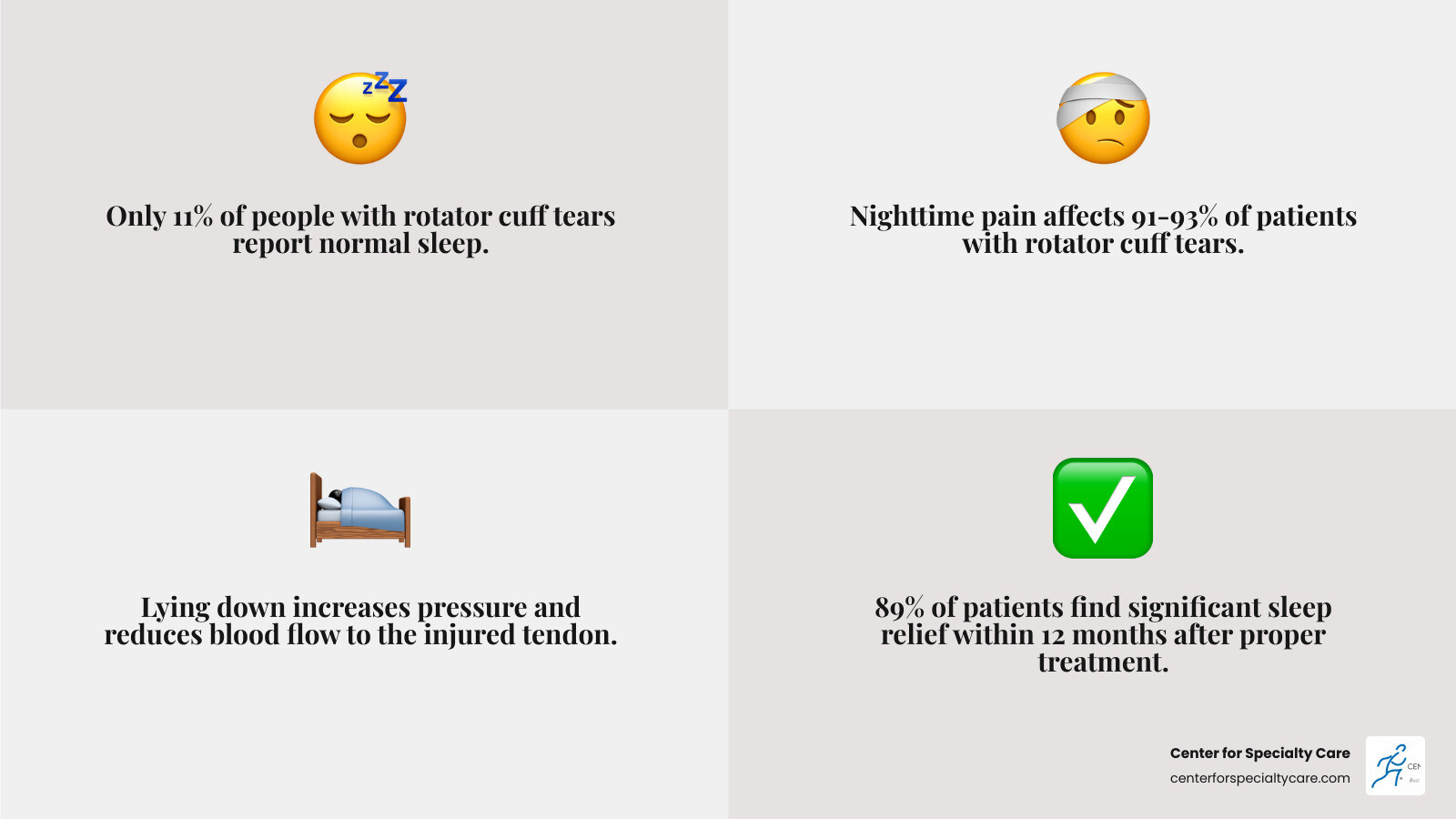
Rotator cuff tear pain at night is one of the most common and frustrating symptoms of a shoulder injury. If you’re struggling with this, you’re not alone. Research shows that nighttime pain affects 91-93% of patients, and only 11% of people with rotator cuff tears report normal sleep.
Quick Relief Strategies for Night Pain:
- Sleep on your back with a pillow supporting your injured arm.
- Try a reclined position using a wedge pillow or recliner.
- Apply ice or heat for 15-20 minutes before bed.
- Take over-the-counter pain relievers about an hour before sleep.
- Avoid sleeping on the affected shoulder or your stomach.
Why does the pain get worse when you lie down? When you’re horizontal, pressure increases on the injured tendon, blood flow changes, and inflammation can intensify. Poor sleep doesn’t just make you tired—it directly interferes with your body’s ability to heal.
The good news is that relief is possible. In one study, 89% of patients reported improved sleep within 12 months after proper treatment.
I’m Dr. Corey Welchlin, a board-certified orthopedic surgeon specializing in rotator cuff repair since 1990. Here in Fairmont, I’ve helped thousands of patients in southern Minnesota and northern Iowa overcome rotator cuff tear pain at night and return to restful sleep. Let me walk you through the most effective strategies.
Rotator cuff tear pain at night glossary:
Understanding Your Shoulder and Rotator Cuff Tear
Your shoulder’s incredible flexibility comes at a cost: it’s one of the most vulnerable joints to injury. At its core is the rotator cuff, a group of four muscles and their tendons (supraspinatus, infraspinatus, teres minor, and subscapularis) that stabilize the joint and allow you to lift and rotate your arm.
A rotator cuff tear occurs when one or more of these tendons pulls away from the bone. Partial tears mean the tendon is damaged but still attached, while complete tears mean it has fully separated. Tears can be acute (from a sudden injury) or, more commonly, degenerative (from gradual wear and tear).
Common symptoms include a dull, deep ache in the shoulder, weakness in your arm that makes simple tasks difficult, and sometimes popping or clicking sounds when you move. If those sounds are bothering you, our guide on shoulder joint pain and popping explains what’s happening.
Common Causes and Risk Factors
Rotator cuff tears are usually caused by a combination of factors:
- Repetitive overhead motion: Common in jobs like painting and carpentry, and sports like baseball and swimming.
- Age-related wear and tear: Tears become much more common after age 40 as tendons lose elasticity.
- Sudden injuries: A fall on an outstretched arm or lifting something too heavy can cause an acute tear. Learn more about shoulder pain after car accidents.
- Other factors: A family history of shoulder problems, poor posture, and smoking can also increase your risk.
Why Does Rotator Cuff Tear Pain at Night Get Worse?
It’s not your imagination—the pain intensifies at night for several physical reasons:
- Increased Pressure: Lying down, especially on your side, compresses the injured tendon. Research shows that pressure in the shoulder changes dramatically with different sleep positions.
- Inflammation: Your body’s natural inflammatory response can peak at night as part of its circadian rhythm, making pain feel more intense.
- Stiffness from Inactivity: During sleep, lack of movement causes the joint to stiffen, so even small shifts can be painful.
- The “Quiet Effect”: With fewer daytime distractions, your brain is free to focus on the aching sensation, amplifying your perception of pain.
Strategies for Better Sleep with a Rotator Cuff Injury
Sleep is one of your body’s most powerful healing tools. During deep sleep, your body releases growth hormones to repair damaged tissues and reduces inflammation. When pain disrupts sleep, it slows your recovery. With only 11% of patients with rotator cuff tears reporting normal sleep, finding the right strategies is crucial.

Adjusting Sleeping Positions to Alleviate Rotator Cuff Tear Pain at Night
How you position yourself in bed can make or break your night. The goal is to minimize pressure and keep the shoulder in a neutral, supported position.
- Sleeping on your back: This is often the best position. Place a small pillow under the elbow of your injured arm to keep it supported and prevent it from pulling on the tendons.
- Sleeping on your unaffected side: If you’re a side sleeper, lie on your good side and hug a large pillow in front of you. Rest your injured arm on the pillow to keep it in a neutral position.
- Sleeping in a reclined position: A wedge pillow or a recliner chair can take pressure off your shoulder, which is especially helpful after an injury or surgery. It also prevents you from accidentally rolling onto the painful side.
Positions to Avoid: Never sleep directly on your affected shoulder, as this puts direct pressure on the injury. Stomach sleeping is also not recommended, as it forces your shoulder into an awkward position.
Effective Home Treatments for Rotator Cuff Tear Pain at Night
Combine these simple treatments to create a pre-sleep routine that reduces your rotator cuff tear pain at night.
- Heat and Cold Therapy: Use an ice pack for 15-20 minutes before bed to reduce acute inflammation and numb the area. Use a heating pad for chronic aches and stiffness to relax muscles. Experiment to see which works best for you.
- Over-the-Counter Pain Relievers: NSAIDs like ibuprofen or naproxen can reduce inflammation. Take one about an hour before bed to give it time to work. Acetaminophen (Tylenol) is another option if inflammation isn’t the main issue. Topical creams can also provide localized relief.
- Gentle Stretching Before Bed: Light stretching can reduce stiffness. Focus on gentle movements, not pushing through pain.
- Pendulum Stretch: Lean forward and let your arm hang down. Gently swing it in small circles.
- Crossover Arm Stretch: Gently bring your injured arm across your body, supporting it with your other hand.
- Doorway Stretch: Stand in a doorway, place your forearms on the frame, and lean forward to feel a stretch in your chest and shoulders.

Medical Treatments to Restore Sleep and Shoulder Function
If home remedies aren’t enough and rotator cuff tear pain at night continues to disrupt your life, it’s time to seek professional help. Persistent pain can indicate a tear that may worsen without treatment.
Your journey starts with a thorough evaluation. We’ll perform a physical exam to check your range of motion and strength. To see the soft tissues, we often use advanced imaging like an MRI or ultrasound. These tests show us the exact location and size of the tear, which is essential for creating a personalized treatment plan. Our guide on finding a shoulder specialist can help you steer this process.
The Role of Physical Therapy
Physical therapy is a cornerstone of rotator cuff treatment. A skilled therapist will create a custom program to:
- Strengthen the rotator cuff and surrounding shoulder muscles.
- Improve flexibility and range of motion to reduce stiffness.
- Correct posture to relieve stress on the shoulder joint.
For partial tears, physical therapy is highly effective—research shows about 8 out of 10 people improve significantly with nonsurgical treatment. Committing to your therapy program is key to a successful outcome. Learn more about our approach to shoulder physical therapy.
Non-Surgical and Surgical Options
We always start with the least invasive treatments appropriate for your condition.
-
Non-Surgical Treatments: For many partial tears, a combination of physical therapy and other treatments is enough. Corticosteroid injections can provide powerful, short-term relief from inflammation and pain. Platelet-Rich Plasma (PRP) therapy, which uses your body’s own growth factors, is another option to stimulate healing. You can read more about types of injections for shoulder pain.
-
Surgical Options: Surgery is typically recommended for complete tears that won’t heal on their own or when non-surgical treatments fail. Dr. Welchlin often uses arthroscopic repair, a minimally invasive technique that uses small incisions to reattach the tendon. This leads to less pain and a faster recovery than traditional open surgery.
Recovery varies, but the payoff is significant. After proper treatment, 89% of patients report improved sleep within 12 months, finally getting the rest they need to heal and live well.
Why Rotator Cuff Tear Pain Disrupts Your Sleep
If shoulder pain wakes you up or keeps you from falling asleep, youre not alone. Only 11% of people with rotator cuff tears report normal sleep, and 91-93% struggle with night pain. The encouraging news: with proper treatment, 89% of patients report improved sleep within 12 months.
Quick relief you can try tonight:
- Sleep on your back with a pillow supporting your injured arm.
- Try a reclined position (wedge pillow or recliner).
- Apply ice or heat for 15-20 minutes before bed.
- Take over-the-counter pain relievers about an hour before sleep.
- Avoid sleeping on the affected shoulder or your stomach.
Why pain worsens at night:
- Increased pressure on the injured tendon when lying down (especially on your side).
- Inflammation and stiffness increase with inactivity during sleep.
- Fewer distractions at night make pain feel more intense.
I’m Dr. Corey Welchlin, board-certified orthopedic surgeon in Fairmont. Our team helps patients across southern Minnesota and northern Iowa overcome rotator cuff night pain and sleep better. Related resources:
Understanding Your Shoulder and Rotator Cuff Tear
Your rotator cuff is a team of four muscles and tendons (supraspinatus, infraspinatus, teres minor, subscapularis) that stabilize the shoulder and allow you to lift and rotate your arm. A rotator cuff tear happens when one or more tendons are damaged or detach from the bone.
- Partial tears: tendon is damaged but still attached.
- Complete tears: tendon is fully separated from the bone.
- Acute tears: result from a sudden injury.
- Degenerative tears: develop gradually over time.
Common symptoms: a dull, deep ache in the shoulder, arm weakness, and sometimes popping or clicking with movement. Learn more about shoulder joint pain and popping.
Common Causes and Risk Factors
- Repetitive overhead motion (certain jobs and sports).
- Age-related wear and tear (more common after 40).
- Sudden injuries (falls, lifting too heavy). See shoulder pain after car accidents.
- Other factors: family history, poor posture, and smoking.
Why Does Rotator Cuff Tear Pain at Night Get Worse?
- Increased pressure when lying down, especially on your side. Research shows shoulder pressures vary significantly with sleep position.
- Natural inflammatory rhythms may heighten pain sensations at night.
- Inactivity leads to stiffness, and even small movements can hurt during sleep.
- Fewer distractions at night can amplify your perception of pain.
Strategies for Better Sleep with a Rotator Cuff Injury
Sleep supports healing by reducing inflammation and helping tissue repair. With only 11% of symptomatic patients reporting normal sleep, a simple, consistent night routine is essential.
Adjusting Sleeping Positions to Alleviate Rotator Cuff Tear Pain at Night
Best positions:
- Sleeping on your back: place a small pillow under the elbow/forearm of the injured arm to keep it supported.
- Sleeping on your unaffected side: hug a large pillow and rest the injured arm on it to stay neutral and supported.
- Reclined position: use a wedge pillow or recliner to reduce pressure and prevent rolling onto the painful side.
Positions to avoid:
- Directly on the affected shoulder.
- Stomach sleeping (forces awkward shoulder/neck positions).
Effective Home Treatments for Rotator Cuff Tear Pain at Night
- Heat or Cold Therapy: apply ice for swelling or a heating pad for stiffness (15-20 minutes before bed). Try both to see which helps most.
- Over-the-Counter Pain Relievers: NSAIDs (ibuprofen, naproxen) for inflammation, or acetaminophen for pain; take about an hour before bed. Consider topical options (e.g., diclofenac gel). Follow label directions and consult your clinician if needed.
- Gentle Stretching Before Bed: focus on easy, pain-free motion.
- Pendulum stretch.
- Crossover arm stretch.
- Doorway stretch.
- Sleeper stretch (only to a gentle stretch, not pain).
Medical Treatments to Restore Sleep and Shoulder Function
If home care isnt enough and night pain persists, get a professional evaluation. We start with a focused exam and often confirm the diagnosis with MRI or ultrasound. For help navigating care, see our guide on finding a shoulder specialist.
The Role of Physical Therapy
Physical therapy strengthens the rotator cuff and supporting muscles, improves flexibility and range of motion, and optimizes posture. About 8 out of 10 people with partial tears improve significantly without surgery when they commit to a structured program. Learn more about our approach to shoulder physical therapy.
Non-Surgical and Surgical Options
- Non-surgical: targeted physical therapy, activity modification, and pain control. Corticosteroid injections can calm inflammation and reduce pain. PRP therapy may support healing. Read about types of injections for shoulder pain.
- Surgical: typically recommended for complete tears or when conservative care fails. Arthroscopic repair (minimally invasive) reattaches the tendon; recovery is gradual and guided by therapy.
With appropriate care, most patients see steady improvement, and 89% report better sleep within 12 months.
Recovery, Prevention, and Long-Term Outlook
If you’re struggling with rotator cuff tear pain at night, the long-term outlook is very encouraging. With proper treatment, you can get back to pain-free nights and active days. One study found that 89% of patients reported improved sleep 12 months after rotator cuff surgery. This dramatic improvement highlights that you don’t have to live with sleepless nights.
Commitment to your recovery plan is the key to an excellent outcome. Patients who diligently follow their physical therapy program see the best long-term results. It’s also important to recognize the link between chronic pain, poor sleep, and mental health. Successfully treating your shoulder can improve not just your physical comfort but also your mood and energy levels.
Preventing Future Rotator Cuff Injuries
Once your shoulder has healed, you’ll want to keep it that way. These strategies can help protect your shoulders from future injury:
- Maintain Strength: Continue exercises that strengthen your rotator cuff and the supporting muscles around your shoulder blade.
- Use Proper Form: When lifting or participating in sports, focus on good mechanics to avoid putting unnecessary strain on your shoulder.
- Take Breaks: If your job involves repetitive overhead motion, take regular breaks to stretch and rest your tendons.
- Improve Ergonomics: Adjust your workspace to promote good posture and keep frequently used items within easy reach.
- Warm-Up Properly: Always warm up before physical activity to increase blood flow and prepare your muscles for action.

By incorporating these habits, you are investing in your long-term shoulder health. We are here to support you with comprehensive orthopedic care to keep you moving comfortably for years to come.
Frequently Asked Questions about Rotator Cuff Night Pain
When should I see a doctor for shoulder pain?
While minor aches can resolve with rest, you should schedule an appointment if you experience any of the following:
- Pain that consistently disrupts your sleep.
- Noticeable weakness in your arm or difficulty with daily tasks like dressing or reaching overhead.
- Pain that lasts for more than a few weeks despite home treatment.
- A sudden, traumatic injury to your shoulder that causes intense pain.
If your shoulder pain is accompanied by chest tightness or difficulty breathing, seek emergency medical attention immediately, as this could be a sign of a heart attack.
Will a torn rotator cuff heal on its own?
This depends on the type of tear.
Partial tears often can. With conservative care like physical therapy and activity modification, about 8 out of 10 people with partial tears improve without surgery. It requires patience, but for many, it’s a very successful approach.
Complete tears, however, do not heal on their own. The tendon fully separates from the bone and retracts, and it cannot reattach itself. While some older or less active individuals can manage symptoms without surgery, surgical repair is often the best option to restore strength and prevent the tear from worsening.
For a deeper dive, read our guide: Will a torn rotator cuff heal on its own?.
How long does rotator cuff recovery take?
Recovery is a gradual process that requires patience. The timeline depends on the type of treatment:
-
Non-Surgical Recovery: For partial tears, you may feel relief within weeks, but it can take up to a year for the condition to fully improve and for night pain to resolve completely.
-
Surgical Recovery: After surgery, you will typically wear a sling for 4-6 weeks to protect the repair. Physical therapy begins after that to restore motion and strength. Most people regain significant function within 4-6 months, with full recovery taking 12 to 18 months.
Your individual timeline will depend on factors like the tear size, your age, and your commitment to rehabilitation. We will work with you every step of the way.
Find Lasting Relief from Shoulder Pain
If you’ve read this guide, you know that rotator cuff tear pain at night is a treatable problem, and you don’t have to live with it. From adjusting your sleeping position to seeking professional medical care, there is a clear path to recovery and restful nights.
Finding a care team that creates a personalized plan is the most important step. At Center for Specialty Care, we are committed to 100% patient satisfaction. We listen to your concerns, answer your questions, and move quickly to get you the relief you need without making you wait weeks for an appointment.
Since 1990, we have helped thousands of patients throughout southern Minnesota and northern Iowa—from Fairmont and St. James to Estherville and Buffalo Center—overcome shoulder pain and return to the activities they love.
You don’t have to spend another night tossing and turning. Take the first step toward recovery by scheduling a consultation. We will evaluate your shoulder and work with you to develop a treatment plan that gets you back to a pain-free life.
Your journey to recovery starts today. For more information or to schedule an appointment, please visit our dedicated shoulder care page. Let’s work together to help you reclaim your nights.