
Soothe Your Tendons: The Right Way to Apply Heat for Pain
December 23, 2025
Your Guide to Orthopedic Care in Iowa
December 25, 2025
Bunion pain relief: Fast Comfort 2025
Why Bunion Pain Relief Matters for Your Daily Life
Bunion pain relief is achievable through a combination of proper footwear, protective padding, orthotics, pain medication, ice therapy, and in severe cases, surgical correction. Most people find significant comfort by wearing shoes with wide toe boxes, using bunion pads, applying ice for 15-20 minutes daily, and taking over-the-counter anti-inflammatory medications like ibuprofen.
Quick Relief Strategies:
- Change your shoes – Switch to wide, low-heeled styles with plenty of toe room
- Use padding – Apply moleskin or gel pads to cushion the bunion
- Apply ice – Wrap ice in a towel and apply for 15-20 minutes to reduce swelling
- Take NSAIDs – Ibuprofen or naproxen can ease pain and inflammation
- Try orthotics – Shoe inserts help redistribute pressure away from the bunion
- Maintain healthy weight – Every 10 pounds lost reduces foot pressure by 60 pounds
If you’ve noticed a bony bump at the base of your big toe, you’re not alone. Around one-third of Americans have bunions, and the pain can range from mild discomfort to debilitating agony. That throbbing, the struggle to find shoes that fit, and the redness and swelling are signs that the joint at the base of your big toe has shifted out of alignment, creating what doctors call hallux valgus.
While bunions are permanent unless surgically corrected, there are many proven ways to manage symptoms and slow progression. Women are particularly affected, developing bunions more often than men, especially with age. Over 70% of people with bunions have a parent who also had them, pointing to a strong hereditary link. However, genetics isn’t the only factor—shoe choices and foot mechanics also play crucial roles.
Whether you’re dealing with occasional discomfort or chronic pain, understanding your options is the first step toward relief. I’m Dr. Corey Welchlin, a board-certified orthopedic surgeon with over three decades of experience treating foot and ankle conditions. At the Center for Specialty Care in Fairmont, Minnesota, I’ve helped countless patients find lasting comfort through both conservative treatments and surgical bunion pain relief solutions.
Understanding Bunions: What Causes the Pain?
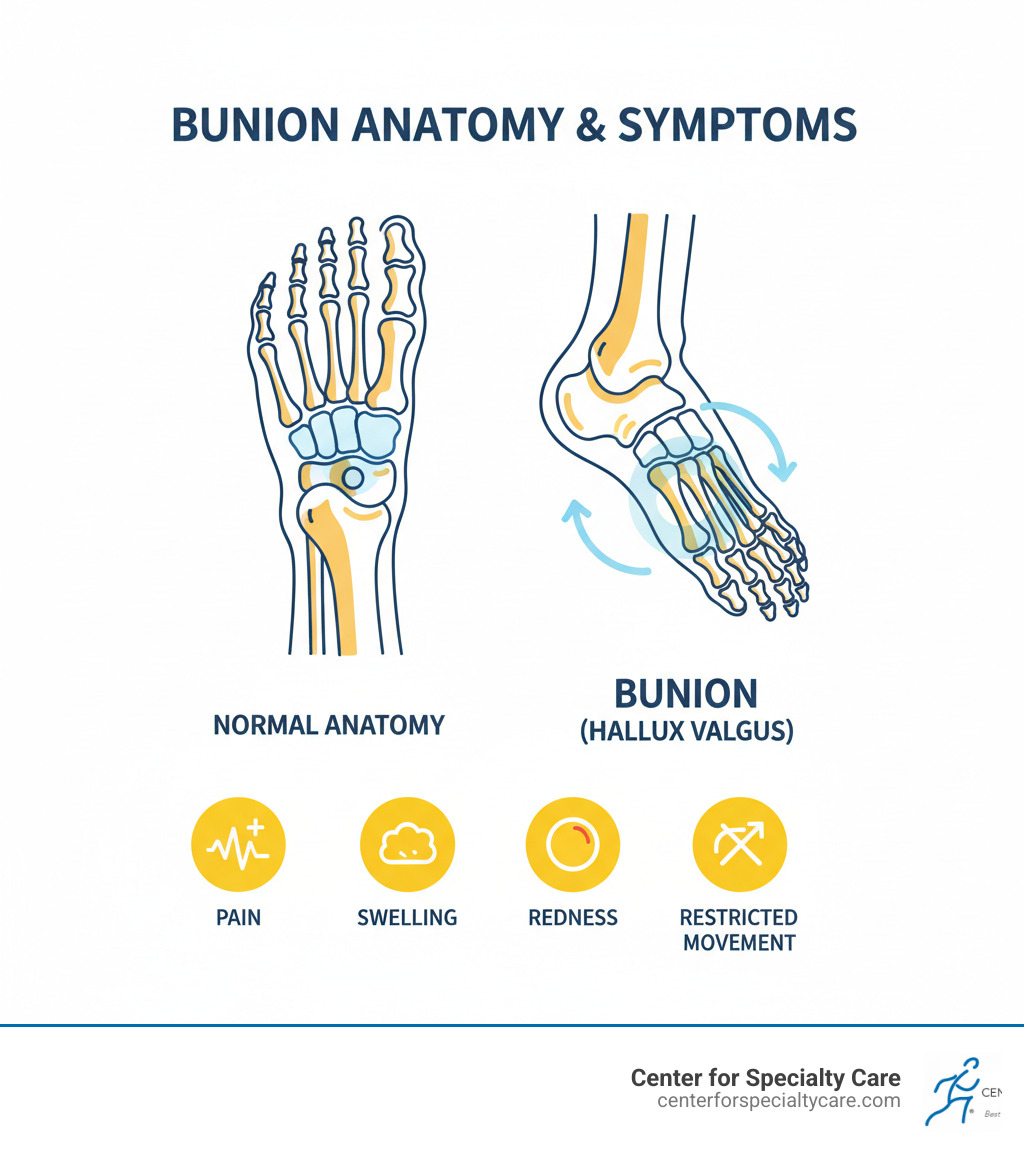
If you’re experiencing that telltale bony bump at the base of your big toe, you’re dealing with what doctors call hallux valgus—more commonly known as a bunion. This isn’t just a bump; it’s a structural deformity of the metatarsophalangeal (MTP) joint. The first metatarsal bone angles outward, while your big toe points inward, creating a misalignment that forms the painful protrusion. Understanding this is key to finding effective bunion pain relief.
Bunions are progressive, meaning they gradually worsen over time if not addressed. This slow shift in your foot’s architecture can eventually affect how you walk and your overall quality of life. For an evidence-based overview of bunions, including causes and treatment options, see OrthoInfo: Bunions.
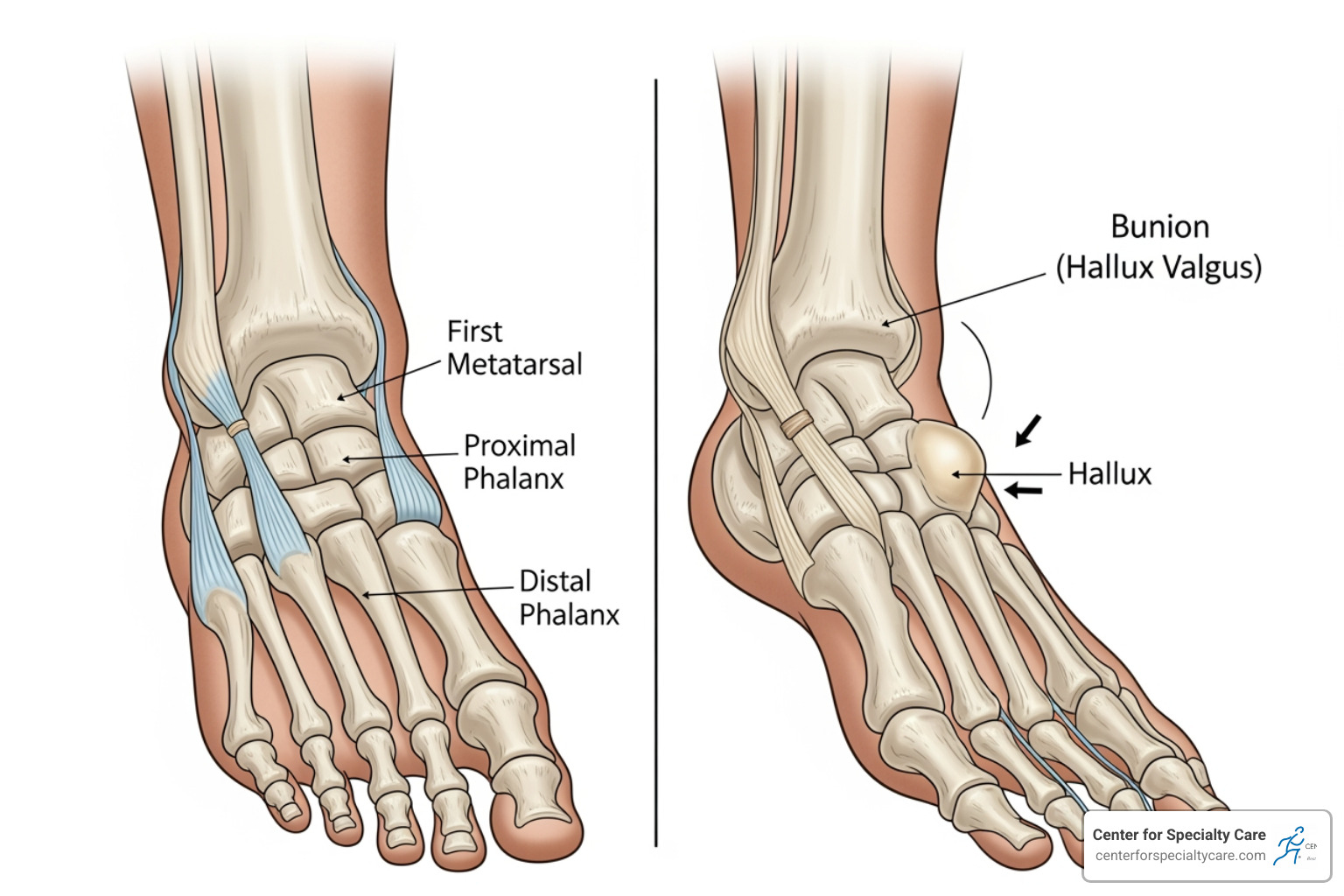
Symptoms of a Bunion
The most obvious sign is a visible bony bump at the base of the big toe. Other common symptoms include:
- Pain and tenderness around the joint, ranging from a dull ache to sharp pain.
- Redness and inflammation, with the skin appearing warm and swollen.
- Corns and calluses developing between the toes or on the bunion itself due to friction.
- Restricted movement in the big toe, causing stiffness that affects your natural walking pattern.
- Difficulty finding shoes that fit, as most pairs press against the tender spot.
For a comprehensive look at this and other common foot issues, check out our guide on A Walk Towards Healthy Feet: Common Foot Problems and Solutions.
The Root Causes of Bunions and Bunion Pain
Bunion formation is typically a combination of factors working together over time.
- Heredity: If your parents had bunions, you’re more likely to develop them. You inherit the foot structure—like flat feet or loose joints—that makes you susceptible.
- Foot Mechanics: An abnormal walking pattern puts extra stress on the MTP joint, gradually pushing it out of alignment.
- Footwear: While not a direct cause, ill-fitting shoes accelerate bunion development. Narrow, pointed-toe shoes and high heels squeeze toes into an unnatural position, which is a major reason bunions are up to 10 times more common in women.
- Arthritis: Conditions like rheumatoid arthritis can damage joint cartilage, making bunions more likely and more painful.
- Foot Injuries: Though less common, trauma to the foot can sometimes trigger bunion development.
Potential Complications of Untreated Bunions
Ignoring a bunion can lead to a cascade of other foot problems as your body tries to compensate for the misaligned toe.
- Bursitis: The fluid-filled sac (bursa) cushioning your joint becomes inflamed from friction, adding a burning ache.
- Hammertoes: As the big toe pushes against its neighbors, it can force them to bend abnormally, creating another painful deformity.
- Metatarsalgia: Shifting your weight to avoid bunion pain can overload the ball of your foot, causing pain and inflammation there.
- Chronic Pain and Worsening Deformity: What starts as occasional discomfort can become constant pain. The deformity can worsen, with the big toe overlapping or underlapping the second toe.
These changes compromise overall foot function and balance. Understanding related foot pain conditions is crucial, and you might find our article on Understanding Morton’s Neuroma: An Orthopedic Guide to Foot Pain and Treatment helpful.
Non-Surgical Bunion Pain Relief: Your First Line of Defense
Most people can find significant bunion pain relief without surgery. Conservative treatments are our first-line approach, designed to reduce pain, slow the bunion’s progression, and help you return to your daily activities. While these methods won’t reverse the deformity, they are remarkably effective at managing symptoms.
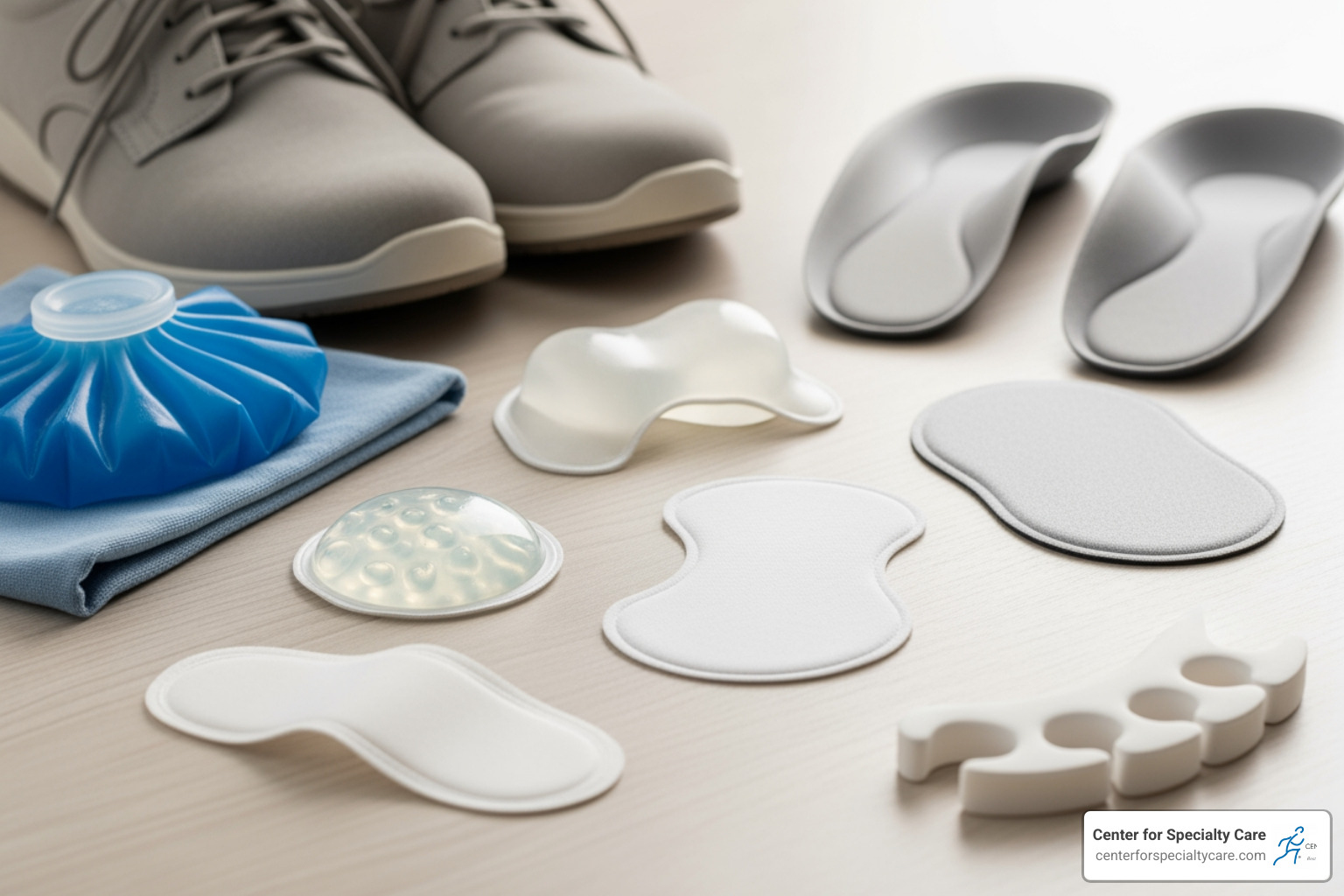
The Impact of Footwear on Bunion Pain Relief
Changing your footwear is one of the most powerful things you can do to reduce bunion pain. The right shoes can make an enormous difference. Look for shoes with a wide toe box to give your toes room to spread naturally. Keep heels low (under two inches), as high heels force your weight forward and cram your toes. Choose soft, flexible materials like leather or mesh that conform to your foot’s shape instead of creating friction.
Proper arch support is also key, as it helps distribute pressure evenly across your foot. It’s a good idea to get your feet measured regularly, as foot size can change over time. Always fit your shoes to your larger foot and try them on at the end of the day when your feet are at their largest.
The Role of Orthotics and Padding for Bunion Pain Relief
Beyond shoes, specialized devices can provide targeted protection and support for bunion pain relief.
- Bunion pads: Made from moleskin or gel, these stick over the bunion to absorb friction and pressure from shoes.
- Over-the-counter inserts: These provide general cushioning and arch support, helping to redistribute pressure.
- Custom orthotics: Created specifically for your feet, these devices correct abnormal walking patterns and significantly reduce pressure on the bunion. Properly fitted orthotics are a cornerstone of long-term comfort for overall foot and Ankle health.
- Toe separators and taping: These can provide temporary relief by keeping your toes properly spaced and aligned, reducing friction.
At-Home Remedies and Lifestyle Adjustments
Many effective strategies for bunion pain relief can be done right at home.
- Ice therapy: Apply an ice pack wrapped in a towel to your bunion for 15-20 minutes at a time to reduce inflammation, especially after a long day.
- Warm soaks: Soaking your feet in warm water, with or without Epsom salts, can be soothing and help reduce swelling.
- Gentle stretching: Exercises for your big toe and calf muscles can improve flexibility and reduce stiffness.
- Maintain a healthy weight: Every extra pound adds stress to your feet. Losing just 10 pounds can reduce foot pressure by 60 pounds.
- Pain relievers: Over-the-counter NSAIDs like ibuprofen can manage pain and inflammation. Topical anti-inflammatory gels can also provide localized relief.
- Night splints: Wearing a splint while you sleep holds your big toe in a straighter position, which can help you wake up with less stiffness.
For additional home-care guidance and safety tips, see MedlinePlus: Bunions.
When to See a Doctor: Advanced and Surgical Options
While conservative treatments help many, there comes a point when they are no longer enough. If your pain is persistent, your mobility is limited, or the bunion is worsening, it’s time to consult an orthopedic specialist. At Center for Specialty Care, we provide personalized care and quick appointment availability to address your foot health needs.
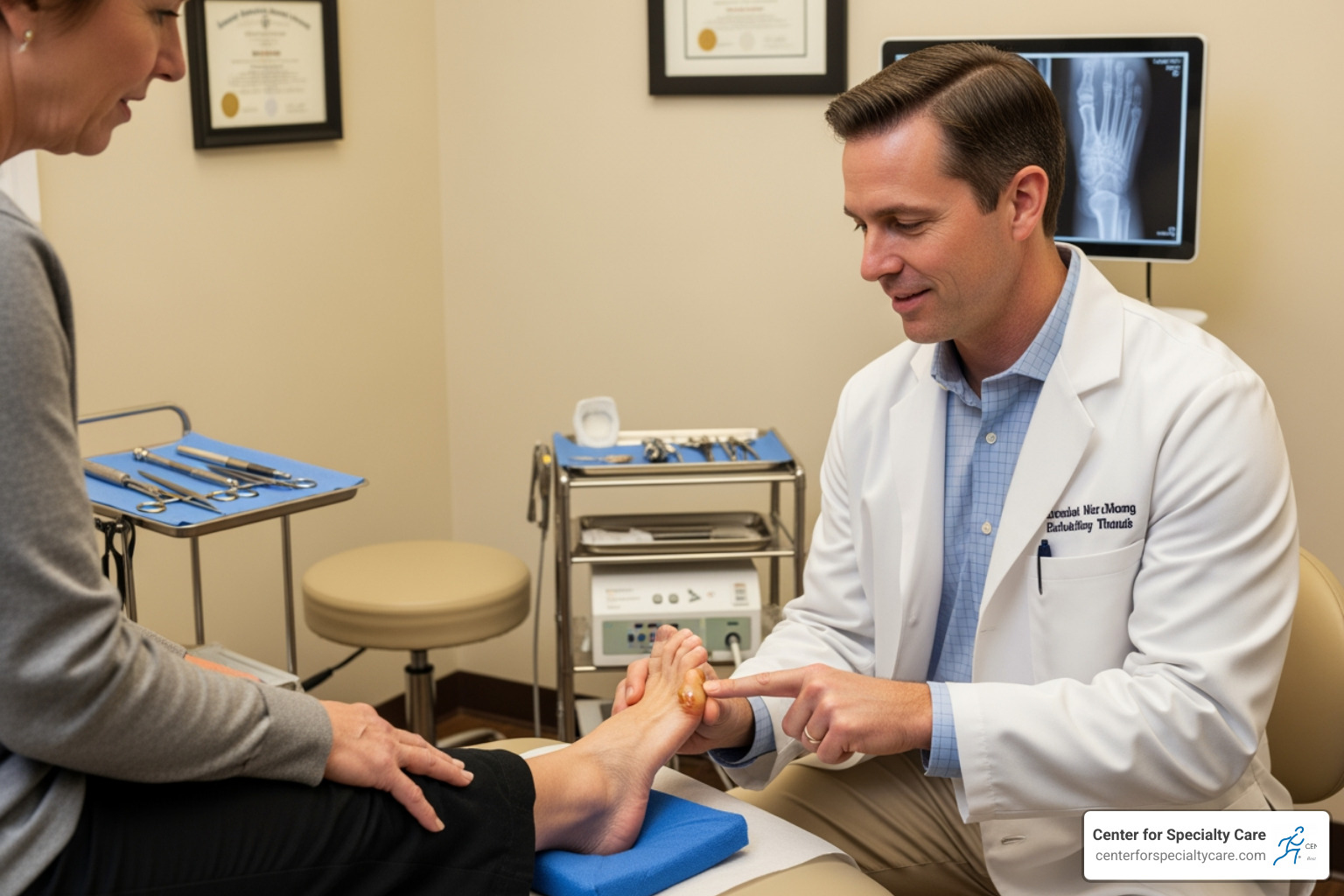
Signs It’s Time to Seek Professional Help
How do you know when to seek professional medical guidance? The answer becomes clear when your daily life is compromised.
- Pain interferes with daily activities: If pain consistently stops you from walking, standing, or enjoying hobbies, it’s time for help.
- Inability to find shoes that fit: When even wide, comfortable shoes cause pain, your quality of life is significantly affected.
- Worsening toe deformity: If your big toe is pushing further into your second toe or other toes are bending abnormally (hammertoes), the condition is progressing.
- Numbness or burning sensations: These symptoms may indicate nerve involvement and require prompt medical attention.
- Failure of home treatments: If you’ve tried conservative measures for months without relief, it’s time to explore other options.
An Overview of Bunion Surgery (Bunionectomy)
For those with debilitating pain despite non-surgical efforts, bunion surgery may be the next step. Bunion surgery is not a cosmetic procedure; it is performed for bunion pain relief and to restore function.
Surgery is typically recommended only when conservative treatments have failed and pain significantly limits your daily life. The goal is to realign bone and tissue to restore normal alignment and relieve pain. This may involve removing swollen tissue, straightening the toe by removing a wedge of bone, or realigning the bones of the forefoot. There are many types of bunion surgery, and our orthopedic surgeons will assess your specific condition to recommend the best approach for you. To understand the process, we encourage you to review The Patient’s Guide to Podiatric Surgery: Expectations and Outcomes.
Recovery and Life After Bunion Surgery
Understanding the recovery process is crucial for successful outcomes and lasting bunion pain relief. Recovery takes time and patience, but the freedom from chronic pain makes it worthwhile for most patients.
The recovery timeline varies, but full recovery can take up to six months, with most people returning to usual activities within two to three months. Post-operative care is vital and includes proper wound care, managing swelling with ice and elevation, and protecting the surgical site. Physical therapy may be recommended to regain strength and a proper walking pattern.
You will need to wear special footwear, like a surgical shoe or boot, for several weeks to protect your foot as it heals. Most importantly, preventing recurrence is key. This relies on consistently wearing properly fitted shoes with ample toe space. Returning to narrow, high-heeled shoes risks the bunion returning. We are committed to supporting you through your recovery. For more on maintaining foot health, you might find our article on Extensor Tendonitis: Navigating Through Recovery and Maintaining Foot Health beneficial.
Frequently Asked Questions about Bunion Pain
Living with bunion pain brings up many questions. Here, we address the most common concerns to help you make informed decisions about your bunion pain relief strategy.
Can bunions go away on their own?
Unfortunately, bunions do not go away on their own. A bunion is a permanent structural change in the alignment of your bones. This misalignment will not reverse itself naturally. Our treatment strategies focus on managing your symptoms, providing effective bunion pain relief, and slowing the deformity’s progression. While many patients live comfortably with conservative treatments, only surgery can physically correct the underlying bone structure and remove the bump.
Are bunion splints effective for correction?
Bunion splints, typically worn at night, can provide temporary bunion pain relief. They work by gently stretching the soft tissues around the joint, which may reduce stiffness and discomfort. However, there is no scientific evidence that splints permanently correct the toe’s position or fix the bone deformity. Think of them as a temporary aid that can make you more comfortable as part of a broader management strategy, not a cure.
How can I prevent bunions from getting worse?
While you may not be able to prevent a bunion entirely, especially if it’s hereditary, you can absolutely slow its progression and manage pain. The choices you make daily can have a significant impact.
- Wear proper footwear: This is the most important step. Choose shoes with a wide, deep toe box that allows your toes to spread naturally.
- Avoid high heels and narrow shoes: Pointy-toed shoes and heels over two inches force your foot into a cramped position that puts immense pressure on the bunion.
- Maintain a healthy weight: Reducing weight significantly reduces the pressure on your feet with every step.
- Use orthotics: If you have structural issues like flat feet, orthotics can help support your foot and distribute pressure more evenly.
- Address pain early: Don’t ignore discomfort. The sooner you implement these strategies, the better your chances of managing pain and avoiding surgery.
Conclusion: Taking the Next Step Towards Comfort
You don’t have to accept bunion pain as a permanent part of your life. We’ve explored a range of solutions, from choosing better shoes and using orthotics to at-home remedies and surgical correction. The path to bunion pain relief is a personalized journey, and the most important takeaway is that early management makes all the difference. Addressing discomfort when it first appears gives you the best chance of slowing progression and maintaining your mobility.
At Center for Specialty Care, we understand that foot pain affects your ability to work, exercise, and enjoy life. We are committed to providing personalized care that addresses your specific needs and goals. We believe in 100% patient satisfaction because we know that when your feet feel good, everything else in life becomes easier.
Our approach combines decades of orthopedic expertise with genuine compassion. We listen, evaluate thoroughly, and work with you to create a treatment plan that fits your life. With quick appointment availability across our locations in Fairmont and the surrounding areas, we’re here when you need us most.
Don’t let foot pain control your life. You deserve to walk comfortably and move through your day without pain. Take control of your foot health by scheduling a consultation with our podiatry experts. Let’s work together to find the bunion pain relief strategy that gets you back to living life on your terms.