
The Sleep-Shoulder Connection: What to Do When Your Bed Becomes a Pain
December 22, 2025
Finding Comfort: Effective Ways to Relieve Bunion Pain
December 24, 2025
Heat for Tendon Pain: 4-Step Ultimate Relief
Understanding When Heat Can Help Your Aching Tendons
Heat for tendon pain works best for chronic conditions—but timing matters. Here’s the quick answer:
When to Use Heat for Tendon Pain:
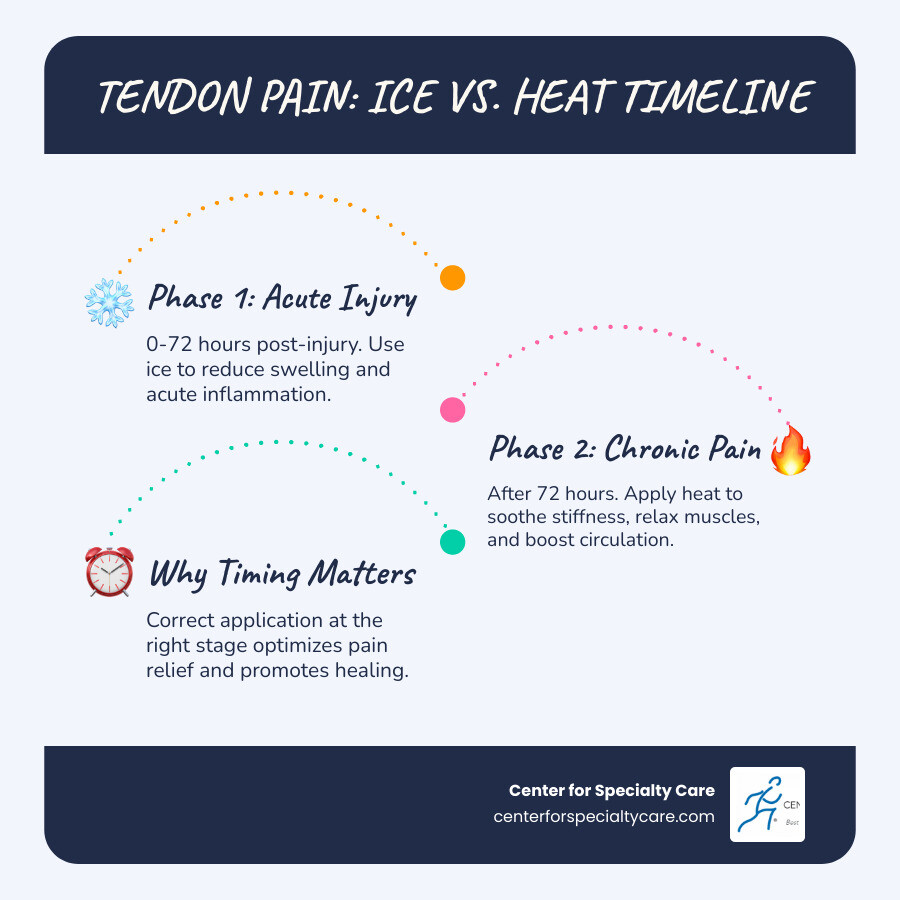
- After 48-72 hours following an injury (once swelling has gone down)
- For chronic tendinitis or ongoing tendon discomfort
- When experiencing muscle tightness and stiffness around the affected area
- Before stretching or physical therapy to warm up tissues
Apply for: 15-20 minutes at a time, 2-3 times daily
Avoid heat if: You have fresh swelling, acute injury, or open wounds
You’ve probably asked yourself whether to reach for an ice pack or a heating pad when your shoulder, elbow, or knee starts aching. It’s a common question—and the answer isn’t always straightforward.
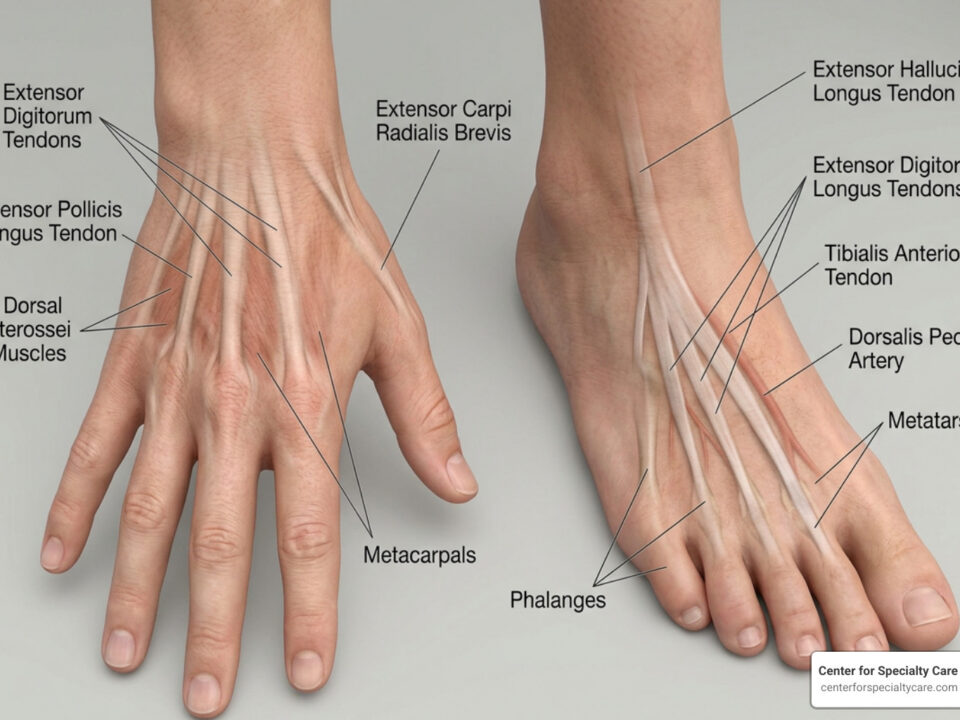
Tendinitis happens when the tough, fibrous bands connecting your muscles to bones become inflamed or irritated. The most common culprits? Repetitive movements, overuse, and stress on the joint. Whether you’re dealing with tennis elbow, rotator cuff pain, or Achilles tendinitis, the discomfort can range from a dull ache to sharp, activity-limiting pain.
The confusion around heat versus ice stems from a simple truth: different stages of injury require different treatments. Ice works wonders for fresh injuries with swelling. Heat shines when you’re dealing with ongoing stiffness and chronic pain.
Research shows that heat increases blood flow to the affected area by about 25%, which helps deliver oxygen and nutrients that support healing. It also relaxes the muscles surrounding your tendons, reducing the force needed to move the joint and easing that characteristic stiffness.
I’m Dr. Corey Welchlin, an orthopedic surgeon who has treated countless tendon injuries over three decades of practice here in Fairmont, Minnesota. Through my work at the Center for Specialty Care, I’ve guided patients on when and how to use heat for tendon pain as part of a comprehensive recovery plan that gets them back to the activities they love.
Key heat for tendon pain vocabulary:
The Great Debate: When to Use Heat vs. Ice for Tendon Pain
Here’s the truth: choosing between heat and ice for your aching tendon isn’t about personal preference—it’s about timing and strategy. I like to explain it this way: ice puts out the fire, while heat loosens the stiffness.
The confusion happens because both treatments work beautifully—just at different stages of your injury. Use ice too late, and you’re missing the window to control swelling. Apply heat too early, and you might actually make inflammation worse. The key is knowing which tool to reach for and when.
| Feature | Heat Therapy | Ice Therapy |
|---|---|---|
| When to Use | Chronic pain, stiffness, muscle tightness | Acute injuries, swelling, inflammation |
| After initial inflammation has subsided (48-72 hrs) | Immediately after injury (first 48-72 hours) | |
| Before stretching or physical activity | For sudden pain or flare-ups | |
| Benefits | Increases blood flow, relaxes muscles | Reduces blood flow, decreases swelling |
| Reduces stiffness, improves flexibility | Numbs pain, reduces inflammation | |
| Promotes healing, eases chronic pain | Prevents further tissue damage | |
| Duration | 15-20 minutes per session | 15-20 minutes per session |
| 2-3 times daily | Every 4-6 hours |
Ice: For Acute Injuries and Inflammation
Picture this: you’ve just twisted your knee during a pickup basketball game, or your elbow suddenly flared up after a weekend of yard work. That sharp, immediate pain means you’re dealing with an acute injury—and ice is exactly what you need.
For those first 48 to 72 hours after a sudden tendon injury, ice works like a miracle. It causes something called vasoconstriction, which is just a fancy way of saying it narrows your blood vessels. Less blood flow to the area means less swelling, less inflammation, and less pain.
The cold temperature also temporarily numbs the nerve endings, giving you immediate relief from that throbbing discomfort. Think of ice as your first line of defense—it prevents the injury from getting worse while your body starts the healing process.
Always wrap your ice pack in a thin towel to protect your skin from ice burns. Apply it for 15 to 20 minutes at a time, then give your skin a break. You can repeat this every 4 to 6 hours during those critical first few days.
If you’re dealing with a sports-related tendon injury, our Sports Medicine team can provide comprehensive care beyond just ice and rest.
Heat: For Chronic Stiffness and Soreness
Now let’s talk about when heat for tendon pain becomes your go-to treatment. After those first 72 hours pass—or if you’re dealing with that persistent, nagging ache that just won’t quit—it’s time to switch to warmth.
Heat therapy shines when you’re experiencing ongoing pain without acute swelling. Maybe your shoulder feels stiff every morning, or your elbow aches after a day at the computer. These are signs of chronic tendinitis or tendinosis, where the tendon has become irritated over time rather than from a single injury.
Here’s what makes heat so effective: it increases blood flow to the area, delivering fresh oxygen and nutrients that support healing. At the same time, it relaxes the muscles surrounding your tendon, easing that characteristic tightness that makes movement uncomfortable.
I often recommend patients apply heat before stretching or physical therapy. The warmth makes your tissues more pliable and receptive to gentle movement. Your joints feel less stiff, and you’ll find it easier to work through those exercises that build strength and flexibility.
According to the Mayo Clinic, heat can boost blood flow to help the tendon heal while also easing pain by relaxing muscles. This approach works especially well for conditions involving tendon degeneration rather than acute inflammation.
Apply heat for 15 to 20 minutes at a time, and repeat this 2 to 3 times throughout your day. The key is consistency—regular heat therapy sessions can make a noticeable difference in how your tendon feels and functions.
Some patients even benefit from contrast therapy, alternating between cold and heat to get the benefits of both. But that’s a conversation worth having with your healthcare provider to make sure it’s right for your specific situation.
The Science-Backed Benefits of Using Heat for Tendon Pain
When used at the right time, heat for tendon pain offers a cascade of physiological benefits that contribute to pain relief and healing. It’s not just about comfort—it’s about actively supporting your body’s recovery mechanisms.
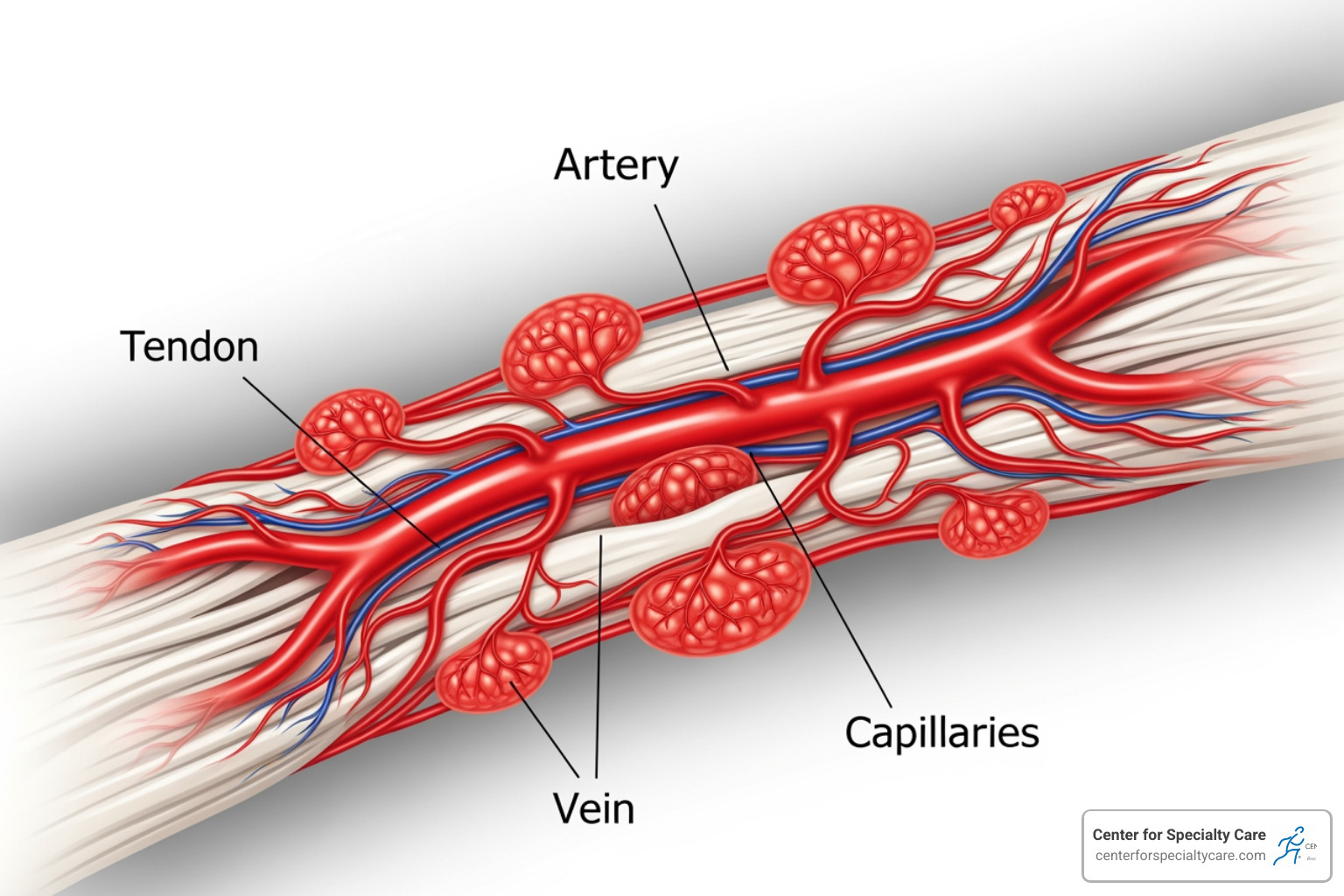
Think of heat therapy as opening the gates for your body’s natural healing resources. When you apply warmth to an aching tendon, your blood vessels dilate—meaning they widen—which dramatically increases circulation to that area. This isn’t just a pleasant sensation; it’s a delivery system bringing oxygen and nutrients right where they’re needed most.
This boost in blood flow can improve the rate at which your tendon heals. Your body’s repair cells work more efficiently when they have a steady supply of the resources they need. At the same time, that increased circulation helps flush away metabolic waste products that can accumulate around injured tissues.
But the benefits don’t stop there. Heat naturally relaxes the muscles surrounding your painful tendon. When you’re hurting, those nearby muscles often tense up as a protective response—which ironically can make the pain worse. By releasing that tension, heat reduces the pressure on your tendon and helps break the pain-tension cycle.
You’ll also notice that heat provides genuine pain relief. While it doesn’t numb the area like ice does, it alters the pain signals traveling to your brain, creating a soothing sensation that makes discomfort more manageable. Many of my patients describe it as the difference between a sharp, nagging pain and a gentler, more tolerable ache.
Perhaps most importantly for long-term recovery, heat improves flexibility. It makes your tendons and the connective tissues around them more pliable and elastic. This means you can move more freely, with less stiffness, and you’ll get more benefit from your stretching exercises. Heat essentially loosens stiff joints, making everyday movements—reaching for a shelf, climbing stairs, throwing a ball—feel easier and less restricted.
That’s why applying heat before physical activity or stretching is such a smart strategy. You’re warming up your tissues, making them more resilient and receptive to movement, which helps prevent re-injury.
How Heat Promotes Healing and Flexibility
The science behind these benefits is fascinating. Research shows that heat application significantly increases the flexibility of tendons and ligaments—in one study of the human knee, heat decreased the force needed to flex the joint by about 25% compared to cold application. That’s a substantial difference you can actually feel.
This improvement happens because heat boosts blood flow, delivering a steady stream of oxygen and nutrients to your injured tendon. Your cells become more active, working harder to repair damaged tissue and clear away debris.
Heat also affects the collagen fibers that make up your tendons. These tough, rope-like structures become more relaxed and extensible when warmed, which is exactly why heat for tendon pain works so well for chronic conditions where stiffness is the main problem.
There’s also the matter of what scientists call viscoelastic properties. Tendons aren’t just elastic like a rubber band—they also have viscous qualities, meaning they respond differently depending on temperature and the speed of movement. Heat favorably changes these properties, making your tendons more amenable to stretching and less likely to feel rigid or “stuck.”
The net result? Reduced joint stiffness, better range of motion, and tissues that are genuinely prepared for the demands you’re about to place on them. For more detailed scientific insights on how temperature affects tendon flexibility, check out this research on tendon flexibility.
This scientific backing is why we consistently recommend heat therapy as part of a comprehensive treatment plan for chronic tendon conditions at our clinic. It’s not just folk wisdom—it’s evidence-based medicine that helps you get back to doing what you love.
A Step-by-Step Guide to Applying Heat Safely and Effectively
Think of heat for tendon pain as a therapeutic tool that requires a bit of finesse. You wouldn’t use a hammer without knowing which end to hold, right? The same principle applies here—proper technique makes all the difference between genuine relief and potential harm.
Best Methods for Applying Heat for Tendon Pain
The beauty of heat therapy is its versatility. You’ve got several excellent options, and the best choice often depends on where your pain is located and what you have available.
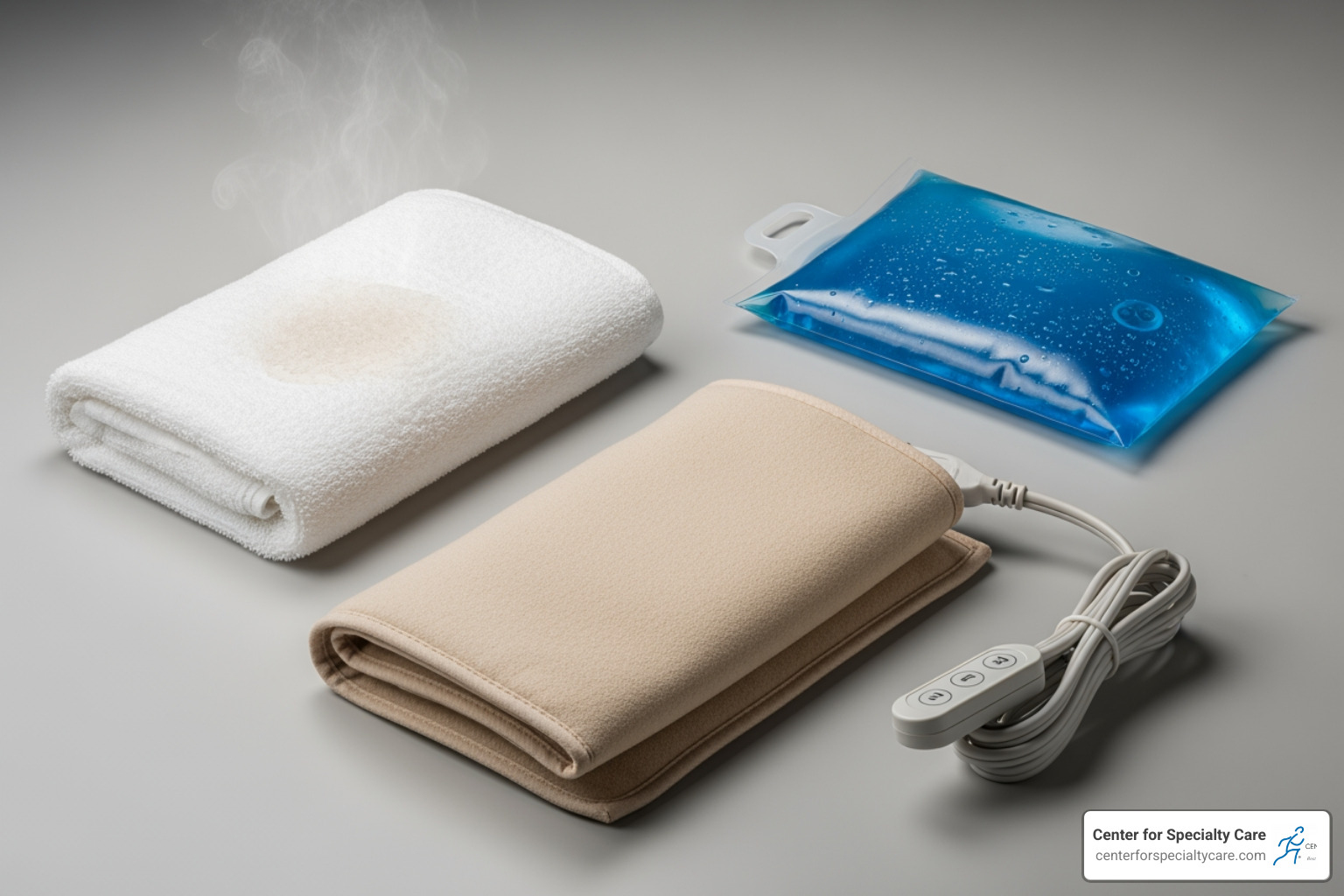
Moist heating pads are the gold standard in my practice. Why? Because moist heat penetrates deeper into your tissues than dry heat—think of it like the difference between steaming vegetables versus roasting them. That deeper penetration makes moist heat particularly effective for larger joints like your Shoulder or Knee. The consistent warmth helps relax those stubborn muscles and ease stiffness in a way that dry heat simply can’t match.
Warm compresses or towels offer a simple, no-equipment-needed approach. Just soak a clean towel in warm water (not hot enough to scald), wring it out, and apply it to the affected area. This method is perfect when you’re traveling or don’t have access to a heating pad. Plus, the moist heat works wonders for targeting specific tender spots.
Warm baths or showers become your best friend when tendon pain affects multiple areas or you’re dealing with widespread stiffness. The enveloping warmth relaxes muscles throughout your entire body, and there’s something genuinely therapeutic about letting warm water cascade over sore joints. Many of my patients tell me their morning shower is when they feel the most relief.
Heated gel packs or heat wraps bring convenience into the equation. You can microwave them or activate them chemically, and many are designed to conform to different body parts—wrapping around an elbow or draping over a shoulder. Some specialized heat wraps provide extended, low-level warmth over several hours, which can be particularly beneficial for chronic tendon issues that need sustained relief throughout the day.
Your 4-Step Heat Application Routine
Getting the most from heat for tendon pain means following a consistent routine. Here’s exactly what I recommend to my patients:
Step 1: Choose your method based on where your pain is and what feels most comfortable. If you’re treating your shoulder, a moist heating pad might work best. For your Achilles tendon, a warm foot bath could be ideal. There’s no wrong choice as long as it delivers consistent warmth to the affected area.
Step 2: Protect your skin with a barrier—and I can’t stress this enough. Always place a thin towel or cloth between your heat source and your skin. I’ve seen too many patients come in with burns because they skipped this step. Think of it as your safety buffer. It ensures the heat remains therapeutic rather than damaging.
Step 3: Apply for 15-20 minutes and set a timer. This timeframe gives you all the benefits—increased blood flow, muscle relaxation, improved flexibility—without overheating your tissues. More isn’t better here. Your tendons need warmth, not a sauna experience.
Step 4: Wait at least an hour between sessions to give your skin and tissues a proper break. If you need additional relief during the day, you can repeat the process two to three times total. Just remember that continuous heat isn’t the goal; strategic, timed applications are what work.
Critical Safety Precautions
While heat therapy is wonderfully effective, it’s not risk-free. Following these safety guidelines protects you from complications and ensures your treatment remains beneficial.
Never apply heat directly to your skin. That protective barrier we mentioned? It’s non-negotiable. Even if the heat source feels comfortable at first, prolonged direct contact can cause burns before you realize what’s happening.
The heat should feel warm and soothing, not hot or uncomfortable. If you find yourself thinking “this is almost too hot,” it definitely is too hot. Reduce the temperature immediately or add more layers of protection. Your comfort level is your best safety indicator.
Never, ever fall asleep with a heating pad. I know it’s tempting when the warmth feels so good, but this is one of the most common causes of serious burns I see. When you’re asleep, your body can’t properly sense or react to excessive heat. Set that timer and stay awake during treatment.
Certain medical conditions require extra caution with heat therapy. If you have diabetes, your reduced sensation makes it harder to detect when heat becomes dangerous. Poor circulation compromises your body’s ability to dissipate heat and increases burn risk. Neuropathy impairs nerve sensation, which means you might not feel a burn developing until it’s too late. If any of these conditions apply to you, please talk with us before starting heat therapy.
Avoid using heat entirely on fresh injuries within the first 48-72 hours when swelling or inflammation is present. Heat will make things worse by increasing blood flow to an already inflamed area. Also skip heat therapy on open wounds, cuts, stitches, or any area of skin that’s already red, hot, or discolored.
When used correctly, heat for tendon pain becomes a powerful ally in your recovery. But like any therapeutic tool, it demands respect and proper technique. Follow these guidelines, listen to your body, and you’ll maximize the benefits while staying safe.
Beyond Heat: Complementary Treatments for Lasting Relief
While heat for tendon pain offers real relief for chronic stiffness, it works best as part of a bigger picture. Think of it like this: heat is a valuable player on your recovery team, but it can’t win the game alone.
At Center for Specialty Care, we’ve seen countless patients achieve lasting relief by combining heat therapy with other proven treatments. It’s not about doing more—it’s about doing what works together.
The R.I.C.E. method remains a cornerstone for managing acute flare-ups, even when you’re dealing with chronic tendon issues. Rest gives your tendon the time it needs to heal without additional strain. Ice tackles acute inflammation when pain suddenly worsens. Compression helps control swelling by supporting the affected area. Elevation reduces fluid buildup by using gravity to your advantage. If you experience a sudden spike in pain or a new injury, returning to these basics can prevent setbacks.
Once your initial pain settles down, gentle stretching and strengthening exercises become your best friends. These aren’t the aggressive workouts that got you injured in the first place—they’re carefully designed movements that restore flexibility and build resilience. Our physical therapists excel at creating programs that challenge you just enough to promote healing without causing setbacks.
Activity modification sounds simple, but it’s often the missing piece in recovery. Maybe it’s adjusting your tennis grip, changing how you lift boxes at work, or taking breaks every twenty minutes during computer work. Small changes in how you move can dramatically reduce the repetitive stress that caused your tendon pain in the first place.
Ergonomic adjustments to your workspace or athletic equipment can make the difference between ongoing pain and full recovery. A properly positioned keyboard, a supportive chair, or the right running shoes—these aren’t luxuries, they’re investments in your long-term tendon health.
When to Seek Professional Help
Home care with heat for tendon pain and other conservative measures works well for many people, but some situations call for professional expertise. You know your body best, and if something doesn’t feel right, trust that instinct.
Pain that persists beyond two weeks despite consistent home treatment deserves a professional evaluation. Tendon injuries can be stubborn, and what seems like simple tendinitis might require targeted intervention to heal properly.
Severe swelling or bruising suggests something more than routine tendon irritation. These signs could indicate a partial tear or more significant tissue damage that won’t respond to heat alone.
If you’re experiencing inability to move the joint or significant limitation in your range of motion, that’s your body’s way of saying it needs help. Bearing weight shouldn’t be excruciating, and if it is, we need to figure out why.
Worsening symptoms are perhaps the clearest signal to reach out. If your pain, stiffness, or swelling continues to intensify despite your best efforts at home, something in your treatment approach needs to change.
Our team across Fairmont, Estherville, Buffalo Center, and St James specializes in getting to the root of your pain. Through our comprehensive Pain Management options and targeted Physical Therapy programs, we create personalized treatment plans that address your specific situation. We’re not interested in generic solutions—we want to understand your pain, your goals, and what it will take to get you back to the activities that matter to you.
Frequently Asked Questions
You’ve got questions about using heat for tendon pain, and I’m here to give you straight answers based on what we see every day in our clinic. Let’s clear up the most common concerns.
Can heat make my tendon pain worse?
Yes, it absolutely can—but only if you use it at the wrong time. Here’s the thing: if you apply heat to a brand-new injury or an area that’s actively swollen and inflamed, you’re essentially pouring fuel on the fire. Heat increases blood flow, which sounds good, right? Normally, yes. But when there’s fresh inflammation, that extra blood flow can make the swelling worse and intensify your pain.
This is why timing is everything. Wait at least 48 to 72 hours after an injury before reaching for that heating pad. Give your body time to complete that initial inflammatory response. Once the swelling has calmed down and you’re dealing more with stiffness and soreness, that’s when heat for tendon pain becomes your ally instead of your enemy.
How Long to Apply Heat for Tendon Pain?
The sweet spot for heat application is 15 to 20 minutes per session. That’s long enough for the heat to penetrate deep into your tissues, increase blood flow, and relax those tight muscles without overdoing it.
You can safely repeat this 2 to 3 times daily, but here’s the catch: always wait at least an hour between sessions. Your skin and underlying tissues need time to return to normal temperature. Think of it like giving your body a chance to reset before the next round of therapy.
And remember, this advice applies specifically to chronic tendon pain—after that initial 72-hour inflammatory period has passed. Using heat too early or for too long can backfire.
Should I use heat before or after exercise?
Great question, and the answer is both strategic and simple: use heat before exercise and ice after.
Before you work out or do your physical therapy exercises, applying heat helps warm up your muscles and tendons. It’s like giving your body a heads-up that movement is coming. The warmth increases tissue elasticity, loosens stiff joints, and improves flexibility—all of which make movement safer and more comfortable. Your tendons become more pliable and less likely to strain during activity.
After exercise, though, the game changes. Even if you’ve been careful, physical activity can create micro-inflammation in your tendons, especially if you’ve pushed yourself. That’s when ice becomes your post-workout friend. It helps reduce any inflammation that developed during your activity and keeps swelling in check.
Think of it this way: heat prepares, ice repairs.
Take the Next Step Towards Pain-Free Movement
You now understand the essential role that heat for tendon pain plays in your recovery—particularly for chronic stiffness and ongoing soreness. You’ve learned when to reach for heat versus ice, how to apply it safely and effectively, and why timing matters so much. Heat increases blood flow, relaxes tight muscles, improves flexibility, and helps prepare your tendons for movement. Ice, on the other hand, is your go-to for those first critical 48 to 72 hours after an acute injury when swelling needs to be controlled.
The key takeaway? Heat for chronic conditions, ice for acute swelling. And always use proper technique—15 to 20 minutes at a time, with a protective barrier between the heat source and your skin, never falling asleep with a heating pad.
But here’s the thing: while heat therapy can provide meaningful relief at home, persistent tendon pain often signals a deeper issue that deserves professional attention. You don’t have to steer this journey alone or settle for temporary fixes that don’t address the root cause.
At Center for Specialty Care, we’ve built our reputation on one simple promise: personalized care that puts you first. We’re not interested in rushing you through appointments or offering one-size-fits-all solutions. Instead, we take the time to understand your unique situation, your goals, and what’s holding you back from the activities that matter most to you.
Our team serves patients across Fairmont, MN; Estherville, IA; Buffalo Center, IA; and St James, MN, with quick appointment availability because we know that when you’re in pain, waiting weeks isn’t acceptable. We offer comprehensive treatment options—both surgical and non-surgical—custom to your specific needs and comfort level.
Whether you’re dealing with shoulder tendinitis from years of overhead work, knee pain from running, or elbow discomfort that’s affecting your daily routine, we’re here to help you find lasting relief. Don’t let tendon pain dictate what you can and can’t do.
Ready to move forward? Explore our comprehensive orthopedic services and find how our experienced specialists can help you reclaim pain-free movement. Your journey toward recovery starts with a single step—and we’re here to walk alongside you every step of the way.