

Decoding the Dollars: Your Guide to Intracept Procedure Pricing
December 19, 2025
Soothe Your Tendons: The Right Way to Apply Heat for Pain
December 23, 2025
Shoulder pain from sleeping: 1st Relief Now
Why Waking Up With a Sore Shoulder Is So Common
Shoulder pain from sleeping is a frustrating way to start your day. You go to bed feeling fine, only to wake up with a stiff, aching shoulder that makes simple tasks feel impossible.
Quick Answer: What Causes Shoulder Pain from Sleeping?
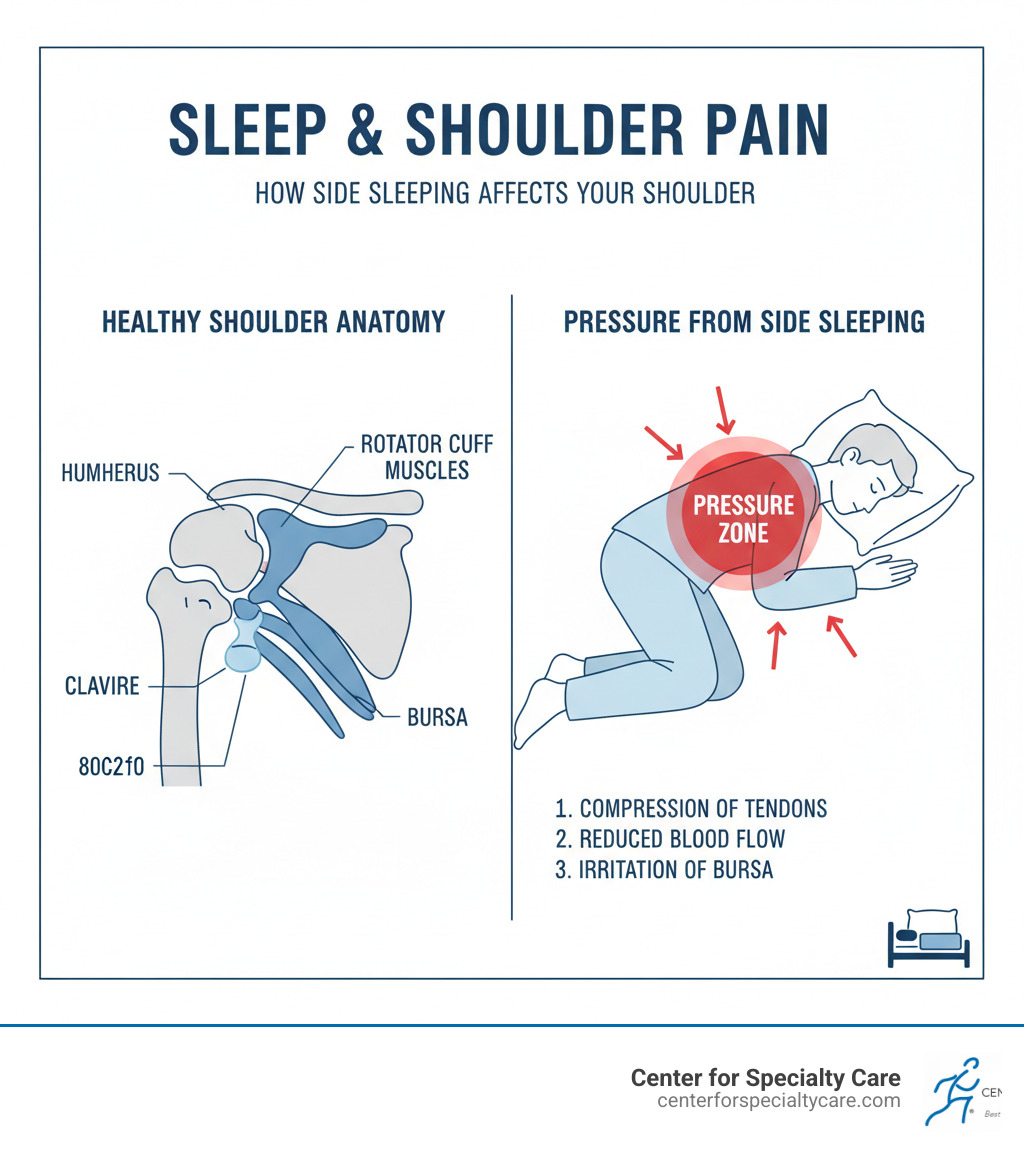
- Side sleeping: Puts prolonged pressure on the shoulder joint, compressing tendons.
- Poor pillow support: Forces your neck and shoulder into unnatural positions.
- Underlying conditions: Rotator cuff injuries, bursitis, or frozen shoulder can worsen with prolonged stillness.
- Your mattress: Being too soft or too firm creates pressure points or poor alignment.
You’re not alone. Shoulder pain is a common joint problem, and it’s strongly linked to sleep disturbances. People with shoulder issues are nearly five times more likely to experience sleep problems. The connection is a two-way street: poor sleep can worsen pain, and pain disrupts the rest your body needs to heal.
The good news is that most cases of shoulder pain from sleeping can be managed with simple changes to your sleep setup. For persistent pain, professional treatments can address the root cause.
I’m Dr. Corey Welchlin, a board-certified orthopedic surgeon in Fairmont, Minnesota, with over 30 years of experience. I’ve helped thousands of patients find relief from shoulder pain through both conservative and surgical treatments.
Basic shoulder pain from sleeping glossary:
Why Your Shoulder Hurts: Common Causes and Triggers
Waking up with shoulder pain after a good night’s sleep is confusing, but it’s rarely from a single cause. It’s often a combination of your sleep position, underlying shoulder conditions, and daily activities.

Lying in one position for hours puts prolonged stress on your shoulder joint, which can lead to inflammation and pain. Scientific proof shows that your sleep position directly affects the frequency and intensity of shoulder pain. During sleep, you lose normal muscle control and pain feedback, allowing you to remain in a harmful position without realizing it. This prolonged pressure can wear down your joint over time.
The Role of Your Sleeping Position
Your sleeping position is often the biggest culprit when it comes to morning shoulder pain.
- Side sleeping is the most common cause. Your body weight compresses the rotator cuff tendons and bursa, reducing blood flow. This can lead to shoulder impingement, bursitis, tendonitis, or even rotator cuff tears, and will worsen any existing shoulder condition.
- Awkward arm positions, like tucking your arm under your pillow or stretching it overhead, can pinch nerves and blood vessels, straining the shoulder.
- Stomach sleeping forces you to twist your neck, which can misalign your shoulders and create strain, contributing to morning pain.
Underlying Medical Conditions Worsened by Sleep
Sometimes your sleeping position isn’t creating the problem—it’s just making an existing condition worse. Lying down changes blood flow and puts pressure on inflamed tissues.
- Rotator cuff injuries are a common cause of nighttime shoulder pain. Sleeping on the affected side causes a dull ache, and you may also have weakness or difficulty reaching behind your back. Learn more about how to relieve rotator cuff pain at night.
- Bursitis is inflammation of the bursa (fluid-filled sacs) in your shoulder. Side sleeping directly irritates the bursa, causing sharp pain.
- Shoulder osteoarthritis is ‘wear-and-tear’ arthritis that worsens with the pressure of side sleeping, leading to pain and stiffness, especially in the morning.
- Frozen shoulder (adhesive capsulitis) causes severe pain, stiffness, and limited motion, making sleep difficult. Lying on the affected shoulder is often unbearable.
- Tendonitis is inflammation of the biceps or rotator cuff tendons, often from overuse, making them sensitive to pressure during sleep.
For a deeper understanding of these and other shoulder conditions, you can read more general information on shoulder pain conditions.
How Lifestyle Factors Contribute to Nighttime Pain
Your daily habits can set you up for either a restful night or hours of tossing and turning.
- Daily posture: Poor posture—like slouching at a desk or hunching over a phone—creates muscle imbalances and strain that lead to nighttime pain.
- Repetitive overhead activities: Jobs or sports involving repetitive overhead movements create micro-traumas and inflammation in the shoulder that often feel more intense at night.
- Muscle tension from stress: Stress causes you to unconsciously tense your neck and shoulder muscles. This chronic tension leads to tightness and pain that can intensify at night. Stress management techniques can help.
- Lack of exercise: A sedentary lifestyle leads to weak, inflexible shoulder muscles. Regular exercise improves posture and helps your shoulders better handle the stress of sleeping.
The Right Setup for a Pain-Free Night
Understanding the cause of your shoulder pain is the first step. Now, let’s focus on practical solutions. The key to a pain-free night often lies in your sleeping position, mattress, and pillow.

Best Sleeping Positions to Alleviate Shoulder Pain
The goal is to take pressure off your shoulders while keeping your spine aligned.
- Back sleeping is ideal because it distributes your weight evenly. Use a thin pillow for your head to keep your neck neutral. Placing a small pillow under your arms prevents your shoulders from rounding forward, and a pillow under your knees can relieve lower back pressure.
- Reclined sleeping, in a recliner or on an adjustable bed, can also relieve pressure on the shoulder joint. This is especially helpful for rotator cuff issues.
- Modified side sleeping can work if you must sleep on your side. Lie on your pain-free shoulder and hug a firm body pillow to your chest to prevent your top shoulder from rolling forward. A pillow between your knees will help keep your hips and spine aligned.
Whatever you do, avoid sleeping with your arm tucked under your pillow, under your head, or stretched overhead, as these positions strain the shoulder joint.
How Your Mattress and Pillow Impact Shoulder Health
Your mattress and pillow are critical tools for preventing shoulder pain.
Your mattress firmness is crucial. Too firm creates pressure points, while too soft causes poor alignment. A medium-firm mattress usually provides the best balance of cushioning and support. The right mattress contours to your body, supporting your shoulders and hips while keeping your spine straight.
Your pillow selection is just as important. Its main job is to keep your head and neck aligned with your spine, allowing your shoulder muscles to relax.
- For back sleepers, a thinner pillow is usually best to maintain the natural neck curve.
- For side sleepers, a thicker, firmer pillow is needed to fill the space between the ear and the mattress, keeping the neck straight. The pillow’s height (loft) should match the width of your shoulder.
Investing in a good mattress and pillow is preventative healthcare. Since you spend a third of your life in bed, proper support is essential to prevent chronic shoulder pain from sleeping.
At-Home Relief: Managing Shoulder Pain From Sleeping
Even with a perfect sleep setup, shoulder pain can still occur. Fortunately, many effective home remedies can manage occasional shoulder pain from sleeping, especially if you address it quickly.

Immediate Pain Management Strategies
When you wake up with an aching shoulder, try these simple strategies for quick relief.
- Rest: Rest your shoulder by avoiding activities that cause pain, like heavy lifting or overhead movements. This gives the joint time to heal.
- Ice or Heat: For new, sharp, or swollen pain, use an ice pack for 15-20 minutes at a time to reduce inflammation. For stiffness and muscle aches, use a heating pad or warm shower to relax muscles, especially before bed.
- Over-the-Counter (OTC) Medications: Anti-inflammatory drugs like ibuprofen (Advil) or naproxen (Aleve) can reduce both pain and swelling. Acetaminophen (Tylenol) can relieve pain without affecting inflammation. Always follow label directions.
- Topical Pain Relievers: Creams, gels, or patches containing ingredients like menthol or diclofenac can provide localized relief. Applying them before bed can help you sleep more comfortably.
Simple Stretches and Exercises for Relief
Gentle movement is often better than complete rest for a sore shoulder, as it prevents stiffness. Move slowly and stop if you feel sharp pain. A little discomfort during a stretch is normal, but pain is a signal to stop.
- Pendulum Stretch: Lean forward and let your affected arm hang down. Gently swing it in small circles, using gravity to create a gentle stretch.
- Doorway Stretch: Stand in a doorway, place your forearms on the frame with elbows bent at 90 degrees, and gently lean forward to stretch your chest and shoulders. Hold for 15-30 seconds.
- Cross-Body Arm Stretch: Gently pull your sore arm across your chest with your other arm to stretch the back of the shoulder.
- Shoulder Blade Squeeze: Sit or stand tall and squeeze your shoulder blades together. Hold for 5-10 seconds to strengthen posture muscles.
Strengthening your rotator cuff with targeted exercises can improve posture and reduce strain. Research confirms physical therapy is highly effective for shoulder pain. If you need expert guidance, our team provides custom shoulder treatment with physical therapy to help you recover.
When to See a Doctor: Recognizing You Need Professional Help
While home remedies can help, persistent or worsening shoulder pain from sleeping requires professional attention. Ignoring your body’s warning signs can lead to more serious issues. Our team at Center for Specialty Care, with locations in Minnesota and Iowa, is ready to help when home care isn’t enough.
Red Flag Symptoms You Shouldn’t Ignore
It’s time to schedule an appointment if you experience any of the following:
- Severe or persistent pain that lasts for more than a week or regularly disrupts your sleep.
- Noticeable weakness in your arm, making it difficult to lift objects or perform daily tasks.
- Significant stiffness or loss of motion that prevents normal activities.
- New or painful popping, clicking, or catching sensations in the joint.
- Visible swelling, warmth, or bruising around the shoulder.
- Pain that interferes with your work, hobbies, or quality of life.
Important: Sudden, severe shoulder pain (especially on the left) with chest pain, shortness of breath, or dizziness requires immediate emergency medical attention (call 911), as it could be a sign of a heart attack.
The Long-Term Consequences of Ignoring Shoulder Pain from Sleeping
Ignoring persistent shoulder pain can lead to:
- Chronic Pain: An occasional ache can become constant, creating a vicious cycle where pain disrupts sleep and lack of sleep worsens pain.
- Worsening Conditions: A small rotator cuff tear can become a full rupture, and conditions like bursitis can become more severe.
- Permanent Joint Damage: Continued stress on the joint can lead to irreversible conditions like osteoarthritis.
- Muscle Weakness: Avoiding use of the painful shoulder leads to muscle atrophy, making the joint less stable and more prone to injury.
Your Path to Diagnosis and Treatment
Finding the right specialist is key. Here’s what you can expect with us:
- Diagnosis: Your visit will start with a thorough physical exam. Imaging tests like X-rays or an MRI may be used to get a clear diagnosis.
- Non-Surgical Treatments: Most cases respond well to conservative care. This often starts with physical therapy to build strength and flexibility. We may also use prescription medications or types of injections for shoulder pain to reduce inflammation. Learn more about our approach to shoulder treatment with physical therapy.
- Surgical Options: When conservative treatments fail, surgery may be the best option to restore function, especially for severe injuries. Our surgeons use the latest techniques to ensure the best outcomes.
Our team of board-certified orthopedic surgeons provides personalized care with a focus on patient satisfaction and quick appointment availability. Learn how to find the best orthopedic shoulder specialist in our region.
Frequently Asked Questions about Shoulder Pain and Sleep
We hear these questions all the time in our clinic. Here are some quick answers.
Can a pillow really cause shoulder pain?
Yes. A pillow that is too high or too low misaligns your neck and spine, straining your shoulder. The right pillow keeps your spine neutral. Side sleepers usually need a thicker, firmer pillow, while back sleepers need a thinner one to support the neck’s natural curve.
How long does it take for shoulder pain from sleeping to go away?
If the pain is from a minor issue like an awkward sleeping position, it should improve within a couple of days with self-care. However, if pain persists for more than a week, worsens, or is severe, it likely indicates an underlying condition that requires medical evaluation.
Is it better to use ice or heat for shoulder pain at night?
It depends on the type of pain:
- Use ice for new injuries (within the first 48 hours) or when there’s swelling and sharp pain. It reduces inflammation.
- Use heat for chronic stiffness and muscle aches. It relaxes muscles and increases blood flow. Applying heat before bed can be particularly soothing.
A simple rule to remember is: ice for injury, heat for stiffness.
Get Lasting Relief and Reclaim Your Sleep
Waking up with shoulder pain from sleeping is frustrating and exhausting, but you don’t have to live with it. As we’ve discussed, simple changes to your sleep position, pillow, and daily habits can make a significant difference. Gentle stretches and proper support are powerful tools for preventing pain.
Most importantly, listen to your body and don’t ignore persistent pain. While minor aches may resolve on their own, pain that lasts for weeks or disrupts your life requires professional attention to prevent it from worsening and leading to chronic issues or joint damage.
At Center for Specialty Care, our experienced team in Fairmont, Minnesota, Estherville, Iowa, Buffalo Center, Iowa, and St. James, Minnesota, provides personalized treatment plans for shoulder pain. From diagnosis and physical therapy to injections and surgery, we are committed to your recovery. We pride ourselves on 100% patient satisfaction, personalized care, and quick appointment availability.
You’ve taken the first step by educating yourself. Now, take action. Don’t let another night of pain rob you of rest. Learn more about our expert shoulder care and let us help you wake up pain-free and ready for your day.