
Rhomboid Knot Foam Rolling: The Ultimate Guide to Shoulder Blade Relief
July 14, 2026
Don’t Get Tied Up in Knots Over That Lump on Your Neck
July 16, 2026
Don’t Get Tied Down by a Knot in Your Lumbar Region
Why a Knot in Your Lumbar Region Deserves Your Attention
A knot in lumbar region muscles is one of the most common — and most frustrating — sources of low back pain adults deal with. That tight, tender spot that aches when you press it, stiffens up after sitting too long, or sends a dull throb down toward your hip? That’s a muscle knot, and you’re far from alone.
Quick answer: What is a knot in the lumbar region?
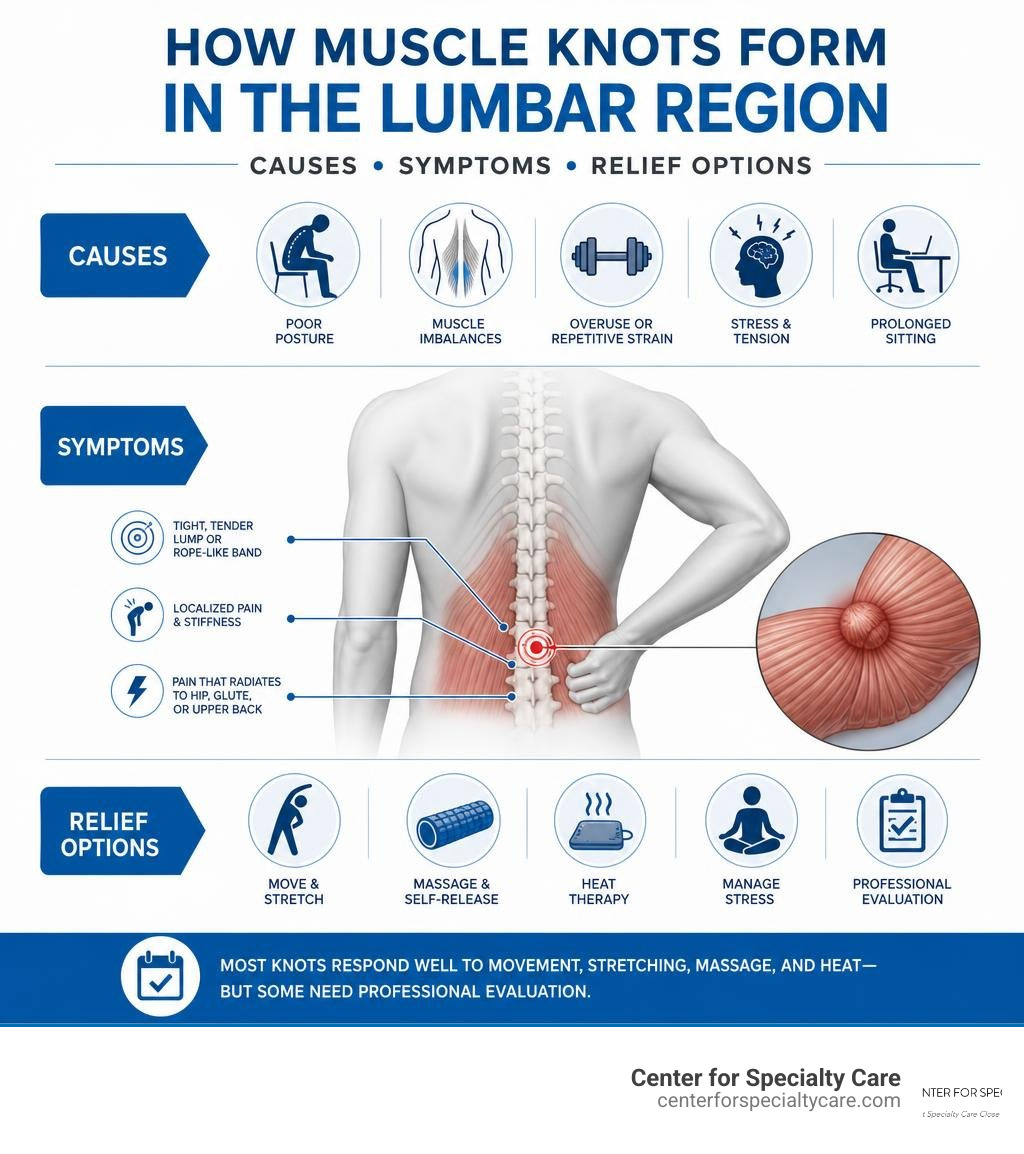
- A muscle knot (also called a myofascial trigger point) is a small, hard area of muscle that stays contracted even at rest
- It feels like a tight lump or rope-like band in your lower back
- It can cause localized pain, stiffness, and pain that radiates to your hip, glute, or upper back
- Common causes include poor posture, muscle imbalances, overuse, stress, and prolonged sitting
- Most knots respond well to movement, stretching, massage, and heat — but some need professional evaluation
Between 60 and 80% of adults experience low back pain at some point in their lives, and muscle knots are one of the leading contributors. Yet many people either push through the pain or rest completely — when the real answer usually lies somewhere in between.
This guide walks you through exactly what’s happening in your lower back, why it’s happening, and what you can do about it.
I’m Dr. Corey Welchlin, a board-certified orthopedic surgeon with over 30 years of experience treating musculoskeletal pain — including the all-too-common knot in lumbar region muscles — at the Center for Specialty Care in Fairmont, Minnesota. Whether your pain is new or has been nagging you for months, understanding what’s driving it is the first step toward lasting relief.
Knot in lumbar region word list:
Understanding the Knot in Lumbar Region
To understand why your lower back feels like it has a physical hitch in its giddy-up, we have to look at how muscle tissue operates.
Our muscles are made of thousands of tiny, elastic fibers designed to slide past one another. When we move, these fibers contract and relax in a coordinated dance. However, when a muscle is pushed past its limit, undergoes repetitive strain, or is forced to stay in one position for too long, those fibers can get “stuck.”
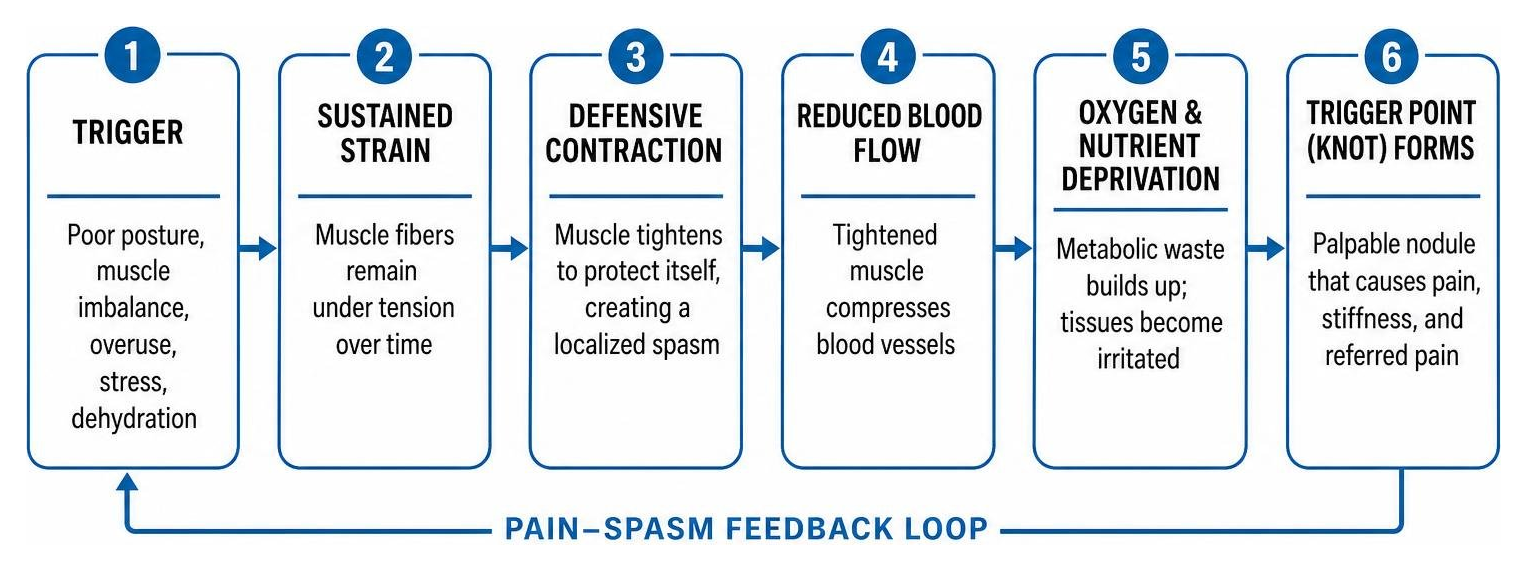
In the medical community, we refer to these tight, localized spots as myofascial trigger points. The word “myofascial” refers to both the muscle tissue (myo) and the thin connective tissue sheath that wraps around it (fascia). When these tissues experience sustained strain, they can contract defensively. This localized tension cuts off local blood supply, starving the area of oxygen and nutrients while trapping metabolic waste. This creates a feedback loop of pain and spasm, leaving you with a palpable, tender nodule.
If you also struggle with tension higher up on your back, you may find it helpful to Learn more about managing upper back tension.
How a Knot in Lumbar Region Differs from General Soreness
It is easy to confuse a trigger point with general back soreness, but they are distinct issues requiring different approaches:
- General Soreness (DOMS): This is a diffuse, aching sensation that usually occurs a day or two after an intense workout or a long day of yard work. It is spread across a wide area, feels like a dull ache, and typically fades on its own within 48 to 72 hours.
- Myofascial Trigger Points (Knots): These are highly localized, palpable nodules. When you press on them, they produce spot-specific, intense tenderness. They stay contracted at rest and often cause referred pain — meaning pressing on the knot in your lower back might trigger an ache in your hip, glutes, or even down your thigh.
When a muscle knot forms, it acts as a protective mechanism gone wrong. The muscle tightens defensively to prevent further injury, but this persistent contraction restricts your range of motion and makes daily activities like bending, lifting, or even sleeping comfortably a challenge.
Common Muscles Prone to a Knot in Lumbar Region
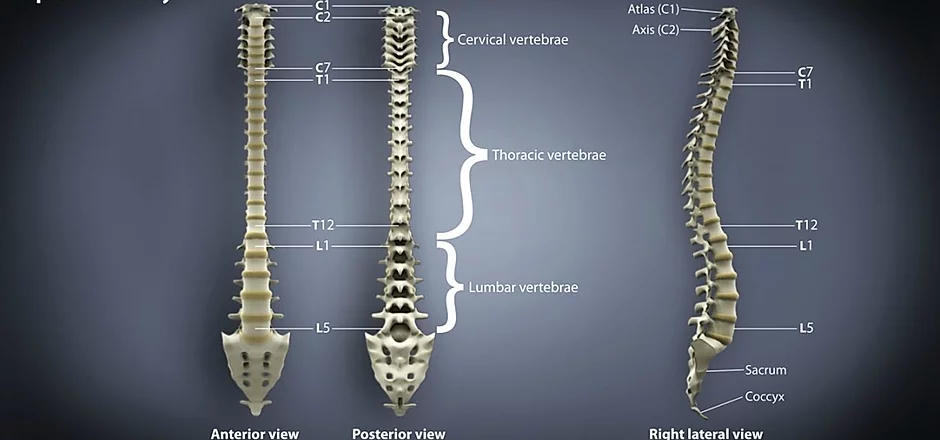
The lower back is a complex crossroads of muscles, tendons, and ligaments that transfer force between your upper and lower body. Certain muscles in this region are notorious for developing trigger points:
- Quadratus Lumborum (QL): This deep, flat muscle sits on either side of your lumbar spine, connecting your lowest rib to your pelvis. It is highly prone to knots, especially if you sit with poor posture or lean to one side. A knot in the QL often refers pain directly into the hip and buttocks.
- Erector Spinae: This is a bundle of muscles running vertically along your spine. They keep your back upright and stable. When overworked, they can feel like hard, rope-like bands flanking your spine.
- Gluteus Medius: Though technically a hip muscle, the gluteus medius sits just below the beltline. Knots here frequently mimic direct lower back pain and can throw off your entire walking gait.
- Iliopsoas: This deep hip flexor connects your thighs to your lower spine. If you sit for hours at a time, the iliopsoas shortens and pulls on your lumbar spine, causing compensatory knots in your back muscles.
- Piriformis: Located deep in the gluteal region, this muscle can become tight and irritated, contributing to referred lower back tightness and occasionally compressing the nearby sciatic nerve.
Common Causes of Lower Back Trigger Points
Why do these fibers lock up in the first place? Muscle knots do not appear out of thin air; they are usually the result of cumulative physical and environmental stressors.
- Poor Posture and Sedentary Lifestyles: The human body is built to move. When we sit at a desk for eight hours a day, we often slouch, rounding our shoulders and flattening the natural curve of our lower back. This forces the lumbar muscles to stay in a stretched, high-tension state to keep us upright, leading to defensive knotting.
- Muscle Imbalances: Think of your muscles as a team of housemates sharing chores. If your core and glutes are weak, they aren’t pulling their weight. Your lower back muscles have to take on all the extra work. Eventually, those overworked muscles get “frustrated” and lock up.
- Repetitive Movements and Overuse: Jumping into a high-intensity workout after months of inactivity, spending hours twisting and bending while doing yard work, or lifting heavy objects with poor form can overload the lumbar tissues.
- Emotional Stress and Tension: When you are stressed or anxious, your body releases cortisol and keeps your muscles in a low-grade “fight or flight” state of contraction. Over time, this chronic tension manifests as painful physical knots.
- Dehydration and Poor Nutrition: Muscles require adequate water, electrolytes, and nutrients to contract and relax properly. Dehydration reduces blood volume and restricts the flow of oxygen to tense tissues, making them highly susceptible to cramping and trigger points.
Understanding these structural mechanics is vital, especially when ruling out deeper nerve-related issues. For instance, you can explore the Scientific research on lumbosacral radiculopathy to see how nerve root compression in the lower back can present with radiating symptoms that mimic or complicate muscle tightness.
Symptoms and Red Flags: When to Seek Professional Help
A standard knot in lumbar region muscles typically causes a localized, dull ache, stiffness, and a noticeable reduction in flexibility. However, because the lower back houses major nerves and spinal structures, it is crucial to know when a “knot” is actually a sign of something more serious.

While muscle knots are generally benign and respond well to conservative care, you should seek professional medical evaluation if you experience any of the following “red flag” symptoms:
- Severe, sudden back pain that does not improve with rest
- Pain accompanied by unexplained weight loss, fever, or night sweats
- Numbness, tingling, or weakness in your legs, feet, or groin
- Difficulty lifting your foot when walking (foot drop)
- Any changes in bowel or bladder function (this is a medical emergency known as Cauda Equina Syndrome)
- A hard, immovable lump directly over a spinal bone rather than in the soft muscle tissue
It is also important to recognize that several distinct medical conditions can mimic the sensation of a simple muscle knot:
- Hard Knots on the Spine: A firm, painful bump directly on the bony parts of your back could point to structural spinal issues, bone spurs, or cysts. Learn more by reading the Scientific research on hard knots on the spine.
- Lumbar Hernia: Though rare, a lumbar (or flank) hernia occurs when internal tissue pushes through a weak spot in the lower back muscles, creating a noticeable bulge and localized pressure. Dive into the Scientific research on lumbar hernias.
- Lumbar Disc Herniation: A bulging or ruptured disc can compress nearby nerves, causing intense back pain and radiating leg discomfort that patients often mistake for deep muscular knots. Review the Scientific research on lumbar disc herniation.
Effective Treatments and Self-Care Strategies
If you have a standard muscle knot, the good news is that you do not have to live with it. A combination of active movement and targeted self-care can help “untie” the tension.
When treating a fresh strain or an angry muscle knot, choosing the right temperature is key. For a quick guide on whether to reach for a heating pad or an ice pack, check out our advice on Choosing between ice and heat for strains. Generally, chronic muscle knots respond beautifully to heat, which dilates blood vessels, boosts circulation, and coaxes tight fibers to relax.
For a deeper dive into evidence-based recovery pathways, you can read the Scientific research on lower back knot relief.
Targeted Exercises and Stretches
Movement is medicine. While your instinct might be to lie down and rest, gentle stretching and mobility exercises are far more effective at restoring normal muscle function.
- Cat-Cow Stretch: Get on your hands and knees. Gently arch your back toward the ceiling (like an angry cat) while tucking your chin, then slowly let your belly sink toward the floor while looking slightly upward. Repeat this fluid motion 10 times to lubricate the spine and relax the erector spinae muscles.
- Child’s Pose with Side Bend: Kneel on the floor, sit back on your heels, and reach your arms forward. To target a knot on one side of your lower back (such as the QL), gently walk both hands to the opposite side until you feel a deep, comfortable stretch along your flank. Hold for 30 seconds on each side.
- Bird Dog: On your hands and knees, slowly extend your right arm forward and your left leg backward until they are parallel to the floor. Hold for a few seconds, return to the starting position, and switch sides. This builds stability and teaches your core to support your lower back.
- Standing Rotation: Stand with your feet shoulder-width apart and gently twist your torso from side to side, letting your arms swing loosely. This gentle rotation helps release tension in the obliques and lower back.
- Diaphragmatic Breathing: Lie on your back with your knees bent. Place one hand on your chest and the other on your belly. Breathe deeply through your nose, ensuring your belly rises while your chest remains relatively still. This down-regulates your nervous system, immediately reducing protective muscle tension.
Passive Relief Techniques
In addition to active movement, several passive therapies can help break up stubborn trigger points:
- Trigger Point Massage: Using a tennis ball, lacrosse ball, or foam roller can provide targeted pressure. Place the ball between your lower back (avoiding the spine itself) and a wall or the floor. Gently lean into the ball, holding pressure on the tender spot for 30 to 60 seconds until you feel the muscle start to release.
- Epsom Salt Baths: Soaking in a warm bath filled with Epsom salts allows your body to absorb magnesium, a natural muscle relaxant that helps ease persistent spasms.
- Hydration: Sip water throughout the day. Well-hydrated muscles are more pliable and far less likely to bind up.
- Sleep Positioning: To take the pressure off your lumbar region at night, try lying on your back with your legs elevated on a stack of pillows (creating a 90-degree bend at your hips and knees). Alternatively, if you prefer sleeping on your stomach, place a flat pillow under your pelvis to prevent your lower back from arching excessively.
Preventing Recurrent Lower Back Knots
Once you get rid of a muscle knot, the goal is to keep it from coming back. This requires shifting your focus from short-term relief to long-term prevention.
| Active Prevention Strategies (Build Resilience) | Passive Relief Techniques (Manage Symptoms) |
|---|---|
| Core Strengthening: Building strong abdominals and obliques to support the spine. | Heating Pads: Applying warmth to temporarily relax tight fibers. |
| Glute Activation: Ensuring the buttocks muscles fire correctly to prevent back overload. | Massage Therapy: Manually breaking up localized adhesions. |
| Ergonomic Adjustments: Setting up your desk and chair to support natural spinal alignment. | Stretching: Temporarily lengthening tight, shortened muscles. |
| Movement Breaks: Standing up and walking for 2 minutes every hour of sitting. | Epsom Salt Soaks: Using warm magnesium baths to soothe aches. |
| Gradual Activity Progression: Slowly pacing new exercise routines. | Topical Analgesics: Using cooling gels to dull localized pain signals. |
By prioritizing active prevention strategies, you address the root cause of why the knot in lumbar region muscles formed in the first place, rather than just chasing the symptoms.
Frequently Asked Questions about Lower Back Knots
How long does a muscle knot in the lower back last?
A standard, uncomplicated muscle knot can resolve within a few days to a week if you actively move, stretch, stay hydrated, and apply heat. However, if the underlying cause — such as poor desk ergonomics or a weak core — is not addressed, the knot can become chronic, persisting for weeks or recurring frequently.
Can a knot in the lower back cause leg pain?
Yes. Muscle knots are famous for causing referred pain. A tight quadratus lumborum or gluteus medius knot can send a dull, aching pain down into your hip, buttocks, or upper thigh. However, if you experience sharp, shooting pain, numbness, or tingling that travels past your knee, this is more likely radiculopathy (nerve compression) from a herniated disc, which requires a professional evaluation.
Is walking good for a lower back muscle knot?
Absolutely. Walking is one of the best low-impact, active recovery exercises for lower back pain. It increases blood flow to the lumbar tissues, delivers fresh oxygen and nutrients to tight muscle fibers, and helps flush out inflammatory waste products. Aim for a brisk, comfortable 15-to-20-minute walk on flat ground.
Conclusion
A knot in lumbar region muscles can certainly throw a wrench in your daily routine, but it doesn’t have to keep you sidelined. By combining active movement, targeted stretching, proper hydration, and smart lifestyle adjustments, you can untie the tension and rebuild a resilient, pain-free back.
If your lower back pain persists, if you are dealing with recurring knots, or if you want a professional team to help you design a personalized recovery plan, we are here for you. At the Center for Specialty Care, we provide comprehensive orthopedic and pain management services tailored to your unique needs.
With convenient locations in Fairmont, MN, Estherville, IA, Buffalo Center, IA, and St. James, MN, we are proud to offer:
- Highly personalized, compassionate care
- Both advanced surgical and non-surgical treatment options
- Quick appointment availability so you don’t have to wait in pain
- A steadfast commitment to 100% patient satisfaction
Let’s get you back to doing what you love without the constant ache. Schedule an evaluation for comprehensive pain relief with our team today!