
Don’t Get Tied Down by a Knot in Your Lumbar Region
July 15, 2026
When Your Leg Acts Like a Live Wire: Understanding Nerve Pain
July 17, 2026
Don’t Get Tied Up in Knots Over That Lump on Your Neck
What a Hard Knot on the Right Side of Your Neck Could Mean
A hard knot on the right side of your neck is one of the most common reasons people find themselves quietly panicking in front of a bathroom mirror. The good news? Most of the time, it is nothing serious.
Here are the most likely causes at a glance:
| Cause | Typical Feel | Common Duration |
|---|---|---|
| Muscle knot (trigger point) | Tender, in a band of muscle | Days to 3 weeks |
| Swollen lymph node | Soft to rubbery, movable | 1 to 4 weeks |
| Epidermoid or sebaceous cyst | Smooth, movable under skin | Months to years |
| Lipoma | Soft, doughy, painless | Years (stable) |
| Salivary stone | Hard, painful near jaw | Variable |
| Cancerous lump | Hard, fixed, painless | Grows over time |
The most important things to watch are how fast it grows, whether it moves, and whether you have other symptoms like fever, night sweats, or unexplained weight loss.
A pea-sized lump that moves easily and appeared after a cold or sore throat is almost always a reactive lymph node — your immune system doing its job. A hard, fixed lump that keeps growing without any obvious infection is the kind that deserves a prompt medical evaluation.
I’m Dr. Corey Welchlin, a board-certified orthopedic surgeon and sports medicine physician with over 30 years of experience evaluating and treating musculoskeletal conditions — including the neck pain and hard knots that bring many patients through our doors at the Center for Specialty Care. Whether your hard knot on the right side of your neck turns out to be a stubborn muscle knot or something that needs further workup, knowing what you’re dealing with is the first step toward relief.
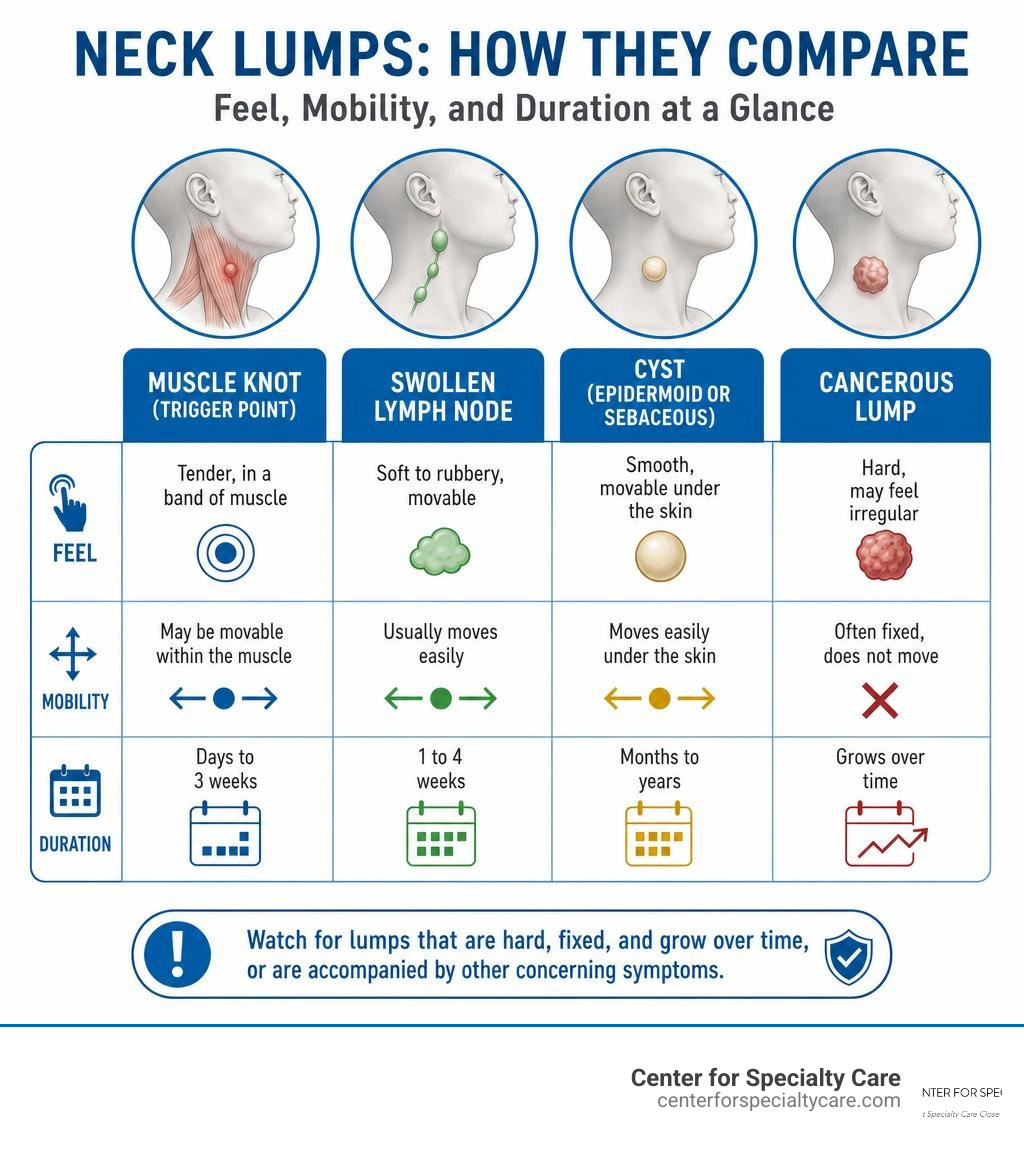
Hard knot on right side of neck terms at a glance:
Common Causes of a Hard Knot on Right Side of Neck
The anatomy of the neck is incredibly complex, packed with muscles, blood vessels, nerves, lymph nodes, glands, and bones. When a hard knot forms, identifying its exact location, texture, and mobility is key to finding the root cause.
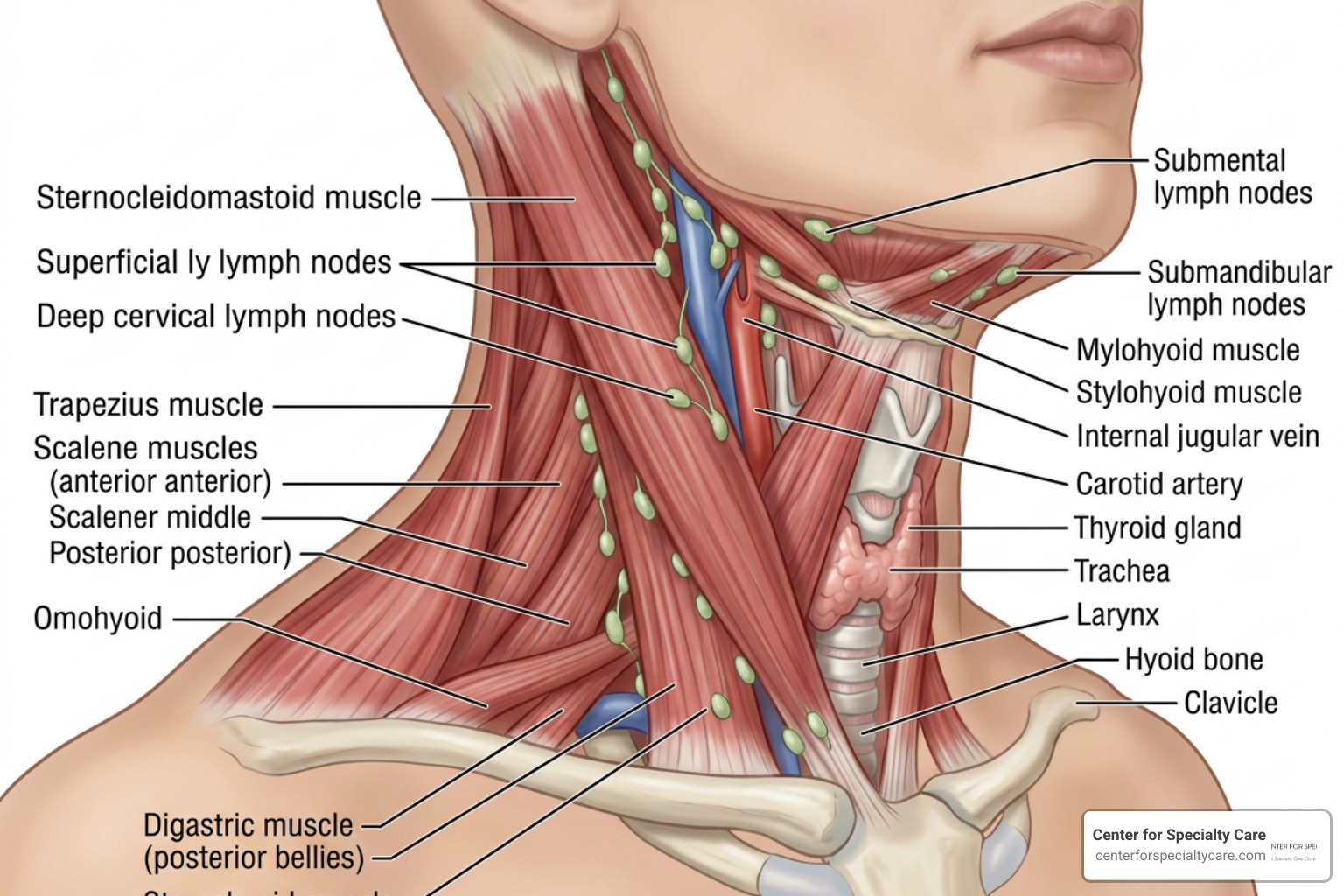
Most neck lumps are entirely benign. The lymphatic system, which acts as the body’s drainage and defense network, contains between 500 and 800 lymph nodes in an adult. When your body fights off a minor virus, bacteria, or even an insect bite, the cervical lymph nodes in your neck can swell rapidly. This is known as cervical lymphadenopathy. These reactive nodes typically measure between 0.5 and 2 centimeters and gradually shrink within a couple of weeks after the infection clears.
However, if you are experiencing a lump on right side of neck no pain, there are several other potential culprits:
- Salivary Stones (Sialolithiasis): These are calcified structures that form in the salivary glands, most commonly in males aged 30 to 60. A stone can block the flow of saliva, resulting in a hard, painful lump under the jaw or in front of the ear that swells noticeably during or after meals.
- Thyroid Nodules: The thyroid gland sits at the base of the neck. Up to 60% of people will develop at least one thyroid nodule in their lifetime. Most are completely benign, though some can grow large enough to feel like a firm, painless knot on the front or side of the neck that moves up and down when you swallow (a goiter).
- Epidermoid or Sebaceous Cysts: These are slow-growing, fluid-filled sacs under the skin containing keratin or sebum. They are smooth and move slightly when touched.
- Lipomas: These benign fatty tumors feel soft, doughy, and highly mobile. They grow very slowly—typically at a rate of 0.5 to 2 centimeters per year—and rarely cause pain unless they press on a nearby nerve.
Is a Hard Knot on Right Side of Neck Muscle Tension or Something Else?
Very often, what feels like a scary “lump” under the skin is actually a myofascial trigger point, commonly known as a muscle knot. These develop when individual muscle units (sarcomeres) remain tightly contracted and fail to relax. This localized, intense contraction cuts off local blood flow, leading to an accumulation of metabolic waste and localized swelling that can feel surprisingly hard and distinct.
Your neck is highly susceptible to these knots due to daily habits like “tech neck” (looking down at phones or computers), poor posture, and stress. Stress causes us to unconsciously hunch our shoulders, clench our jaws, and take shallow breaths, reducing oxygen delivery to the muscles.
Because most people are right-handed and sleep on their right side, dominant-side strain is incredibly common. This extra pressure can make the right side of the neck particularly prone to developing painful, hard trigger points.
If you have a muscle knot, you might also experience radiating discomfort. It is common to find shoulder blade knots why your back is acting like a pre-tangled slinky, which can refer pain directly up into the neck.
Understanding the differences between a muscle spasm and a swollen gland is essential. To learn more about how these sensations overlap, you can read about how can a knot in your neck feel like a lump? to help ease your mind. Additionally, recognizing other connected issues, such as beyond the ache recognizing the many faces of shoulder pain symptoms or shoulder clicking and pain causes effective relief, can help you determine if your neck knot is part of a larger posture or shoulder issue.
Anatomical Variants and Joint Degeneration on the Right Side
In some cases, a hard knot on the right side of the neck is actually a normal bone or joint structure that has become prominent or degenerative. These are often overlooked but are entirely benign:
- Cervical Rib: An extra rib arising from the seventh cervical vertebra occurs in a small percentage of the population. Only about 10% of people with a cervical rib complain of symptoms, but it can present as a hard, immovable lump in the lower neck or supraclavicular fossa.
- Elongated Styloid Process (Eagle Syndrome): The styloid process is a pointed piece of bone extending down from the temporal bone of the skull. About 4% of the population has an elongated styloid process, and only 4% to 28% of those individuals experience symptoms (Eagle syndrome), which include a hard, tender lump in the throat or upper neck, painful swallowing, and ear pain.
- Sternoclavicular Joint Osteoarthritis: Degenerative joint disease in the sternoclavicular joint (where your collarbone meets your breastbone) can produce a hard, bony mass at the root of the neck. This condition affects more than half of patients over the age of 60.
For a comprehensive clinical overview of these rarer skeletal issues, you can download the medical review on hard neck lumps: a review of uncommon and sometimes overlooked causes of these worrying presentations.
Differentiating Muscle Knots, Lymph Nodes, and Cysts
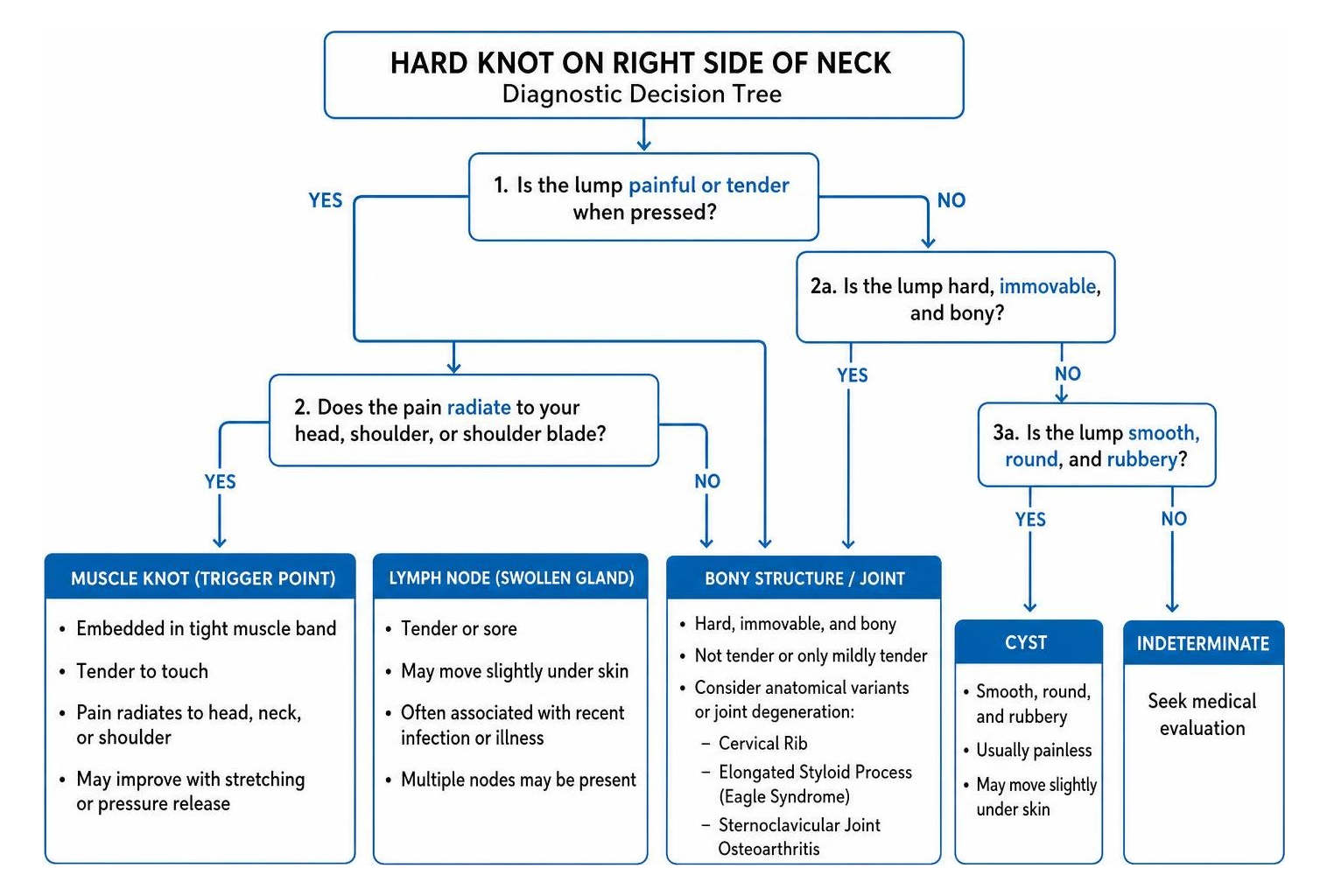
When trying to identify what that hard knot is, it helps to follow a simple diagnostic pathway.
How to Tell the Difference by Touch and Mobility
You can perform a gentle self-exam at home to gather clues about the nature of the knot:
- Muscle Knots: If the lump is embedded within a tight band of muscle, hurts when you press on it, and the pain radiates to your head or shoulder, it is highly likely to be a muscle trigger point.
- Swollen Lymph Nodes: These typically feel like small, firm, rubbery marbles. They are usually tender to the touch if they are actively fighting an infection, and they can be wiggled slightly under the skin.
- Cysts and Lipomas: These sit just beneath the skin rather than deep in the muscle. They are generally painless, smooth, and highly movable. Cysts are fluid-filled, whereas lipomas have a doughy, soft texture.
- Cystic Lymph Nodes: In some cases, a lymph node can develop fluid inside, presenting as a cystic lymph node. While these can sometimes be benign (such as in Kikuchi disease, a rare, self-limiting inflammatory condition), they can also be a sign of a chronic infection like tuberculosis or a metastatic tumor.
For more details on comparing these lumps, read this guide on a knot on left side of neck: causes, treatments & when to worry, which outlines similar anatomical principles. You can also review general medical advice on a knot in neck: causes, symptoms, and tips to relieve the pain or consult the possible causes of a lump on the back of the neck hairline for dermatological perspective. For a broad clinical overview, see the neck lump: MedlinePlus Medical Encyclopedia. If you are looking at a younger demographic, this case study of an adolescent male with a “knot” in his neck highlights how persistent nodes are evaluated.
When to Seek Immediate Care for a Hard Knot on Right Side of Neck
While the vast majority of neck lumps are harmless, we must always rule out serious conditions like lymphoma, salivary gland tumors, or metastatic head and neck cancers.
You should seek prompt medical evaluation if you notice any of these “red flag” features:
- The knot is rock-hard, completely immovable (feels fixed to the underlying tissue), and painless.
- The lump is larger than 1 inch (2.5 cm) in diameter.
- It has been growing steadily for more than two to four weeks.
- You have no recent history of cold, flu, or dental infection.
- You experience systemic symptoms such as unexplained weight loss, drenching night sweats, or a persistent fever.
- You have difficulty swallowing (dysphagia), persistent hoarseness, or trouble breathing.
Safe Home Care vs. Professional Pain Management
If your hard knot is accompanied by red flags, never attempt to treat it at home. However, if you are confident the knot is a result of muscle strain or poor posture, conservative home care can be highly effective.

Self-Care and Posture Adjustments for Muscle Knots
To find relief from muscle tension, we recommend a combination of targeted self-care techniques:
- Trigger Point Self-Massage: Use your fingers or a clean tennis ball pressed against a wall to apply firm, direct pressure to the knot for 5 to 10 seconds. Release, take a deep breath, and repeat up to six times a day.
- Therapeutic Heat and Cold: For acute muscle strains (less than 48 hours old), apply a cold pack wrapped in a thin towel for 10 to 15 minutes to reduce localized swelling. For chronic muscle stiffness, use a heating pad for 15 minutes to increase blood flow and relax tight fibers. For detailed advice, see our guides on heat cold therapy for tendonitis and utilizing a heating pad for achilles tendonitis to understand how temperature therapies affect tissues.
- Ergonomic Adjustments: Set your computer monitor at eye level, keep your feet flat on the floor, and avoid cradling your phone between your ear and shoulder.
- Gentle Stretching: Practice slow shoulder shrugs, gentle head-to-hand neck releases, and yoga poses like Cat-Cow or Cobra to restore flexibility.
Clinical Treatments and Interventions
If your neck knot does not improve after a few weeks of home care, or if it is causing chronic pain, it is time to seek professional evaluation. At the Center for Specialty Care, we provide a full spectrum of diagnostic and treatment options:
- Diagnostic Imaging: We use non-invasive ultrasound as a first-line tool to determine if a lump is solid or fluid-filled. If necessary, we can order CT or MRI scans to evaluate deep tissue structures.
- Physical Therapy: Our specialized physical therapists can design a personalized program to correct postural imbalances, using targeted exercises, manual therapy, and dry needling to release stubborn trigger points. If your neck pain is tied to shoulder dysfunction, we offer specialized shoulder treatment with physical therapy recovery pain relief.
- Advanced Pain Management: For persistent muscle knots or arthritic joint pain, our pain management specialists can perform trigger point injections or corticosteroid injections to break the cycle of pain. If you live in Southern Minnesota or Northern Iowa, you can easily find a pain management clinic near me at one of our convenient locations.
- Surgical Interventions: If the lump is a benign cyst, lipoma, or bony variant causing nerve compression (such as thoracic outlet syndrome from a cervical rib), our surgical team can safely perform an excision.
- Comprehensive Spine and Joint Care: For complex issues where neck pain is referred from degenerative disc disease, we also offer advanced procedures like the what is intracept procedure for back pain to target chronic nerve-related pain.
Frequently Asked Questions about Neck Lumps
Can stress cause swollen lymph nodes?
Anxiety and high stress levels can tax your immune system and make you more susceptible to infections, which in turn cause your lymph nodes to swell. However, stress itself does not directly cause lymph nodes to enlarge. Stress is, however, a leading cause of tight muscle knots in the neck and shoulders, which are frequently mistaken for swollen glands.
Why does a knot in my neck feel hard and lump-like?
A muscle knot feels hard because the muscle fibers are locked in a state of continuous contraction. This localized tension restricts blood flow, causing minor swelling and a buildup of metabolic waste products. This makes the tissue feel dense, firm, and distinctly lump-like under the skin.
How long does it take for a neck knot to disappear?
- Muscle Knots: Usually resolve within a few days to three weeks with proper stretching, hydration, massage, and posture correction.
- Reactive Lymph Nodes: Typically swell quickly during an illness and shrink back to their normal size within one to four weeks after the infection has cleared.
- Cysts and Lipomas: These benign growths do not go away on their own and can persist for years. They are harmless unless they grow large, become infected, or cause pain, in which case they can be surgically removed.
Conclusion
Finding a hard knot on the right side of your neck can be unsettling, but most cases point to common, highly treatable issues like muscle tension, reactive lymph nodes, or benign cysts. By paying attention to the texture, mobility, and duration of the lump, you can take the right steps toward finding relief.
At the Center for Specialty Care, we are dedicated to helping you live pain-free. With clinic locations in Fairmont, MN, Estherville, IA, Buffalo Center, IA, and St. James, MN, we provide personalized, comprehensive orthopedic and pain management services. We pride ourselves on our quick appointment availability, warm patient-first care, and a commitment to 100% patient satisfaction.
If your neck pain is radiating or accompanied by persistent shoulder discomfort, explore our dedicated Center for Specialty Care Shoulder Services to see how we can help. If you have been struggling with a persistent, painful knot, don’t wait—reach out to us today to schedule an evaluation and get back to feeling your best.