

Don’t Get Tied Up in Knots Over That Lump on Your Neck
July 16, 2026
The Ultimate Anatomy Guide: Muscles Connected to the Rotator Cuff
July 18, 2026
When Your Leg Acts Like a Live Wire: Understanding Nerve Pain
Why Electric Shock Leg Pain Deserves Your Attention
Electric shock leg pain is one of the most alarming sensations the human body can produce. One moment you’re sitting, walking, or simply at rest — then a sudden jolt shoots down your leg like a live wire.
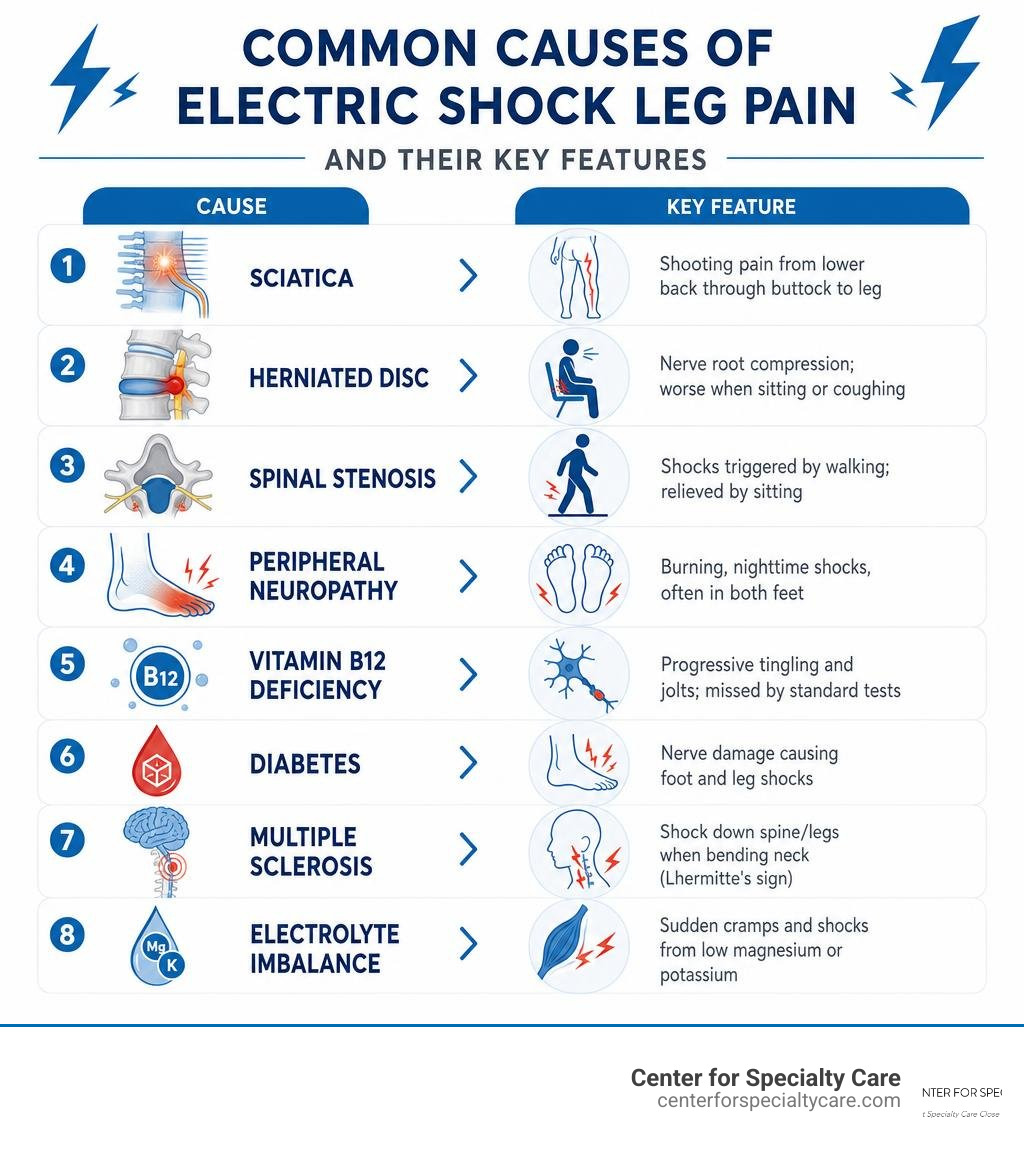
Quick answer: What causes electric shock sensations in the legs?
| Cause | Key Feature |
|---|---|
| Sciatica | Shooting pain from lower back through buttock to leg |
| Herniated disc | Nerve root compression; worse when sitting or coughing |
| Spinal stenosis | Shocks triggered by walking; relieved by sitting |
| Peripheral neuropathy | Burning, nighttime shocks, often in both feet |
| Vitamin B12 deficiency | Progressive tingling and jolts; missed by standard tests |
| Diabetes | Nerve damage causing foot and leg shocks |
| Multiple sclerosis | Shock down spine/legs when bending neck (Lhermitte’s sign) |
| Electrolyte imbalance | Sudden cramps and shocks from low magnesium or potassium |
These sensations go by many names — lightning bolts, zaps, jolts, or “pins and needles on fire.” They can last milliseconds or linger as a persistent burn. They can strike once a week or dozens of times a day.
The good news: most causes are diagnosable and treatable. This guide walks you through why it happens, how doctors find the source, and what can actually help.
I’m Dr. Corey Welchlin, a board-certified orthopedic surgeon with over 30 years of experience diagnosing and treating the nerve and spine conditions behind electric shock leg pain at the Center for Specialty Care in Fairmont, Minnesota. Whether the source is a compressed nerve root, peripheral neuropathy, or something less obvious, identifying the right cause is the essential first step — and that’s exactly what this guide is designed to help you do.
What Electric Shock Leg Pain Usually Means
When your leg flashes with a sudden, painful jolt, your body is sending a highly specific type of SOS. Unlike the dull ache of a bruised muscle or the throbbing of a sprained joint, a sudden, lightning-like sensation indicates that a nerve is irritated, compressed, or damaged.
In medical terms, this is classified as neuropathic pain. It can manifest as paresthesia (abnormal sensations like tingling or “pins and needles”) or dysesthesia (unpleasant, abnormal sensations that can feel like burning or acid). When the pain is brief, sharp, and stabbing, doctors call it lancinating pain. Essentially, your sensory nerves are misfiring, sending false, exaggerated danger signals to your brain.
Because your nervous system is a continuous, interconnected network, the source of your electric shock leg pain may not actually be in your leg at all. It could originate in your lower back, travel through your hip, or stem from a localized issue in the leg itself.
Why Nerves Can Feel Like “Lightning”
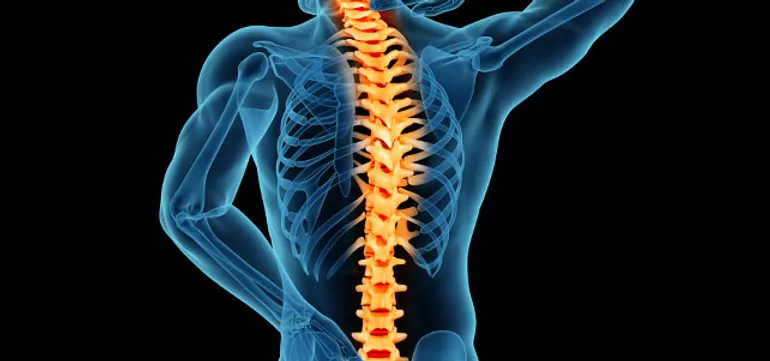
To understand why a nerve feels like a live wire, we have to look at how nerves work. Normal, healthy myelinated nerves conduct signals at speeds up to 120 meters per second. They are wrapped in a protective insulation called myelin, which ensures electrical impulses travel smoothly from your limbs to your brain.
When a nerve is compressed, inflamed, or damaged, this insulation can wear thin, and the underlying ion channels become highly unstable. This leads to what is known as ectopic firing — spontaneous, erratic electrical discharges. It is the physiological equivalent of a frayed extension cord sparking against a metal floor.
Furthermore, when nerves are continuously irritated, a phenomenon called central sensitization can occur. The spinal cord and brain become hyper-reactive, amplifying these tiny sparks into agonizing, full-blown “lightning bolts” of pain.
Key Symptoms That Often Come With Electric Shock Leg Pain
Rarely do these electric jolts travel alone. They are typically accompanied by a constellation of sensory and motor symptoms, including:
- Sharp, sudden jolts: Brief, unpredictable zaps of pain.
- Burning or tingling: A persistent, warm, or “fizzy” feeling in the skin.
- Numbness: A loss of sensation, often described as feeling like you are wearing a thick sock.
- Muscle weakness: Difficulty lifting your foot (foot drop) or weakness in your calf or thigh.
- Pain distribution: Discomfort traveling from the lower back through the buttock, down the back of the leg, and into the foot.
- Nighttime worsening: Shocks that intensify when you lie down to sleep.
- Activity-based triggers: Jolts that occur specifically when walking, standing, or sitting.
When the Pattern Matters: Location, Timing, and Triggers
Paying close attention to when and where your shocks occur can provide vital clues about the underlying culprit:
- One-sided vs. bilateral: Shocks affecting only one leg typically point to a localized mechanical issue, such as a pinched nerve in the lower back or hip. Shocks in both legs or feet are more characteristic of systemic issues, like diabetic neuropathy.
- The path of the shock: A zap that shoots from your lower back, through your hip, and down to your calf or foot strongly suggests sciatica. Conversely, shocks confined strictly to your feet or toes are classic signs of peripheral neuropathy.
- Triggers: If sitting, bending, or coughing triggers a shock, mechanical pressure on a spinal disc is likely. If walking a certain distance triggers calf heaviness and shocks that resolve only when you lean forward, spinal stenosis is a prime suspect.
Common Causes of Electric Shock Sensations in the Legs
Nerves are highly sensitive to their environment. A wide variety of mechanical, metabolic, and systemic issues can cause them to misfire. Let’s look at the most common conditions we diagnose at our Minnesota and Iowa clinics.
Sciatica, Herniated Discs, and Pinched Nerves
The sciatic nerve is the largest and longest nerve in the human body, formed by several nerve roots exiting the lower spine. Sciatica occurs when this nerve is compressed or inflamed, most commonly due to a herniated disc or a bone spur.
Up to 40% of the population will experience sciatica at some point in their lives. When a spinal disc bulges or herniates, it can leak inflammatory proteins that chemically irritate the adjacent nerve root. This combination of physical pinching and chemical inflammation triggers classic radiating pain — sudden, electric jolts traveling down the back of the leg, which often worsen with prolonged sitting.
Spinal Stenosis and Walking-Triggered Shocks
Spinal stenosis is a gradual narrowing of the spinal canal, most common in older adults. As the space inside the spine shrinks, the nerve roots traveling through it become crowded and compressed.
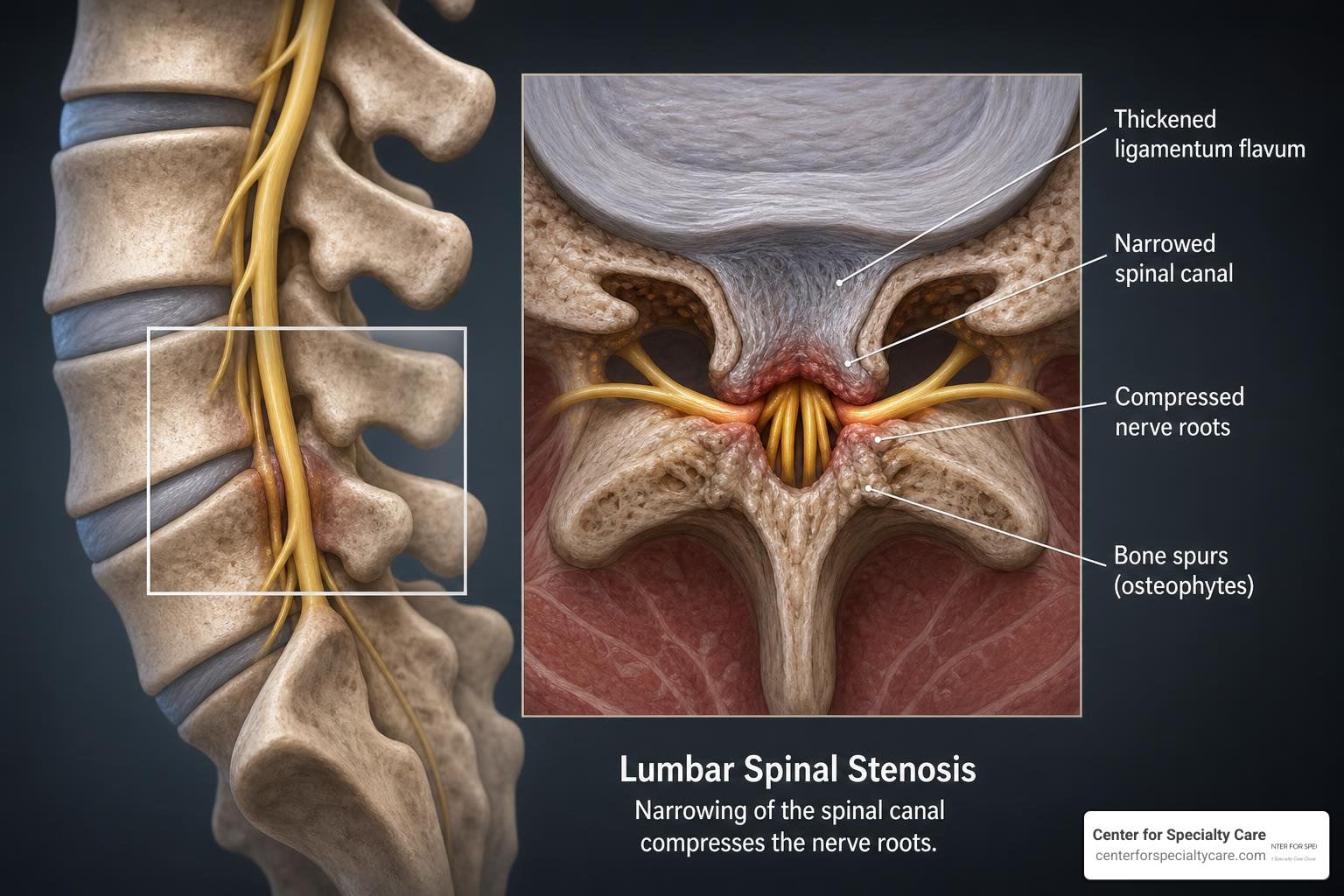
This compression causes a distinct symptom pattern known as neurogenic claudication. When standing or walking, the nerves are squeezed, leading to aching, heaviness, and electric shocks in one or both legs. Leaning forward (often described as the “shopping cart sign”) temporarily opens up the spinal canal, relieving the pressure and stopping the shocks.
Peripheral Neuropathy and Diabetes-Related Nerve Damage
Unlike sciatica, which originates in the spine, peripheral neuropathy involves damage to the smaller, peripheral nerves in the limbs. This damage typically starts in the longest nerve fibers first, causing a symmetric “stocking-glove” pattern of pain, tingling, and numbness that begins in the toes and gradually moves up the calves.
The most common cause of this condition is diabetes. Approximately 30% to 50% of people with diabetes will develop diabetic peripheral neuropathy over their lifetime. High blood sugar levels damage the tiny blood vessels that supply nerves with oxygen and nutrients, causing the sensory fibers to malfunction and send erratic neuropathy electric shock sensations to the brain, which are famously worse at night. Other causes include chemotherapy drugs, chronic alcohol use, infections, and autoimmune conditions.
Less Obvious Causes: B12, Electrolytes, MS, PAD, and Muscle Spasm
Sometimes, the cause of your leg shocks lies outside of spinal compression or diabetes:
- Vitamin B12 Deficiency: Vitamin B12 is essential for maintaining the myelin sheath that insulates your nerves. A deficiency can cause progressive nerve damage, leading to tingling, burning, and electric shocks. Notably, standard laboratory tests consider B12 levels over 200 pg/mL “normal,” but many patients experience neurological symptoms at these borderline levels.
- Electrolyte Imbalances: Your nerves rely on precise concentrations of sodium, potassium, calcium, and magnesium to transmit electrical signals. Dehydration or an imbalance in these minerals can cause muscles to cramp, which in turn can pinch or irritate nearby nerves, causing brief, shocking sensations.
- Multiple Sclerosis (MS): This autoimmune condition causes the body’s immune system to attack the myelin sheath in the central nervous system. A classic symptom is Lhermitte’s sign — an electric shock-like sensation that shoots down the spine and into the legs when bending the neck forward.
- Peripheral Arterial Disease (PAD): PAD affects just over 5% of the population, causing narrowed arteries that restrict blood flow to the legs. While primarily a vascular issue, the lack of oxygenated blood can starve nerves, leading to shooting pains and cramps during exercise.
- Piriformis Syndrome: The piriformis muscle, located deep in the buttock, can spasm and compress the sciatic nerve, mimicking spine-related sciatica. Many patients on forums like the Mayo Clinic Connect discussion on electric buzzing describe this unbearable tugging and buzzing feeling.
Nerve Compression vs Peripheral Neuropathy: How Doctors Tell the Difference
Because treatment approaches differ drastically for mechanical nerve compression versus metabolic neuropathy, establishing an accurate differential diagnosis is critical.
| Feature | Nerve Compression (e.g., Sciatica) | Peripheral Neuropathy |
|---|---|---|
| Symptom Location | Typically one-sided, follows a specific nerve pathway (dermatome) | Symmetrical, starts in both feet/toes (“stocking” pattern) |
| Primary Triggers | Mechanical: sitting, bending, walking, coughing | Metabolic/Environmental: nighttime rest, cold temperatures |
| Back Pain | Often present | Usually absent |
| Key Diagnostics | MRI, CT scan, physical exam (Straight Leg Raise) | Blood tests (A1C, B12), EMG, skin punch biopsy |
| Primary Treatment | Physical therapy, epidural injections, decompression surgery | Blood sugar control, nerve-pain medications, lifestyle changes |
Electric Shock Leg Pain From Nerve Compression
When a patient presents with electric shocks caused by nerve compression, the symptoms are almost always asymmetrical. The jolts follow a specific dermatome — a localized band of skin supplied by a single spinal nerve root.
During a physical exam, we can often reproduce these shocks through mechanical testing. For example, the Straight Leg Raise (SLR) test, where we gently lift your leg while you lie flat, stretches the sciatic nerve. If this trigger shoots an electric jolt down your leg, it strongly points to a herniated disc or foraminal narrowing in your lower back.
Electric Shock Leg Pain From Peripheral Neuropathy
In contrast, peripheral neuropathy symptoms are symmetrical and systemic. Patients describe a burning sensation on the soles of both feet, accompanied by spontaneous, unpredictable zaps.
Because neuropathy damages the sensory nerves responsible for balance and touch, patients often show a reduced ability to feel vibrations (tested with a tuning fork) or have diminished reflexes in their ankles. There are no mechanical spinal triggers; the shocks happen just as frequently when lying perfectly still in bed.
How Sciatica, Neuropathy, and Spinal Stenosis Differ Day to Day
Your daily routine can highlight these differences clearly:
- If you have sciatica: You might dread your morning commute because prolonged sitting in the car increases spinal disc pressure, sending sharp jolts down your thigh.
- If you have spinal stenosis: You can stand and chat for only a few minutes before your legs feel heavy and weak, forcing you to sit down or lean forward to find relief.
- If you have peripheral neuropathy: Your days may be relatively manageable, but as soon as you climb into bed and the distractions of the day fade, your feet begin to burn and spark, keeping you awake for hours.
How Doctors Diagnose Electric Shock Sensations in the Legs
To get to the bottom of your symptoms, our team at the Center for Specialty Care conducts a thorough, step-by-step diagnostic evaluation.
What to Tell Your Doctor
When you visit us in Fairmont, MN, or our Iowa locations, having a detailed log of your symptoms is incredibly helpful. Be prepared to share:
- Location: Where does the shock start, and where does it end?
- Duration & Frequency: Do the shocks last a millisecond, or do they linger? How many times a day do they occur?
- Triggers: What makes the pain worse (sitting, walking, cold weather)? What makes it better?
- Associated Symptoms: Are you experiencing numbness, muscle weakness, or balance issues?
- Medical History: Do you have a history of diabetes, spinal issues, cancer treatments, or alcohol use?
- Medications: Bring a complete list of your current prescriptions and supplements.
Tests That May Identify the Underlying Cause
To confirm a diagnosis and build your comprehensive pain treatment plan, we utilize several advanced diagnostic tools:
- Imaging (MRI, CT, X-ray): These scans provide highly detailed images of your bones, joints, and spinal discs, allowing us to see if a herniated disc or bone spur is compressing a nerve root.
- Electromyography (EMG) & Nerve Conduction Studies (NCS): These tests measure how quickly and effectively electrical signals travel through your nerves, helping us pinpoint exactly where a nerve is damaged or pinched.
- Comprehensive Blood Panels: We screen for elevated blood glucose (A1C), vitamin B12 deficiencies, thyroid dysfunction, and electrolyte imbalances.
- Vascular Testing: If we suspect PAD, we may perform an ankle-brachial index (ABI) to check blood flow in your legs.
Red Flags Doctors Screen For First
During your evaluation, we screen for critical “red flag” symptoms that require emergency medical or surgical intervention:
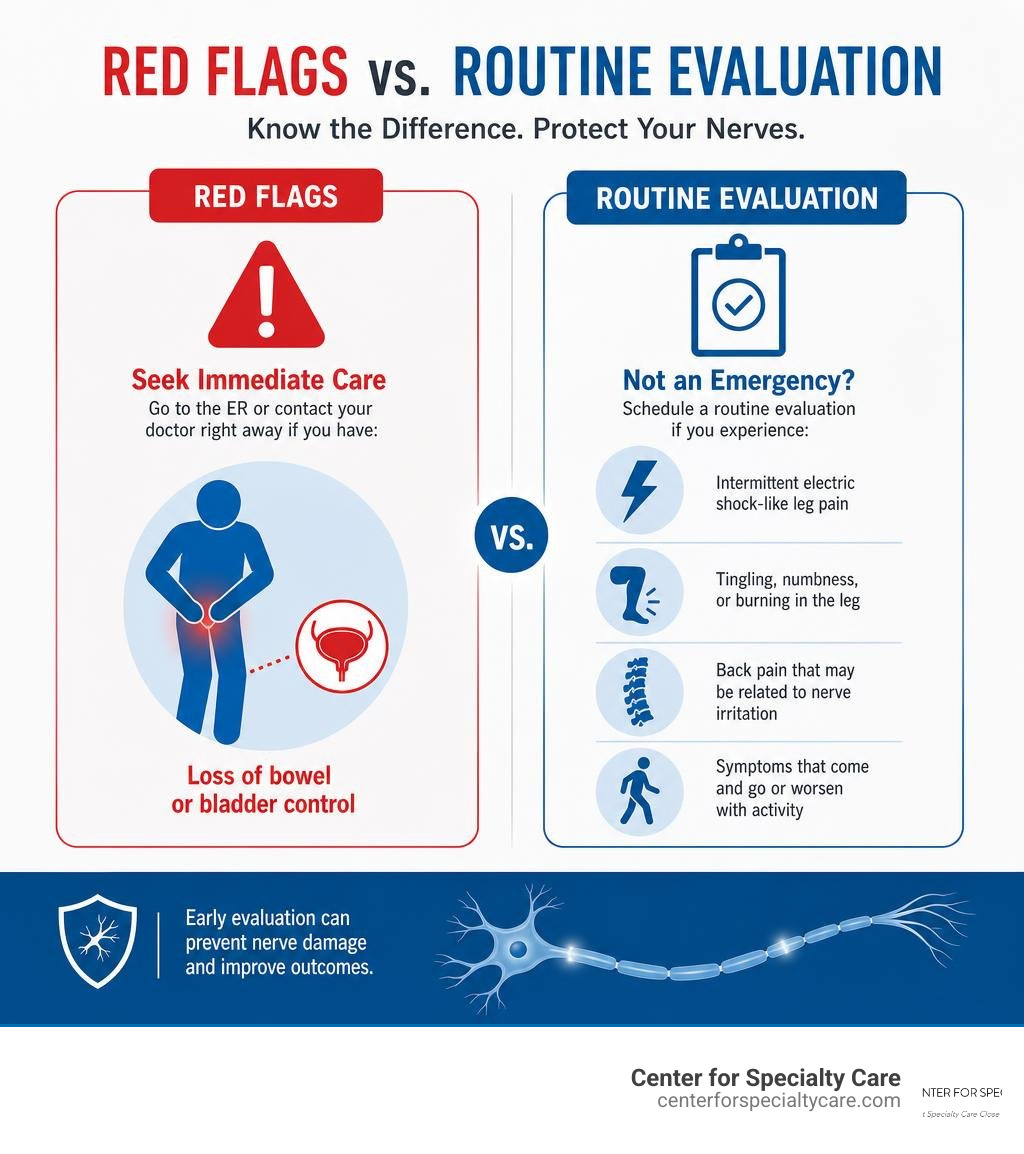
- Cauda Equina Syndrome: Severe compression of the nerve sac at the base of the spine, marked by sudden weakness in both legs, numbness in your groin/saddle area, and a loss of bowel or bladder control.
- Progressive Motor Weakness: A sudden inability to lift your foot (foot drop) or walk.
- Vascular Emergency: A leg or foot that suddenly becomes cold, pale, and loses its pulse, which can indicate an acute arterial blockage.
Treatment Options for Electric Shock Leg Pain
At the Center for Specialty Care, we believe in a personalized, patient-first approach. We offer a full spectrum of pain management options, ranging from conservative at-home therapies to advanced interventional procedures.
Conservative Care and Physical Therapy
For mechanical nerve compression like sciatica, conservative care is highly effective. Our physical therapy programs focus on:
- Core Strengthening: Building the muscles that support your spine to reduce pressure on your discs.
- Nerve Glides: Gentle, targeted exercises designed to help irritated nerves slide smoothly through their pathways without getting caught on surrounding tissues.
- Postural Training: Improving your sitting and lifting ergonomics to protect your lower back.
Medications and Supplements for Nerve Pain
Standard over-the-counter pain relievers like ibuprofen are often ineffective for true neuropathic pain. Instead, we utilize medications that specifically calm hyper-active nerves:
- Gabapentinoids (Gabapentin, Pregabalin): These medications stabilize calcium channels in nerve cells, reducing the spontaneous firing that causes electric shocks.
- SNRIs & Tricyclic Antidepressants (Duloxetine, Amitriptyline): These medications boost the body’s natural pain-inhibiting pathways in the spinal cord.
- Targeted Supplements: High-dose Vitamin B12 (methylcobalamin) or alpha-lipoic acid can support nerve repair and reduce diabetic neuropathy symptoms.
Interventional and Advanced Pain Treatments
When conservative treatments aren’t enough, we offer minimally invasive interventional therapies at our chronic pain treatment clinics:
- Epidural Steroid Injections (ESI): Delivering powerful anti-inflammatory medication directly around a compressed spinal nerve root to dramatically reduce swelling and pain.
- Percutaneous Electrical Nerve Stimulation (PENS): A specialized therapy that uses ultra-thin needles to deliver low-frequency electrical currents directly to a localized, painful nerve. Scientific research on PENS for saphenous neuralgia shows it can provide profound, long-lasting relief for stubborn nerve pain.
- Radiofrequency Ablation (RFA): Using heat to temporarily turn off a specific nerve’s ability to send pain signals to the brain.
Treating the Root Cause, Not Just the Shock Sensation
True, lasting relief requires addressing the underlying source of the nerve irritation. This means working diligently to manage blood sugar levels if you have diabetes, correcting vitamin deficiencies, staying hydrated, and maintaining a healthy body weight to minimize physical stress on your spine.
When to Seek Immediate Care—and How to Reduce Future Episodes
Knowing when to seek emergency help and how to care for your nerves at home can protect you from permanent nerve damage.
Get Urgent Help for These Symptoms
Go to the nearest emergency room or contact us immediately if your leg shocks are accompanied by:
- Loss of bowel or bladder control.
- Numbness in your groin, buttocks, or inner thighs (saddle anesthesia).
- Sudden, severe weakness in one or both legs (difficulty standing or walking).
- A foot or leg that is cold to the touch, pale, or blue.
- Non-healing ulcers or open sores on your feet or ankles.
Home Strategies That May Help Reduce Shocks
For daily management of mild to moderate nerve irritation, try these simple lifestyle adjustments:
- Take movement breaks: Avoid sitting or standing in one position for more than 30 minutes.
- Stay hydrated: Drink plenty of water throughout the day to support electrolyte balance and muscle health.
- Use ergonomic support: Invest in an office chair with proper lumbar support, and avoid crossing your legs, which can compress peripheral nerves.
- Try heat or cold therapy: A warm bath can relax tight muscles pressing on nerves, while an ice pack can numb sharp, localized jolts.
Prevention Tips for Spine and Nerve Health
Protect your nervous system long-term with these healthy habits:
- Maintain a healthy weight: Excess weight puts continuous, unnecessary pressure on your spinal discs.
- Exercise regularly: Low-impact activities like walking, swimming, or cycling keep your joints flexible and boost blood circulation to your nerves.
- Eat a balanced diet: Focus on whole foods rich in B vitamins, magnesium, and potassium.
- Avoid smoking and limit alcohol: Both smoking and excessive alcohol consumption damage blood vessels and are directly toxic to peripheral nerves.
Frequently Asked Questions About Electric Shock Leg Pain
Why do I feel electric shock leg pain when sitting?
Sitting increases the pressure on your lower spinal discs by up to 40% compared to standing. If you have a bulging or herniated disc, this extra pressure squeezes the nearby nerve roots, triggering an electric shock down your leg. Poor posture or crossing your legs can also directly pinch the sciatic nerve in your buttocks.
Why does electric shock leg pain happen at night?
At night, your body’s natural anti-inflammatory hormone (cortisol) levels drop, which can increase nerve inflammation. Additionally, when you lie down to sleep, there are fewer sensory distractions (like movement, sights, and sounds) to occupy your brain, making you highly aware of the spontaneous misfires of damaged peripheral nerves.
Can dehydration or exercise cause electric shock sensations in the legs?
Yes. Dehydration and intense exercise can deplete your body’s essential electrolytes (magnesium, potassium, and calcium). When these minerals are low, your muscles can experience severe spasms that physically compress nearby sensory nerves, resulting in sudden, shocking sensations.
Conclusion
Living with electric shock leg pain can feel like waiting for an unpredictable alarm to go off. But you don’t have to navigate this stressful journey alone. Whether your pain stems from a spinal issue, diabetic neuropathy, or a simple vitamin deficiency, an accurate diagnosis is the first step toward reclaiming your quality of life.
At the Center for Specialty Care, our orthopedic and pain management specialists are dedicated to providing personalized care, quick appointment availability, and a wide range of state-of-the-art non-surgical and surgical treatment options.
If you are ready to find lasting relief and stop the shocks, we invite you to Schedule pain management care at our Fairmont, MN, or Iowa clinics today. Let us help you get back to living life without the live wire.