

Scapula Secrets: Uncovering the Roots of Your Under-Blade Pain
September 16, 2025
Bad Back? Target Pain with Radiofrequency Neurotomy
September 18, 2025
Is heat good for patellar tendonitis? Essential 2025
Why Understanding Heat Therapy for Jumper’s Knee Matters
Is heat good for patellar tendonitis? The answer depends on your specific situation and the stage of your condition. Many people with jumper’s knee wonder whether to reach for a heating pad or ice pack when pain strikes.
Quick Answer:
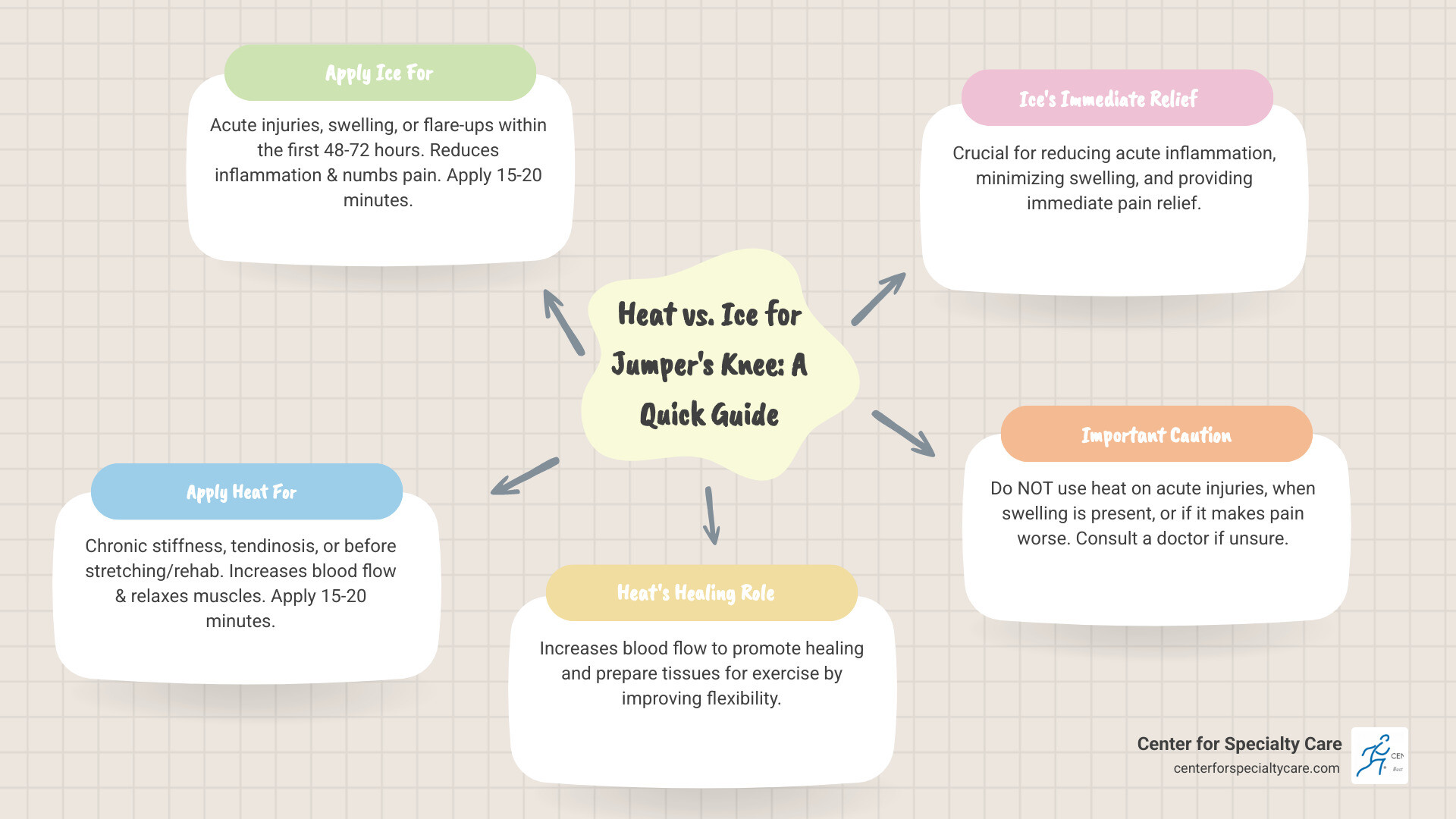
- Yes, heat can help – but only for chronic patellar tendonitis (tendinosis)
- Heat increases blood flow and relaxes tight muscles around the knee
- Use heat when inflammation has subsided – typically after the first 48-72 hours
- Avoid heat during acute flare-ups or when swelling is present
- Best used before stretching or rehabilitation exercises
Patellar tendonitis (jumper’s knee) is an overuse injury that causes pain just below the kneecap. It’s common in athletes and active individuals because repetitive jumping, running, and direction changes stress the patellar tendon.
In the early, inflamed phase, ice helps control swelling and pain. When inflammation settles, heat can reduce stiffness, improve flexibility, and prepare tissues for rehabilitation.
As Dr. Corey Welchlin, a board-certified orthopedic surgeon with over 30 years of experience, I’ve helped countless patients decide when heat fits into recovery so they can return to activity quickly and safely.
First, What is Patellar Tendonitis (Jumper’s Knee)?
Understanding what patellar tendonitis really is can help you make better decisions about treatment – including whether heat is good for patellar tendonitis in your specific situation. Let’s start with the basics of how your knee works.

Your patellar tendon is like a strong rope that connects your kneecap (patella) to your shinbone (tibia). Think of it as the crucial link that helps your powerful quadriceps muscle straighten your leg. Every time you walk up stairs, jump to catch a ball, or simply stand up from a chair, this tendon is hard at work.
Jumper’s knee is essentially what happens when this hardworking tendon gets overloaded. It’s an overuse injury that develops gradually – not from one dramatic moment, but from countless repetitive movements that slowly wear down the tendon fibers.
Athletes in basketball, volleyball, soccer, and tennis know this pain well. All that jumping, landing, and sudden direction changes put enormous stress on the patellar tendon. But you don’t have to be a professional athlete to develop jumper’s knee – weekend warriors and fitness enthusiasts experience it too.
Here’s something important that affects treatment decisions: patellar tendinitis and patellar tendinosis aren’t the same thing, even though doctors sometimes use the terms interchangeably.
Tendinitis refers to acute inflammation – the initial angry response when your tendon gets irritated. Picture redness, swelling, and heat around the injury. This is when ice typically works better than heat.
Tendinosis is the chronic phase where the tendon structure actually starts breaking down. The inflammation has settled, but the tendon fibers are damaged and weakened. This is often when heat therapy becomes more beneficial.
The symptoms you’ll notice with patellar tendonitis usually start small and build up over time. Most people first feel a dull ache just below the kneecap after exercise or sports. You might notice stiffness when you wake up in the morning or after sitting for a while.
As the condition progresses, that mild discomfort can turn into sharp pain during activities. Swelling around the tendon is common, especially after particularly active days.
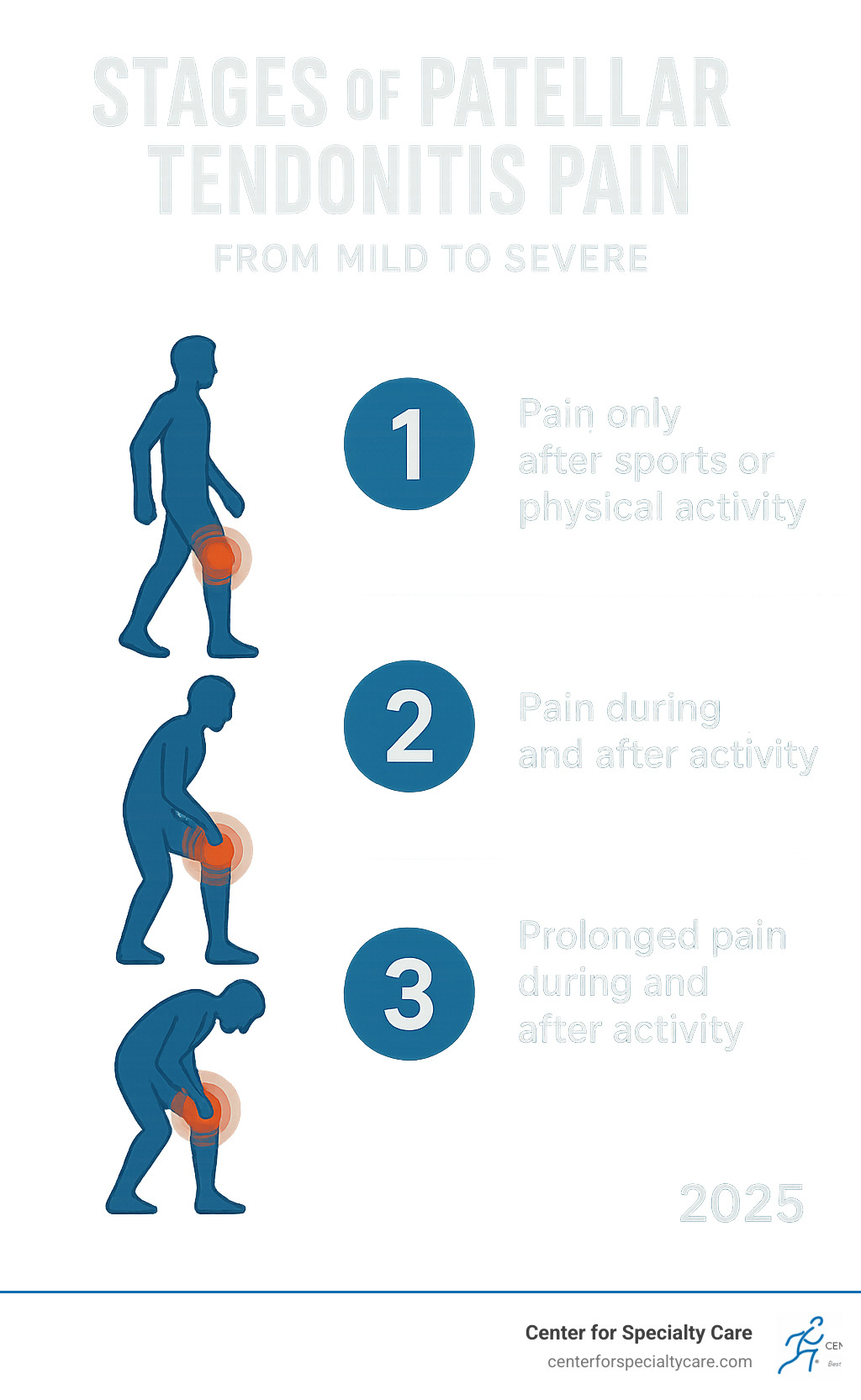
Understanding which stage you’re in helps determine the best treatment. In Stage 1, you only feel pain after activity. Stage 2 brings pain during and after activity, though you can still perform reasonably well. By Stage 3, the pain is severe enough to interfere with sports performance and daily activities like climbing stairs.
The stage of your condition plays a big role in determining whether heat therapy will help or hurt your recovery. Generally speaking, heat works best for chronic tendinosis (later stages) rather than acute tendinitis (early inflammation).
The Critical Choice: Using Heat vs. Ice for Tendon Pain
When you’re dealing with patellar tendonitis, one of the most confusing decisions you’ll face is whether to grab an ice pack or a heating pad. It’s like standing in front of your medicine cabinet, knee throbbing, wondering which option will actually help rather than make things worse.
The truth is, both ice and heat have their place in treating tendon pain – but timing is everything. Think of it this way: ice is your emergency responder, while heat is your rehabilitation partner.
| Feature | Ice (Cryotherapy) | Heat (Thermotherapy) |
|---|---|---|
| When to Use | Acute injuries, first 48-72 hours, post-activity flare-ups, when swelling is present | Chronic pain, stiffness, before exercise/stretching, after inflammation has subsided |
| Primary Effect | Reduces inflammation and swelling, numbs pain | Increases blood flow, relaxes muscles, reduces stiffness, promotes healing |
| Mechanism | Constricts blood vessels, slows metabolic rate | Dilates blood vessels, increases tissue elasticity |
| Goal | Pain relief, swelling control | Pain relief, improved flexibility, tissue healing |
When to Use Ice (Cryotherapy)
Ice becomes your best friend when you’re dealing with fresh pain or sudden flare-ups. Picture this: you’ve just finished a basketball game and feel that familiar sharp ache below your kneecap, or maybe you’ve overdone it during your morning run and your knee is starting to swell.
Acute injury situations call for ice therapy, especially within the first 48 to 72 hours when inflammation is at its peak. Your body’s natural response to injury includes sending extra blood flow to the area, which can cause uncomfortable swelling and throbbing pain.
Ice works by reducing swelling through a process called vasoconstriction – essentially, it makes your blood vessels narrow, limiting the amount of fluid that can accumulate in the injured tissue. At the same time, the cold temperature numbs pain by slowing down nerve signals that carry pain messages to your brain.
Post-activity flare-ups are another perfect time for ice. If you’ve just finished exercising and notice increased pain or any swelling around your kneecap, ice can help prevent the inflammation from getting worse.
The key is proper application: 15 to 20 minutes at a time, with at least 20 minutes between sessions. Always use a thin towel between the ice and your skin to prevent ice burns.
When to Use Heat (Thermotherapy)
Now, here’s where we answer the big question: is heat good for patellar tendonitis? Absolutely – but only under the right circumstances.
Heat therapy shines when you’re dealing with chronic conditions like patellar tendinosis, where the initial inflammation has settled but you’re left with persistent stiffness and dull, nagging pain. If your knee feels tight when you wake up in the morning or after sitting for long periods, heat can be incredibly helpful.
Unlike ice, heat increases blood flow by dilating your blood vessels. This improved circulation delivers oxygen and nutrients directly to your healing tendon while helping remove waste products that can contribute to pain and stiffness.
Heat also relaxes muscles and tendons around your knee joint. Think of your tissues like taffy – when they’re cold, they’re stiff and prone to tearing, but when warmed up, they become more flexible and forgiving.
Before stretching or physical therapy exercises, heat can be your secret weapon. It prepares your tissues for movement, making your rehabilitation exercises more effective and reducing the risk of further strain.
The magic happens when heat is used for stiffness rather than swelling. If your knee feels locked up or tight, especially without visible swelling, heat therapy can provide significant relief.
For comprehensive guidance on managing different types of pain, our pain management specialists can help you develop a personalized approach. The Mayo Clinic also provides excellent insights on this topic: Tendinitis pain: Should I apply ice or heat?
The wrong choice at the wrong time can set back your recovery. When in doubt, start with ice for the first few days after pain begins, then transition to heat once swelling subsides.
So, Is Heat Good for Patellar Tendonitis? Unpacking the Benefits
Now for the moment you’ve been waiting for: is heat good for patellar tendonitis? The answer is a resounding yes – when you use it at the right time and in the right way. Heat therapy can be incredibly beneficial, especially if you’re dealing with chronic patellar tendonitis or you’re in the rehabilitation phase of your recovery.
Think of heat as your knee’s best friend during the healing process. When your patellar tendon has moved past that initial angry, swollen stage, heat becomes a powerful ally in your recovery toolkit.
The primary benefit is increased blood flow. When you apply heat, blood vessels expand, bringing a surge of oxygen and nutrients to your injured tendon. This improved circulation also carries away waste products that can slow healing, effectively jump-starting the repair process.
This promotes healing in a very real, measurable way. Your tendon tissue gets the building blocks it needs to repair itself more efficiently. For chronic conditions like patellar tendinosis, where the tendon has been struggling for weeks or months, this improved blood flow can make the difference between staying stuck in pain and actually getting better.
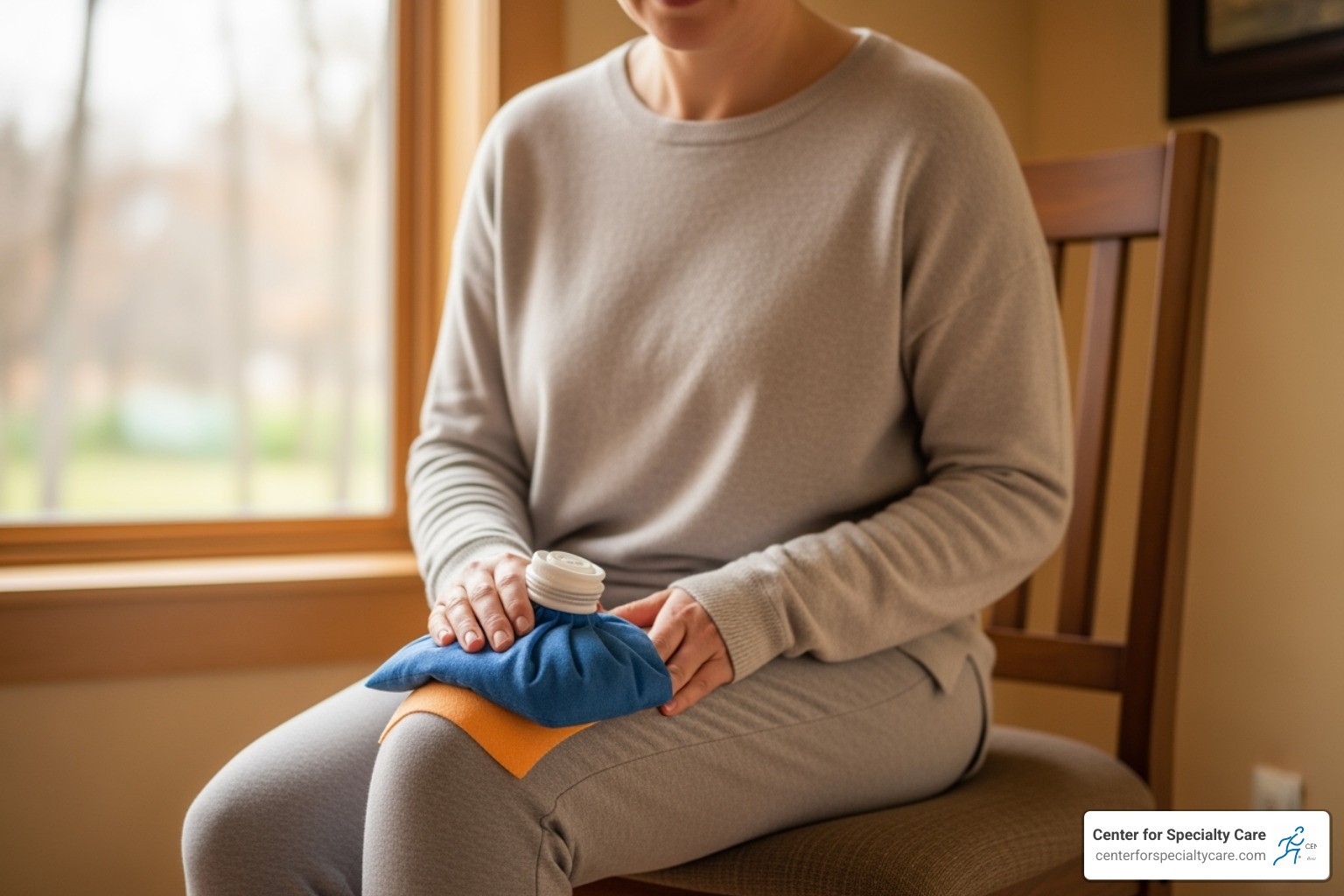
Heat also works wonders for reducing stiffness. If you’ve ever tried to bend a cold rubber band versus a warm one, you understand the principle perfectly. Heat relaxes those tight collagen fibers in your tendon and the surrounding muscles, making your knee feel less like a rusty gate and more like a well-oiled hinge.
Perhaps most importantly, heat improves flexibility in ways that research has actually measured. Studies show that heat can increase tendon flexibility by approximately 25% compared to no treatment at all. That’s not just a small improvement – it’s a game-changer for getting your knee moving properly again. You can read more about these fascinating findings in this study on heat’s effect on tendon flexibility.
How heat helps prepare your knee for rehabilitation
Here’s where heat therapy really shines – as your pre-game warm-up before stretching or rehabilitation exercises. Just like you wouldn’t jump into an intense workout without warming up your muscles, you shouldn’t ask your injured tendon to stretch or strengthen without preparing it first.
Warming up tissues is the first step in this preparation process. When you apply heat for 15-20 minutes before your exercises, you’re literally raising the temperature of your tendon and the muscles around it. This makes everything more pliable and ready to move.
This preparation makes stretching more effective in ways you’ll actually feel. Instead of fighting against tight, cold tissues, your stretches can achieve better range of motion with less discomfort. Your quadriceps and hamstring stretches become more productive, and your patellar tendon gets the gentle lengthening it needs to heal properly.
Most importantly, this warm-up process reduces your risk of further strain during exercise. When your tissues are properly warmed and flexible, they’re much less likely to tear or become re-injured during your rehabilitation routine. Think of it as insurance for your recovery – a small investment of time that protects your larger investment in getting better.
Understanding the risks of using heat for patellar tendonitis
Now, before you rush to grab that heating pad, let’s talk about when heat isn’t your friend. Like any powerful tool, heat therapy can backfire if you use it at the wrong time or in the wrong situation.
The biggest red flag is acute inflammation. If your knee is hot, red, swollen, or if the pain just started within the last 48-72 hours, heat will make things worse, not better. Heat increases blood flow – and if your tendon is already inflamed and angry, more blood flow means more swelling and more pain. It’s like throwing gasoline on a fire.
Swelling is your clear signal to stick with ice instead. If you can see visible puffiness around your kneecap or if your knee feels tight and swollen, wait until that subsides before switching to heat.
You should also avoid heat if you have open wounds anywhere on your knee, or if you have conditions like neuropathy that affect your ability to feel temperature properly. Burns from heating pads are more common than you might think, especially when people can’t accurately gauge how hot something feels.
The bottom line? When inflammation has subsided and you’re dealing with chronic stiffness and aching rather than acute, angry pain, that’s when heat becomes your ally. Listen to your body, and when in doubt, consult with healthcare professionals who can guide you through the best treatment approach for your specific situation.
A Complete Recovery Plan: Combining Heat with Other Treatments
When patients ask me, “is heat good for patellar tendonitis?” I explain that it’s just one part of a comprehensive recovery strategy. At Center for Specialty Care, we treat the whole person, not just the symptom. This approach, creating personalized treatment plans that address every aspect of your condition, is how we achieve our 100% patient satisfaction rate.
Think of your recovery like building a house. Heat therapy is one important tool in your toolbox, but you wouldn’t try to build an entire house with just a hammer, right? The same principle applies to healing your patellar tendonitis.
How to Safely Apply Heat for Patellar Tendonitis
Once you’ve determined that heat is right for your situation (remember, no swelling or acute inflammation), let’s talk about doing it safely. I’ve seen too many patients accidentally burn themselves because they were eager to feel better quickly.
Moist heating pads are my top recommendation. They provide deeper, more penetrating heat than dry heating pads. Many electric heating pads have a moist heat setting, or you can simply place a slightly damp towel between a regular heating pad and your skin.
Warm towels are another excellent option, especially if you don’t have a heating pad handy. Soak a clean towel in warm water, wring it out well, and apply it to your knee. You can even microwave a damp washcloth for about 30 seconds – just test the temperature on your wrist first!
Warm baths can be wonderfully soothing for your entire body while targeting your knee pain. The water should feel comfortably warm, ideally between 92 and 100 degrees Fahrenheit. Any hotter and you risk burns or increased inflammation.
Here’s what you need to know about safe application: Keep it to 15-20 minutes per session. I know it feels good, but longer exposure can actually irritate your skin or even cause burns. You can repeat this up to three times daily once the acute inflammation has settled down.
Always use a barrier like a thin towel between the heat source and your skin. Never fall asleep with a heating pad on – I’ve treated too many patients with serious burns from this mistake. If the heat feels too intense or increases your pain, remove it immediately. Your body is trying to tell you something important.
Essential Therapies Beyond Heat
While understanding when heat is good for patellar tendonitis is important, the real magic happens when we combine it with other proven treatments. Let me walk you through the essential components of effective patellar tendonitis recovery.
Activity modification is usually where we start. I know this isn’t what active people want to hear, but temporarily reducing activities that aggravate your patellar tendon is crucial. This doesn’t mean becoming a couch potato – it means being smart about your activities while your tendon heals.
Eccentric strengthening exercises are game-changers for patellar tendonitis. These exercises involve slowly lengthening your muscle while it’s working, which puts a specific healing load on your tendon. Think of slowly lowering yourself from a squat position – that’s eccentric strengthening in action. These exercises actually help rebuild the collagen structure in your tendon.

Stretching your quadriceps and hamstrings is equally important. When these muscles are tight, they put extra stress on your patellar tendon. This is where heat therapy really shines – applying heat before stretching makes your tissues more pliable and your stretches more effective.
Patellar tendon straps can provide immediate relief during activities. These simple braces worn just below your kneecap help distribute forces more evenly across your tendon, reducing stress on the painful area.
Our Physical Therapy team works closely with our orthopedic specialists to create personalized exercise programs. They’ll assess your specific movement patterns, identify muscle imbalances, and teach you the right exercises for your situation. Every person’s body is different, and cookie-cutter approaches rarely work.
For athletes, our Sports Medicine specialists understand the unique pressures of returning to competition. They’ll help you get back to your sport safely while preventing future injuries.
The beauty of our approach at Center for Specialty Care is that we coordinate all these treatments seamlessly. You won’t get lost between different providers or receive conflicting advice. We work as a team to ensure your recovery is as smooth and effective as possible.
Frequently Asked Questions about Heat and Jumper’s Knee
We get it – dealing with knee pain can be confusing, and you probably have a dozen questions running through your mind right now. Over the years, we’ve heard just about every question you can imagine about heat therapy and jumper’s knee. Let’s tackle the most common ones that keep our patients up at night.
Can heat make patellar tendonitis worse?
Here’s the honest truth: yes, heat can absolutely make your patellar tendonitis worse – but only if you use it at the wrong time. It’s like putting gasoline on a fire when what you really need is water.
If your knee is in the acute phase with swelling, redness, or that angry, hot feeling, heat will increase the inflammation and make you feel worse. Think about it this way – heat opens up your blood vessels and sends more blood rushing to the area. When your tendon is already inflamed, this extra blood flow just adds fuel to the fire.
The sweet spot for heat therapy is when you’re dealing with chronic stiffness and that nagging, dull ache that won’t go away. Once the initial inflammation has calmed down (usually after the first few days), heat becomes your friend instead of your enemy.
Should I use heat before or after exercise?
This is where timing becomes everything, and getting it right can make or break your recovery.
Before exercise is typically when heat shines brightest. Spending 15-20 minutes with a warm compress on your knee before stretching or light activity helps warm up those stiff tissues. It’s like giving your knee a gentle wake-up call, preparing it for movement and making your exercises more comfortable.
Your muscles and tendons become more flexible when they’re warm, which means you can stretch more effectively and with less discomfort. It’s the same reason athletes do warm-up routines – nobody jumps straight into intense activity with cold muscles.
After exercise is where things get trickier. If your knee feels inflamed, swollen, or more painful after activity, reach for ice instead of heat. Your body is telling you there’s some irritation happening, and ice will help calm that down. However, if you just feel stiff without any swelling or acute pain, a warm bath can be wonderfully soothing.
How long should I use heat for patellar tendonitis?
When it comes to is heat good for patellar tendonitis, duration matters just as much as timing. We recommend sticking to 15-20 minutes per session – this gives you all the therapeutic benefits without risking burns or skin irritation.
You can repeat this process up to three times throughout the day, but always make sure inflammation has completely subsided first. Give yourself at least an hour between sessions to let your skin recover and to reassess how your knee is responding.
More isn’t always better when it comes to heat therapy. Using heat for too long can actually irritate your skin and may even increase swelling in some cases. It’s better to use it consistently for shorter periods than to overdo it in one long session.
The key is listening to your body. If the heat feels soothing and your stiffness improves, you’re on the right track. If it increases your pain or causes any discomfort, it’s time to stop and reassess whether your knee is truly ready for heat therapy.
When to See a Specialist for Your Knee Pain
Sometimes, despite your best efforts with home care and heat therapy, your patellar tendonitis needs professional attention. The question is heat good for patellar tendonitis becomes less important when your symptoms signal it’s time for expert evaluation.
Pain that persists beyond 2-3 weeks is often the first red flag. If you’ve been diligently applying heat, modifying your activities, and following proper self-care, but your knee still aches below the kneecap, it’s time to seek help. Your body is telling you that the injury needs more than home remedies.
Worsening pain is another clear indicator. Maybe your discomfort started as a mild ache after basketball practice, but now it’s sharp and constant. When pain increases in intensity or begins interfering with your sleep, don’t wait – professional intervention can prevent a minor issue from becoming a major problem.
Inability to perform daily tasks signals that your patellar tendonitis has progressed beyond the self-care stage. If climbing stairs feels impossible, walking becomes uncomfortable, or you find yourself avoiding activities you normally enjoy, your knee needs specialized attention. Life shouldn’t revolve around avoiding pain.
Knee instability is particularly concerning. When your knee feels like it might give out or buckle, this suggests the injury may have affected the structural integrity of your joint. This isn’t something to ignore or push through.

At Center for Specialty Care, we understand that knee pain can be frustrating and limiting. Our orthopedic specialists bring decades of experience in diagnosing and treating patellar tendonitis, offering both surgical and non-surgical solutions custom to your specific needs.
What sets us apart is our commitment to 100% patient satisfaction and personalized care. We don’t believe in one-size-fits-all treatments. Instead, we take time to understand your lifestyle, activity level, and goals before creating your comprehensive treatment plan.
Our quick appointment availability means you won’t spend weeks waiting in pain. With convenient locations in Fairmont MN, Estherville IA, Buffalo Center IA, and St James MN, getting the care you need has never been easier.
Take control of your recovery – you don’t have to live with persistent knee pain. Our team combines advanced diagnostic techniques with proven treatment methods to help you return to the activities you love. Whether you’re a weekend warrior or a competitive athlete, we’ll help you get back on your feet safely and effectively.
Learn more about our advanced orthopedic services and find how our comprehensive approach can help you find lasting relief from patellar tendonitis.