
No More Waiting for Relief with This Clinic Access Guide
March 12, 2026
Nighttime Rotator Cuff Pain? Here’s How to Finally Get Some Rest
March 14, 2026
Knot Today! How to Banish Those Pesky Muscle Knots Behind Your Shoulder Blade
Why That Nagging Pain Between Your Shoulder Blades Demands Attention
A knotted muscle behind shoulder blade is one of the most common sources of upper back discomfort, affecting up to 85% of people at some point in their lives. These tight, tender spots—medically known as myofascial trigger points—can range from a dull, persistent ache to sharp, stabbing pain that interferes with daily activities like reaching, typing, or even sleeping.
Quick Relief for Muscle Knots Behind Your Shoulder Blade:
- Self-massage with a tennis ball against a wall for 30-60 seconds on tender spots
- Apply heat therapy (heating pad or warm shower) for 15-20 minutes to relax tight muscles
- Stretch gently with doorway chest stretches, Cat-Cow pose, and chin tucks
- Improve posture by keeping your monitor at eye level and shoulders relaxed
- Take breaks every 30-60 minutes if you sit at a desk
- Seek professional help if pain persists beyond 2 weeks or worsens
The shoulder blade area is particularly prone to developing knots because seventeen different muscles attach to it, connecting your neck, shoulders, and lower back. When muscle fibers bunch up and stay contracted, they can form a hard nodule that limits blood flow and creates that familiar tender spot. Poor posture from desk work, repetitive motions, stress, and overuse are the most common culprits.
I’m Dr. Corey Welchlin, a board-certified orthopedic surgeon with over three decades of experience treating musculoskeletal conditions, including the stubborn knotted muscle behind shoulder blade that affects so many of my patients in southern Minnesota and northern Iowa. At the Center for Specialty Care, my team and I have helped thousands of people find lasting relief from upper back pain through both conservative treatments and, when necessary, advanced interventions.
Understanding the Knotted Muscle Behind Your Shoulder Blade
If you’ve ever felt that familiar “knot” behind your shoulder blade, you know it’s more than just a minor annoyance. It’s a sensitive, hardened spot within the muscle, often described as a small lump or nodule. When we press on it, it can be quite tender, and sometimes that pain even radiates to other areas like your neck, arm, or lower back. This phenomenon is known as referred pain. These knots can also lead to muscle stiffness and a limited range of motion, making it difficult to move your arm or turn your head comfortably.
These knots, scientifically called myofascial trigger points, can be either “active” or “latent.” Active trigger points cause discomfort even without being touched, while latent ones only hurt when pressure is applied. Either way, they signify that a part of your muscle is stuck in a contracted state, unable to fully relax.
The shoulder blade, or scapula, is a triangular bone in your upper back that serves as a crucial anchor point. Did you know that an incredible seventeen different muscles attach to your shoulder blades? These muscles connect your neck, shoulders, and lower back, forming a complex web of soft tissue. This intricate network makes the area particularly susceptible to tension and the formation of knots, as many different forces pull and push on these muscles.
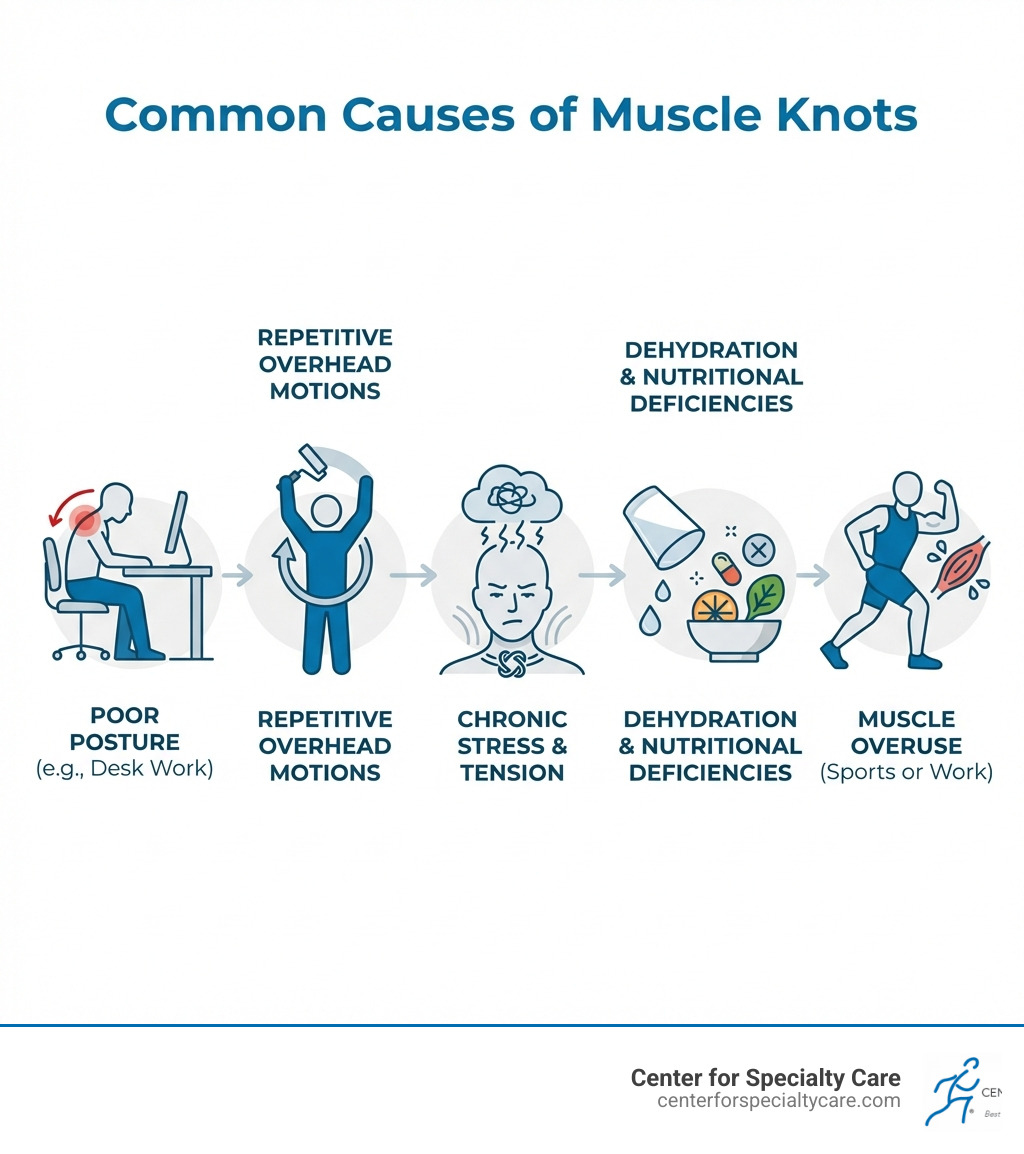
What Causes Knots in the Rhomboid or Shoulder Blade Area?
So, why do these pesky knots decide to take up residence behind your shoulder blade? Often, it’s a perfect storm of modern lifestyle factors and physical stressors.
- Poor Posture: This is a big one. Hunching over a computer or phone for extended periods, a common issue we call “tech neck,” puts immense strain on your upper back and neck muscles. Your head, which can weigh as much as a 10-12 pound bowling ball, pulls forward, causing your rhomboid muscles (located between your shoulder blades) to be constantly stretched and overworked. This prolonged, strained position can lead to a “cycle of pain,” where these muscles weaken, and other muscles, like those in your chest, tighten, pulling your shoulders even further forward.
- Repetitive Motions and Overuse: Whether it’s from your job, a sport, or even exercising, repeating the same motion over and over can lead to muscle knots. Think about painting overhead, swinging a tennis racket, or typing all day. Researchers have a theory called the “Cinderella hypothesis,” which suggests that smaller, “Cinderella fibers” within your muscles repeatedly work while larger ones remain relaxed. This continuous strain on those smaller fibers can eventually damage them, leading to trigger points.
- Muscle Imbalances: Sometimes, knots form because some muscles are strong and tight, while others are weak and underused. This imbalance forces certain muscles to work harder than they should, leading to fatigue and knot formation. Regular exercise, particularly strengthening exercises, can help correct these imbalances.
- Psychological Stress and Muscle Guarding: Our bodies often hold onto emotional stress as physical tension. When you’re feeling anxious or stressed, it’s common to subconsciously hunch your shoulders or clench your jaw. This “muscle guarding” response causes your shoulders to rise and upper back muscles to tighten. Prolonged tension keeps these muscles in a contracted state, making them ripe for developing painful trigger points. Managing stress is not just good for your mind, but for your muscles too!
- Dehydration and Injury: Not drinking enough water can contribute to muscle spasms and knots. Additionally, sudden muscle injuries or even small, repeated tears from trauma or inadequate warm-up can also initiate the formation of these irritated spots.
Muscle Knot vs. Pinched Nerve: Key Differences
Sometimes, the pain behind your shoulder blade might feel like a muscle knot, but it could be something else entirely, like a pinched nerve. It’s crucial to understand the differences to ensure you get the right treatment.
Here’s a quick comparison:
| Symptom | Muscle Knot | Pinched Nerve (Cervical Radiculopathy) |
|---|---|---|
| Type of Pain | Dull, aching, localized, tender to touch | Sharp, shooting, burning, electrical, often radiating |
| Location of Pain | Specific tender spot, sometimes referred to nearby areas | Originates in the neck, radiates down the arm, hand, or fingers |
| Associated Sensations | Stiffness, limited range of motion | Numbness, tingling (“pins and needles”), weakness in the arm/hand |
| Triggering Factors | Pressure on the knot, certain movements | Neck movement (turning, tilting), coughing, sneezing |
A knotted muscle behind shoulder blade typically presents as a dull, aching pain localized to a tender spot, and while it can cause referred pain, it usually doesn’t come with neurological symptoms like numbness or weakness.
On the other hand, a pinched nerve, specifically cervical radiculopathy (a nerve compressed in your neck), can send pain signals down unexpected pathways. This can cause sharp, shooting pain radiating down your arm, along with numbness and tingling. In some cases, it can even lead to muscle weakness. While these symptoms can sometimes mimic a stubborn knot, they require a different approach to treatment. If you experience radiating pain, we encourage you to learn more info about radiating pain to understand its nuances. Data shows that cervical radiculopathy is quite common, and active myofascial trigger points are often more frequent in patients with this condition, highlighting the interconnectedness of these issues.
Your At-Home Toolkit for Releasing Knots
When that knotted muscle behind shoulder blade starts to act up, there’s a lot you can do from the comfort of your home to find relief. The key is consistency and combining different approaches for the best results. Think of it as your personal self-care mission to soothe those tense muscles!
Self-Massage and Stretching for a Knotted Muscle Behind Your Shoulder Blade
Self-massage is a fantastic way to apply direct pressure to those stubborn knots, helping to increase blood flow and encourage the muscle fibers to release.

Self-Massage Techniques:
- Tennis or Lacrosse Ball: Grab a tennis ball or a firmer lacrosse ball. Place it between your back and a wall, positioning the ball directly on your knot. Lean into the wall, applying steady pressure for 30-60 seconds. Gently roll the ball in small circles or move up and down to find the most tender spots. Aim for “good pain”—a manageable discomfort level around 5-6 out of 10—not sharp, unbearable pain. Over-massaging can actually irritate the muscle, so listen to your body!
- Fingers or Knuckles: For more accessible areas, you can use your fingers or knuckles. Gently massage the knot, pressing down firmly and making small circles.
Effective Stretches: Stretching helps to elongate muscle fibers, improve circulation, and reduce tension. Hold each stretch for 15-30 seconds and repeat several times daily.
- Doorway Chest Stretch: Stand in a doorway, place your forearms on the doorframe, and gently step forward until you feel a stretch across your chest. This helps counteract the forward-slouching posture that contributes to shoulder blade knots.
- Cat-Cow Pose: Get on your hands and knees. Arch your back, dropping your belly toward the floor (Cow pose), then round your spine, tucking your chin to your chest (Cat pose). This mobilizes your spine and stretches your back muscles.
- Chin Tucks: Sit or stand tall. Gently tuck your chin towards your throat, as if making a double chin, keeping your head level. This helps align your neck and upper back.
- Cross-Body Arm Stretch: Relax your shoulders. Hold the elbow of one arm with your other hand. Gently pull the arm across your body until you feel a stretch in the back of your shoulder.
- Rhomboid Stretch: Sit or stand tall. Clasp your hands in front of you at shoulder height. Drop your chin to your chest and reach forward, rounding your upper back and feeling your shoulder blades pull apart.
- Shoulder Blade Squeezes: Sit or stand with good posture, arms at your sides. Gently squeeze your shoulder blades together and down, as if trying to hold a pencil between them. Hold for 6 seconds, then release. Repeat 8-12 times.
For more targeted relief and a personalized program, exploring shoulder pain relief options with a physical therapist can be incredibly beneficial.
Using Heat and Cold Therapy
Heat and cold therapy are simple yet effective tools in your at-home arsenal for managing a knotted muscle behind shoulder blade.
- Heat Therapy: Applying heat helps relax tight muscles and improves blood flow to the area. This increased circulation can help flush out metabolic waste and bring in nutrients, promoting healing.
- How to use: Use a heating pad, a warm compress, or take a warm shower or bath.
- When to use: Heat is best for relaxing stiff, achy muscles before stretching or to soothe general tension.
- Application time: Apply heat for 15-20 minutes at a time.
- Cold Therapy: Cold therapy, on the other hand, works by reducing inflammation and numbing the area, which can help alleviate acute pain.
- How to use: Use an ice pack wrapped in a thin towel.
- When to use: Cold is best immediately after an activity that might have aggravated the knot, or if the area feels inflamed or swollen.
- Application time: Apply cold for 10-15 minutes at a time.
You can alternate between heat and cold therapy, often applying heat first to relax the muscle, followed by cold to reduce any inflammation.
Preventing Future Knots: Lifestyle and Ergonomic Fixes
While at-home treatments can provide welcome relief, the real victory lies in preventing those stubborn knots from returning. This requires a proactive approach, incorporating small, consistent changes into your lifestyle and work environment.
Improving Posture and Workspace Ergonomics
Your daily habits, especially how you sit and work, play a huge role in the health of your upper back.

- Ergonomic Workspace Setup:
- Monitor at Eye Level: Position your computer monitor so the top of the screen is at or slightly below eye level. This prevents you from craning your neck up or down, which strains your neck and upper back.
- Supportive Chair: Use a chair that provides good lumbar support, encouraging the natural curve of your spine. Your feet should be flat on the floor, and your knees should be at about a 90-degree angle.
- 90-Degree Elbow Angle: Keep your keyboard and mouse close to your body so your elbows are bent at a comfortable 90-degree angle. This reduces strain on your shoulders and wrists.
- Head Alignment: Consciously keep your head aligned over your shoulders, not leaning forward.
- Taking Frequent Breaks: If you have a sedentary job, set a timer to remind yourself to take a “movement snack” every 30-60 minutes. Stand up, stretch, walk around, or do a few gentle shoulder rolls. This helps to improve circulation and prevent muscles from getting stuck in a tense position.
- Posture Correction Exercises: Regularly perform exercises like shoulder blade squeezes to strengthen the muscles that support good posture. Aim for 8-12 repetitions, holding for 6 seconds each.
The Impact of Sleeping Positions and Stress
Believe it or not, how you sleep and how you manage stress can significantly influence the development or relief of a knotted muscle behind shoulder blade.
- Sleeping Positions:
- Back Sleeping: Often considered the best position for spinal alignment. Use a supportive pillow that cradles your neck without propping your head up too high.
- Side Sleeping: If you prefer sleeping on your side, use a pillow that keeps your head and neck in a neutral alignment with your spine. Placing a pillow between your knees can also help keep your hips and spine aligned, and a small pillow under your top armpit can prevent that shoulder from protracting all night. Side sleepers often keep one shoulder protracted all night, which can contribute to knots.
- Stomach Sleeping: This is generally the least recommended position for your spine. It forces you to twist your neck to one side for hours, which can lead to significant neck and upper back pain, making existing knots worse or creating new ones. If you absolutely must sleep on your stomach, try using a very thin pillow or no pillow at all for your head.
- Stress Management Techniques: As we discussed, stress and anxiety are direct pathways to muscle tension. Our bodies respond to stress with a “fight-or-flight” response, releasing cortisol and causing muscles to tense up, particularly in the shoulders and neck. This constant “muscle guarding” can lead to chronic knots.
- Deep Breathing: Practice diaphragmatic breathing (belly breathing) for 5-10 minutes daily. This simple technique can calm your nervous system and release tension.
- Meditation: Engaging in mindfulness or meditation has been shown to reduce overall muscle tension and may play a role in alleviating myofascial pain.
- Time Outdoors/Hobbies: Spending time in nature or engaging in enjoyable hobbies can be powerful stress-relievers, helping your body and mind relax.
When to Seek Professional Help for a Knotted Muscle Behind Your Shoulder Blade
While our at-home toolkit is effective for many, there are times when a knotted muscle behind shoulder blade needs professional attention. If your self-care efforts aren’t yielding the desired results, or if your symptoms are worsening, it’s time to seek expert guidance. A correct diagnosis is paramount, as what feels like a knot could be something more, such as a pinched nerve. At Center for Specialty Care, we specialize in the diagnosis and management of trigger points, ensuring you receive care custom to your specific condition.
Signs You Need a Doctor
Don’t hesitate to reach out to our team if you experience any of the following:
- Persistent Pain: If your pain lingers for more than two weeks despite consistent at-home treatments.
- Severe or Unbearable Pain: If the pain is so intense that it interferes significantly with your daily activities or sleep.
- Numbness, Tingling, or Weakness: These neurological symptoms, especially radiating down your arm, could indicate a pinched nerve and require prompt evaluation.
- Pain After an Injury or Car Accident: If your muscle knot developed after a specific injury, fall, or car accident, get it checked to rule out more serious damage.
Our goal is to help you understand when to manage your pain at home and when to seek professional care. For a comprehensive guide on when to consult a specialist, you can refer to our article on Doctor for Shoulder Problems: Your Guide to Specialized Care.
Professional Treatment Options
When at-home remedies aren’t enough, our team at Center for Specialty Care offers a range of professional treatments to address stubborn knotted muscle behind shoulder blade issues. We believe in personalized treatment plans that combine medical knowledge with genuine care for your recovery.
- Physical Therapy: Our physical therapists are experts in assessing movement, identifying imbalances, and finding the root cause of your knots. They can provide manual therapy (hands-on techniques to release muscle tension), create a custom exercise program for strengthening and stretching, and guide you through specific movements to restore function. You can learn more about shoulder treatment with physical therapy on our website.
- Massage Therapy: Professional massage, particularly deep tissue, sports massage, or trigger point therapy, can be incredibly effective in releasing muscle knots. It promotes circulation, reduces muscle tension, and helps break the pain-spasm cycle.
- Chiropractic Care: For some, chiropractic adjustments can play a vital role. Chiropractors focus on neuro-structural adjustments to optimize spine and nervous system function. By ensuring proper spinal alignment, the surrounding muscles receive clearer signals, which can reduce nerve irritation and muscle tension contributing to shoulder blade knots.
- Pain Management Services: For persistent or severe cases, our pain management specialists in Fairmont, Estherville, Buffalo Center, and St. James offer advanced interventions. These can include:
- Trigger Point Injections: A healthcare professional inserts a small needle into the trigger point, sometimes with an anesthetic (wet needling). Studies suggest wet needling may offer better long-term results.
- Dry Needling: Similar to trigger point injections but without medication, a thin needle is inserted into the muscle to elicit a “twitch response” that helps release the knot.
- Low-Level Light Therapy (Cold Laser): This non-invasive option uses near-infrared light to ease pain and improve range of motion by stimulating cellular activity and oxygen flow.
- Acupressure: An alternative treatment that applies pressure to specific trigger points (or acupoints) to soothe aches and pains.
We offer comprehensive pain management services to help you find relief and restore your quality of life.
Frequently Asked Questions about Shoulder Blade Knots
We often hear similar questions from our patients in Minnesota and Iowa about their knotted muscle behind shoulder blade. Here are some common ones:
How long does it typically take for a rhomboid knot to resolve?
The time it takes for a knotted muscle behind shoulder blade to resolve largely depends on whether it’s an acute (newer) or chronic (long-standing) issue, as well as the consistency of treatment.
- Acute Knots: With consistent self-care, including daily stretching, self-massage, heat therapy, and posture correction, a newer knot may improve within a few days to two weeks.
- Chronic Knots: These are often more stubborn and have deeper roots, such as long-term poor posture or chronic stress. They can take several weeks or even months of dedicated professional treatment to resolve. People with myofascial pain syndrome, a condition characterized by persistent trigger points, can experience symptoms for six months or longer. The key for chronic knots is to address the underlying cause, not just the symptoms.
Can stress and anxiety cause knots between the shoulder blades?
Absolutely, yes! Stress and anxiety are major culprits behind the formation of a knotted muscle behind shoulder blade. Our bodies are wired to react to stress with a “fight-or-flight” response, which causes muscles to tense up. When you’re feeling anxious, it’s common to subconsciously hunch your shoulders, tighten your neck, or clench your jaw. This prolonged muscle tension, often accompanied by shallow breathing, leads to restricted blood flow and oxygen to the muscles. Over time, these constantly contracted muscle fibers can form painful trigger points or knots. Managing emotional stress is a critical component of both treating and preventing these types of knots.
Can sleeping positions affect the development or relief of shoulder blade knots?
Yes, your sleeping position can definitely play a significant role in both the development and relief of a knotted muscle behind shoulder blade.
- Side Sleeping: While popular, side sleeping can sometimes lead to issues if not done correctly. If your pillow isn’t supportive enough, or if you don’t use a pillow between your knees, your spine can become misaligned. Also, side-sleepers often keep one shoulder protracted (pulled forward) all night, which can strain the muscles around the shoulder blade. Using a supportive pillow for your head and a small pillow under your top armpit can help maintain better alignment.
- Stomach Sleeping: This is generally the least recommended position. Sleeping on your stomach forces you to twist your neck to one side for extended periods, putting immense strain on your neck and upper back muscles. This position can easily create or worsen knots behind your shoulder blade and in your neck.
- Back Sleeping: Often considered the best position for promoting spinal alignment. When sleeping on your back, ensure your pillow supports the natural curve of your neck without propping your head up too high. This helps keep your neck and upper back in a neutral position, reducing muscle strain.
Choosing a supportive mattress and pillow, and being mindful of your sleeping posture, can go a long way in preventing and relieving those pesky knots.
Take Control of Your Upper Back Pain
We understand that living with a knotted muscle behind shoulder blade can be frustrating and debilitating, impacting your ability to work, enjoy hobbies, and even get a good night’s sleep. But you don’t have to live with this discomfort.
You have a powerful toolkit at your disposal. By consistently applying self-care strategies like targeted self-massage, gentle stretching, and appropriate heat and cold therapy, you can find significant relief and prevent many knots from forming. Making simple lifestyle adjustments, such as improving your posture, optimizing your workspace ergonomics, and managing stress, are crucial steps toward long-term wellness.
For those times when at-home care isn’t enough, or if you’re experiencing persistent or worsening symptoms like radiating pain, numbness, or weakness, our team at Center for Specialty Care is here to help. With locations in Fairmont, Estherville, Buffalo Center, and St. James, our orthopedic and pain management specialists offer personalized treatment plans that combine medical expertise with genuine care. We pride ourselves on 100% patient satisfaction and quick appointment availability, ensuring you get the comprehensive care you need.
Don’t let a knotted muscle behind shoulder blade hold you back from living your life to the fullest. Take control of your upper back pain today. Learn more about our advanced shoulder care options and let us help you refind comfort and mobility.