

Tendonitis Relief: The Hot and Cold Truth About Healing
October 1, 2025
Say Goodbye to Nighttime Shoulder Pain: Your Guide to Restful Sleep
October 3, 2025
Vertebrogenic low back pain: 2025 Solutions
Why Understanding Vertebrogenic Pain Changes Everything for Chronic Back Pain Sufferers
Vertebrogenic low back pain is a groundbreaking shift in understanding and treating chronic back pain. For decades, up to 80% of chronic low back pain cases were labeled ‘non-specific,’ leaving millions without clear answers or effective treatments.
What is vertebrogenic low back pain?
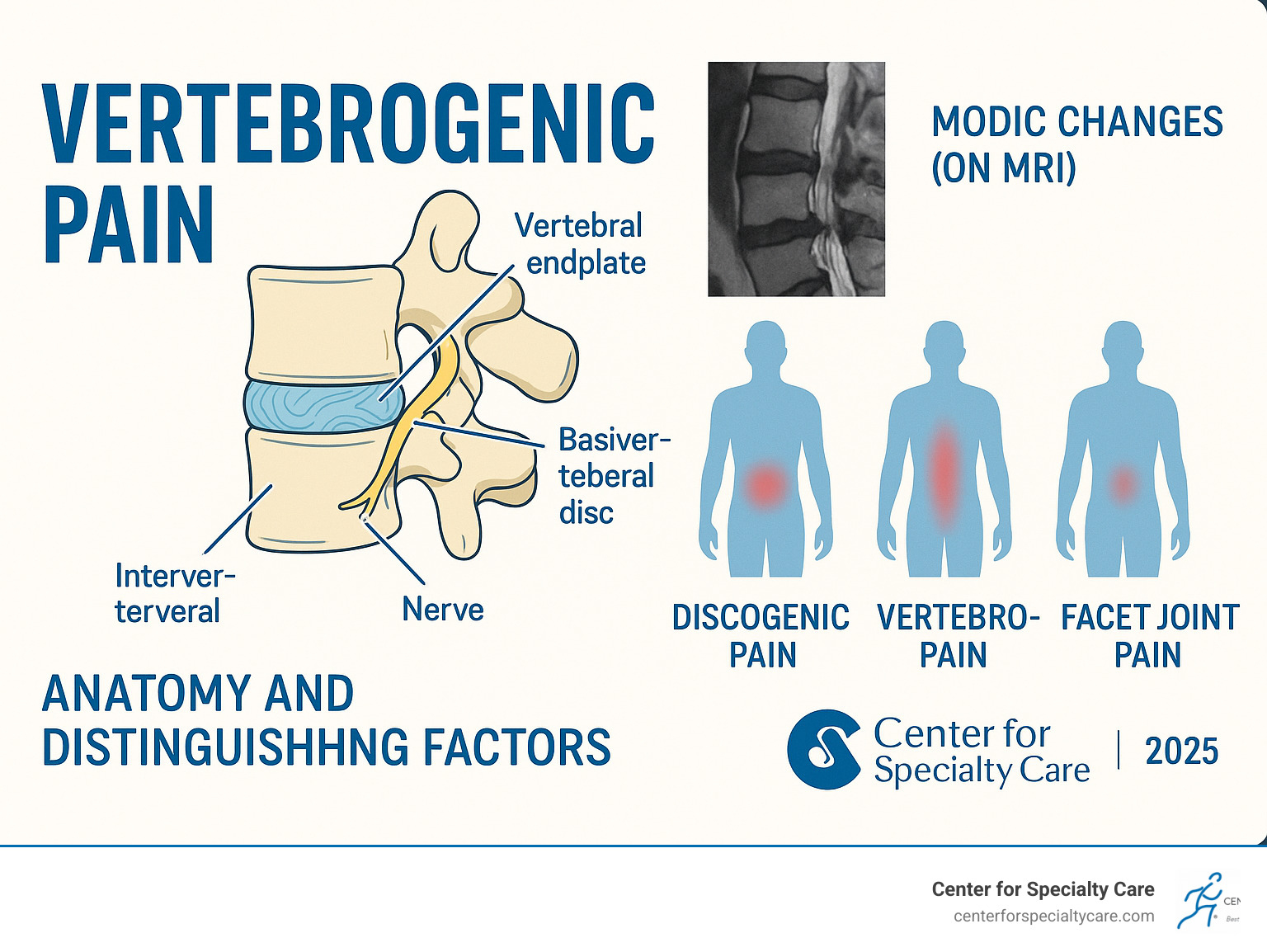
- Pain from damaged vertebral endplates (the junction between vertebrae and discs)
- Transmitted by the basivertebral nerve within the vertebral bone
- Affects about 1 in 6 people with chronic low back pain
- Characterized by deep, midline pain that worsens with sitting and bending
- Diagnosable using MRI to identify specific Modic changes
Key differences from other back pain:
- Discogenic pain: Originates from the disc itself.
- Facet joint pain: Comes from small joints at the back of the spine.
- Vertebrogenic pain: Stems from nerve-rich endplates inside the vertebral bone.
This findy has transformed our approach. Instead of just managing symptoms, we can now target the specific nerve causing the pain with procedures like basivertebral nerve ablation.
As an orthopedic surgeon with over three decades of experience in southern Minnesota and northern Iowa, I’ve seen how understanding vertebrogenic low back pain has revolutionized outcomes for patients with limited options. At the Center for Specialty Care, we’ve helped countless patients find lasting relief with this targeted approach.
What is Vertebrogenic Low Back Pain and What Causes It?
For years, many chronic back pain sufferers were told their pain was from ‘wear and tear’ or was ‘non-specific.’ This made treatment difficult because the true cause was unknown.
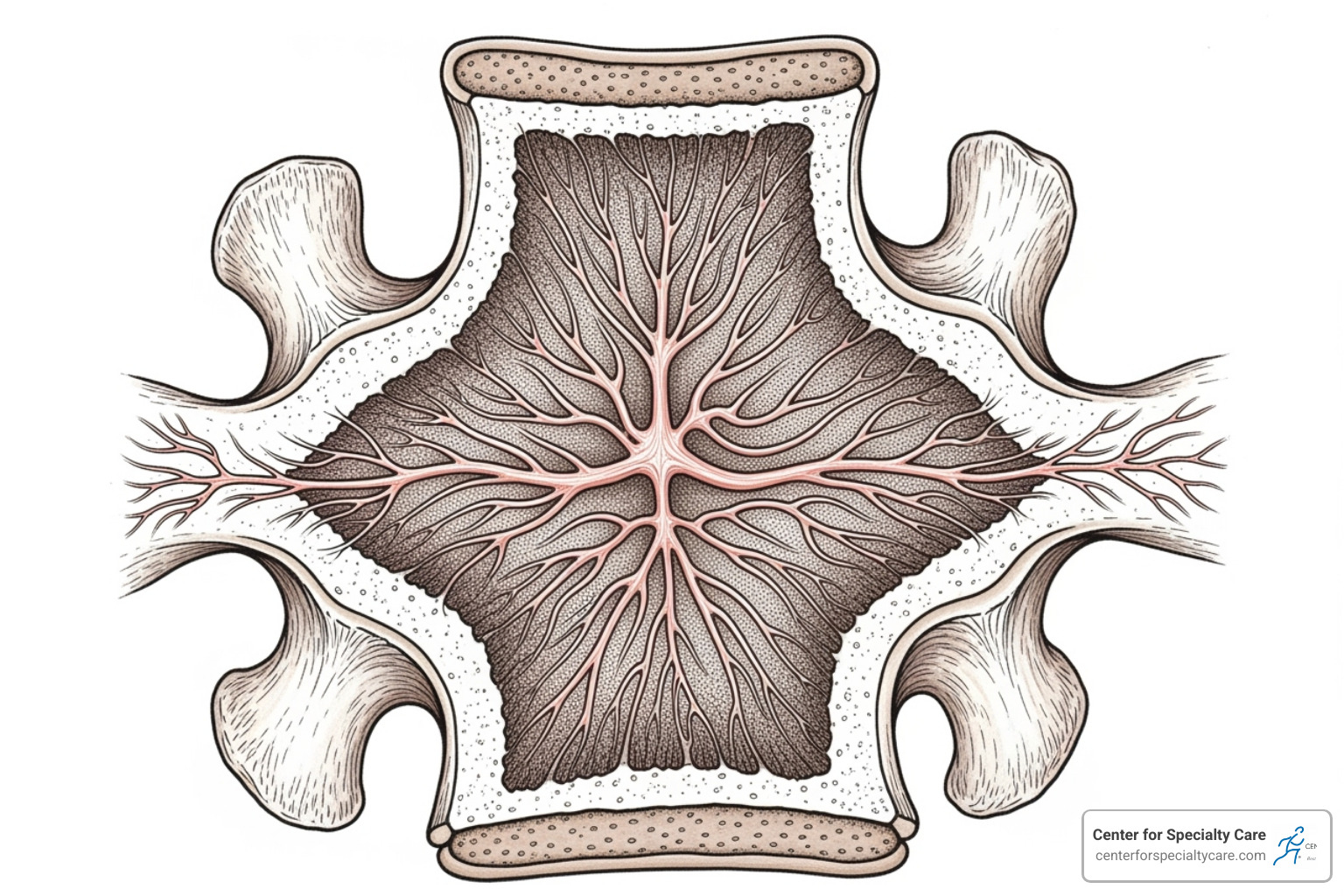
We now understand that vertebrogenic low back pain comes from a specific source: damaged vertebral endplates. These are thin layers of cartilage and bone between your vertebrae and discs. Endplates are crucial for pain because they are packed with nerve endings from the basivertebral nerve (BVN). This nerve enters the back of the vertebra and branches out, supplying the endplates.
When endplates are damaged, these nerves become irritated and can even multiply, sending constant pain signals to the brain. This creates a persistent ache. This pain feels different from other types. Unlike muscle pain (a broad ache) or disc pain (often shooting down a leg), vertebrogenic pain is deep and centralized. Patients often describe it as a burning or throbbing in the middle of their lower back.
Primary Causes and Risk Factors
Degenerative changes and everyday wear and tear are the most common causes. With age, our endplates naturally weaken. However, other factors increase risk:
- Genetics: A family history of back issues can make you more prone. Research links certain factors to the development of degenerative disks, which often accompany endplate damage.
- High BMI: Extra weight adds daily stress to your spine, forcing your endplates to absorb an increased load.
- Repetitive stress: Physically demanding jobs involving constant bending, lifting, or twisting can wear down endplates over time.
- Other factors: Previous back injuries, smoking (which reduces blood flow to the spine), and being taller than average can also contribute.
Understanding these risks allows for preventative measures and, when needed, precise treatments that target the pain’s source.
Symptoms and Diagnosis: Identifying Vertebrogenic Pain
Diagnosing vertebrogenic low back pain requires a careful approach. At the Center for Specialty Care in Fairmont, MN, we work to understand your unique pain pattern. Your visit will start with a thorough physical examination and a detailed patient history.
A key indicator is pain lasting 6 months or more that hasn’t improved with conservative treatments like rest, physical therapy, or medication. This failure to respond suggests a deeper issue. We encourage patients to track their symptoms, as this information helps us form an accurate diagnosis and effective treatment plan.

Specific Symptoms of Vertebrogenic Pain
Vertebrogenic low back pain has a distinct fingerprint. The hallmark symptom is midline low back pain—a deep ache or burning sensation located in the center of your lower back, directly along the spine.
The pain has specific triggers:
- Worse with sitting, especially for long periods.
- Worse with bending forward and other physical activities like lifting or twisting.
- Morning stiffness is common.
- Relief with rest or lying down.
Unlike some back pain, it usually doesn’t radiate down the leg but stays in the lower back, sometimes spreading to the buttocks or hips.
The Role of MRI in Diagnosing vertebrogenic low back pain
An MRI scan is the gold standard for diagnosis. It provides a detailed view inside your spine and can reveal specific changes in the vertebral endplates and bone marrow known as Modic changes.
- Type 1 Modic changes indicate inflammation and swelling in the bone marrow around the endplates. These are strongly linked to pain.
- Type 2 Modic changes show that bone marrow has been replaced with fatty marrow, a sign of chronic degeneration and significant endplate damage.
The presence of Modic type 1 and 2 changes on an MRI, combined with your symptoms, helps confirm the diagnosis. Our specialists at the Center for Specialty Care have extensive experience interpreting these MRIs, allowing us to provide a precise diagnosis and a personalized treatment plan that targets the real source of your pain.
Modern Treatments: From Conservative Care to Basivertebral Nerve Ablation
For vertebrogenic low back pain, we start with conservative methods before progressing to more advanced options if needed. We always begin with the least invasive treatments.
Initial treatments include:
- Physical therapy: Our therapists help you strengthen core muscles, improve flexibility, and learn proper body mechanics to reduce strain on your spine.
- Anti-inflammatory medications: Medications like ibuprofen can reduce pain and inflammation. Topical creams and short-term muscle relaxers may also be recommended.
- Activity modification: This involves learning to adapt daily tasks to avoid pain triggers.
We recommend a trial of conservative care for at least six months. If pain persists, we then consider interventional pain management options for lasting relief.
What is Basivertebral Nerve Ablation (The Intracept Procedure)?
For patients who don’t find relief with conservative care, basivertebral nerve ablation (the Intracept Procedure) is a breakthrough treatment. This minimally invasive procedure is precise, directly targeting the source of the pain—the basivertebral nerve—rather than just masking symptoms.
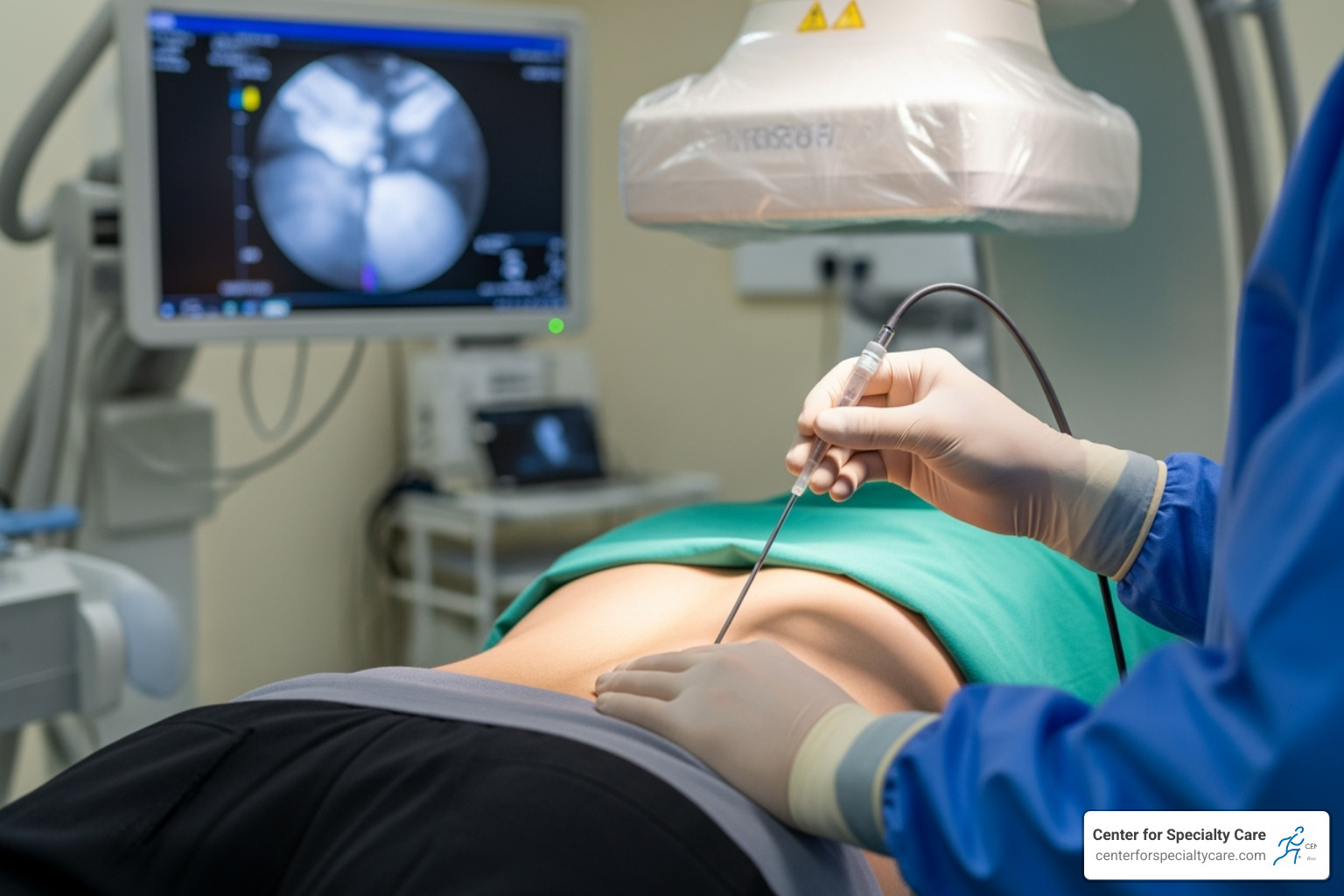
Using radiofrequency energy, the procedure creates a small lesion on the nerve, stopping it from sending pain signals to the brain. The process is straightforward and takes about an hour. While you lie comfortably, we numb the area and use imaging guidance to insert a thin tube (cannula) into the affected vertebra. A radiofrequency probe is then passed through the cannula to the basivertebral nerve, where controlled energy is delivered. Most patients go home the same day.
The Intracept Intraosseous Nerve Ablation System is the only system cleared by the FDA for treating vertebrogenic back pain. To be eligible, patients must have chronic low back pain for at least six months, have failed conservative care, and show Modic Type 1 or 2 changes on an MRI.
Benefits and Risks of the Intracept Procedure for vertebrogenic low back pain
The results of the Intracept Procedure are impressive, supported by robust clinical research. At the Center for Specialty Care, we’ve seen significant benefits for our patients.
- Significant pain reduction: Studies show at least a 50% pain reduction at 12 months, allowing patients to sleep better and enjoy daily activities again.
- Improved function: Patients show significant improvement in their ability to perform daily tasks like dressing, carrying groceries, or returning to work.
- Long-term relief: Five-year studies show the benefits are durable, with over a third of patients reporting being pain-free and two-thirds resuming their previous activity levels.
- High patient satisfaction: Nearly 80% of patients in long-term studies would have the procedure again, highlighting its life-changing impact.
- Minimally invasive: Recovery is fast. Patients go home the same day and avoid the extended downtime of major surgery.
- Reduced medication reliance: Patients often experience reduced reliance on medications, including opioids.
The safety profile is excellent. A pooled analysis of three clinical trials demonstrates its safety and effectiveness, supported by data from over 30,000 patients treated worldwide. Risks are rare, with a serious complication rate below 0.2%, and may include temporary pain, numbness, infection, or bleeding.
The procedure stops pain signals but doesn’t heal the damaged endplate. However, by eliminating pain, it allows you to improve function and quality of life. During your consultation at our Fairmont clinic, we will discuss all risks and benefits to help you make an informed decision.
Prognosis, Prevention, and When to See a Specialist
The prognosis for vertebrogenic low back pain is much brighter today. With better understanding and targeted treatments like basivertebral nerve ablation, patients have real options for relief. Patients undergoing the Intracept procedure often see dramatic, long-lasting improvements, allowing them to return to activities like gardening or playing with grandchildren.
At the Center for Specialty Care in Fairmont, we’ve seen patients’ lives transformed after receiving the right diagnosis and treatment. Our goal is to achieve these outcomes for every patient.

Lifestyle Modifications and Prevention
While some risk factors can’t be changed, certain lifestyle strategies can help protect your spine:
- Maintain a healthy weight: Extra weight adds stress to your vertebral endplates, so even a small weight loss can make a difference.
- Strengthen your core: Strong core muscles support your spine like a natural brace. Simple, consistent exercises can help.
- Use proper lifting technique: Always squat and lift with your legs, not your back, keeping the object close to your body.
- Avoid smoking: Smoking reduces blood flow to discs and endplates, accelerating degeneration.
- Practice good ergonomics: At a desk, take frequent breaks to stand and move, and ensure your screen is at eye level.
When to Consult a Healthcare Professional
It’s important to know when to seek professional help for back pain. Early intervention often leads to simpler, more effective treatment. Contact us if:
- Your pain lasts several weeks without improvement.
- Your pain is unresponsive to home care like rest and over-the-counter medication.
- Your back pain is impacting your daily life—affecting work, sleep, or hobbies.
- You suspect you have vertebrogenic low back pain or are considering advanced treatments.
Seek immediate medical attention for red flag symptoms like sudden leg numbness or weakness, loss of bladder/bowel control, or back pain with fever or unexplained weight loss. At the Center for Specialty Care, we offer personalized care and quick appointments to help you feel better.
Frequently Asked Questions about Vertebrogenic Pain
Here are answers to common questions about vertebrogenic low back pain we hear at the Center for Specialty Care in Fairmont.
Is vertebrogenic pain the same as degenerative disc disease?
These two conditions are closely related but different. Degenerative disc disease involves the breakdown of the spinal disc itself. Vertebrogenic low back pain comes from damage to the vertebral endplates—the bone between the disc and vertebra—and the nerves within them. A key difference is that degenerative disc disease often causes pain that radiates down the leg, while vertebrogenic pain is typically centered in the lower back. An MRI can differentiate between them by identifying Modic changes, which are the key indicator for vertebrogenic low back pain, allowing for more targeted treatment.
How long is the recovery from basivertebral nerve ablation?
Recovery from the Intracept Procedure is quick because it’s minimally invasive. Patients go home the same day. Recovery is manageable, with some soreness at the procedure site for a few days. We recommend avoiding heavy lifting for the first week. Many patients notice pain relief within two weeks, though individual results vary. Unlike major back surgery, most patients return to regular activities much sooner.
Is the Intracept procedure covered by insurance?
The Intracept Procedure is FDA-cleared, which helps with insurance coverage. Many insurance providers cover the procedure if you meet the criteria: at least six months of chronic pain unresponsive to conservative care, and Modic changes on your MRI. However, coverage varies by plan. We recommend contacting your insurance provider to confirm your benefits. Our team at the Center for Specialty Care can also help you steer this process by providing necessary documentation.
Conclusion
If you’re struggling with persistent chronic low back pain, you’re not alone. For years, many were told their pain was ‘non-specific,’ leaving them without a clear path to relief.
The identification of vertebrogenic low back pain changes this. We now know the pain often has a specific source: damaged vertebral endplates and the basivertebral nerve. This allows us to target the nerve causing the pain, rather than just managing symptoms. This shift to treating a specific, diagnosable condition is a major breakthrough. By identifying Modic changes on an MRI, we can use the Intracept Procedure to offer real, lasting relief.
Clinical data confirms the procedure provides significant pain reduction, improved daily function, and durable relief. It’s satisfying to see patients return to their favorite activities.
At the Center for Specialty Care, we bring this breakthrough treatment to southern Minnesota and northern Iowa. We are committed to 100% patient satisfaction through personalized care and quick appointment availability. You don’t have to wait to start your journey toward a pain-free life.
Your chronic back pain has stolen enough from you. It’s time to take it back.
Learn more about our targeted Intracept Procedure for chronic low back pain