
Unraveling Medicare: What Pain Management Services Are Covered?
March 4, 2026
Your Shoulder’s Best Friend: Choosing an Orthopedic Specialist
March 6, 2026
Knots Be Gone! Your Guide to Self-Healing Shoulder Blade Muscle Knots
Open up Relief: Your Guide to Self-Healing Shoulder Blade Knots
If you’re wondering how to self heal muscle knot behind shoulder blade, you’re not alone. One minute you’re fine, and the next, a spot of painful muscle zings to an aching awareness below your shoulder blade. This common discomfort, often felt as a persistent ache or burning sensation, can stem from tight muscle fibers and impact your daily life.
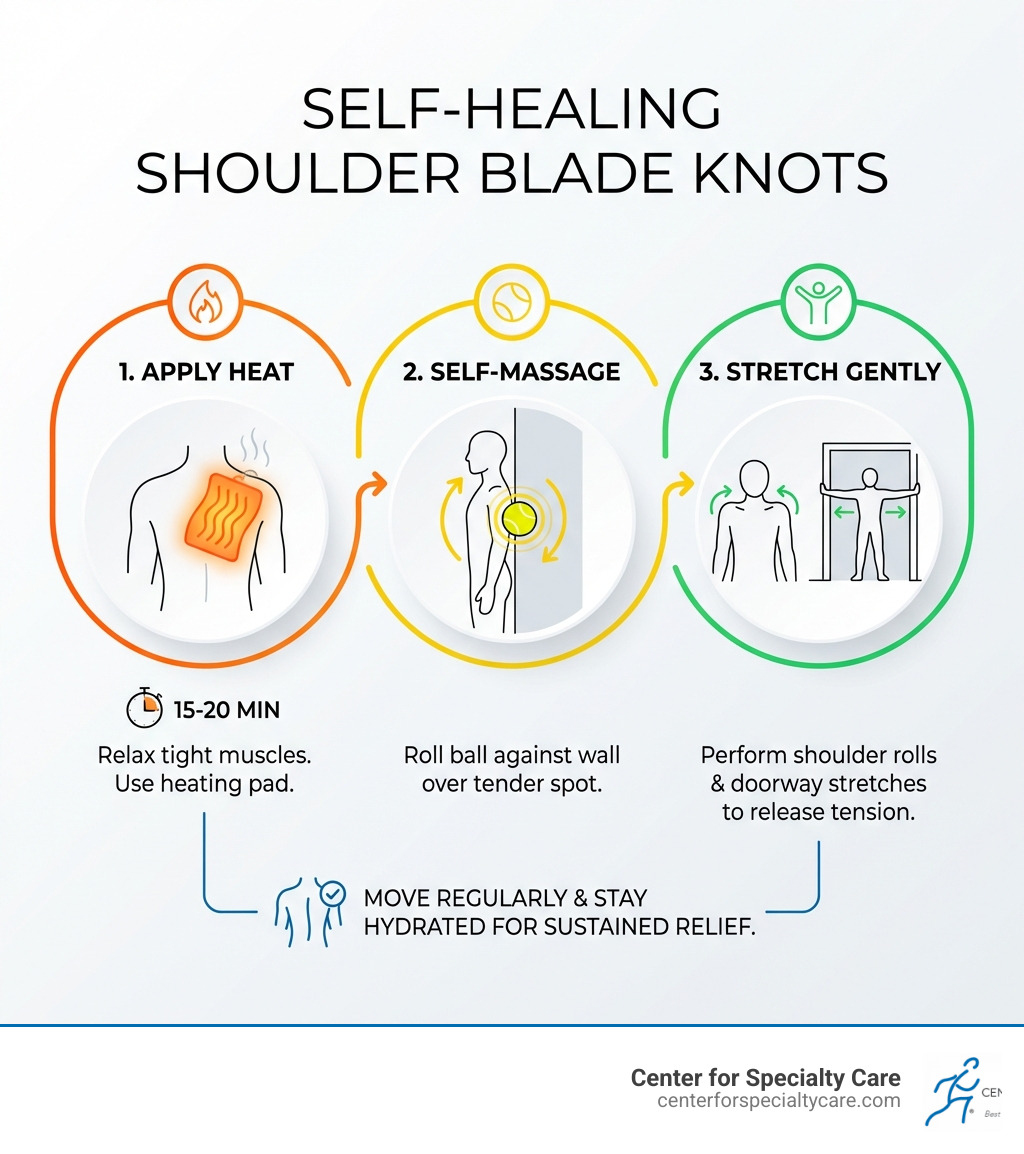
To quickly address a muscle knot behind your shoulder blade:
- Apply Heat: Use a heating pad for 15-20 minutes to relax tight muscles.
- Self-Massage: Roll a tennis or lacrosse ball between your back and a wall over the tender spot.
- Stretch Gently: Perform shoulder rolls and doorway stretches to release tension.
- Move Regularly: Take breaks every 30-60 minutes if you sit for long periods.
- Stay Hydrated: Drink plenty of water to support muscle function.
Understanding these knots and how to manage them at home can bring significant relief.
As Dr. Corey Welchlin, a board-certified orthopedic surgeon and sports medicine physician, I’ve dedicated my career to helping countless patients find lasting relief from musculoskeletal pain, including guiding them on how to self heal muscle knot behind shoulder blade. My team and I are committed to providing you with innovative pain-relief solutions and rehabilitation, ensuring you can move through life without discomfort.
Important how to self heal muscle knot behind shoulder blade terms:
Decoding the Knot: What It Is and Why It’s There
That nagging discomfort behind your shoulder blade, often described as a “knot,” has a medical name: a myofascial trigger point. Think of it as a small, tightly clenched bundle of muscle fibers, even when the muscle itself is at rest. These tense bands can feel like a small lump, pea, or nodule right under your skin, and they’re often tender to the touch. When these fibers remain contracted, they compress tiny blood vessels, leading to reduced blood flow. This lack of oxygen and the buildup of waste products create a vicious cycle of tension and pain, making the muscle unable to relax fully.
The area behind your shoulder blade is particularly susceptible to these knots. Why? Because seventeen muscles attach to your shoulder blades, connecting them to your neck, shoulders, and lower back. This complex network makes the region a common hotspot for tension, especially in muscles like the rhomboids, trapezius, levator scapulae, and infraspinatus. When we experience a knot behind our left shoulder blade, it typically involves one of these hardworking muscles. While muscle knots can feel uncomfortable, they aren’t inherently harmful, but they are your body’s way of signaling that something needs attention. For a deeper dive into the medical definition, you can explore what a myofascial trigger point is.
What brings these unwelcome visitors to our backs? Often, it’s a combination of modern lifestyle factors:
- Poor Posture: Prolonged static positions, like hunching over a computer, push your shoulders and head forward. This overstretches and strains your upper back and neck muscles, including the rhomboids, which lie between your shoulder blades. The result? Tightness and those pesky trigger points.
- Sedentary Lifestyle: Extended periods of sitting, common in many jobs, significantly contribute to muscle knots. Our bodies are designed for movement, and a lack of it can lead to stiffness and tension.
- Repetitive Motions: Activities that involve repeated movements of the arms or shoulders can lead to overuse and fatigue in specific muscles, making them prone to knot formation. This is particularly true if these movements are unbalanced or performed with poor mechanics.
- Emotional Stress: Our shoulders, upper back, and neck are common places for us to hold stress and tension. When we’re stressed, our muscles naturally tense up, and prolonged tension can lead to knots.
- “Tech Neck”: Constantly looking down at phones or tablets creates a forward head posture that puts immense strain on the neck and upper back muscles. This modern habit is a frequent culprit for knots behind the shoulder blade.
- Dehydration and Diet: Hydration is key to muscle movement and function. Insufficient water intake, along with a diet lacking essential minerals like calcium, potassium, and magnesium, can make muscles more prone to cramping and spasms, contributing to knots.
The symptoms of a muscle knot behind the shoulder blade can vary, but they often include:
- Localized Pain and Tenderness: A specific spot that feels sore or aching, and is painful when touched. You might feel a distinct, firm lump that is tender to the touch.
- Dull Ache or Throbbing Sensation: A persistent, low-level discomfort that can range from mild to intense.
- Stiffness and Limited Movement: The affected muscle may feel stiff, making it difficult to move your shoulder or arm through its full range of motion.
- Referred Pain: Interestingly, muscle knots can cause symptoms in areas outside of the affected muscles. This might include headaches (especially from knots in the upper trapezius), toothaches, or earaches. You may also experience stress, anxiety, and difficulty sleeping due to the persistent discomfort.
Understanding these causes and symptoms is the first step in knowing how to self heal muscle knot behind shoulder blade and take proactive steps toward relief.
Your Step-by-Step Guide on How to Self-Heal a Muscle Knot Behind Your Shoulder Blade
When a muscle knot makes its unwelcome appearance, we want relief, and we want it now! Fortunately, there are several effective at-home techniques you can employ to soothe that tender spot.
Our first recommendation is to listen to your body. Sometimes, the best immediate action is simply rest. Take a break from activities that aggravate the knot. If certain sitting or sleeping positions worsen the pain, change your routine until you feel better.
Incorporating gentle movement is also crucial. Staying completely still can often make stiffness worse. Simple, non-strenuous movements can help improve blood flow and encourage the muscle to relax.
Hot and cold therapy offers a powerful one-two punch for muscle knots. We often recommend alternating between the two, or using whichever feels best for your specific discomfort.
| Therapy Type | Benefits | Application |
|---|---|---|
| Heat Therapy | Relaxes and loosens stiff muscles, relieves pain, increases blood flow which promotes healing, dilates blood vessels bringing more oxygen and nutrients to the area. | Apply a heating pad, warm compress, or take a warm bath for 15-20 minutes. |
| Cold Therapy | Constricts blood vessels, reduces swelling and inflammation, numbs the area to reduce pain. | Apply a cold compress (wrapped in a cloth to protect skin) for 10 minutes, then remove for at least 15 minutes. Repeat as needed. |
Cold therapy is particularly effective for new injuries or inflammation, while heat is excellent for chronic, achy knots. Many find that alternating between heat and cold can provide optimal relief.
Specific Stretches for How to Self-Heal a Muscle Knot Behind Your Shoulder Blade
Stretching is a cornerstone of self-healing muscle knots. It helps lengthen and relax muscle fibers, improving flexibility and reducing tension. When stretching, remember to be gentle and avoid any movements that cause sharp pain. For best results, hold stretches for at least 30 seconds, and release slowly to reduce your risk of injury.

Here are some specific stretches that can help target the muscles around your shoulder blade:
Doorway Stretch: This stretch helps open up your chest, counteracting the forward-rounded posture that often contributes to shoulder blade knots.
- Stand in a doorway with your forearms on the doorframe, elbows bent at 90 degrees.
- Step forward gently with one foot, leaning into the stretch until you feel it across your chest and shoulders.
- Hold for 30 seconds, breathing deeply. Repeat 2-4 times.
Cat-Cow Pose: A fantastic way to mobilize your spine and gently stretch your back muscles.
- Start on your hands and knees, hands directly under your shoulders and knees under your hips.
- Cat: As you exhale, round your spine towards the ceiling, tucking your chin to your chest and pulling your shoulder blades apart.
- Cow: As you inhale, drop your belly towards the floor, lift your chest and tailbone, and gently squeeze your shoulder blades together.
- Flow between these two poses for 1-2 minutes, coordinating with your breath.
Chin Tucks: This simple exercise helps correct forward head posture and lengthens the muscles at the back of your neck.
- Sit or stand tall, looking straight ahead.
- Gently tuck your chin towards your chest, as if making a double chin, while keeping your head level. You should feel a stretch at the base of your skull.
- Hold for 5-10 seconds, then release. Repeat 10-15 times.
Thread the Needle Stretch: This provides a deep stretch for your upper back and shoulders.
- Start on your hands and knees, similar to Cat-Cow.
- Reach one arm under your opposite armpit, palm facing up, lowering your shoulder and head to the floor.
- Keep your hips liftd and feel the stretch in your upper back and shoulder.
- Hold for 30 seconds, then slowly return to the starting position and repeat on the other side.
Shoulder Rolls: Simple yet effective for releasing tension.
- Sit or stand tall with your arms relaxed at your sides.
- Roll your shoulders up towards your ears, then back, then down, and then forward in a smooth, circular motion. Repeat 2-4 times.
- Reverse the direction: press your shoulders down, then back, then up, and then forward. Repeat 2-4 times.
For more information on the benefits and techniques of stretching, you can find helpful resources on gentle stretching. Consistency is key when it comes to stretching for muscle knots.
Self-Massage Techniques for How to Self-Heal a Muscle Knot Behind Your Shoulder Blade
Self-massage, specifically myofascial release, is an incredibly effective way to directly address those tight spots. Myofascial release focuses on applying sustained pressure to trigger points to encourage the muscle fibers to relax and release.

Here’s how you can perform self-massage using common tools:
- Tennis Ball or Lacrosse Ball: These are excellent tools for targeted pressure.
- Place the ball between your back and a wall (or the floor if you prefer more pressure).
- Position the ball directly on the tender spot behind your shoulder blade.
- Lean into the ball, applying firm but tolerable pressure. You might feel some discomfort, but it should not be sharp or excruciating pain.
- Hold the pressure on the spot for 30-60 seconds, or until you feel the tension begin to release. You can also roll gently back and forth or in small circles over the area.
- The theory behind this is that limiting blood flow to the knot by applying pressure, and then releasing it, allows more blood to flow into the area, promoting relaxation and healing.
- Foam Roller: A foam roller can cover a larger area and is great for general upper back tension.
- Lie on your back with the foam roller positioned horizontally across your upper back, just below your shoulder blades.
- Cross your arms over your chest or place your hands behind your head to support your neck.
- Lift your hips slightly and slowly roll up and down your upper back, allowing the roller to massage the muscles between your spine and shoulder blades.
- When you find a particularly tender spot, pause and hold pressure for 30 seconds, or until the tension subsides.
- Finger Pressure: Don’t underestimate the power of your own hands!
- Gently work the affected areas with your fingers, applying sustained pressure to the knot.
- This is a form of myofascial release therapy that relies on constant, deep, gentle pressure to help release the tension and break up those constricted tissues.
Important Caution: While self-massage is beneficial, it’s crucial to avoid over-massaging. Excessive pressure or prolonged massaging can irritate the muscle, leading to more inflammation, bruising, and increased pain. Use firm but gentle pressure for about 15-20 minutes at a time, and ease up if you feel sharp pain. Listen to your body – it will tell you what’s too much.
Building a Knot-Resistant Back: Long-Term Prevention Strategies
Once you’ve experienced the discomfort of a muscle knot, the next logical step is to prevent its return. Building a knot-resistant back involves a holistic approach that addresses daily habits and strengthens your body.
- Posture Correction and Ergonomics: Poor posture is a major contributor to knots.
- Optimize Your Workspace: If you spend a lot of time at a desk, ensuring an ergonomic setup is paramount. Position your monitor at eye level and an arm’s length away. Use a supportive chair that allows your feet to rest flat on the floor (use a footrest if needed), and ensure your elbows are bent at a 90-degree angle when typing. We offer valuable office ergonomics tips that can make a significant difference.
- Mindful Posture: Beyond your desk, practice mindful posture throughout the day. Relax your shoulders down and back, align your head over your spine, and avoid slouching.
- Regular Movement Breaks: Our muscles are not meant to stay in static positions for long periods.
- Break the Cycle: Take a break and get up and move at least once every hour of extended sitting. Set a timer to remind you to stand, walk around, or do a few simple stretches. This helps improve blood flow, reduces muscle tension, and prevents stiffness.
- Strengthening Exercises: Strong muscles are less prone to fatigue and knots.
- Targeted Strengthening: Focus on exercises that strengthen the upper back, shoulders, and core.
- Seated Rows: Using resistance bands or a machine, pull back, squeezing your shoulder blades together.
- Shoulder Blade Squeezes: Sit or stand tall, keep your shoulders relaxed, and gently squeeze your shoulder blades together for 6 seconds, then relax. Repeat 8-12 times.
- Core Strength: A strong core provides a stable foundation for your upper body, reducing strain on your back and shoulder muscles. Incorporate exercises like planks and bird-dogs.
- Rotator Cuff Stabilization: Don’t forget the smaller, stabilizing muscles around your shoulder. Exercises with light resistance bands can help prevent overuse of larger muscles.
- Physical therapy can provide a personalized program to strengthen these key areas. You can learn more about shoulder physical therapy and its benefits.
- Lifestyle Changes: These broader habits significantly impact muscle health.
- Hydration: Drink plenty of water throughout the day. Hydration is key to muscle movement and overall health, helping prevent cramping and spasms.
- Stress Management: Since stress often manifests as muscle tension, managing it is crucial. Techniques like deep breathing, meditation, yoga, or simply setting aside time for relaxation can make a big difference. Anything that’s aggravating you – sitting or sleeping positions, physical activities – it’s OK to avoid them or change your routine until you’re feeling better.
- Balanced Diet: A healthy diet rich in calcium, potassium, and magnesium supports muscle function and recovery.
- Adequate Sleep: Give your body enough time to repair and recover. Aim for 7-9 hours of quality sleep each night.
Muscle knots aren’t always avoidable, but by incorporating these proactive measures into your daily routine, you can significantly reduce your risk and improve your overall musculoskeletal health.
When At-Home Care Isn’t Enough: Seeking Professional Help
While self-healing techniques can be incredibly effective for many muscle knots, there are times when professional intervention is necessary. We urge you to seek professional help if:
- Pain Persists: If your pain persists for more than two weeks despite consistent at-home care, it’s time to consult a healthcare provider.
- Severe or Worsening Pain: If the pain is severe, progressively worsening, or interfering with your daily life and well-being, don’t delay seeking medical attention.
- Numbness or Tingling: If you experience numbness, tingling, or weakness in your arm, hand, or fingers, this could indicate a more serious underlying issue, such as a pinched nerve.
- Red Flag Symptoms: Be aware of other concerning symptoms like fever, unexplained weight loss, or if the knot appears suddenly after a significant injury. These warrant immediate medical evaluation.
For persistent or complex cases, a range of professional treatments can provide relief and address underlying causes:
- Physical Therapy: Our physical therapists can identify muscle imbalances, postural issues, and movement patterns contributing to your knots. They will guide you through targeted exercises, stretches, and manual therapy techniques to release tension, strengthen weak muscles, and prevent recurrence. Physical therapy is one of the top treatments for joint and muscle pain, helping to build strength, improve mobility, and reduce pain. Explore our Physical Therapy services.
- Massage Therapy: Professional massage therapists can apply specialized techniques like deep tissue massage, trigger point therapy, or myofascial release to effectively break up stubborn knots and restore muscle function. This can relax tight muscles and improve blood flow, often providing significant relief where self-massage might fall short.
- Trigger Point Injections: For highly stubborn or painful knots, a healthcare provider might administer trigger point injections. These involve injecting a local anesthetic, sometimes with a corticosteroid, directly into the trigger point to alleviate pain and relax the muscle.
- Dry Needling: Performed by trained physical therapists or doctors, dry needling involves inserting thin needles into trigger points. This technique aims to stimulate the muscle and cause it to contract and then relax, helping to release tension.
- Pain Management: For chronic or severe pain, a comprehensive Pain Management approach may be necessary. This can involve a combination of therapies custom to your specific needs, focusing on long-term relief and improved quality of life.
Our team at Center for Specialty Care in Fairmont MN, Estherville IA, Buffalo Center IA, and St James MN is here to provide comprehensive, personalized care for your shoulder pain. We believe in 100% patient satisfaction and quick appointment availability, ensuring you get the expert help you need when you need it.
Frequently Asked Questions about Shoulder Blade Knots
We understand you might have more questions about these common, yet bothersome, muscle knots. Here are some answers to frequently asked questions:
How long does it take for a knot behind the shoulder blade to go away?
The duration for a muscle knot to resolve can vary. For minor knots, with consistent self-care techniques like heat, stretching, and self-massage, you might experience relief and resolution within a few days to a couple of weeks. However, chronic knots or those linked to underlying issues like poor posture or repetitive strain may take longer to treat and often benefit significantly from professional treatment, such as physical therapy or massage. Healing is a process, and consistency in your self-care routine is key.
Can a knot behind the shoulder blade be a sign of something serious?
In most cases, a knot behind the shoulder blade is a benign muscle issue and not a sign of something serious. It’s usually a result of muscle tension, overuse, or poor posture. However, it’s important to be aware of certain red flag symptoms that could indicate a more serious underlying condition. You should seek medical evaluation if the knot is accompanied by:
- Severe pain that doesn’t improve or worsens.
- Weakness, numbness, or tingling in your arm, hand, or fingers.
- Fever or unexplained weight loss.
- If the pain radiates to other parts of your body in an unusual pattern.
- If the lump feels hot to the touch, is red, growing, or draining fluid. These could signal conditions like a pinched nerve (cervical radiculopathy) or other issues that require professional diagnosis and treatment. When in doubt, it’s always best to consult a doctor for shoulder problems to rule out any serious conditions.
Can you over-massage a muscle knot?
Yes, you absolutely can over-massage a muscle knot. While self-massage is a powerful tool for relief, applying excessive pressure or massaging for too long can actually irritate the muscle further. This can lead to increased inflammation, bruising, and even more pain, setting back your healing process. The goal is to apply gentle but firm pressure that is tolerable, not excruciating. Listen to your body: if you feel sharp pain, ease up immediately. Limit your self-massage sessions to about 15-20 minutes at a time, and ensure you’re not causing any skin irritation or bruising. The key is consistent, gentle pressure rather than aggressive force.
Take Control of Your Shoulder Health
We’ve explored a comprehensive guide on how to self heal muscle knot behind shoulder blade, covering everything from understanding what these knots are and why they form, to implementing effective self-care techniques. From targeted stretches and self-massage with tools like tennis balls and foam rollers, to embracing heat and cold therapy, you have many options at your fingertips for immediate relief.
Equally important is the emphasis on prevention. By making simple adjustments to your posture and ergonomics, incorporating regular movement breaks, strengthening key muscle groups, staying hydrated, and managing stress, you can significantly reduce the likelihood of these knots returning.
However, we understand that sometimes, despite your best efforts, pain can persist or worsen. It’s crucial not to ignore persistent pain or any concerning symptoms. Our team at Center for Specialty Care is dedicated to providing personalized care and advanced solutions for all types of shoulder discomfort. Don’t let shoulder pain hold you back from enjoying life to the fullest. We are proud to offer comprehensive orthopedic and pain management services to the communities of Fairmont MN, Estherville IA, Buffalo Center IA, and St James MN.
Take control of your shoulder health today. We are here to help you move through life without discomfort. Explore our comprehensive shoulder care services and find how we can help you achieve lasting relief and improved well-being.