
Flat Foot Fix: The Best Trainers for Flat Feet and Men Who Need Support
May 7, 2026
Tendinitis Pain: Should You Apply Ice or Heat for Fast Relief?
May 9, 2026
What patients really think about Intracept
What Patients Really Think About the Intracept Procedure
Intracept procedure reviews are overwhelmingly positive — and the clinical data backs that up.
Here is a quick summary of what patients report:
| Outcome | Result |
|---|---|
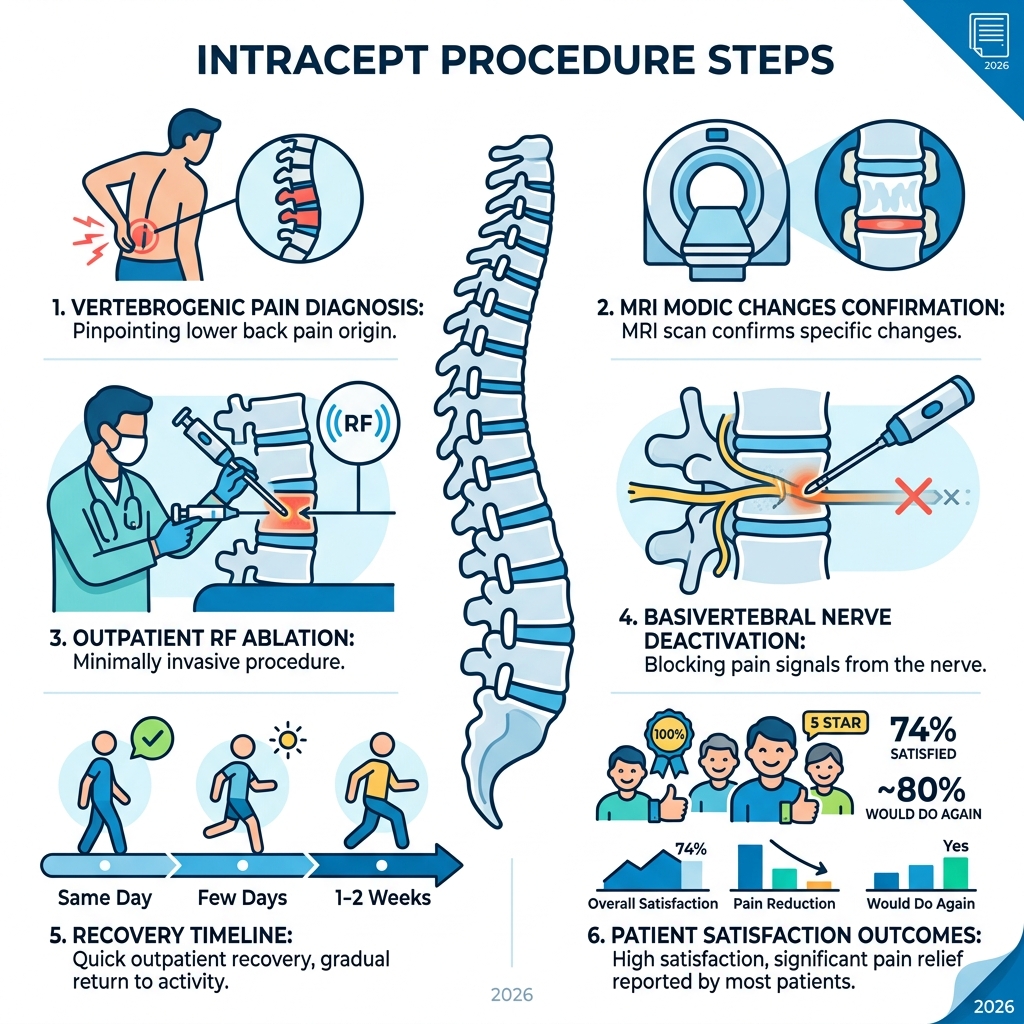
| Patient satisfaction | 74% satisfied with results |
| Would do it again | ~80% of patients |
| At least 50% pain reduction | 65-69% of patients |
| At least 75% pain reduction | 36% of patients |
| Complete pain relief (100%) | 22-38% of patients |
| Relief maintained at 5 years | 66% of patients |
| Resumed previous activity levels | Nearly 70% of patients |
| Serious complication rate | Less than 0.3% |
The Intracept procedure targets a specific nerve inside the spine called the basivertebral nerve. When vertebral endplates break down over time, this nerve sends constant pain signals to the brain. Intracept uses radiofrequency energy to stop those signals — without implants, without fusion, and without major surgery.
For people who have tried physical therapy, injections, and medications without lasting relief, this procedure has been a turning point. As one patient described after nearly two decades of chronic pain: “For the first time in 19 years, I don’t hurt.”
I’m Dr. Corey Welchlin, a board-certified orthopedic surgeon with over 30 years of experience treating musculoskeletal pain through both surgical and minimally invasive approaches — and intracept procedure reviews are something I follow closely as part of delivering the most effective, evidence-based care to my patients. In this guide, I’ll walk you through exactly what patients and clinical studies say about this treatment so you can make a fully informed decision.
Learn more about intracept procedure reviews:
- intracept procedure
- intracept procedure recovery
- what is the success rate of the intracept procedure
Understanding the Intracept Procedure and How It Works
To understand why intracept procedure reviews are so distinct from reviews of other back treatments, we have to look at the anatomy. For years, doctors focused almost exclusively on discs and pinched nerves. However, research has shown that a significant portion of chronic low back pain actually comes from the vertebral bodies themselves—specifically the endplates.
This is known as vertebrogenic pain. Over time, the wear and tear on your spine causes these endplates to become inflamed and damaged. This damage is visible on an MRI as “Modic changes” (Type 1 or Type 2). Inside these damaged bones sits the basivertebral nerve (BVN), which carries pain signals from the endplates to your brain.
The Intracept procedure uses radiofrequency ablation to “turn off” this nerve. During the outpatient procedure, we use image guidance to reach the exact trunk of the basivertebral nerve. Once the probe is in place, radiofrequency energy is used to heat and ablate the nerve, permanently disrupting the pain pathway.
Because the BVN does not provide motor function or sensation to the legs, deactivating it is safe and does not affect your mobility. According to Scientific research on BVN ablation outcomes, this relief is not just a temporary mask; it is a durable change that becomes apparent within weeks and can last for years.
Analyzing Intracept Procedure Reviews: Success Rates and Satisfaction
When we look at the data, the numbers are hard to ignore. In our practice serving Fairmont, MN, and the surrounding areas, we see patients who have been “through the ringer” with other treatments. They want to know if this actually works.

According to pooled clinical data, the intracept procedure reviews reflect a high level of clinical success:
- 74% of patients report being satisfied with their results.
- Nearly 80% would choose to have the procedure again.
- 65% to 69% of patients experience at least a 50% reduction in their chronic pain.
- Remarkably, between 22% and 38% of patients report 100% pain relief—meaning their back pain is completely gone.
What sets Intracept apart in a A systematic review of BVN ablation effectiveness is the durability. Unlike steroid injections that might wear off in three months, Intracept outcomes remain stable. Five-year studies show that 77% of patients maintain a clinically meaningful improvement in their daily function.
Real Patient Experiences and Intracept Procedure Reviews
Numbers are great, but the stories of our neighbors in Minnesota and Iowa are what truly highlight the impact. Many patients describe the procedure as a “paradigm shift.”
Take the story of David, who suffered for years after a fall. He had tried physical therapy, chiropractic care, and even other surgeries, but a nagging, dull ache remained. About 10 days after his Intracept procedure, he woke up and realized the “hinging” pain in his lower back was simply gone. Within weeks, he was back to hiking and biking—activities he thought were gone forever.
Other patients, like Michael, emphasize the return to “normalcy.” For him, success wasn’t about running a marathon; it was about being able to stand at a museum for two hours or sit through a movie without needing to constantly shift positions.
One of the most significant findings in intracept procedure reviews is the impact on medication. Studies have shown a 73% reduction in opioid use at the five-year mark for patients who underwent BVN ablation. This is life-changing for patients who want to reclaim their lives from the fog of chronic pain medication. You can find more info about Intracept services on our dedicated procedure page.
Long-Term Relief in Intracept Procedure Reviews
One of the most common questions we hear in Fairmont is: “Is this going to last?”
The answer, according to the research, is a resounding yes. Because the procedure targets the nerve trunk within the bone—a structure that doesn’t “grow back” in a way that restores the pain pathway—the relief is exceptionally durable.
- Maintenance: 66% of patients maintain a 50% or greater pain reduction at the 5-year follow-up.
- Function: Patients show significant improvements in their Oswestry Disability Index (ODI) scores, which measures how much back pain affects daily life.
- Activity: Nearly 70% of patients are able to resume their previous activity levels, whether that’s golfing, gardening, or returning to work.
Who is a Candidate for the Intracept Procedure?
Not all back pain is the same. If you have a herniated disc or spinal stenosis, Intracept may not be the right choice. This procedure is specifically designed for vertebrogenic pain.
We look for several key indicators to see if you are a candidate:
- Chronic Pain Duration: You must have suffered from chronic low back pain for at least six months.
- Failed Conservative Care: You have tried physical therapy, medications, or other non-surgical treatments for at least six months without success.
- MRI Confirmation: This is the “smoking gun.” Your MRI must show Modic Type 1 or Type 2 changes at the L3 to S1 vertebrae. These changes indicate inflammation or damage to the endplates.
- Symptoms: Your pain is usually localized in the lower back, feels like a deep ache, and gets worse with sitting, forward bending, or lifting.
According to An overview from Cleveland Clinic, the procedure is not recommended for those who are pregnant, have active systemic infections, or have certain implanted electronic devices like pacemakers. At Center for Specialty Care, we perform a thorough evaluation to ensure that your pain source matches the procedure’s target.
Recovery Timeline and Potential Side Effects
One reason intracept procedure reviews are so positive is the relatively easy recovery. Unlike a spinal fusion, which can involve months of “no bending, lifting, or twisting,” Intracept is minimally invasive.
- The First 48 Hours: Most patients are advised to rest. You may feel some soreness at the incision site (which is typically small enough to be covered by a simple bandage).
- 1–2 Weeks: Most patients return to their normal daily routines. Full recovery of the soft tissues around the site usually takes about two weeks.
- Relief Timeline: While some patients feel better almost immediately, it is common for relief to scale up over time. Many see significant improvement by week 6, with peak results appearing between 3 and 6 months.
Potential side effects are generally mild and temporary. They can include:
- Temporary increase in pain at the procedure site.
- Mild swelling or bruising.
- Transient numbness or tingling in the legs (rare).
- Risk of infection or bleeding (serious complications occur in less than 0.3% of cases).
Frequently Asked Questions about Intracept
Is the Intracept procedure covered by insurance?
Yes, coverage has expanded significantly. Medicare Part B covers the procedure when medical necessity criteria are met (6 months of pain, failed conservative care, and Modic changes on MRI). Many commercial insurance providers also cover it, though some may require a prior authorization process. Our team at Center for Specialty Care is very experienced in navigating these requirements for our patients in Minnesota and Iowa.
How does Intracept compare to spinal fusion or injections?
This is where Intracept really shines.
| Feature | Intracept | Spinal Fusion | Epidural Injections |
|---|---|---|---|
| Invasive Level | Minimally Invasive | Highly Invasive | Minimally Invasive |
| Implants | None | Hardware/Cages | None |
| Recovery | 1-2 weeks | 3-12 months | 1-2 days |
| Duration of Relief | Years (Durable) | Permanent (but variable) | Weeks/Months (Temporary) |
| Structure | Preserves Spine | Changes Spine | Preserves Spine |
Unlike fusion, Intracept doesn’t limit your range of motion or put extra stress on the levels of your spine above or below the treatment site. And unlike injections, it targets the root cause of the pain rather than just bathing the area in temporary anti-inflammatories.
How long does the pain relief last?
Current clinical data shows that the relief lasts at least five years, and for many, it appears to be permanent. Because the nerve is ablated at the trunk and the bone environment doesn’t typically allow for functional nerve regeneration of that specific pathway, the “off switch” stays off. This leads to sustained functional gains and a permanent improvement in quality of life.
Conclusion
At Center for Specialty Care, we know that chronic back pain isn’t just a physical sensation—it’s an emotional weight that keeps you from your family, your hobbies, and your livelihood. The intracept procedure reviews from patients across the country reflect a new era of hope for those suffering from vertebrogenic pain.
If you’ve been told “nothing else can be done” or that “surgery is your only option,” it’s time for a second opinion. Our Fairmont orthopedic experts specialize in personalized pain management, and we pride ourselves on quick appointment availability so you don’t have to wait months for relief.
Don’t let another season pass while you’re stuck on the sidelines. We are here to help you determine if this breakthrough treatment is the key to your “life beyond pain.”
Schedule your Intracept consultation today and take the first step toward a pain-free future.