

Ouch, My Shoulder Blades! A Guide to Rhomboid Strain Symptoms
July 10, 2026
Rhomboid Knot Foam Rolling: The Ultimate Guide to Shoulder Blade Relief
July 14, 2026
When Acid Reflux Backs Up Into Your Back
When Your Stomach Pain Ends Up in Your Back
Heartburn and shoulder blade pain often occur together — and that combination confuses a lot of people.
Here’s the quick answer:
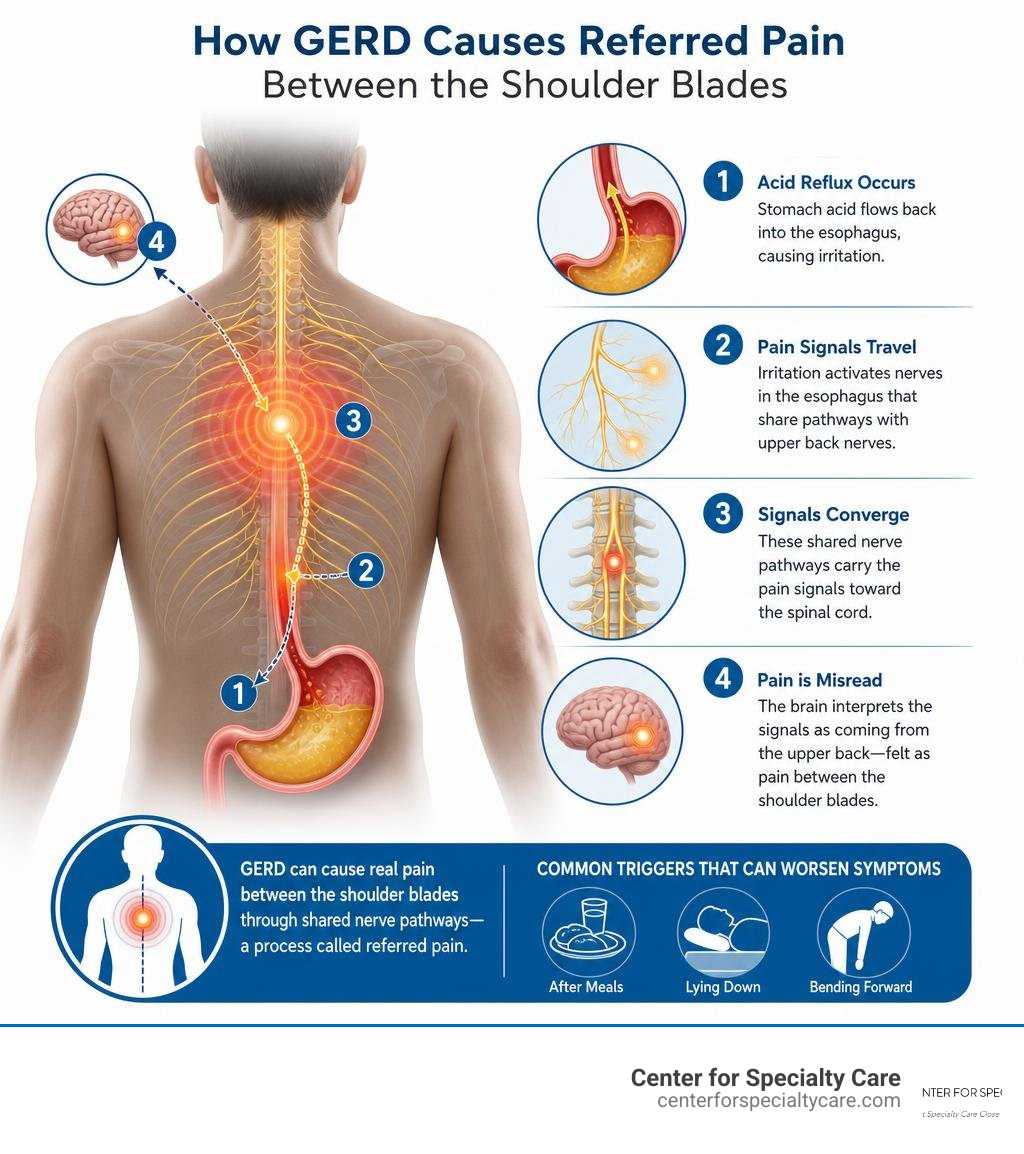
- Yes, acid reflux and GERD can cause pain between the shoulder blades. This happens through a process called referred pain, where irritation in your esophagus sends pain signals that your brain reads as upper back pain.
- The pain is typically a burning or stabbing sensation between or beneath the shoulder blades.
- It usually worsens after meals, when lying down, or when bending forward.
- It can be hard to tell apart from a muscle strain or even a heart problem — which is why understanding the difference matters.
Over 15 million Americans experience heartburn every single day. For many of them, the discomfort doesn’t stay in the chest. It travels — up, down, and into the back — in ways that feel completely unrelated to digestion.
That’s what makes this symptom pattern easy to misread and easy to ignore. But ignoring it can mean missing something important.
I’m Dr. Corey Welchlin, a board-certified orthopedic surgeon and founder of the Center for Specialty Care in Fairmont, Minnesota, with over 30 years of experience evaluating and treating musculoskeletal pain — including cases where heartburn and shoulder blade pain turn out to be more connected than patients ever expected. In this guide, I’ll walk you through exactly what’s happening in your body and what you can do about it.
Heartburn and shoulder blade pain vocabulary:
What is Heartburn and How Does It Differ From GERD?
To understand how stomach trouble makes its way to your back, we have to start with the basics of digestion. Many people use the terms “acid reflux,” “heartburn,” and “GERD” interchangeably, but they actually represent different stages of the same underlying digestive issue.
Acid reflux is the physical action of stomach acid flowing upward into the esophagus. Normally, a ring of muscle at the bottom of your esophagus — called the lower esophageal sphincter (LES) — acts as a one-way valve. It opens to let food into your stomach and clamps shut to keep acid from escaping. When the LES relaxes inappropriately or becomes weak, highly acidic stomach contents can splash back up.
Heartburn is the actual symptom caused by this acid reflux. It is the burning, painful sensation felt behind your breastbone. Because the esophageal lining is delicate and not built to withstand harsh stomach acid, the acid quickly irritates the tissues, creating that classic fiery discomfort.
Gastroesophageal Reflux Disease (GERD) is the chronic, more severe form of acid reflux. If you experience heartburn more than twice a week, or if the reflux begins to cause tissue damage or extra-esophageal symptoms, it is classified as GERD.
In some cases, people suffer from what is known as silent reflux (laryngopharyngeal reflux, or LPR). With silent reflux, stomach acid travels all the way up to the throat and larynx. Patients might not experience the classic “burning chest” sensation of heartburn at all. Instead, they present with atypical symptoms like a chronic cough, throat clearing, hoarseness, or mysterious upper back discomfort.
Whether it is classic heartburn or silent GERD, the persistent presence of stomach acid outside the stomach can trigger a cascade of nerve signals that travel far beyond your digestive tract.
How Acid Reflux Triggers Heartburn and Shoulder Blade Pain
If the esophagus is in the front of your chest, how does the pain end up in your back? The answer lies in the complex wiring of the human nervous system.
When stomach acid irritates the esophageal lining, it doesn’t just cause localized damage. It stimulates sensory nerve fibers that share pathways with other areas of your body. This phenomenon is known as referred pain.
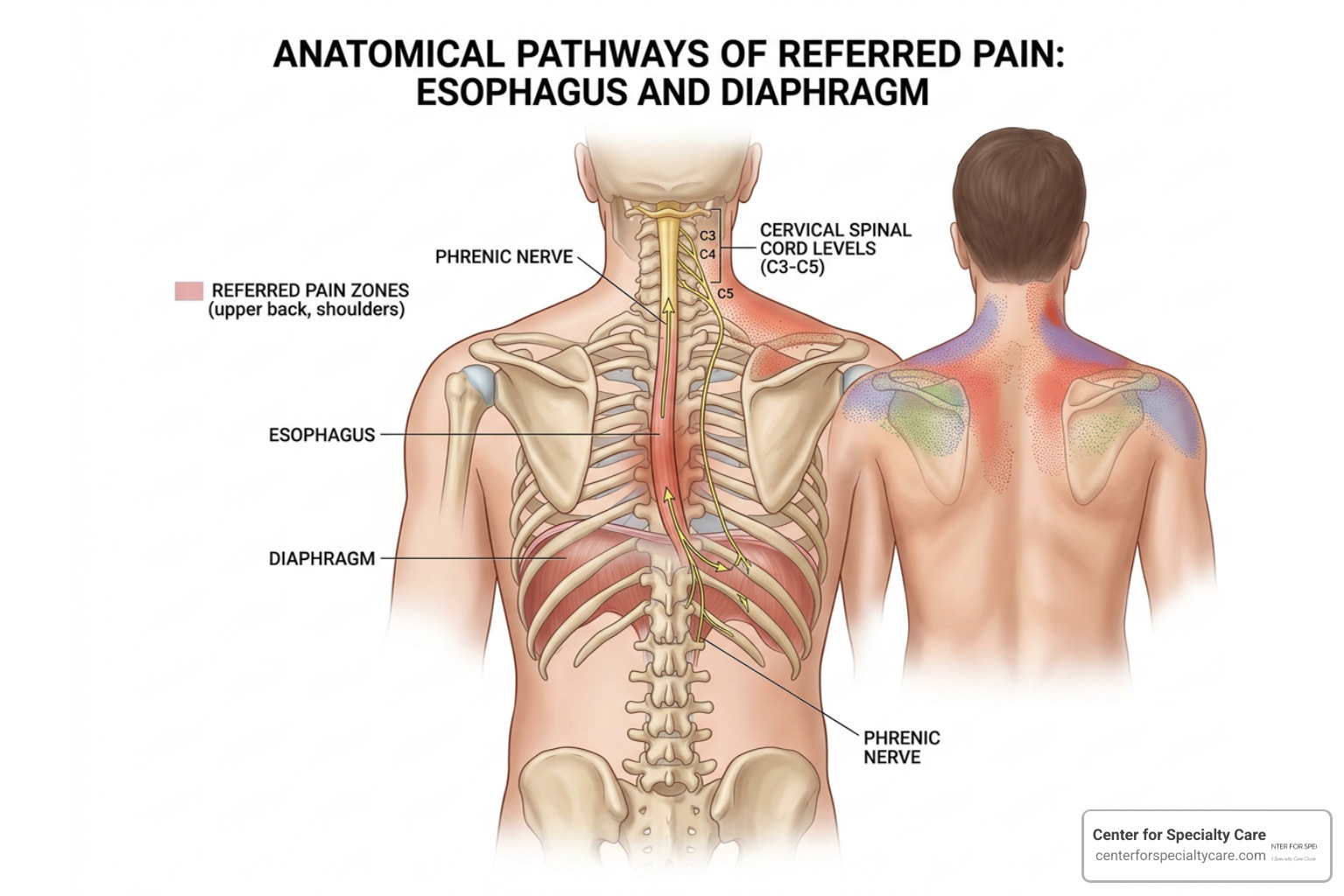
Your brain is incredibly smart, but it can sometimes get its signals crossed. The esophagus, diaphragm, and upper back muscles all send sensory information to the spinal cord along overlapping nerve pathways, including the vagus nerve and the phrenic nerve. When the esophagus is highly irritated by acid, the brain can misinterpret these visceral signals, processing them as pain coming from the musculoskeletal structures of the upper back, specifically leading to scapula pain.
Furthermore, severe acid reflux can cause direct diaphragm irritation. The diaphragm is the dome-shaped breathing muscle that sits right above your stomach. The phrenic nerve innervates the diaphragm and shares nerve roots in the neck with nerves that travel to your shoulders and upper back. When the diaphragm is irritated by acid or a hiatal hernia, the pain can radiate upward, creating clear referred pain pathways that terminate right between your shoulder blades.
Understanding the Connection Between Heartburn and Shoulder Blade Pain
Visceral pain — pain originating from internal organs — is notoriously difficult to pinpoint. Unlike your skin, which has highly localized sensory receptors (allowing you to feel exactly where a pinprick is), your internal organs have a more diffuse network of nerves.
When stomach acid causes inflammation in the lower esophagus, the sensory signals travel up through the thoracic spine. Because these nerves enter the spinal cord at the same levels as the nerves supplying the skin and muscles of the upper back, you may feel a deep, burning, or aching pain under scapula regions.
Additionally, the body often responds to internal inflammation with “muscular guarding.” When your esophagus is irritated, the surrounding muscles in your thoracic spine and upper back may involuntarily tense up to protect the area. This constant, protective muscle tension can quickly lead to painful muscle spasms and trigger points between your shoulder blades.
Esophageal Spasms vs. Typical Heartburn and Shoulder Blade Pain
Sometimes, the connection between your digestive tract and your back is even more direct. Chronic acid exposure can cause the muscles in the walls of your esophagus to contract violently. These are known as esophageal spasms.
Unlike a mild, gradual burn, esophageal spasms often present as a sudden, sharp, and incredibly intense pain. This pain can feel like it is slicing straight through your chest and radiating directly to your back, creating a severe pain below left scapula or right scapula.
Because esophageal spasms can cause a tight, squeezing sensation in the chest that mimics a cardiac event, they can be highly alarming. Understanding the difference between typical heartburn, esophageal spasms, and other potential causes of back pain is crucial for getting the right care.
Differentiating GERD-Related Back Pain From Other Conditions
Because the area between your shoulder blades contains muscles, bones, joints, and lies close to major organs like your heart, lungs, and gallbladder, it can be a hotbed for different types of pain.
| Feature | GERD / Acid Reflux Pain | Musculoskeletal Strain | Cardiac Pain (Heart Attack) |
|---|---|---|---|
| Pain Quality | Burning, stabbing, or deep ache | Dull ache, tight knot, or sharp with movement | Squeezing, heavy pressure, crushing tightness |
| Triggers | Heavy, fatty, or spicy meals; lying down; bending over | Lifting, twisting, poor posture, physical exertion | Physical exertion, emotional stress |
| Relieving Factors | Antacids, sitting upright, sipping water | Rest, heat/ice, stretching, massage | Nitroglycerin, rest (does not respond to antacids) |
| Associated Symptoms | Regurgitation, sour taste, bloating, chronic cough | Localized tenderness, muscle stiffness | Shortness of breath, jaw/arm pain, cold sweats, nausea |
To help you figure out what is causing your discomfort, we must look closely at both musculoskeletal and visceral possibilities. For a comprehensive overview, check out the complete guide to shoulder blade pain causes to see how many different factors can be at play.
Musculoskeletal Causes of Upper Back Pain
Most of the time, when we see patients in Fairmont, Minnesota, complaining of upper back pain, the cause is orthopedic. Common musculoskeletal culprits include:
- Poor Posture: Slouching over a computer or phone strains the muscles and ligaments in your upper back, leading to chronic tension. Interestingly, bad posture can also compress your abdomen, weakening your lower esophageal sphincter and worsening your acid reflux!
- Muscle Strain: Lifting heavy objects incorrectly, sudden twisting, or repetitive overhead movements can strain the rhomboids or trapezius muscles. If you are dealing with this, learning why your shoulder blade hurts and how to fix it can provide immediate relief.
- Herniated Disc: A bulging or herniated disc in the cervical or thoracic spine can compress nearby nerves, sending radiating pain down into the shoulder blades.
- Rib Dislocation: Repetitive strain or sudden trauma can cause a rib to slightly misalign from the thoracic spine, resulting in sharp, stabbing pain when breathing or moving.
Visceral and Referred Pain From Other Organs
If the pain isn’t muscular, it could be referred pain from organs located near the diaphragm:
- Gallbladder Disease: The gallbladder sits just under your liver. Gallbladder attacks, often triggered by eating greasy or fatty meals, cause severe pain in the upper right abdomen that classically radiates to the right shoulder blade.
- Peptic Ulcer: An open sore in the lining of your stomach or duodenum can cause a burning abdominal pain that radiates straight through to the back.
- Pancreatitis: Inflammation of the pancreas causes a severe, steady pain in the upper abdomen that radiates directly to the mid-back.
- Spleen Issues (Kehr’s Sign): Irritation or injury to the spleen can cause referred pain felt specifically in the left shoulder tip and shoulder blade.
Because of these overlapping symptoms, distinguishing GERD from cardiac chest pain is the absolute first step in any medical evaluation.
When to Seek Immediate Medical Attention
While heartburn-related back pain is uncomfortable, it is not a medical emergency. However, a heart attack can present with symptoms that feel almost identical to severe acid reflux — especially in women, older adults, and individuals with diabetes, who are more likely to experience atypical heart attack symptoms.

You should call 911 or go to the nearest emergency room immediately if your shoulder blade pain or chest pain is accompanied by any of the following “red flag” symptoms:
- A feeling of crushing pressure, squeezing, or heaviness in your chest (often described as “an elephant sitting on my chest”).
- Pain that radiates to your jaw, neck, left arm, or both shoulders.
- Sudden, severe shortness of breath or difficulty breathing.
- Unexplained dizziness, lightheadedness, or fainting.
- Cold sweats, nausea, or vomiting.
- A sudden, tearing, or ripping sensation in your chest or back (which can indicate a life-threatening aortic dissection).
Never assume severe or new chest and back discomfort is “just acid reflux” or a simple muscle strain. When in doubt, always have a medical professional rule out cardiac issues first. Once your heart is cleared, we can safely focus on managing your digestive and orthopedic health.
Treatment and Management Options for GERD-Related Back Pain
If your heart is healthy and your doctor confirms that your upper back discomfort is linked to acid reflux, the good news is that you don’t have to live with it. Managing this pain requires a dual approach: treating the underlying acid reflux while addressing any secondary muscle tension in your upper back.
For comprehensive relief, managing radiating pain involves combining lifestyle changes, targeted therapies, and medical interventions.
Dietary and Lifestyle Modifications
Making small changes to your daily routine can dramatically reduce the amount of acid escaping your stomach:
- Identify and Avoid Trigger Foods: Fatty foods, spicy dishes, citrus fruits, tomatoes, caffeine, chocolate, onions, and alcohol are notorious for relaxing the lower esophageal sphincter. Keep a food journal to track which foods correspond with your back pain.
- Eat Smaller, More Frequent Meals: Large meals overfill your stomach, putting upward pressure on the LES. Eating smaller portions helps keep stomach pressure low.
- Stay Upright After Eating: Avoid the temptation to lie down or lounge on the couch immediately after a meal. Sit upright or take a gentle walk for at least two to three hours after eating to let gravity keep the acid where it belongs.
- Adjust Your Sleeping Position: Elevate the head of your bed by 6 to 8 inches using bed risers or a wedge pillow. This keeps your esophagus above your stomach while you sleep. Additionally, sleeping on your left side has been shown to reduce reflux episodes due to the natural anatomy of the stomach.
- Stress Management: Stress hormones can make your esophagus highly sensitive to even small amounts of acid. Interestingly, research involving over 12,000 GERD patients revealed that those with higher stress levels are more prone to developing GERD and persistent chest pain. Practice stress-relief techniques like deep breathing, meditation, or yoga.
- Correct Your Posture: Practice sitting up straight, especially during and after meals. This prevents abdominal compression and helps align your spine, reducing both reflux and muscular back strain.
Medical and Therapeutic Interventions
When lifestyle modifications aren’t quite enough, several medical and therapeutic options are available:
- Over-the-Counter Medications: Antacids (like Tums) can provide quick, temporary relief by neutralizing stomach acid. H2 blockers (like famotidine) reduce acid production for longer periods.
- Proton Pump Inhibitors (PPIs): Medications like omeprazole are highly effective at blocking acid production to allow the esophageal lining to heal. However, statistics show that 40% of patients taking PPIs are not getting the relief they need, and long-term use can carry risks. It is important to work with a doctor to find the right medical balance.
- Physical Therapy: If chronic acid reflux has caused your upper back muscles to lock up in a state of constant tension, physical therapy can help. A physical therapist can guide you through targeted stretches, core strengthening, and manual therapy to release a painful knot behind left shoulder blade or right shoulder blade.
- Surgical Options: For severe, chronic GERD that does not respond to conservative treatments, minimally invasive surgical procedures (such as fundoplication or the LINX device) can reinforce the lower esophageal sphincter to permanently stop reflux.
Frequently Asked Questions about Heartburn and Back Pain
Can acid reflux cause pain between the shoulder blades?
Yes. When stomach acid irritates the esophagus, the sensory nerves send signals to the spinal cord. Because these nerves share pathways with the nerves supplying the muscles and skin of your upper back, your brain can interpret the irritation as a burning or stabbing pain felt between your shoulder blades.
How do I know if my shoulder blade pain is from my heart or my stomach?
Generally, pain from acid reflux or GERD is triggered or worsened by eating certain foods, lying down, or bending over, and it often improves after taking antacids. Cardiac pain, on the other hand, is typically triggered by physical exertion or stress, is not affected by eating or position, does not respond to antacids, and is often accompanied by shortness of breath, dizziness, or pain radiating to the jaw and left arm. Always seek emergency care if you suspect a heart issue.
What is the best sleeping position to prevent acid reflux and back pain?
The ideal position is sleeping on your back with the head of your bed elevated by 6 to 8 inches, or sleeping on your left side. Sleeping on your left side keeps the junction between your stomach and esophagus above the level of gastric acid, preventing nighttime reflux. Avoid sleeping on your stomach, as it flattens the natural curve of your spine and can worsen upper back pain.
Conclusion
Heartburn and shoulder blade pain are a frustrating, confusing duo, but understanding how your digestive system and musculoskeletal system interact is the first step toward finding relief. Whether your pain is caused by referred acid irritation, poor posture, or an orthopedic muscle strain, you don’t have to navigate it alone.
At the Center for Specialty Care in Fairmont, Minnesota, we specialize in comprehensive orthopedic and pain management care. We are dedicated to helping our patients find the root cause of their discomfort, offering both personalized non-surgical therapies and advanced surgical options. With our commitment to 100% patient satisfaction, highly personalized care, and quick appointment availability, we make sure you get the answers and relief you deserve.
If you are experiencing persistent upper back discomfort, or if you are dealing with joint issues like shoulder clicking and pain relief needs, we are here to help. We serve patients across our convenient locations, including Fairmont, MN, St. James, MN, Estherville, IA, and Buffalo Center, IA.
Don’t let unexplained pain hold you back. Contact us today to schedule your personalized evaluation!