
A-Z Guide to Heat for Tendonitis
October 20, 2025
How to Relieve Rotator Cuff Pain at Night, Even if New to It
October 22, 2025
Is Intracept Procedure a Surgery: 2025 Breakthrough!
A New Horizon for Chronic Low Back Pain
Is intracept procedure a surgery? Yes, the Intracept procedure is classified as a minimally invasive surgery that uses radiofrequency ablation to target the basivertebral nerve within your vertebrae.
Quick Answer:
- Type: Minimally invasive outpatient surgery
- Technique: Radiofrequency ablation of the basivertebral nerve
- Incision: Single small incision
- Implants: None required
- Duration: 60-90 minutes
- Recovery: Same-day discharge
Chronic low back pain affects millions of people, with 80% of adults experiencing it at some point in their lives. When conservative treatments like physical therapy, medications, and injections fail to provide relief, many patients feel hopeless about their options.
The Intracept procedure offers new hope for those suffering from a specific type of chronic pain called vertebrogenic pain. This pain originates from damaged vertebral endplates and the basivertebral nerve that runs through your spine’s bone structure – not from discs or muscles like other back pain causes.
As Carson Daly shared about his experience: “Chronic low back pain can be debilitating, affecting every aspect of your life.” This innovative treatment targets the root cause of vertebrogenic pain through a precise, minimally invasive approach.
I’m Dr. Corey Welchlin, a board-certified orthopedic surgeon with over three decades of experience treating complex spinal conditions. Throughout my career, I’ve helped countless patients understand is intracept procedure a surgery and whether this innovative treatment might be right for their specific condition. My expertise in minimally invasive techniques allows me to guide patients through their treatment options with confidence.
Related content about is intracept procedure a surgery:
What is the Intracept Procedure and How is it Classified?
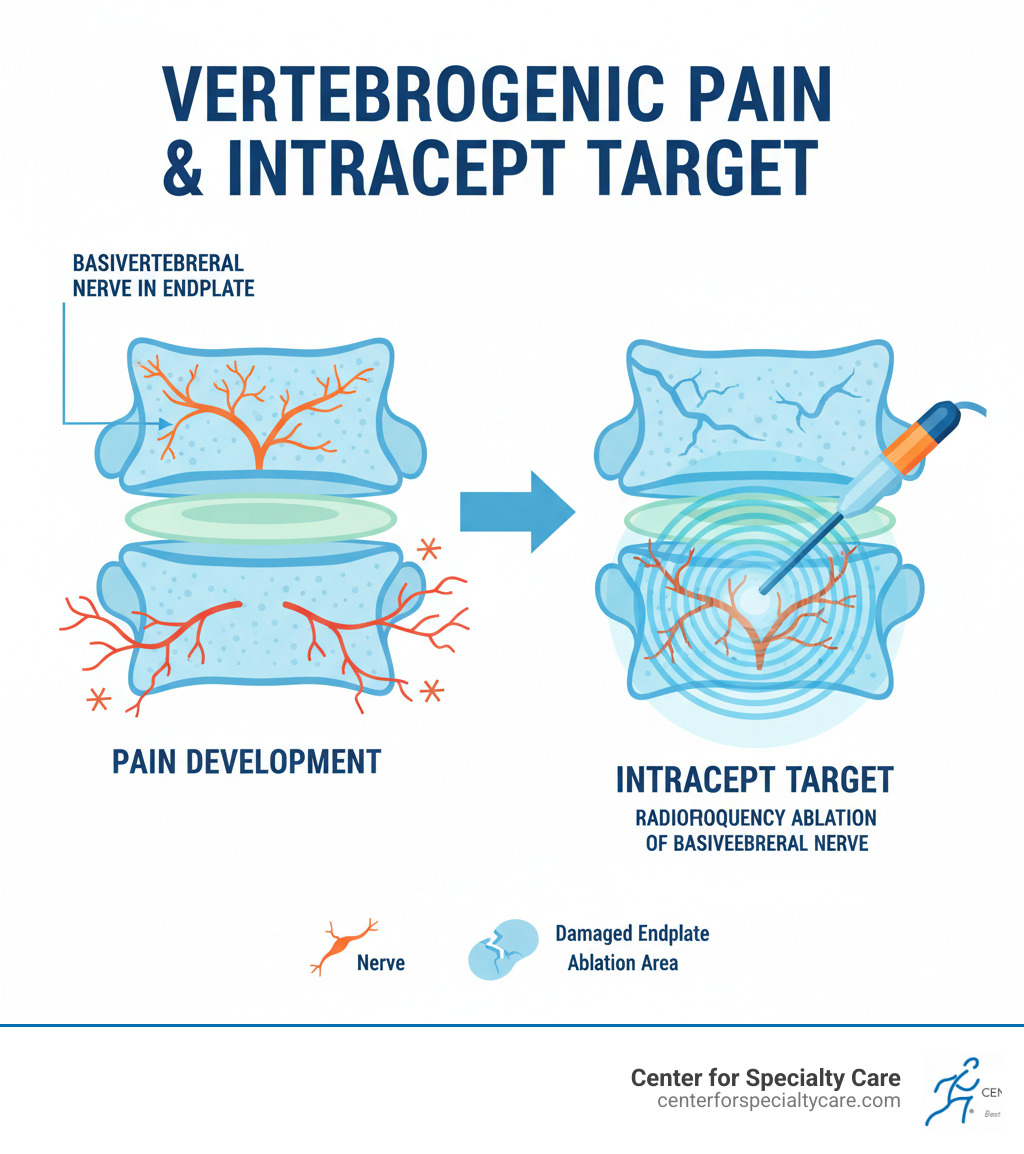
Think of the Intracept procedure as a precision tool designed specifically for one job: stopping chronic back pain at its source. This outpatient procedure uses radiofrequency ablation to target the basivertebral nerve (BVN) – the tiny nerve inside your vertebrae that’s been sending constant pain signals to your brain.
Here’s how I like to explain it to my patients: imagine your pain signals are like a smoke alarm that won’t stop beeping, even though there’s no fire. The Intracept procedure essentially disconnects that alarm by carefully applying targeted heat to disrupt the nerve’s ability to transmit pain signals.
What makes this treatment special is its precision. We’re not affecting muscles, discs, or other structures – just the specific nerve causing your vertebrogenic pain. The procedure typically takes 60-90 minutes, and you’ll go home the same day with just a small bandage over the tiny incision site.
At Center for Specialty Care, we’ve seen how life-changing this can be for the right patients. Our comprehensive Pain Management approach means we’ll explore all options to find what works best for your unique situation.
Understanding Vertebrogenic Pain
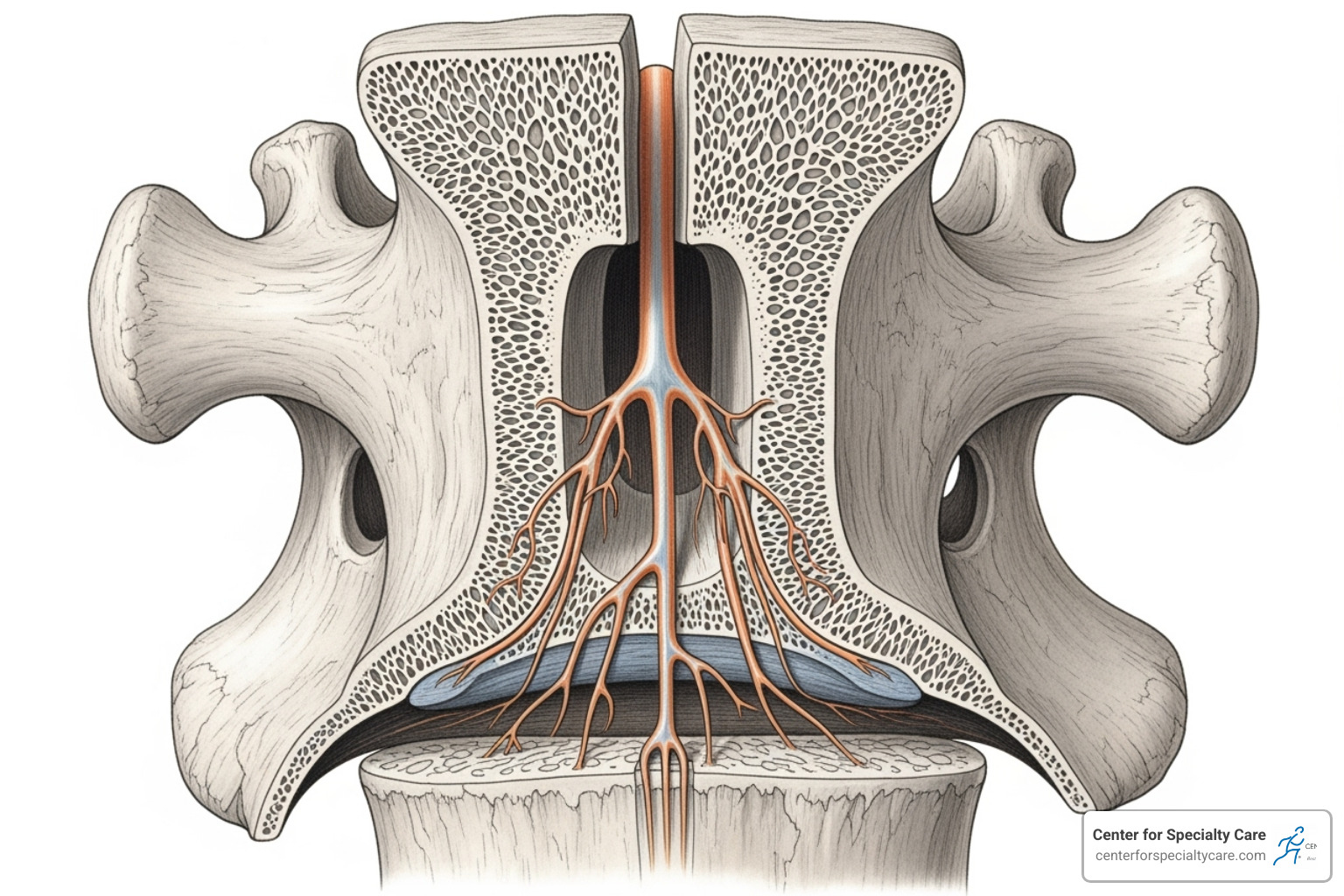
Before we dive into whether is intracept procedure a surgery, let’s talk about the specific type of pain it treats. Vertebrogenic pain is different from the back pain most people know about. It doesn’t come from pulled muscles or herniated discs – it originates deep within your vertebral endplates.
These endplates are like protective cushions between your spine bones and discs. When they get damaged from years of wear and tear, they become inflamed and irritate the basivertebral nerve running right through your vertebrae. That’s when you start experiencing that deep, aching pain that gets worse when you sit for long periods or bend forward.
The key to diagnosing this condition lies in MRI scans showing Modic changes – special patterns that reveal inflammation in your vertebral bone marrow. These changes are like fingerprints that help us identify vertebrogenic pain and determine if Intracept might help you.
You’re not alone in this struggle. According to global research, low back pain affects hundreds of millions of people worldwide, and the numbers keep growing. For many patients dealing with damage to vertebrae and the resulting chronic pain, Intracept offers hope when other treatments haven’t worked.
Our team specializes in diagnosing and treating Common Spinal Conditions: Causes, Symptoms, and Treatment Options, so we know how to spot the signs of vertebrogenic pain and help you understand your options.
So, Is the Intracept Procedure a Surgery?
Here’s the straight answer: yes, the Intracept procedure is classified as a minimally invasive surgery. But before you worry, let me explain what that really means for you.
When most people hear “surgery,” they picture large incisions, long hospital stays, and months of recovery. Intracept is completely different. We make one small incision – less than an inch – and use specialized instruments to reach the target nerve. There are no implants, screws, or hardware left behind in your body.
The comparison to open surgery is like comparing a pinprick to a major construction project. Traditional spinal fusion surgery might require a 4-6 inch incision and weeks in the hospital. With Intracept, you’re typically home within a few hours with just a small bandage.
What makes this an FDA-approved treatment is its proven safety and effectiveness. The procedure has met strict standards for treating chronic low back pain, giving you confidence that it’s both safe and reliable.
The beauty of this minimally invasive surgery classification is that it gives you the benefits of surgical intervention without the drawbacks of traditional surgery. You get targeted pain relief while preserving your spine’s natural structure and function.
How Intracept Works and Who It Can Help
Think of the Intracept procedure as a highly precise mission to silence the pain signals coming from deep within your spine. It’s fascinating how this minimally invasive surgery combines cutting-edge technology with surgical precision to target something as small as a nerve buried inside your vertebral bone.
The procedure itself follows four carefully orchestrated steps. First, we ensure you’re completely comfortable with local anesthesia and sedation – some patients prefer general anesthesia, and we’ll discuss what’s best for you. Once you’re ready, we use fluoroscopic guidance – think of it as GPS for surgeons – to see exactly where we’re going in real-time with X-ray imaging.
Through a small incision, we guide a specialized curved instrument called a cannula through the pedicle (the back part of your vertebra) and into the vertebral body itself. This creates a precise pathway directly to the basivertebral nerve trunk. Finally, we insert a radiofrequency probe that delivers controlled heat to the nerve, effectively disrupting the pain signals it’s been sending to your brain. It’s like turning off a faulty alarm that won’t stop ringing.
The entire process typically takes 60 to 90 minutes, and the beauty is that we’re only affecting the problematic nerve while leaving all the healthy surrounding tissue completely untouched. This targeted approach aligns perfectly with our comprehensive back pain services philosophy.

Who is a Suitable Candidate for Intracept?
Not everyone with back pain needs this procedure – and that’s actually a good thing. The Intracept procedure is specifically designed for people dealing with vertebrogenic pain, which means we need to be very particular about who benefits from it.
Chronic low back pain lasting six months or longer is the starting point. This isn’t about a recent injury or a pulled muscle – we’re talking about persistent pain that’s been affecting your daily life for half a year or more. The kind of pain that makes you think twice about picking up your grandchild or sitting through a movie.
You’ll also need to have tried conservative treatments without success. This means you’ve given physical therapy a real shot, tried various medications from over-the-counter pain relievers to prescription anti-inflammatories, and possibly had injections like epidural steroids or nerve blocks. We never jump to procedures when simpler treatments might work.
The most crucial requirement is having an MRI showing Type 1 or Type 2 Modic changes in your L3, L4, or L5 vertebrae. These changes appear as specific patterns on your MRI scan and confirm that your pain is coming from damaged vertebral endplates – exactly what the Intracept procedure treats.
Your pain pattern matters too. If your discomfort gets worse with prolonged sitting, bending forward, or lifting, you’re showing classic signs of vertebrogenic pain. Many patients tell us they can’t sit through a work meeting or car ride without significant discomfort.
However, there are important situations where Intracept isn’t recommended. Pregnancy is an absolute contraindication, as is having implanted electronic devices like pacemakers or spinal cord stimulators. Active infections anywhere in your body, severe heart or lung problems, and being under 18 years old also rule out the procedure. If your pain stems from spinal instability, tumors, or fractures rather than vertebrogenic causes, we’ll explore other treatment options.
What are the Risks and Potential Complications?
Here’s some reassuring news: the Intracept procedure is considered a low-risk procedure, especially when you compare it to traditional open spine surgeries. Clinical studies show serious complications occur in less than 0.3% of cases – those are excellent odds.
Most patients experience only minor, temporary side effects. Temporary soreness, bruising, or mild swelling at the incision site is normal and usually resolves within a few days with basic over-the-counter pain medication. Some people notice their back pain actually increases slightly right after the procedure – this is temporary and often a sign that the targeted area is responding to treatment.
The more serious risks, while rare, include infection, bleeding, or nerve damage. We follow strict sterile protocols in our surgical suite to prevent infection, and our experienced team knows exactly how to minimize bleeding risks. The theoretical possibility of unintended nerve damage exists with any spine procedure, but our precision techniques and advanced imaging guidance make this extremely unlikely.
Allergic reactions to medications or materials used during the procedure can occur, but they’re uncommon and manageable when they do happen. Our team at Orthopedics has extensive experience with the Intracept procedure, and we’ll provide you with detailed post-procedure instructions to ensure the smoothest possible recovery.
The bottom line? While we never take any medical procedure lightly, the risk profile of Intracept is very favorable, especially considering the potential for significant, long-term pain relief it offers.
Intracept vs. Traditional Back Surgery: A Comparison
When you’re dealing with chronic back pain, understanding your treatment options can feel overwhelming. Many patients wonder is intracept procedure a surgery and how it compares to the traditional back surgeries they may have heard about from friends or family members.
Let me help you understand the key differences between these approaches. While both the Intracept procedure and traditional spinal surgeries aim to relieve your pain, they’re as different as a precision scalpel and a sledgehammer.
| Feature | Intracept Procedure | Traditional Spinal Fusion |
|---|---|---|
| Invasiveness | Minimally invasive | Highly invasive |
| Incision Size | Single, small (less than 1 cm) | Larger (several inches) |
| Hospital Stay | Outpatient (same-day discharge) | Overnight stay, often 2-5 days |
| Implants Used | None | Often uses screws, rods, plates |
| Recovery Time | Days to a few weeks for normal activities | Weeks to months, up to a year for full recovery |
The most striking difference? Traditional spinal fusion permanently joins your vertebrae together, while Intracept preserves your spine’s natural movement. Think of it this way: fusion is like welding two pieces of metal together, while Intracept is more like fixing a faulty wire without disturbing the surrounding machinery.
Key Benefits and Success Rates of Intracept
The beauty of the Intracept procedure lies in what it doesn’t do as much as what it does. By targeting only the problematic basivertebral nerve, it leaves everything else in your spine exactly as nature intended.
Your spine stays flexible and strong. Unlike traditional surgery that can limit your movement, you’ll maintain your natural range of motion. This means you can still bend down to tie your shoes, twist to look over your shoulder while driving, and move naturally without worrying about hardware limitations.
Recovery happens on your timeline, not the hospital’s. Most patients walk out of our facility the same day and return to light activities within days. Compare that to traditional surgery where you might spend several days in the hospital and weeks before feeling like yourself again.
The results speak for themselves. Clinical studies show that 65% of patients experience at least 50% pain reduction, while 36% achieve 75% or greater relief. Perhaps most encouraging of all, 22% of patients report complete pain elimination six months after the procedure.
These aren’t just numbers on a page – they represent real people getting their lives back. One comprehensive study was actually stopped early because Intracept showed such superior results compared to standard treatments that researchers felt it was unfair to continue giving patients the less effective options.
The pain relief lasts. We’re not talking about temporary improvement that fades after a few months. Clinical evidence shows continued relief for five years or longer after a single treatment. That’s because when we ablate the basivertebral nerve, we’re addressing the root cause of your vertebrogenic pain permanently.
Recovery and Outlook After the Procedure
Here’s where the Intracept procedure really shines – the recovery process is refreshingly straightforward. No lengthy hospital stays, no months of restrictions, and no wondering when you’ll feel human again.
The first 48 hours are typically the gentlest part of your journey back to normal life. You might feel some tenderness at the tiny incision site – think of it as similar to getting a vaccination, not major surgery. Most patients manage this easily with over-the-counter pain medication and find that walking actually helps them feel better.
Within a week, you’ll likely be back to your regular daily routine. This includes driving, working at a desk, light household chores, and all those normal activities that make life, well, normal. The key difference from traditional surgery? You’re not counting weeks or months – you’re counting days.
The timeline for pain relief varies from person to person, and this is important to understand. While some fortunate patients notice improvement immediately, most experience gradual relief over several weeks to months. Some patients report that their full relief took up to five months to develop completely. This isn’t a sign that something’s wrong – it’s simply how the nerve ablation process works as your body adapts to life without those constant pain signals.
The durability of your results is perhaps the most encouraging aspect of all. The nerve ablation is permanent, meaning that once we’ve successfully treated the basivertebral nerve, it won’t regenerate to cause the same pain again. Clinical studies consistently show pain reduction lasting five years or longer for the majority of patients.
Even public figures have shared their positive experiences. Television host Carson Daly openly discussed how the Intracept procedure transformed his life, giving him freedom from the chronic back pain that had been limiting his daily activities and quality of life.
Your recovery journey will be supported every step of the way. We’ll provide you with clear, detailed instructions for the days and weeks following your procedure, and we’ll schedule follow-up appointments to monitor your progress and celebrate your improvements together.
Frequently Asked Questions about the Intracept Procedure

When patients ask me “is intracept procedure a surgery?” it’s usually just the beginning of their questions. After three decades of helping people understand their treatment options, I’ve found that the more you know about a procedure, the more confident you feel about your decision.
Let me share the most common questions I hear in my office about the Intracept procedure. These are the same concerns you might have, and they deserve honest, straightforward answers.
How long does the Intracept procedure take?
The actual Intracept procedure typically takes 60 to 90 minutes from start to finish. Some procedures can be completed in as little as 30-60 minutes, depending on your specific anatomy and whether we’re treating one or multiple vertebrae.
But here’s what many patients don’t realize – the procedure time is just part of your day with us. You’ll arrive at our outpatient facility about an hour before your scheduled time for preparation, which includes getting you comfortable and administering anesthesia. After the procedure, you’ll spend some time in recovery before heading home.
Most patients are surprised by how quickly everything goes. One patient told me, “I was expecting to be there all day, but I was home watching my afternoon shows!” The beauty of this minimally invasive approach is that it doesn’t consume your entire day like traditional spinal surgeries might.
Is the pain relief from Intracept permanent?
This is probably the question I’m asked most often, and I understand why. After dealing with chronic pain for months or years, you want to know if this relief will last.
The nerve ablation itself is considered permanent. When we use radiofrequency energy to disrupt the basivertebral nerve, that specific nerve loses its ability to transmit pain signals. Think of it like cutting a phone line – once it’s severed, it can’t carry the call anymore.
Long-term study results are encouraging. Clinical research shows many patients maintain significant pain relief for five years or longer after a single treatment. Some studies have tracked patients even beyond that timeframe, with sustained benefits.
However, I always tell my patients that while the treated nerve won’t regenerate, your spine continues to age and change. It’s possible that pain could develop from other areas over time. But for the specific vertebrogenic pain we’re targeting, the potential for lasting relief is excellent.
Will my insurance cover the Intracept procedure?
Insurance coverage has improved dramatically over the past few years, which is great news for patients. The procedure now has established CPT and ICD-10 codes, which makes the approval process much smoother than it used to be.
Many commercial insurance plans now recognize the value of this treatment. Companies like Anthem BCBS, Cigna, and Humana often provide coverage when medical necessity is established. Medicare coverage is also expanding across different regions, with some Medicare plans covering the procedure at 100% for eligible patients over 65.
The key factors insurers typically look for include having chronic pain for at least six months, trying conservative treatments first, and having the right MRI findings showing Modic changes.
Our team works closely with patients to steer insurance approval. We’ll help you understand your specific coverage variability and work with your insurer to get the authorization you need. You can also find helpful information on reimbursement support through the manufacturer’s resources.
I always tell patients not to assume they’re not covered – insurance policies change, and coverage is becoming more common as the procedure’s effectiveness becomes better recognized.
Take the Next Step Towards a Pain-Free Life
Chronic back pain doesn’t just hurt your body – it steals pieces of your life. Maybe you’ve stopped playing with your kids because bending down is too painful. Perhaps you’ve given up hobbies you once loved, or you find yourself declining social invitations because sitting for dinner feels impossible.
If you’ve been battling persistent back pain for months or years, and nothing seems to work, you’re not alone. The good news? Is intracept procedure a surgery that could finally give you the relief you’ve been searching for.
At Center for Specialty Care, we’ve seen countless patients transform their lives through innovative treatments like the Intracept procedure. Our approach isn’t about quick fixes – it’s about personalized care that addresses your specific condition with precision and compassion.
What makes us different? We’re committed to 100% patient satisfaction and quick appointment availability. That means you won’t spend months waiting for answers while your pain gets worse. Our team understands that every day in pain is a day too long.
Serving communities throughout Fairmont MN, Estherville IA, Buffalo Center IA, St James MN, and across Minnesota and Iowa, we bring extensive expertise in diagnosing and treating complex spinal conditions. We know vertebrogenic pain inside and out, and we’re skilled in performing the Intracept procedure with the care and precision you deserve.
Your consultation with us will be thorough and enlightening. We’ll conduct a complete evaluation of your condition, carefully review your medical history and diagnostic imaging (especially looking for those crucial Modic changes on your MRI), and discuss whether the Intracept procedure is right for your specific type of pain.
Most importantly, we’ll answer all your questions – from “is intracept procedure a surgery?” to what your recovery will look like and what results you can realistically expect.
Don’t let another day pass living in pain. Taking this step toward consultation could be your path to significant, long-lasting relief and getting back to the life you love. Learn more about how the Intracept Procedure can help you find the lasting comfort you deserve.