

Intracept: Is It Surgery, and What Does It Entail?
October 21, 2025
What Comes Next: A Guide to Effective Post-Treatment Care
October 23, 2025
Rotator cuff pain at night: 3 Steps to Fast Relief
Why Nighttime Shoulder Pain Disrupts Your Sleep
Rotator cuff pain at night is a frustrating barrier to quality rest for up to 93% of patients with shoulder injuries. The dull ache that worsens when you lie down creates a vicious pain-sleep cycle that can impact your daily life.
Quick Relief for Rotator Cuff Pain at Night:
- Sleep on your back or uninjured side with pillow support
- Apply ice for 15-20 minutes before bed to reduce inflammation
- Take over-the-counter NSAIDs like ibuprofen as directed
- Avoid sleeping directly on the painful shoulder
- Use a recliner or wedge pillow to sleep slightly upright
Nearly 2 million Americans seek care for rotator cuff problems annually. The pain intensifies at night because lying down reduces blood flow, allows inflammation to build, and puts direct pressure on the injury. Without daily distractions, the ache becomes more noticeable.
Understanding why your shoulder hurts at night is the first step toward reclaiming restful sleep.
I’m Dr. Corey Welchlin, a board-certified orthopedic surgeon and founder of the Center for Specialty Care in Fairmont, Minnesota. With over three decades of experience, I’ve helped thousands of patients with rotator cuff pain at night find relief through conservative treatments and advanced surgical techniques.
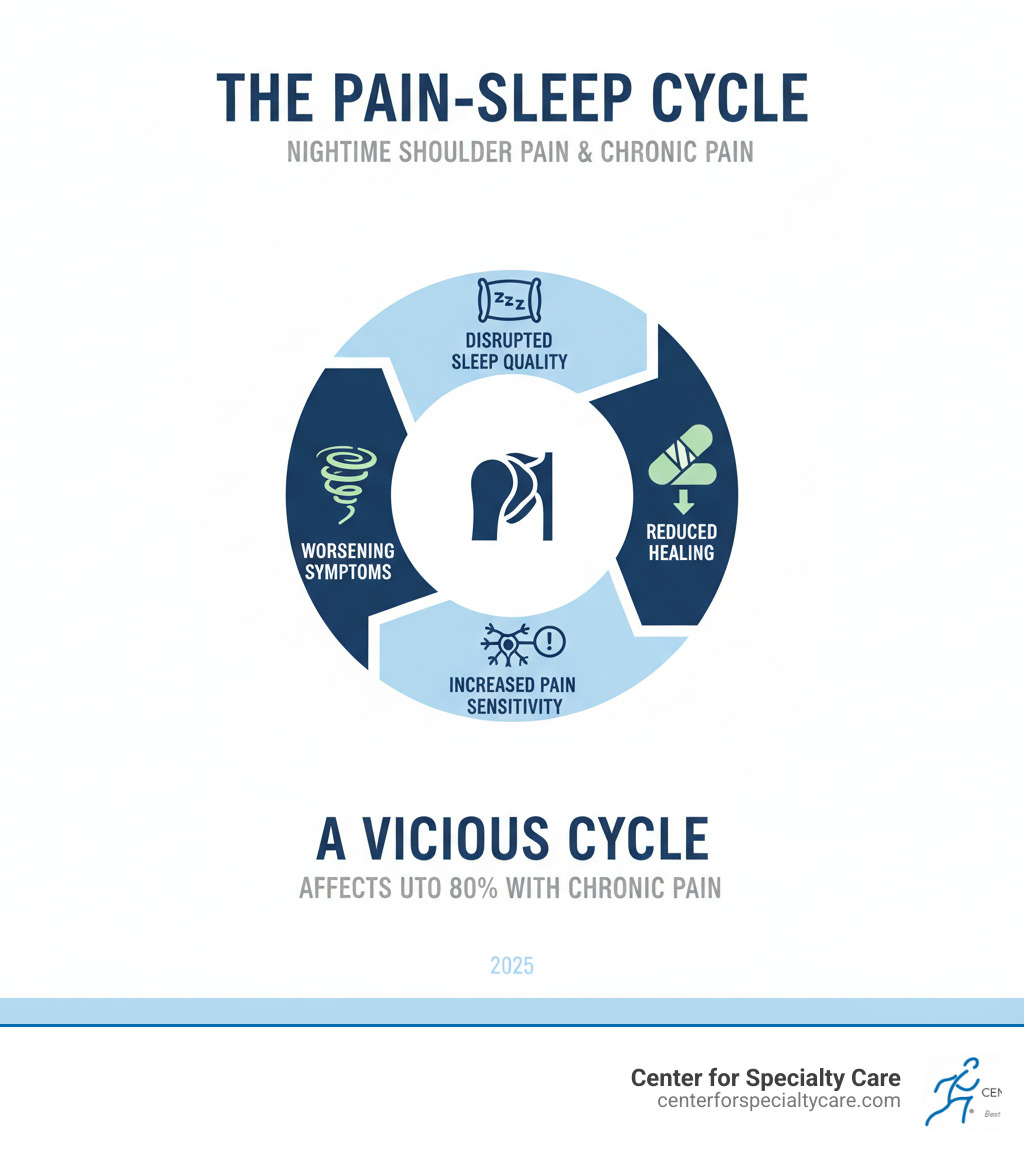
Rotator cuff pain at night terms made easy:
Understanding Your Shoulder and Why It Aches
Your shoulder is the most mobile joint in your body. This incredible flexibility, however, makes it more vulnerable to injury than other joints.

The key player is the rotator cuff, a team of four key muscles (supraspinatus, infraspinatus, subscapularis, and teres minor). They act as a security team, keeping the ball of your upper arm bone centered in the shoulder socket.
The rotator cuff provides shoulder stability and enables arm rotation. You can learn more in this Anatomy of the Rotator Cuff resource.
Common rotator cuff injuries include: Tendinitis (inflamed tendons from overuse), Bursitis (swollen fluid-filled sacs), Impingement syndrome (the rotator cuff getting pinched), and rotator cuff tears (ranging from small frays to complete rips). Tears can be sudden or gradual.
Rotator cuff problems cause about 70% of all shoulder pain, which is why rotator cuff pain at night is such a common complaint.
Several risk factors increase your chances of developing these conditions:
- Age over 40: Tendons naturally become less flexible.
- Repetitive overhead motion: Common in construction or painting jobs, as well as sports like tennis, baseball, or swimming.
- Family history: A genetic predisposition can play a role.
Understanding these basics helps explain why that nagging shoulder ache gets worse when you’re trying to sleep.
Why Does Rotator Cuff Pain at Night Get Worse?
Rotator cuff pain at night often gets worse when you’re trying to sleep. Several physiological reasons explain why this happens.
Lying down, especially on the affected side, puts direct pressure on irritated tissues. This compresses the inflamed rotator cuff, making the pain more noticeable than during the day.
When you’re still for hours, blood flow to the shoulder decreases. During the day, movement circulates blood, which brings nutrients and removes inflammatory byproducts. At night, reduced blood flow slows healing and natural pain relief.
Inflammation from daily activities can build up at night. Without movement and distraction, it accumulates. Research shows that pro-inflammatory cytokines, the body’s pain messengers, can peak during nighttime hours, worsening discomfort.
During the day, your brain is distracted. In a quiet, dark bedroom, with nothing else to focus on, the shoulder ache becomes much more prominent.
Lying down also changes how gravity affects your shoulder, potentially straining damaged tendons. This, combined with stiffness from inactivity, creates a recipe for increased pain.
The inactivity of sleep causes joint stiffness, making it hard to find a comfortable position and causing sharp pain when you move or roll over.
Common symptoms of rotator cuff pain at night include:
- A deep, dull ache radiating down your outer arm.
- Tossing and turning to find a comfortable position.
- Sharp pain when rolling over.
- Weakness when trying to lift your arm.
- Numbness or tingling in the arm and fingers.
These are your body’s signals that something needs attention. Understanding these reasons is the first step toward getting better sleep.
Finding Relief at Home: Sleep Modifications and Remedies
When rotator cuff pain at night strikes, you need relief to get some sleep. While professional treatment is key for long-term healing, many effective at-home strategies can provide immediate comfort.
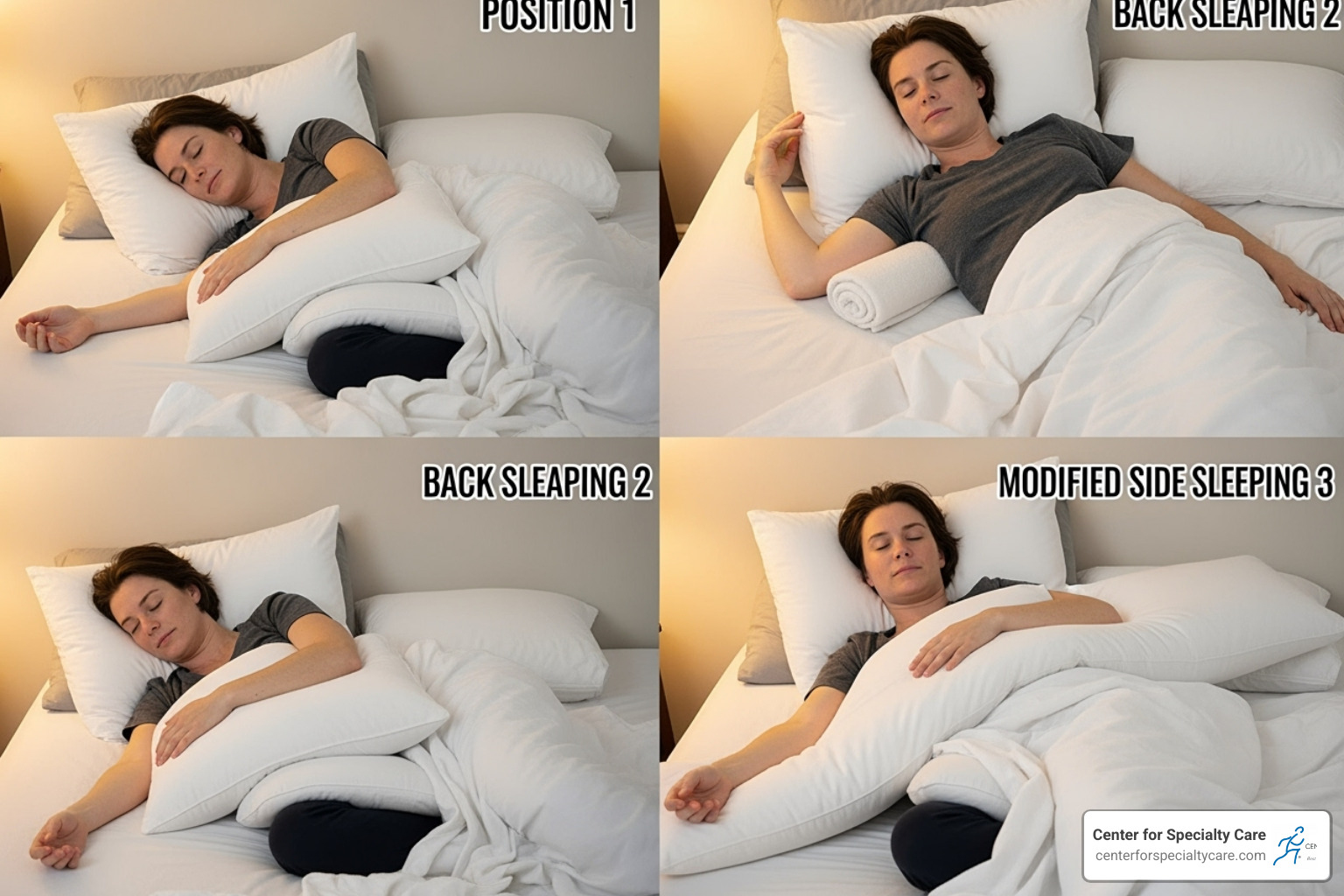
These steps can help manage your discomfort and break the pain-sleep cycle.
Best Sleeping Positions for Shoulder Pain
The goal of finding the right sleeping position is to reduce pressure on your shoulder and keep it in a neutral, supported position.
Sleeping on your back is often the best option, as it avoids direct pressure. Use a pillow to prop up your affected arm, keeping it supported and close to your body to take pressure off the rotator cuff. A small rolled towel can also prevent your shoulder from collapsing inward.
A reclined position, using a recliner or wedge pillow, can also provide relief. This angle reduces gravitational pull and helps prevent you from rolling onto the injured side.
If you’re a side sleeper, lie on your unaffected side. Place a pillow between your knees for spinal alignment and hug a pillow to keep your shoulders stacked and prevent your top arm from pulling forward. Use extra pillows to stop you from rolling over.
Body pillows are also excellent for side sleepers, providing full-length support and helping you stay in position.
Positions to avoid include sleeping on the painful shoulder, which increases pressure and pain. Stomach sleeping should also be avoided as it twists the neck and shoulder. Also, avoid sleeping with your arm overhead, as this stresses the rotator cuff tendons.
Experiment to find the position that causes the least pain.
At-Home Remedies for Rotator Cuff Pain at Night
Beyond sleep posture, other remedies can soothe your shoulder before bed.
For ice versus heat: use ice packs for acute pain or flare-ups to reduce inflammation. Apply for 15-20 minutes before bed. Use heat therapy for chronic stiffness to relax muscles and increase blood flow. Some people find alternating between them helpful.
Over-the-counter pain relievers can help you fall asleep. NSAIDs like ibuprofen or naproxen reduce pain and inflammation. Acetaminophen reduces pain but not inflammation. Always follow dosage instructions and consult a professional if needed.
Gentle pre-sleep stretching can improve flexibility. Avoid anything painful. Try pendulum swings (leaning forward, letting your arm hang and swing gently) and the crossover arm stretch (gently pulling the affected arm across your body). You can find more targeted guidance in our shoulder treatment with physical therapy resources.
Maintaining good posture during the day reduces strain that contributes to nighttime pain. Also, modify daily activities that aggravate your shoulder, especially before bed. Take frequent breaks from repetitive movements.
By combining these strategies, you’re creating a comprehensive approach to managing rotator cuff pain at night and moving toward more restful, healing sleep.
When to See a Doctor: Professional Treatment Options
While at-home remedies help, persistent rotator cuff pain at night is a sign you need professional help. Timely care often leads to better outcomes and faster recovery.

It’s key to know when your shoulder pain requires medical attention. Here are the warning signs.
When to Seek Medical Attention
Seek emergency care immediately if you have:
- Sudden, severe shoulder pain with difficulty breathing or chest tightness (could indicate a heart attack).
- A visibly deformed shoulder joint.
- Complete inability to move your arm.
- Excruciating pain that doesn’t respond to anything.
Schedule an appointment with us if you have:
- Pain lasting more than a week without improvement from home remedies.
- Rotator cuff pain at night that consistently disrupts your sleep.
- Weakness or loss of function that interferes with daily activities.
- Recurrent pain, signs of infection (redness, warmth, fever), or worsening pain.
Leaving rotator cuff problems untreated can lead to permanent weakness and loss of motion. Early intervention leads to better outcomes and can prevent the need for more invasive treatments. If you’re ready, we make it easy to Find a shoulder specialist for your pain at Center for Specialty Care.
Professional Treatments for Rotator Cuff Pain at Night
We start with a thorough examination and possibly imaging (X-ray or MRI) to understand your injury. This allows us to create a custom treatment plan for your specific needs and lifestyle.
Physical therapy is often our first line of defense for rotator cuff pain at night. A therapist will guide you through exercises to improve flexibility, range of motion, and strength in the shoulder’s supporting muscles. They also help correct posture and movement patterns. Specific exercises before bed can decrease nighttime pain. PT is a powerful healing tool that can often help you avoid surgery. Learn more in our guide to Shoulder treatment physical therapy tips.
Corticosteroid injections can provide substantial relief from significant inflammation. They deliver anti-inflammatory medication directly to the problem area, with relief often lasting up to two months. This pain reduction creates a window to engage more effectively in physical therapy. Research shows they are helpful for nighttime pain. Explore your options in our guide to Types of injections for shoulder pain relief.
If conservative treatments fail, surgery may be the best option to repair tissue, restore function, and eliminate nighttime pain.
- Arthroscopic repair: A minimally invasive approach with small incisions and faster recovery.
- Open repair: Used for more complex cases, involving a larger incision for better access.
- Reverse shoulder replacement: A life-changing option for large, irreparable tears or severe arthritis. It alters the shoulder’s anatomy to let the deltoid muscle lift the arm.
Research shows that after rotator cuff surgery, 46% of patients report improved sleep at three months, and 89% report better sleep after a year. This is a dramatic improvement in quality of life.
For more information, visit our Rotator Cuff Surgeon Near Me guide or check out Scientific research on rotator cuff treatment.
Our goal is to get you back to sleeping through the night and living without shoulder pain.
Frequently Asked Questions about Nighttime Shoulder Pain
It’s natural to have questions about rotator cuff pain at night. Here are answers to some of the most common concerns I hear in my practice.
How long does it take for rotator cuff pain to go away?
Healing time varies depending on the injury’s severity and your adherence to the treatment plan.
- For minor strains or tendinitis, relief can come within a few weeks with rest and home care.
- More significant injuries or partial tears typically take 2 to 4 months to heal with conservative treatment like physical therapy.
- Severe tears or injuries requiring surgery can take 6 months to a year for full recovery, including rehabilitation, with gradual improvement along the way.
Most rotator cuff injuries, especially tears, won’t heal completely on their own. Ignoring the pain can lead to chronic issues. Learn more about Will a torn rotator cuff heal on its own?
Can a mattress cause rotator cuff pain?
While a mattress likely didn’t cause your injury, an unsupportive one can worsen rotator cuff pain at night. A bad mattress can cause poor spinal alignment and create increased pressure points, leading to restless sleep and more noticeable pain. A medium-firm mattress often provides a good balance of support and comfort. Consider a new mattress an investment in your recovery.
What is the fastest way to relieve rotator cuff pain at night?
While there’s no instant cure, the fastest relief comes from combining several strategies:
- Adjust your sleep position: Sleep on your back with pillow support, on your unaffected side hugging a pillow, or in a reclined position.
- Apply ice: Use an ice pack for 15-20 minutes before bed to reduce inflammation and numb the pain.
- Take an approved anti-inflammatory: Take medication like ibuprofen 30-60 minutes before bedtime, as directed.
- Rest your shoulder: Avoid aggravating activities, especially in the hours before sleep.
- Stretch gently: Perform light movements like pendulum swings to reduce stiffness.
These strategies offer immediate relief, but a comprehensive treatment plan is necessary for lasting improvement. If you don’t see improvement in a week or two, it’s time to call us.
Reclaim Your Sleep from Shoulder Pain
You don’t have to let rotator cuff pain at night control your life. We’ve explained why your shoulder hurts more at night, from inflammation buildup to reduced blood flow.
The good news is you now have a toolkit of strategies. Proper sleep posture, like sleeping on your back with pillow support or on your unaffected side, can make an immediate difference by reducing pressure.
At-home care like using an ice pack, gentle stretching, and taking over-the-counter anti-inflammatories can also provide powerful relief and help you sleep.
However, if you’re still struggling or the pain wakes you up, it’s time to get professional help. Don’t delay seeking care when home remedies aren’t enough. Untreated rotator cuff problems can worsen, leading to permanent weakness or loss of motion that affects your daily life.
At the Center for Specialty Care, we understand the frustration of losing sleep. We create a personalized care plan for your specific situation, offering physical therapy, injections, or advanced surgical repair. We provide quick, expert diagnosis and a full range of treatments in Fairmont.
Your sleep and comfort matter. Getting back to the activities you love without constant shoulder pain matters, too.
Take the next step toward a painless night’s sleep by exploring our shoulder care services and find how we can help you reclaim both your rest and your life.