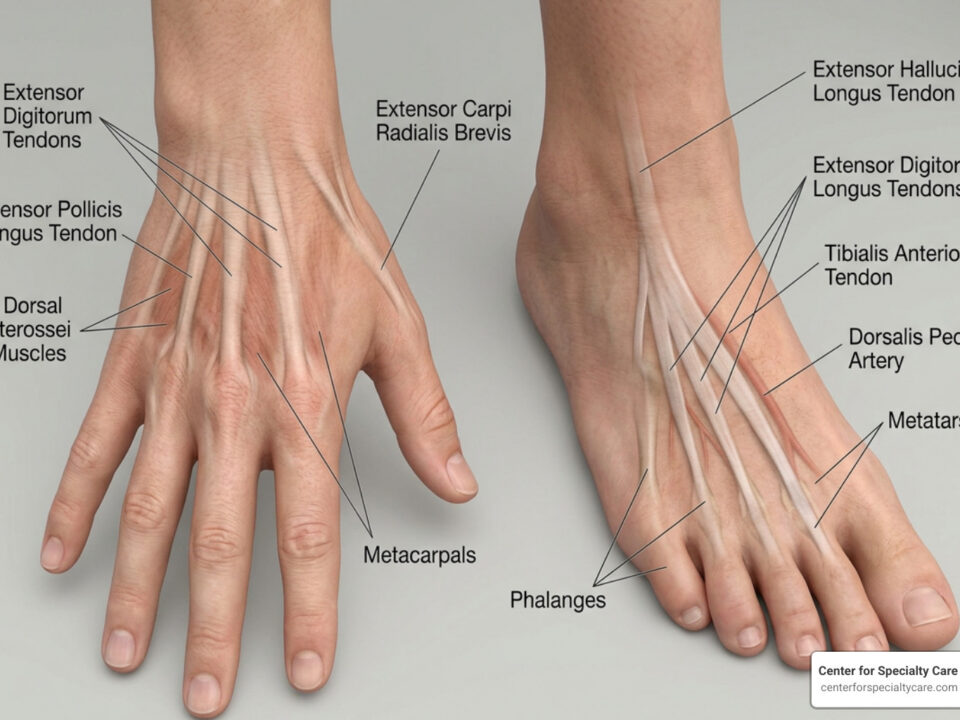

Is Your Shoulder Crying Out? Understanding Painful Clicks and Pops
August 21, 2025
Hear a Pop, Feel No Pain? Your Guide to Harmless Shoulder Sounds
August 25, 2025
Knot in shoulder blade causing neck pain: Ultimate Relief 2025
Understanding the Pain Connection Between Your Shoulder Blade and Neck
A knot in shoulder blade causing neck pain is an extremely common complaint. These muscle knots, or myofascial trigger points, are painful nodules of contracted muscle fibers that can’t relax. They affect up to 85% of the population, creating a cycle of discomfort that radiates from the shoulder blade into the neck and can even cause headaches.
Quick Relief Guide for Shoulder Blade Knots:
- Heat therapy: Apply heat for 15-20 minutes to increase blood flow.
- Gentle massage: Use a tennis ball against a wall for self-massage.
- Stretching: Perform doorway stretches and chin tucks.
- Posture breaks: Move every hour if you sit at a desk.
- Professional help: Seek treatment if pain persists beyond a few days.
This pain connection isn’t coincidental. Seventeen different muscles attach to your shoulder blades, creating a complex network that directly impacts your neck and upper back. The primary culprits behind these knots are poor posture, repetitive motions, stress, and muscle overuse. What begins as simple tension can quickly escalate into neck stiffness and reduced range of motion.
As a board-certified orthopedic surgeon with over three decades of experience, I, Dr. Corey Welchlin, have helped thousands of patients find relief. My comprehensive approach addresses not just the symptoms but the underlying causes of these painful trigger points.
Understanding the Knot: What It Is and Why It Hurts
That painful knot in shoulder blade causing neck pain is a myofascial trigger point—a small patch of muscle fibers that have contracted and become stuck. These knots feel like hard, tender bumps under the skin and are essentially a persistent muscle spasm.
Why do they hurt so much? The contracted fibers squeeze tiny blood vessels, reducing blood flow and starving the tissue of oxygen. This lack of oxygen prevents the muscle from relaxing, creating a painful cycle where the muscle can’t get the energy it needs to release. Meanwhile, the contracted fibers irritate nearby nerves, sending constant pain signals to your brain.
While uncomfortable, these knots are rarely dangerous. However, if left untreated, they can lead to chronic conditions like myofascial pain syndrome. For more details on the science, you can read about the diagnosis and management of trigger points from medical experts.
Common Causes of a Knot in Shoulder Blade Causing Neck Pain
Understanding the cause is key to prevention. These knots usually result from a combination of daily habits:
- Poor posture: Slouching at a desk or hunching over a phone puts enormous strain on your upper back and neck muscles as they struggle to support the weight of your head.

- Repetitive motions and overuse: Activities like typing for hours, carrying a heavy bag on one shoulder, or playing sports can overwork specific muscles, leading to fatigue and knots.
- Emotional stress: When stressed, we unconsciously tense our shoulders, restricting blood flow and setting the stage for trigger points.
- Sedentary lifestyles: Prolonged sitting leads to muscle weakness and stiffness, making muscles prone to knotting.
- Injury or trauma: A fall, whiplash, or even sleeping in an awkward position can irritate muscles and cause lasting trigger points.
- Dehydration and poor nutrition: Lack of water or essential minerals like magnesium and potassium makes muscles more susceptible to cramping and knots.
Key Muscles Involved
Your shoulder blade is a hub for seventeen muscles, but a few key players are usually involved when you have a knot in shoulder blade causing neck pain.
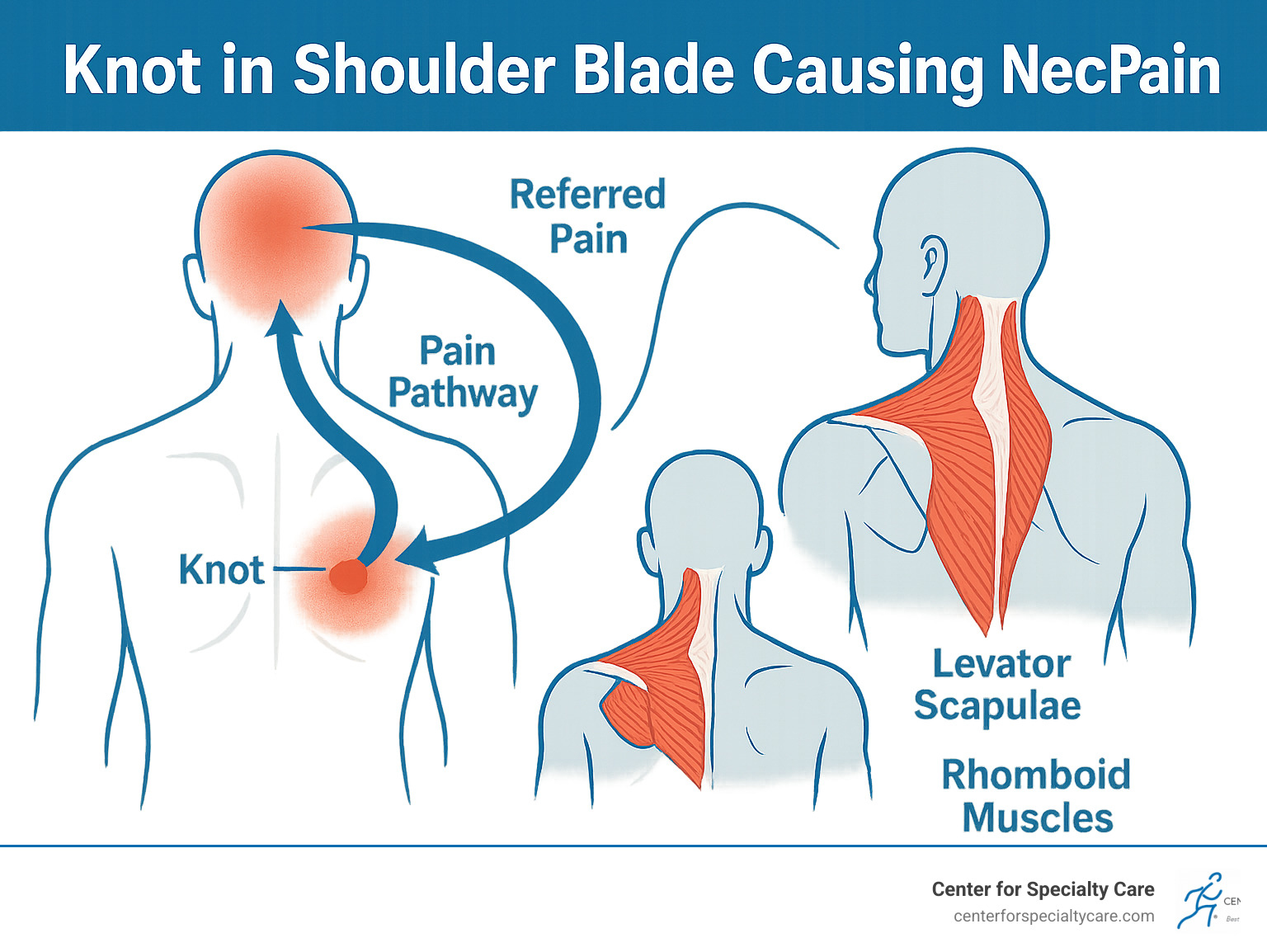
- Levator Scapulae: Runs from your neck to your shoulder blade. It’s often affected by poor desk posture or holding a phone to your ear.
- Rhomboid Muscles: Located between your spine and shoulder blades, these are strained by slouching.
- Trapezius Muscle: This large, diamond-shaped muscle covers your upper back and neck. Its upper fibers are notorious for developing stress-related knots.
- Infraspinatus: A rotator cuff muscle on the back of your shoulder blade. Knots here can cause pain that radiates down the arm.
Understanding these muscle relationships is key to treatment. For more anatomical detail, explore the anatomy of the scapula and back muscles.
The Neck-Shoulder Connection: How One Causes Pain in the Other
Why does a knot in shoulder blade causing neck pain affect so many areas? The answer is referred pain—discomfort that travels along nerve pathways from the source of the problem. The muscles connecting your shoulder blade and neck work as a team, so when one is in trouble, the others feel it.
This connection can cause several issues:
- Tension headaches: A dull, nagging headache is often caused by trigger points in the upper trapezius or levator scapulae muscles, which run from your shoulder blade to the base of your skull.
- Limited range of motion: The spreading tightness can make it difficult to check your blind spot while driving or reach for something on a high shelf.
- Muscle weakness: Chronically tight muscles become fatigued, making everyday tasks feel harder.
- Numbness or tingling: In some cases, severe tension can affect nearby nerves, causing sensations to radiate down your arm. This is a sign you should seek professional attention.
Understanding these pain patterns is crucial for effective treatment. Learn more in our guide on Managing Radiating Pain: Tips for Relief.
When Your Shoulder Knot is Actually a Neck Problem
Sometimes, that persistent knot in shoulder blade causing neck pain isn’t starting in your shoulder at all. It can be a sign of a problem in your neck, such as cervical radiculopathy (a pinched nerve).
When a nerve root in your neck is compressed—often due to degenerative disc disease, arthritis, or an injury—it can send pain signals down to your shoulder blade. You might not even feel significant pain in your neck itself. This phenomenon is sometimes called the Cloward Sign, where irritation of specific cervical discs refers pain directly to the area between the shoulder blades.
Cervical radiculopathy is more common than people realize, affecting roughly 107 men and 64 women per 100,000 people annually. The key difference between a muscle knot and a pinched nerve is the type of symptoms. A pinched nerve often causes sharp, radiating pain down the arm, along with numbness and tingling, whereas a muscle knot typically causes a dull, localized ache.
Because of this complexity, professional diagnosis is vital. Treating only the muscle symptoms won’t provide lasting relief if an underlying nerve problem exists. We specialize in identifying the full range of Common Spinal Conditions to ensure you get the right treatment.
How to Relieve a Knot in Your Shoulder Blade at Home
For a new knot in shoulder blade causing neck pain, several at-home remedies can provide relief. While professional help is best for persistent pain, these techniques can manage your symptoms.
- Heat and Cold Therapy: Apply a heating pad for 15-20 minutes to relax muscles and increase blood flow. Alternatively, an ice pack can reduce inflammation and numb the pain. Many people find success by alternating between heat and cold.
- Self-Massage: Use your fingers to apply steady pressure to the knot in small circles for 5-10 seconds at a time. For hard-to-reach spots, a tennis ball or lacrosse ball against a wall works well. Lean into the ball and gently roll it over the tender area.
- Foam Roller: Lie on your back with a foam roller under your upper back (perpendicular to your spine) and gently roll back and forth to release tension over a broader area.
Use gentle pressure and limit massage sessions to 15-20 minutes to avoid irritation. For more techniques, see this guide on How to try a trigger point massage.
Effective Stretches for a Knot in Shoulder Blade Causing Neck Pain
Daily stretching can treat existing knots and prevent new ones. Hold each stretch for 15-30 seconds without pushing into sharp pain. Consistency is more important than intensity.

- Doorway Stretch: Stand in a doorway with your forearms on the frame, elbows bent at 90 degrees. Lean forward gently to feel a stretch across your chest and shoulders.
- Cat-Cow Pose: On your hands and knees, alternate between arching your back (Cow) and rounding your spine toward the ceiling (Cat) to mobilize your spine.
- Chin Tucks: Sit or stand tall and gently draw your chin straight back, creating a double chin. This strengthens deep neck muscles and counters forward head posture.
- Shoulder Blade Squeeze: Gently squeeze your shoulder blades together and down, holding for 6 seconds. This strengthens key postural muscles.
- Upper Back Stretch: Clasp your hands in front of you, drop your chin to your chest, and reach forward while rounding your upper back to stretch the rhomboid muscles.
Professional Treatment for a Knot in Shoulder Blade Causing Neck Pain
Sometimes a knot in shoulder blade causing neck pain requires professional help. It’s time to see a doctor if you experience:
- Persistent pain that lasts more than a few days despite home care.
- Worsening pain that is spreading or becoming more intense.
- Pain that interferes with sleep or daily activities.
- Neurological symptoms like numbness, tingling, burning, or weakness in your arm or hand. These are red flags that may indicate nerve compression.
Untreated knots can lead to chronic pain, limited mobility, and muscle weakness. At Center for Specialty Care, we focus on personalized care and quick appointment availability to get you back to your life. Find the right specialist with our guide on choosing a Doctor for Shoulder Problems: Your Guide to Specialized Care.
Diagnostic and Treatment Options
Our goal is to find the why behind your pain. We start with a thorough physical examination to assess your movement, posture, and locate tender spots.

If needed, imaging tests like X-rays or an MRI can help us see underlying issues like disc problems or arthritis. Once we have a diagnosis, we create a personalized treatment plan.
-
Physical Therapy: This is often the core of treatment. Our therapists use manual therapy (hands-on techniques) to release muscle tension and improve joint mobility. You’ll also learn targeted exercises and posture correction strategies to address the root cause. Dry needling is another effective technique we use to release stubborn trigger points. Learn more about our Physical Therapy services.
-
Pain Management: For more persistent pain, our specialists may recommend trigger point injections to deliver medication directly to the knot or epidural steroid injections to address nerve compression in the neck. Other options include medications, ultrasound therapy, and TENS units. Explore our comprehensive Pain Management services.
We tailor our approach to your specific needs to help you get back to doing what you love.
Preventing Future Knots: Lifestyle and Ergonomic Adjustments
The best way to beat a knot in shoulder blade causing neck pain is to prevent it from forming. Small daily adjustments can make a huge difference.
-
Fix Your Posture: Good posture is your foundation. At your desk, keep your computer screen at eye level, elbows at a 90-degree angle, and feet flat on the floor. Avoid the “text neck” posture by holding your phone up higher.
-
Create an Ergonomic Workspace: Simple changes like a supportive chair, an external keyboard for your laptop, or a document holder can significantly reduce strain on your neck and shoulders.
-
Move Regularly: Set a timer to take a break every hour. Stand up, stretch, and walk around. Movement is medicine for your muscles.
-
Warm-Up and Cool-Down: Before exercise, always warm up your muscles to prepare them for activity. Our Sports Medicine team can show you effective techniques.
-
Manage Stress: Stress causes unconscious muscle tensing. Practice deep breathing, meditation, or take short walks to help your body relax.
-
Hydrate and Eat Well: Muscles need water and nutrients like magnesium and potassium to function correctly. Dehydration can lead to cramping and knots.
-
Listen to Your Body: Address minor tightness or pain early with stretching or heat. Don’t let small issues become big problems.
Frequently Asked Questions about Shoulder Blade Knots and Neck Pain
Here are answers to the most common questions we hear about a knot in shoulder blade causing neck pain.
How long does it take for a knot in the shoulder blade to go away?
The timeline varies. A new, acute knot may resolve in a few days to a week with consistent self-care (heat, massage, stretching). However, chronic knots that have been present for weeks or months often require weeks to months of professional treatment to address the underlying cause, such as poor posture or muscle imbalances.
Can a shoulder blade knot cause headaches?
Yes, absolutely. This is called referred pain. Trigger points in the upper trapezius and levator scapulae muscles, which connect your shoulder blade to your neck and skull, can send pain signals that your brain interprets as a tension headache. Treating the muscle knots often resolves the headaches as well.
Is it a muscle knot or a pinched nerve?
This is a critical distinction. While both can cause pain in the shoulder blade, their symptoms differ:
- Muscle Knots typically cause a dull, aching pain that is tender to the touch. You can often feel the hard lump. The pain usually responds to massage and stretching.
- Pinched Nerves (cervical radiculopathy) often cause sharp, shooting, or burning pain that radiates down the arm. Crucially, they are almost always accompanied by neurological symptoms like numbness, tingling, or weakness in the arm or hand.
If you have any neurological symptoms, it is essential to get a professional diagnosis. Our Back & Spine Care specialists can accurately determine the source of your pain and ensure you receive the correct treatment.
Take Control of Your Neck and Shoulder Pain
That persistent knot in shoulder blade causing neck pain doesn’t have to control your life. When home remedies aren’t enough, it’s time for professional help.
At Center for Specialty Care, we don’t just mask symptoms; we find and treat the root cause of your pain. Whether it’s years of poor posture, an old injury, or an underlying neck condition, our board-certified orthopedic surgeons and pain management specialists will create a personalized plan to address it.
We are committed to 100% patient satisfaction, offering both non-surgical and surgical options with quick appointment availability. With locations in Fairmont MN, Estherville IA, Buffalo Center IA, and St James MN, we’re ready to help you regain mobility and get back to the activities you love.
Don’t let pain dictate your life. Take the first step toward lasting relief.
Learn more about our comprehensive shoulder care options and find what it feels like to move freely again.