
Your Guide to Orthopedic Care in Iowa
December 25, 2025
The Subluxed Truth: Everything You Need to Know About Joint Instability
December 29, 2025
Tension Knot in Shoulder Blade: Ultimate Relief 2025
Understanding Why That Nagging Shoulder Pain Won’t Go Away
A tension knot in shoulder blade is a myofascial trigger point—a tight, contracted area of muscle fibers that can’t relax. If you’re dealing with this right now, here’s what you need to know:
Quick Relief Guide:
- Apply pressure – Use a tennis ball against a wall for 30-60 seconds
- Apply heat – 15-20 minutes to increase blood flow
- Stretch gently – Doorway stretch or cat-cow pose
- Seek help – If pain persists beyond a few days or causes numbness
One minute you’re fine, and the next a spot of painful muscle zings to an aching awareness below your shoulder blade. It can feel like a hard lump, cause stiffness, and even radiate pain up to your neck or down your arm. You’re not alone—up to 85% of the population experiences muscle knots at some point.
The good news? Most shoulder blade knots respond well to treatment when you understand what’s causing them and take the right steps to address both the symptoms and the root cause.
I’m Dr. Corey Welchlin, a board-certified orthopedic surgeon at the Center for Specialty Care. With over three decades of experience, my team and I have helped thousands in southern Minnesota and northern Iowa find relief from musculoskeletal pain, including tension knot in shoulder blade conditions, using a combination of conservative and minimally invasive treatments.
Key terms for tension knot in shoulder blade:
What Are Shoulder Blade Knots and What Do They Feel Like?
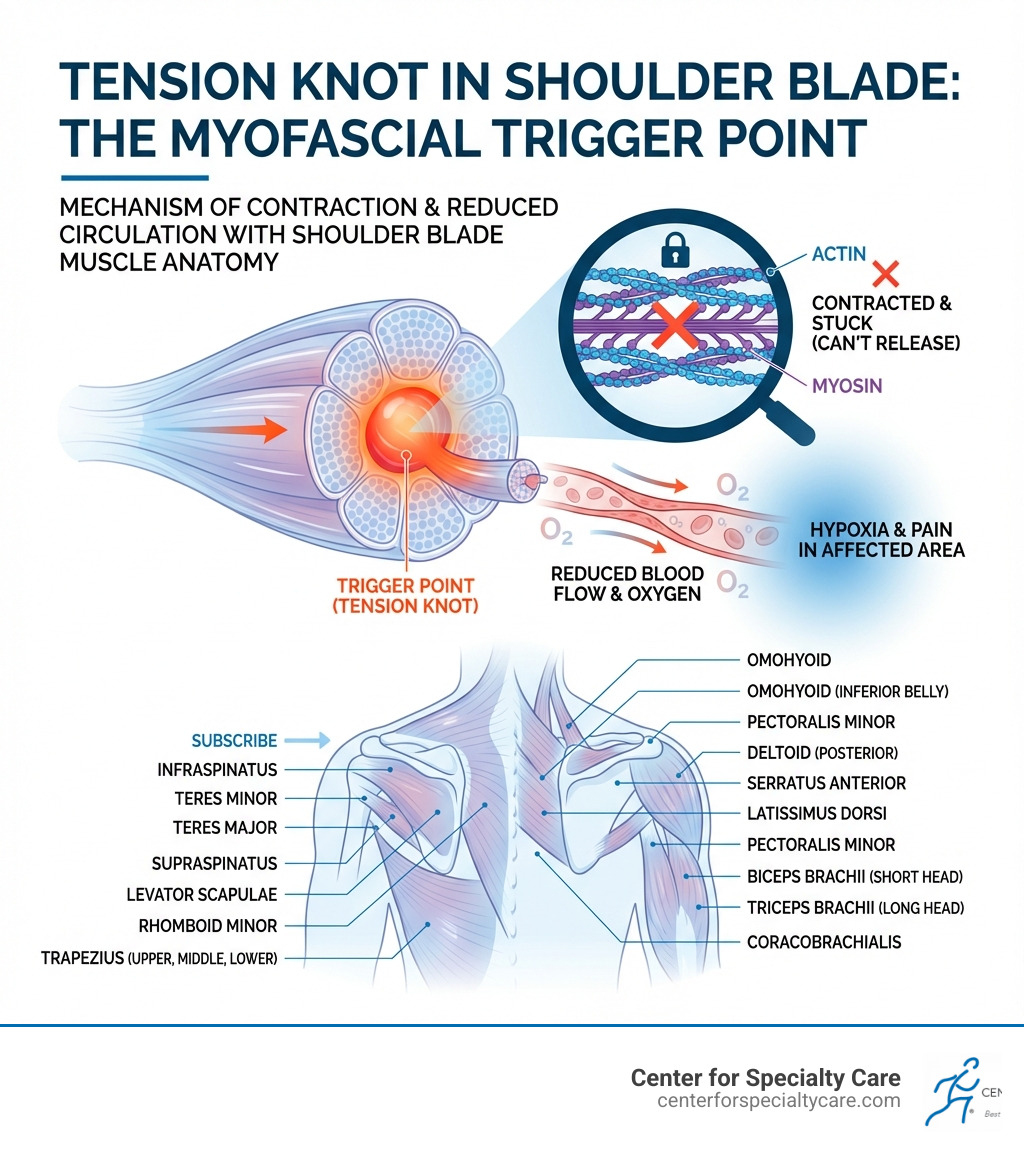
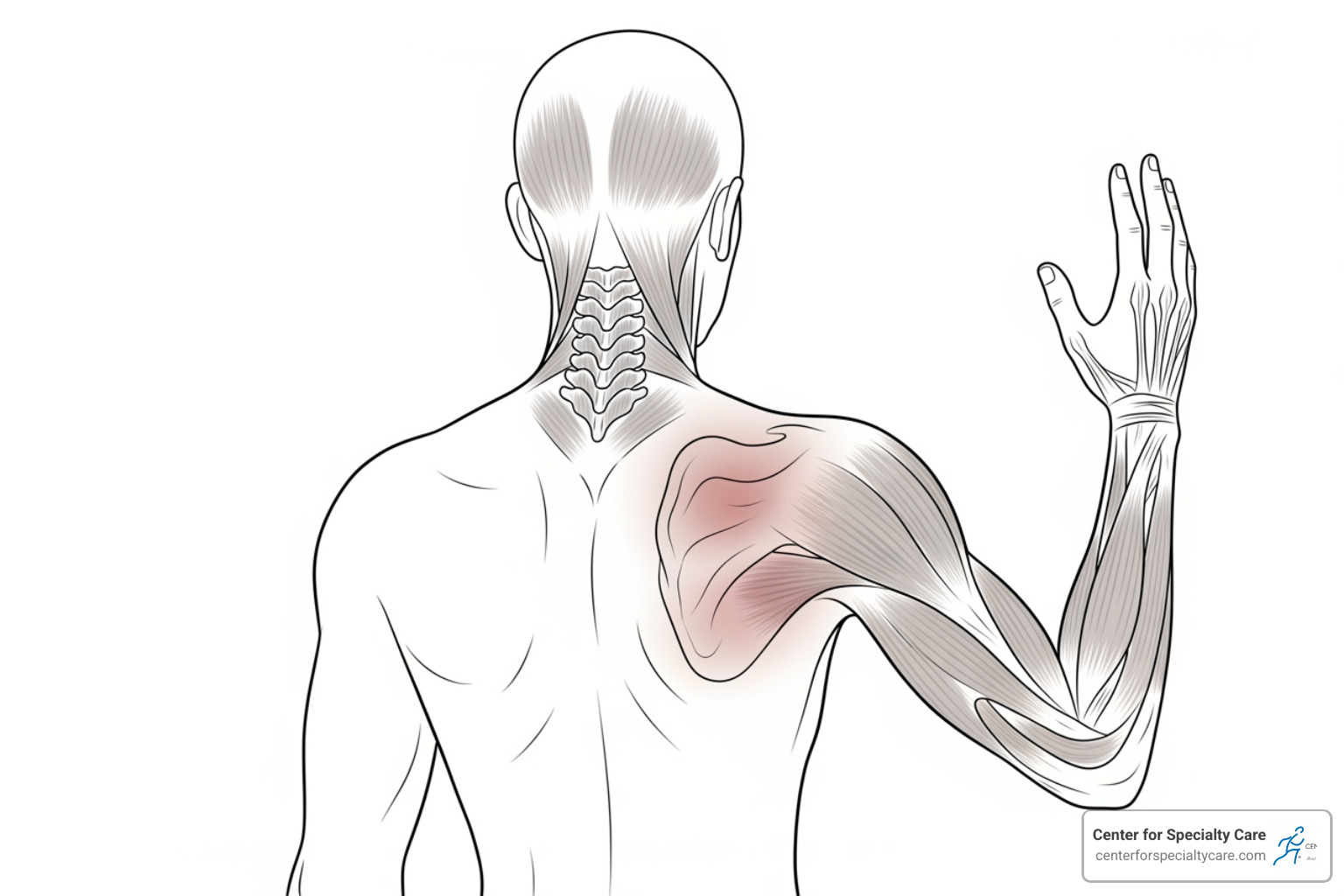
A muscle “knot,” scientifically known as a myofascial trigger point, occurs when muscle fibers get stuck in a contracted state from overuse, stress, or awkward positions. These bunched-up fibers form a hypersensitive, painful nodule that can’t relax.
This contraction reduces blood and oxygen flow, preventing the muscle from getting the energy (ATP) it needs to relax. This creates a vicious cycle of tension and discomfort, like a cramp that won’t quit. For a deeper dive into the science, you can explore scientific research on trigger points.
The shoulder blade (scapula) is a large, triangular bone anchoring seventeen different muscles that control arm and shoulder movement. This complex network of muscles extending from the neck to the back makes the area prone to knots. Understanding these relationships is key to effective treatment. For more anatomical detail, you can explore the anatomy of the scapula and back muscles.
A frustrating aspect of a tension knot in shoulder blade is “referred pain,” where pain is felt in a different location from the knot itself. Discomfort radiates along nerve pathways, so a shoulder blade knot might cause a headache, neck stiffness, or arm pain. The source of the pain can be far from where it’s felt.
Common Symptoms of a Tension Knot in Shoulder Blade
When you have a tension knot in shoulder blade, your body usually isn’t shy about letting you know. The symptoms can range from a mild annoyance to significant, debilitating pain. Here are the common signs we see in our patients:
- Localized Pain and Tenderness: The most obvious symptom is pain right around the shoulder blade area. This pain is often described as a dull ache, but it can also be sharp, especially when you press on the knot. The knot itself might feel like a hard, sensitive lump or bump under your skin.
- Stiffness and Limited Range of Motion: The affected muscles become tight, restricting your ability to move your arm and shoulder freely. You might find it difficult to reach overhead, behind your back, or even turn your head fully.
- Referred Pain: As we discussed, the pain can travel. Knots in the shoulder blade are notorious for causing pain that radiates to your neck, leading to stiffness and reduced head mobility. It can also extend down your arm, sometimes even reaching your hand.
- Headaches: This is a surprisingly common symptom. Trigger points in the upper trapezius and levator scapulae muscles (muscles connected to your shoulder blade and neck) can refer pain to the head, often manifesting as tension-type headaches.
- Muscle Tightness or Spasms: Beyond the localized knot, the surrounding muscles might also feel generally tight, and you might even experience involuntary muscle twitches or spasms in the area.
- Fatigue: Chronically tight muscles are constantly working, which can lead to localized muscle fatigue and a general sense of tiredness in your upper body.
Muscle Knot vs. Pinched Nerve: How to Tell the Difference
Symptoms of a tension knot in shoulder blade can mimic a pinched nerve in the neck (cervical radiculopathy). While both cause pain, crucial differences exist that are important for a correct diagnosis and treatment.
Here’s a comparison to help you understand the key differentiators:
| Feature | Muscle Knot (Myofascial Trigger Point) | Pinched Nerve (Cervical Radiculopathy) |
|---|---|---|
| Type of Pain | Typically dull, aching, throbbing, or a deep pressure sensation. May feel like a tight band or a “knot.” | Often sharp, shooting, burning, or electrical pain that radiates along a specific path (e.g., down the arm). |
| Location | Localized to the muscle, often between the shoulder blade and spine, or on top of the shoulder. Can have referred pain. | Originates in the neck, but pain is felt radiating from the neck down into the shoulder, arm, hand, or fingers. |
| Neurological Symptoms | Generally absent. No numbness, tingling, or weakness directly from the knot itself (though severe tightness can indirectly affect nerve function). | Common and hallmark symptoms: numbness, tingling (“pins and needles”), weakness, or a “heavy” feeling in the arm, hand, or fingers. |
| Aggravating Factors | Movement, sustained postures, pressure on the knot, stress, cold. | Neck movements (turning, tilting), coughing, sneezing, or straining. |
| Alleviating Factors | Massage, heat, stretching, rest, trigger point release. | Changing neck position, traction, rest (sometimes). |
| Causes | Muscle overuse, poor posture, stress, injury, dehydration. | Herniated disc, bone spurs, arthritis in the neck, injury, spinal stenosis. |
| When to Be Concerned | Persistent pain despite self-care, significant limitation in movement. | Any neurological symptoms (numbness, tingling, weakness), severe pain that doesn’t improve, pain that disrupts sleep. |
Pain in your shoulder blade can sometimes originate from a nerve problem in your neck. If you experience neurological symptoms like numbness or weakness, or if your pain is severe and persistent, it’s crucial to seek professional medical advice to rule out a pinched nerve. Our pain management services can help diagnose the root cause of your discomfort.
What Causes Knots in the Shoulder Blades?
Understanding the root cause of your tension knot in shoulder blade is the first step toward lasting relief. These knots are often symptoms of broader issues related to daily habits, physical activities, or emotional stress, and a combination of factors usually contributes to these persistent pains.
Repetitive strain, muscle overuse, a sedentary lifestyle, and emotional stress all contribute. Knots form when demands on our muscles exceed their capacity or when recovery is inadequate. Dehydration and nutritional deficiencies also play a significant role in muscle health.
Primary Causes of a Tension Knot in Shoulder Blade
Let’s dig into the most common culprits we encounter when patients visit us with shoulder blade pain:
- Poor Posture: This is arguably the most prevalent cause in our modern, screen-centric world. Spending hours hunched over a desk, looking down at your phone (hello, “text neck”!), or simply slouching can put immense strain on the muscles of your neck, shoulders, and upper back. Your head, which is surprisingly heavy (think of it as a bowling ball!), when held forward, forces your neck and upper back muscles to work overtime just to keep it upright. This constant isometric contraction can easily lead to a tension knot in shoulder blade.
- Improper Lifting Techniques: Whether you’re lifting weights at the gym, moving furniture, or simply picking up a heavy box, using incorrect form can overload your shoulder and back muscles, leading to acute strain and the formation of knots.
- Repetitive Motions: Many jobs and hobbies involve repetitive movements that can lead to muscle overuse. Activities like painting overhead, typing, playing certain sports (golf, tennis, pickleball), or even gardening can cause the same muscles to contract repeatedly without adequate rest or stretching. This constant strain can exhaust muscle fibers, making them susceptible to knotting.
- Acute Injury: Sometimes, a sudden event like a fall, a direct blow to the shoulder, or even a whiplash injury from a car accident can trigger muscle spasms and knot formation as the body attempts to protect the injured area. If you’ve experienced shoulder pain after such an event, our guide on Shoulder Pain After Car Accident: Causes and Recovery Tips might be helpful.
The Surprising Link Between TMJ and Shoulder Pain
A surprising cause of shoulder blade knots is temporomandibular joint (TMJ) disorder. The TMJ connects your jaw to your skull, and dysfunction in this joint can cause a cascade of pain far beyond the jaw.
TMJ disorders cause referred pain to the neck, shoulders, and upper back, contributing to muscle knots. The muscles for chewing are connected to neck and upper back muscles. Chronic jaw clenching (bruxism) can lead to hyperactive jaw muscles, causing tension in the neck and shoulder muscles. This creates a “muscle tension chain” that results in a tension knot in shoulder blade.
Addressing TMJ pain can be critical for relieving stubborn shoulder knots, especially when other treatments fail. A comprehensive approach may involve oral appliances, therapeutic injections, and physical therapy.
Effective Treatments for a Tension Knot in Shoulder Blade
Treating a persistent tension knot in shoulder blade requires both at-home remedies for immediate relief and professional medical care for lasting solutions. Success depends on consistency and a combination of strategies. We empower patients with tools for long-term muscle health, not just symptom treatment. For more, see our guide on the Best Therapy for Shoulder Pain: Expert Solutions and Relief.
At-Home Stretches and Exercises for Relief
One of the best things you can do for a tension knot in shoulder blade is to keep the affected muscles moving gently and regularly. Here are some effective stretches and self-massage techniques you can try at home:
- Doorway Stretch: Stand in a doorway with your forearms on the frame, elbows at 90 degrees. Lean forward gently until you feel a stretch across your chest and shoulders. Hold for 30 seconds. This helps open up the chest, counteracting the effects of hunching.
- Cat-Cow Pose: Start on your hands and knees. As you inhale, arch your back, drop your stomach, and lift your chin (Cow). As you exhale, round your spine and bring your chin to your chest (Cat). Repeat slowly for 1-2 minutes. This mobilizes your spine and gently stretches your back muscles.
- Chin Tucks: Sit or stand tall. Gently pull your chin straight back, as if making a double chin, keeping your gaze forward. Hold for a few seconds and release. This strengthens deep neck flexors and improves neck posture.
- Shoulder Blade Squeezes: Sit or stand tall with your arms relaxed at your sides. Gently squeeze your shoulder blades together as if you’re trying to hold a pencil between them, without shrugging your shoulders. Hold for 5-10 seconds and release. Repeat 10-15 times. This activates and strengthens the muscles between your shoulder blades.

For self-massage, simple tools can be incredibly effective:
- Tennis or Lacrosse Ball: Place the ball between your back and a wall (or lie on the floor). Position the ball directly on the knot or tender area and gently roll your body against it. Apply pressure until you feel a “good pain,” holding for 30-60 seconds on particularly tight spots.
- Foam Rolling: Lie on your back with a foam roller positioned horizontally across your upper back, just below your shoulder blades. Support your head with your hands and gently roll up and down, allowing the roller to massage the muscles around your shoulder blades.
You can find more techniques and detailed instructions on how to try a trigger point massage.
Finally, don’t underestimate the power of heat and cold therapy. For acute pain or inflammation (especially in the first 24-48 hours after injury), ice can help constrict blood vessels and reduce swelling. Apply a cold compress for 10-15 minutes, then remove for at least 15 minutes before reapplying. For chronic stiffness and muscle tightness, heat is your friend. A warm compress, heating pad, or even a warm bath can increase blood flow, relax muscles, and promote healing. Apply heat for 15-20 minutes. You can alternate between heat and cold if it provides greater relief.
When to Seek Professional Medical Help
While at-home remedies are great for managing mild to moderate tension knot in shoulder blade discomfort, there are times when professional medical help is necessary. We urge our patients to listen to their bodies and not hesitate to seek expert evaluation, especially when symptoms persist or worsen.
You should consider seeing a healthcare professional if you experience any of the following:
- Pain that persists or worsens despite consistent self-care efforts over a few days or a week.
- Numbness, tingling, or weakness in your arm, hand, or fingers. These are red flags that could indicate nerve involvement, such as a pinched nerve.
- Pain that disrupts your sleep or significantly interferes with your daily activities.
- The knot is accompanied by other concerning symptoms like fever, unexplained weight loss, or changes in bowel/bladder function.
For a comprehensive understanding of when and how to seek professional help for muscle knots, the resource on diagnosis and management of trigger points offers valuable insights.
At Center for Specialty Care, we offer a range of professional treatments custom to your specific needs:
- Physical Therapy: Our physical therapists are experts in identifying the root causes of your shoulder blade knots, such as muscle imbalances, postural issues, or movement patterns. They can guide you through targeted exercises, stretches, and manual techniques to restore function, reduce pain, and prevent recurrence. Physical therapy is often covered by insurance, making it an accessible and effective option. Learn more about shoulder treatment with physical therapy: recovery and pain relief.
- Manual Therapy: This involves hands-on techniques performed by a physical therapist or chiropractor to mobilize joints, release muscle tension, and improve range of motion. Techniques may include soft tissue mobilization, myofascial release, and joint manipulation.
- Dry Needling: For deep or resistant knots, dry needling can be highly effective. This technique involves inserting thin needles into trigger points to stimulate a twitch response, which helps the muscle release and relax.
- Trigger Point Injections: In some cases, a local anesthetic or corticosteroid can be injected directly into a stubborn trigger point to provide immediate relief and break the pain cycle. These are typically considered after other conservative treatments have been explored.
How to Prevent Future Shoulder Blade Knots
The best way to deal with a tension knot in shoulder blade is to prevent it. Proactive strategies and lifestyle adjustments are crucial for long-term muscle health. This allows you to optimize your body’s function and live comfortably, enjoying all that southern Minnesota and northern Iowa have to offer.
Ergonomic and Lifestyle Adjustments
Many shoulder blade knots stem from how we interact with our environment, especially during long periods of sitting or repetitive tasks.
-
Optimize Your Workstation: If you spend a lot of time at a desk, an ergonomic setup is non-negotiable.
- Chair: Choose a chair that supports the natural curve of your spine, with adjustable lumbar support. Your feet should be flat on the floor (or on a footrest), and your knees should be roughly level with your hips.
- Monitor: Position your computer screen directly in front of you, about an arm’s length away, with the top of the screen at eye level. This prevents you from craning your neck up or down.
- Keyboard and Mouse: Keep your keyboard and mouse close to your body, allowing your elbows to stay at a 90-degree angle with your wrists straight.
- Movement Breaks: Even with a perfect setup, static postures are detrimental. Set a timer to take a short break every 30-60 minutes. Stand up, walk around, and perform a few gentle stretches.
For a comprehensive guide, check out this office ergonomics how-to guide.
-
Mind Your Sleeping Position: Sleeping in an awkward position can contribute to neck and shoulder tension. Try to sleep on your back or side with a pillow that supports the natural curve of your neck, keeping your head aligned with your spine.
- Stress Management: The shoulders and upper back are common places to hold stress. Incorporate relaxation techniques into your daily routine, such as deep breathing exercises, meditation, yoga, or even short walks in nature. Managing stress can significantly reduce muscle tension.
- Stay Hydrated and Nourished: Dehydration can make muscle fibers more prone to stiffness and cramping. Drink plenty of water throughout the day. A balanced diet rich in essential minerals like magnesium and potassium also supports healthy muscle function.
Strengthening and Mobility
A well-rounded approach to preventing shoulder blade knots includes building balanced muscle strength and maintaining flexibility.
- Balanced Muscle Strength: Focus on strengthening not just the large, visible muscles, but also the smaller, stabilizing muscles around your shoulder blades and rotator cuff. Often, weakness in these supporting muscles forces other muscles (like your upper trapezius) to overcompensate, leading to knots.
- Exercises for Upper Back and Core: Incorporate exercises like rows, pull-aparts, and planks to strengthen your upper back and core. A strong core provides a stable base for your upper body, reducing strain on your shoulder and neck muscles.
- Preventing Muscle Imbalances: Many daily activities, like prolonged sitting, lead to tight chest muscles and weakened upper back muscles. Counteract this by regularly stretching your chest and strengthening your back.
- Warm-up and Cool-down: Always warm up your muscles before any physical activity, even light exercise. This prepares your muscles for work and improves blood flow. After your activity, cool down with gentle stretches to maintain flexibility and prevent post-exercise stiffness. If you’re an avid lifter, our tips on how to get rid of shoulder pain from lifting weights: tips and exercises can provide further guidance.
Frequently Asked Questions about Shoulder Blade Knots
We often hear similar questions from our patients regarding their tension knot in shoulder blade. Here are some of the most common ones, along with our answers based on years of clinical experience.
How long does it take for a knot in the shoulder blade to go away?
How long a tension knot in shoulder blade lasts depends on if it’s an acute (new) or chronic (long-standing) issue and how diligently you treat it.
- Acute Knots: With consistent self-care—such as heat/ice, gentle stretching, and self-massage—an acute knot can often resolve within a few days to a week.
- Chronic Knots: These are trickier. Chronic knots, which might have been present for weeks, months, or even years, often require more comprehensive intervention. They may take several weeks to months of professional treatment, including physical therapy, manual therapy, and addressing underlying causes like poor posture or muscle imbalances. Consistency with your treatment plan, both at home and with professional guidance, is absolutely key for lasting relief.
Can a tension knot in your shoulder blade cause headaches?
Yes, absolutely. Trigger points in neck and shoulder muscles (like the trapezius and levator scapulae) are notorious for causing referred pain that manifests as tension-type headaches. These headaches are often accompanied by neck stiffness. Addressing the tension knot in shoulder blade can often provide significant headache relief.
Is it better to use heat or ice on a muscle knot?
Both heat and ice can be beneficial for a tension knot in shoulder blade, but they serve different purposes and are best used at different times.
- Ice (Cold Therapy): Is generally recommended for acute injuries, inflammation, or sharp pain, especially within the first 24-48 hours. Cold helps to constrict blood vessels, which reduces swelling and numbs the area, providing pain relief. Apply a cold compress wrapped in a cloth for 10-15 minutes, then remove for at least 15 minutes.
- Heat (Warm Therapy): Is usually better for chronic stiffness, muscle tightness, and dull, aching pain. Heat increases blood flow to the area, which helps relax stiff muscles, promotes healing, and can ease the sensation of a knot. You can use a heating pad, a warm compress, or take a warm bath. Apply heat for 15-20 minutes.
It depends on your specific symptoms and what feels most comfortable and effective for you. Some people find alternating between heat and cold provides the best relief.
Take Control of Your Shoulder Pain Today
Living with a tension knot in shoulder blade is frustrating and can impact your daily life, but you don’t have to live with the pain.
Understanding the causes and treatments for muscle knots is the first step to relief. A combination of self-care (stretching, self-massage, ergonomics) and professional guidance is often the most effective path to recovery.
At Center for Specialty Care, we provide personalized care with quick appointment availability. Our team of experts, led by Dr. Corey Welchlin, will find the root cause of your discomfort and create a custom treatment plan for lasting relief.
Don’t let a tension knot in shoulder blade limit your life. Take the proactive step toward better health and comfort. Find a doctor for your shoulder problems and start your journey to recovery today. We’re here to help you get back to feeling your best, right here in southern Minnesota and northern Iowa.