
Everything you need to know about the Intracept procedure
March 24, 2026
The Fairmont Foot Guide: What to Look for in a Local Podiatrist
March 26, 2026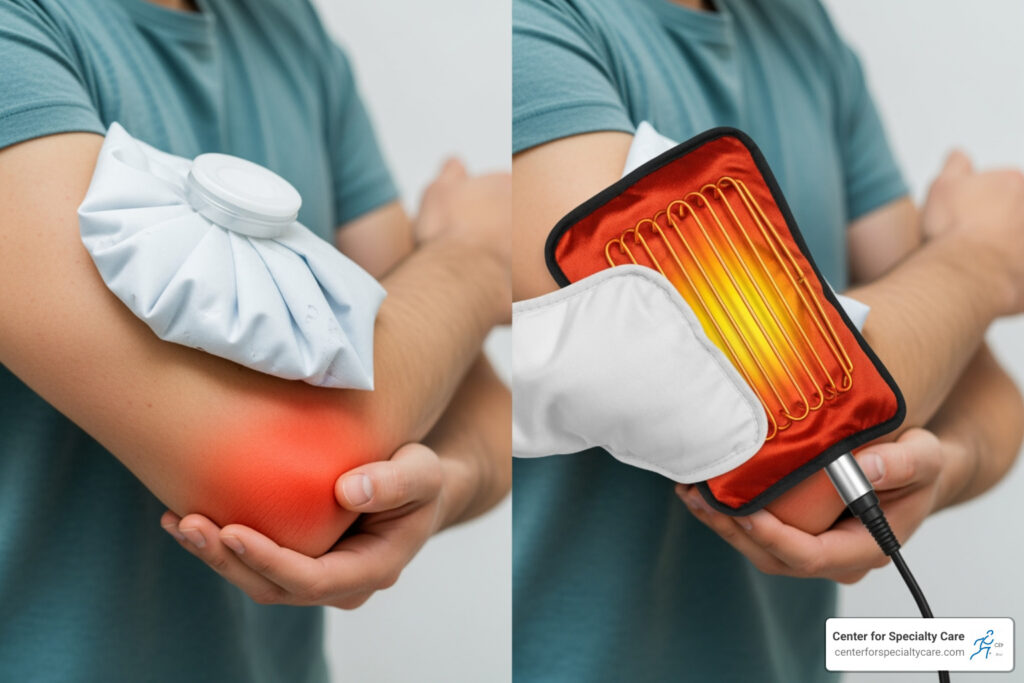
The Great Debate: Is Ice or Heat Best for Your Tendons?
Ice or Heat for Tendons: How to Choose the Right Therapy
Ice or heat for tendons is one of the most common questions people ask after a tendon injury — and the answer depends on one key factor: how recent is your injury?
Quick Answer:
| Situation | Use |
|---|---|
| Injury within the last 48-72 hours (swelling, redness, sharp pain) | Ice |
| Injury older than 72 hours, or chronic stiffness/aching | Heat |
| After activity causes a flare-up | Ice |
| Before exercise or stretching for a chronic condition | Heat |
The general rule is simple: ice first, heat later. Ice helps control swelling in the early stages. Heat helps loosen stiff tissue and boost blood flow once the acute phase has passed.
Getting this wrong matters. Applying heat too early can increase swelling and make pain worse. Using ice on a chronic, stiff tendon can make it tighter and more painful.
Mild tendon injuries can start feeling better within 2-3 weeks with the right self-care. But knowing which therapy to use — and when — is what makes the difference.
I’m Dr. Corey Welchlin, a board-certified orthopedic surgeon and sports medicine physician with over 30 years of experience treating tendon injuries at the Center for Specialty Care in Fairmont, Minnesota. Helping patients understand when to use ice or heat for tendons is one of the most practical pieces of advice I share to support faster, safer recovery.
Basic ice or heat for tendons glossary:
Understanding the Injury: Tendonitis vs. Tendinosis
Before you reach for the freezer or the heating pad, we need to identify what is actually happening inside your body. Tendons are the tough, rope-like bands of fibrous tissue that connect your muscles to your bones. When they hurt, it is usually one of two things: tendonitis or tendinosis.
Tendonitis is an acute condition. This means it happens suddenly, often due to a sharp movement or a sudden increase in activity. It is characterized by active inflammation. If your joint is red, swollen, or warm to the touch, you are likely dealing with tendonitis. You might even feel a “grating” or crackling sensation (known as crepitus) when you move the joint.
Tendinosis, on the other hand, is a chronic condition. According to scientific research on tendinopathy, tendinosis is not actually about inflammation. Instead, it is the result of collagen degeneration. Think of it like a rope that has started to fray over time due to wear and tear. This often happens when an old injury didn’t heal properly or from years of repetitive stress.
Symptoms of tendinosis usually include a dull ache and significant stiffness, especially in the morning. Because there is no active swelling to “put out,” the treatment approach changes entirely. More info about heat for tendonitis explains that for these long-term issues, we want to encourage blood flow rather than restrict it.
When to Use Ice or Heat for Tendons
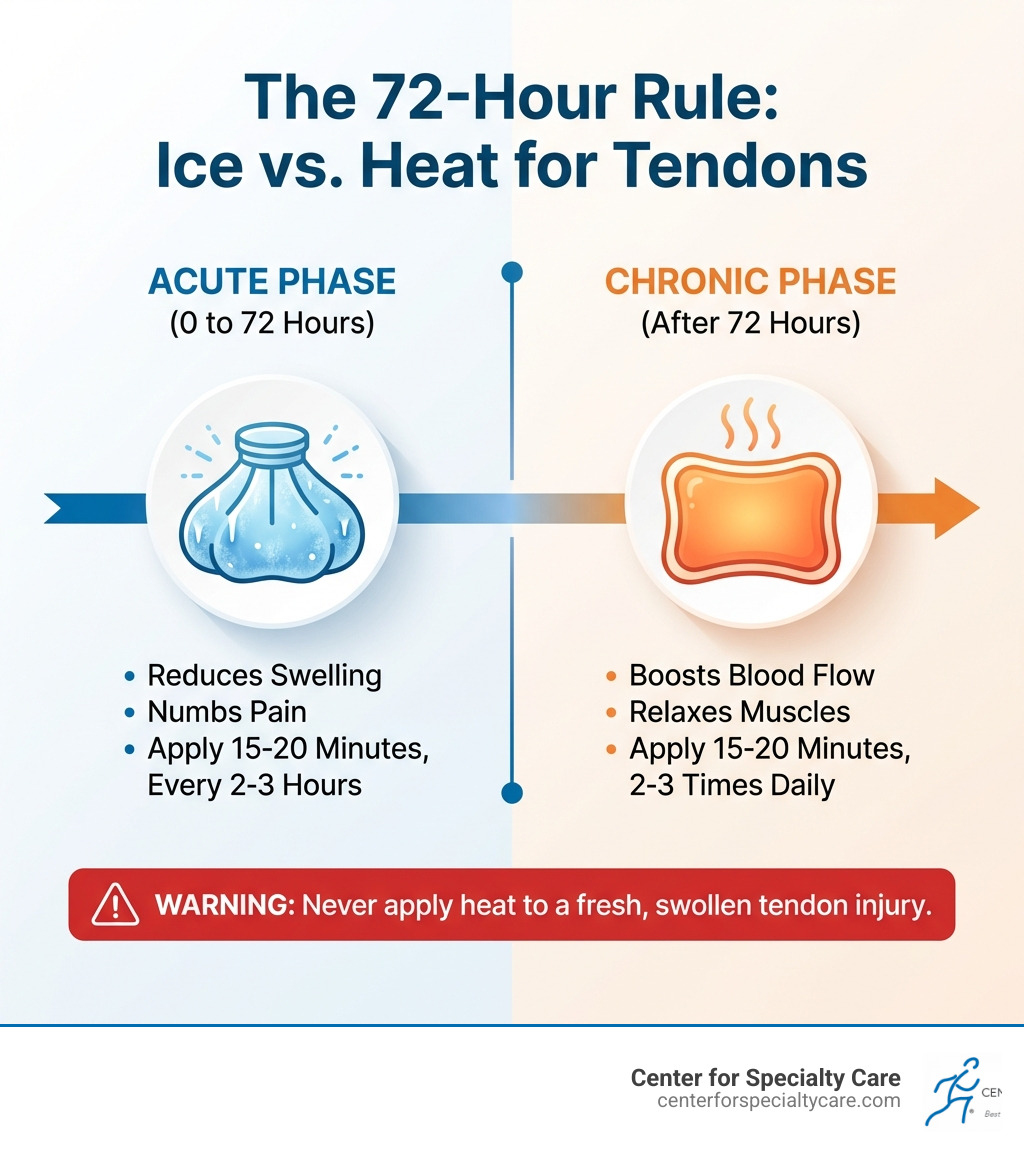
The decision-making process for ice or heat for tendons is largely governed by the “72-hour rule.” Following Mayo Clinic’s guidance on tendinitis pain, we can break down the physiological effects of each therapy.
| Feature | Ice (Cold Therapy) | Heat (Thermal Therapy) |
|---|---|---|
| Primary Goal | Reduce inflammation and numbing | Increase circulation and flexibility |
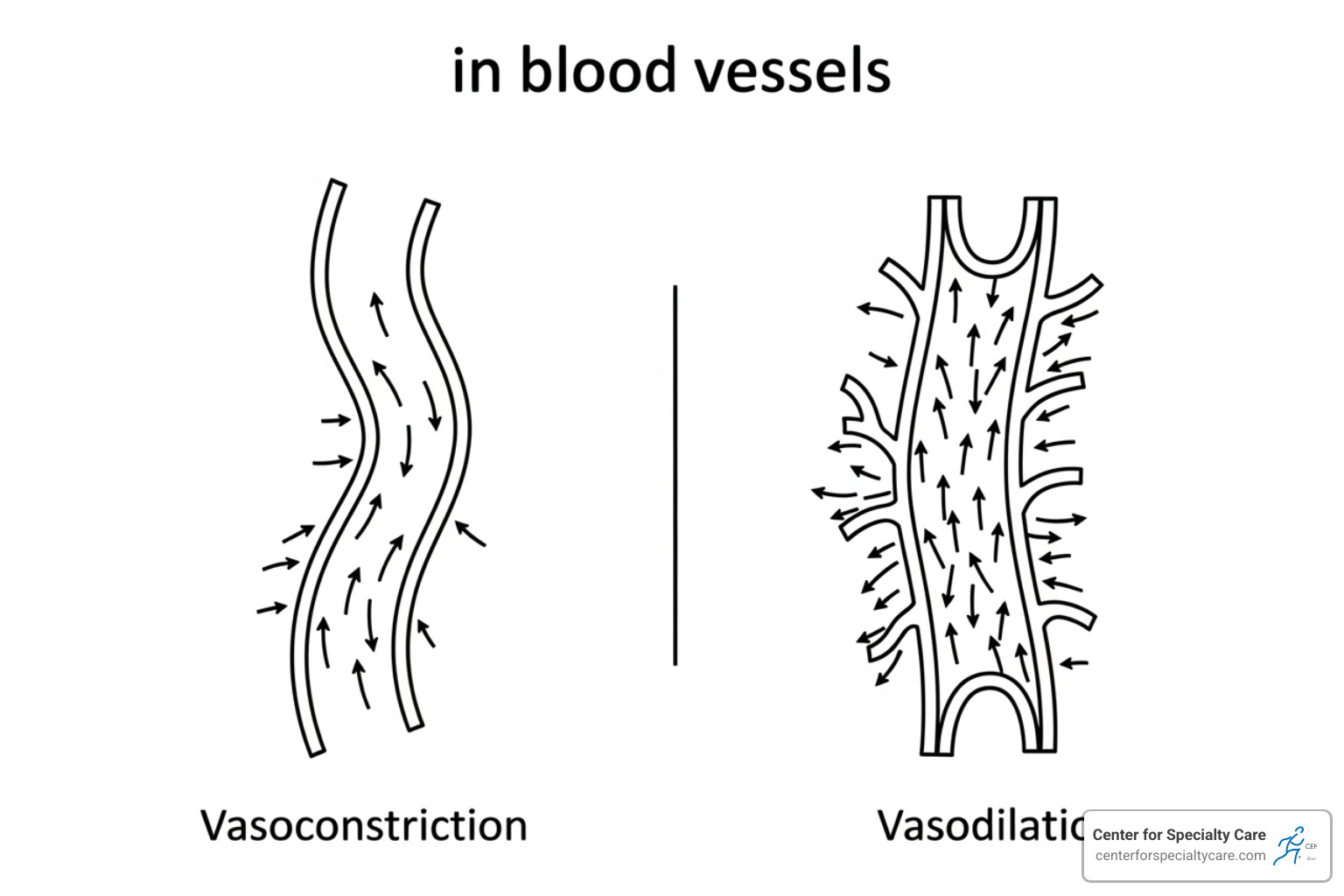
| Vessel Effect | Vasoconstriction (narrowing) | Vasodilation (widening) |
| Best For | Acute injuries (<72 hours) | Chronic pain (>4 weeks) |
| When to Use | Immediately after injury or activity | Before stretching or exercise |
| Duration | 15-20 minutes | 15-20 minutes |
The Case for Ice: When you apply ice, it causes vasoconstriction. This narrows the blood vessels, which limits the amount of fluid leaking into the injured area. This is essential for reducing the swelling that causes pressure and pain in the first 48-72 hours. While ice does not technically “speed up” the biological healing process, it creates the optimal environment for healing to begin by controlling the initial “fire” of inflammation.
The Case for Heat: Heat does the opposite. It causes vasodilation, which opens up the blood vessels. This brings a fresh supply of oxygen and nutrients to the tendon, which is vital for repairing damaged collagen.
The Benefits of Ice or Heat for Tendons in Chronic Cases
When dealing with chronic tendinosis, heat is often the MVP. Because tendons naturally have a lower blood supply than muscles, they can be slow to heal. Heat helps overcome this by artificially boosting circulation.
For those dealing with issues like extensor tendonitis (pain on the top of the foot), heat can be particularly helpful for restoring tissue elasticity. Applying heat before you start your day or before a gentle walk can “prime” the tendon, making it more flexible and less likely to suffer micro-tears during movement.
Heat also aids in muscle relaxation. Often, the muscles attached to a painful tendon will spasm or tighten up as a protective mechanism. Heat breaks this cycle, allowing the entire “muscle-tendon unit” to move more freely.
Risks of Using the Wrong Therapy
We see it often in our Fairmont and Iowa clinics: a patient with a brand-new, swollen ankle injury applies a heating pad because it “feels soothing.” Unfortunately, this can be a recipe for disaster.
Applying heat to an acute, inflamed injury can increase swelling by up to three times. This extra fluid increases pressure on the nerves, leading to more pain and potentially delaying your recovery by weeks. Conversely, using ice on a chronic, stiff tendon—like an Achilles that has been bothering you for months—can cause the tissue to become even more brittle and stiff, increasing the risk of a rupture during activity.
Step-by-Step Guide: How to Apply Therapy Safely
Safety is paramount when using temperature therapy. You are dealing with extremes that can damage your skin if not handled correctly.
Safe Icing Practices:
- Use a Barrier: Never apply ice or chemical cold packs directly to the skin. Wrap your ice pack in a thin kitchen towel or pillowcase.
- Timing: Limit sessions to 15-20 minutes.
- The “Warm-Up” Rule: Allow at least 30 to 60 minutes between sessions to let the skin return to its normal temperature. This prevents frostbite and keeps the blood moving.
- Elevation: While icing, keep the injured area above the level of your heart to help gravity drain the excess fluid.
Safe Heating Practices:
- Check the Temp: The heat should be “warm,” not “scalding.” If it’s uncomfortable, it’s too hot.
- Moist Heat is Best: Use a damp warm towel or a moist heating pad. Moist heat penetrates deeper into the tendon tissue than dry heat.
- Never Sleep with Heat: It is easy to sustain a low-grade burn if you fall asleep with a heating pad on.
- Inspect the Skin: According to safety tips from VeryWell Health, you should always check for signs of skin irritation or blistering after a session.
Advanced Recovery: Contrast Therapy and Specific Conditions
If you are past the initial 72-hour window but still have lingering discomfort and minor swelling, we may recommend Contrast Therapy. This involves alternating between hot and cold to create a “pumping action” in the blood vessels.
How to Perform a Contrast Bath:
- Prepare two containers: one with warm water (not hot) and one with cold water (add a few ice cubes).
- Submerge the affected area in warm water for 3-4 minutes.
- Immediately switch to cold water for 1 minute.
- Repeat this cycle 4-5 times.
- Always end with cold to ensure any inflammation caused by the heat is kept in check.
This method is highly effective for “stubborn” areas like tennis elbow or swimmer’s shoulder, where blood flow is notoriously poor.
For those managing Achilles tendonitis, we often suggest using heat in the morning to get rid of that “stiff board” feeling, and then using ice for 15 minutes after you’ve been on your feet for a long time or finished a workout.
Beyond Temperature: Supporting Your Tendon Recovery
While deciding between ice or heat for tendons is a great first step, it is only one part of a comprehensive recovery plan.
- Rest (The 2-3 Day Rule): Most acute tendon issues need 48-72 hours of significant rest. Avoid the activity that caused the pain.
- Support: Use elastic bandages or braces snugly (but not so tight they cut off circulation) to provide stability.
- Gentle Movement: Following NHS guidance on tendonitis, once the sharp pain subsides, you should begin gentle, pain-free range-of-motion exercises to prevent the joint from “freezing.”
- Gradual Loading: Tendons need to be “re-taught” how to handle weight. This is usually done through eccentric exercises (lengthening the muscle under tension), which should be guided by a professional.
- Medication: Over-the-counter NSAIDs (like ibuprofen) can help with the pain of acute tendonitis, but they may actually slow down the healing of chronic tendinosis. Always consult a pharmacist or our team before starting a regimen.
Frequently Asked Questions about Tendon Pain
How long should I apply ice or heat to a strained tendon?
For both ice and heat, the “sweet spot” is 15 to 20 minutes. Applying ice for longer than 20 minutes can trigger a “hunting response,” where the body actually sends more blood to the area to prevent frostbite, which increases swelling. For chronic pain, 2-3 sessions of heat per day are usually sufficient.
Is it better to use ice or heat for tendons like the Achilles?
It depends on the timing! If you just finished a run and your heel is throbbing and swollen, use ice. If you wake up and can barely walk because your heel feels like it’s made of stone, use heat to loosen it up. Generally, heat before activity and ice after activity is a winning strategy for the Achilles.
Can I exercise while treating a tendon injury?
Yes, but with caution. You should never “push through” sharp tendon pain. If an activity causes pain higher than a 3 out of 10, stop. Focus on pain-free movements and gradual loading. Professional physical therapy is the safest way to return to sports.
Conclusion
Whether you are a high school athlete in Estherville or a weekend warrior in Fairmont, knowing when to use ice or heat for tendons can save you weeks of frustration. Remember the golden rule: Ice for the new and swollen; heat for the old and stiff.
At the Center for Specialty Care, we pride ourselves on 100% patient satisfaction and personalized care. We offer both surgical and non-surgical options at our locations in Fairmont, MN, Estherville, IA, Buffalo Center, IA, and St. James, MN.
If your pain doesn’t improve within a few weeks of home care, or if you suspect you have ruptured a tendon, don’t wait. A ruptured tendon often requires urgent medical attention and cannot be fixed with an ice pack alone.
Ready to get back to moving freely? Schedule a consultation for expert orthopedic care with our team today. We offer quick appointment availability to get you on the road to recovery as soon as possible.