
Why You Should Finally Book That Deep Tissue Massage
August 10, 2026
Dry Spell? How to Find the Best IV for Dehydration Near Me
August 12, 2026
Getting Your Shoulder Back in the Game with Expert Rotator Cuff Care
Decoding Shoulder MRI: Why Your Scan Might Not Mean Surgery
When you experience persistent shoulder pain, getting an MRI is often the first major diagnostic milestone. However, reading your own radiology report can be a terrifying experience. Terms like “partial-thickness tear,” “tendinosis,” or “degenerative changes” make it sound as though your shoulder is structurally failing.
But here is a secret that we always share with our patients at our clinics in Fairmont and Estherville: your MRI findings might not mean what you think they mean.
In a landmark clinical study, researchers scanned 602 random, pain-free adults using high-strength 3-Tesla MRIs. The results were eye-opening:
- 99% of the scanned adults had at least one rotator cuff abnormality.
- 62% had partial-thickness rotator cuff tears but experienced zero pain.
- 78% of those with full-thickness tears were completely asymptomatic.
- Overall, rotator cuff abnormalities were present in 96% of pain-free shoulders and 98% of painful shoulders—a difference of a mere 2%.
In other words, finding an abnormality on a shoulder MRI is incredibly common as we age. We like to tell our patients that many of these imaging findings are simply the “gray hair of the shoulder”—a normal, pain-free part of the aging process rather than a definitive reason to rush into an operating room.
This is why Understanding rotator cuff abnormalities requires a clinical perspective. We do not treat MRI scans; we treat patients. If your shoulder functions perfectly and doesn’t hurt, an abnormal MRI scan doesn’t require treatment. However, if you are experiencing active signs of a torn rotator cuff—such as weakness when lifting your arm, cracking sensations, or severe pain—that is when those imaging findings become clinically meaningful.
Choosing Expert Rotator Cuff Care: Surgery vs. Non-Surgical Management
Deciding how to address a rotator cuff issue is a highly personalized process. At the Center for Specialty Care, we look at several patient-specific factors, including the exact tear pattern, the health and quality of the tendon tissue, and your daily activity level.
To help you understand how we guide our patients through this decision, we have created a quick comparison of the two primary pathways:
| Feature/Factor | Conservative Non-Surgical Management | Surgical Repair (Arthroscopic) |
|---|---|---|
| Primary Candidates | Partial tears, chronic tendinosis, older patients, or low-demand lifestyles. | Full-thickness tears, acute traumatic tears, active individuals, or failed conservative care. |
| Tear Pattern | Incomplete tears where the tendon remains anchored to the bone. | Complete tears where the tendon has pulled away from its attachment. |
| Tissue Quality | Mild to moderate degeneration; tissue retains structural integrity. | Retracted tendons or tears at risk of muscle atrophy and fatty infiltration. |
| Activity Level | Lower-demand daily activities, light recreation. | High-demand labor, overhead sports, or active lifestyles. |
| Primary Goal | Pain relief, compensation through surrounding muscle strengthening. | Mechanical restoration, tendon-to-bone healing, restoring full power. |
| Recovery Time | 6 to 12 weeks of structured physical therapy. | 4 to 6 months of comprehensive postoperative rehabilitation. |
Evaluating these factors carefully ensures that you receive the most appropriate care for your unique shoulder. If you are experiencing persistent weakness or pain, exploring your rotator cuff tear and treatment options with an expert is the safest way to prevent a small problem from turning into a permanent injury. For complex cases, consulting a rotator cuff specialist ensures you get a precise diagnostic evaluation rather than a standard, one-size-fits-all recommendation.
The Role of Regenerative Medicine in Expert Rotator Cuff Care
For patients who are not ready for surgery or who have partial-thickness tears and chronic tendinopathy, modern non-surgical interventions offer highly effective alternatives.
It is important to understand the difference between acute inflammation (tendinitis) and chronic degeneration (tendinosis). While cortisone injections are excellent for short-term pain relief, repeatedly treating chronic tendinosis with cortisone can actually degrade the tendon tissue over time. That is why we focus on regenerative treatments that stimulate the body’s natural healing response.
- Platelet-Rich Plasma (PRP) Injections: PRP uses a concentrated sample of your own blood platelets, which are packed with growth factors. A 2025 meta-analysis of 27 randomized controlled trials (RCTs) involving 1,779 patients demonstrated that PRP injections provided significantly better pain scores at 3 months and superior functional outcomes at 12 and 24 weeks compared to traditional cortisone.
- Percutaneous Needle Tenotomy (PNT): This minimally invasive, clinic-based procedure uses ultrasound guidance to gently fragment and remove degenerated scar tissue. A meta-analysis of 35 studies (over 1,600 patients) found that ultrasound-guided tenotomy led to an average long-term pain reduction of 3.6 points on a 10-point scale.
- The “Synergy” Effect: Combining these treatments yields remarkable results. In a randomized controlled trial, patients who received a combination of PRP and percutaneous tenotomy for partial supraspinatus tendon tears showed an 80% complete tendon healing rate on ultrasound at six months, compared to just 21% in the group that received tenotomy alone.
- Shockwave Therapy (EPAT): This treatment uses acoustic sound waves to increase blood flow and stimulate tissue remodeling in stubborn, degenerative tendons.
- Ultrasound-Guided Barbotage: For patients suffering from calcific tendinopathy (where painful calcium deposits build up inside the tendon), we use ultrasound to precisely locate, wash out, and break up the calcium deposits, providing rapid relief without surgery.
When considering these options, it is helpful to look at the different types of shoulder injections available to find the one that aligns with your healing goals.
Advanced Biologic Augmentation in Modern Surgery
When surgery is unavoidable, we can still leverage the power of biology to improve healing. Over 400,000 rotator cuff repairs are performed annually in the United States, yet standard historical re-tear rates remain a concern, ranging from 10% to 40% depending on the size of the tear.
To combat this, advanced biologic augmentations are used during the surgical procedure to reinforce the repair:
- Bone Marrow Aspirate Concentrate (BMAC): Rich in stem cells and growth factors harvested from your own bone, BMAC can be applied directly to the tendon-to-bone interface during surgery to accelerate biological bonding.
- Bioinductive Collagen Implants: These are tiny, highly porous collagen patches that are placed over the repaired tendon. They act as a scaffold, encouraging your body to grow new, healthy tendon tissue. Peer-reviewed research on advanced shoulder reconstruction shows highly favorable, proven two-year clinical outcomes when full-thickness repairs are augmented with these bioinductive implants.
- Navigating Patch Options Carefully: While collagen scaffolds show great promise, we remain highly selective about the materials we use. For example, certain clinical trials have shown that utilizing bovine patches for partial-thickness repairs can sometimes increase postoperative stiffness and lead to higher reoperation rates.
We evaluate every patient’s tissue quality and activity demands to determine if they are a prime candidate for these advanced biologic enhancements.
Precision Surgical Protocols and Proven Outcomes
When a patient requires surgery, our goal is to perform a repair that is built to last. Historically, standard in-network orthopedic surgeries have relied heavily on “single-row” repairs because they are faster to perform. However, we advocate for value-based, precision surgical approaches that restore the natural anatomy of the shoulder.
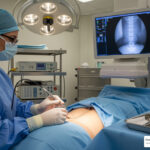
Whenever possible, we utilize a double-row arthroscopic repair technique. By securing the tendon to the bone at two distinct points, we restore the natural “footprint” of the rotator cuff. This distributes mechanical forces more evenly and maximizes the surface area available for the tendon to heal back to the bone.
The data speaks for itself. Patients who undergo optimized, precision surgical protocols achieve:
- Under a 10% re-tear rate, compared to the 20% to 40% re-tear rates reported in historical literature for standard repairs.
- Approximately 38% less pain at the 2-year mark compared to global registry averages.
- About 20% higher shoulder function scores, allowing them to return to work, sports, and daily life with confidence.
If you are suffering from chronic shoulder pain and suspect you need a surgical evaluation, taking the time to research and finding an orthopedic surgeon who specializes in these modern arthroscopic techniques is the single most important step you can take.
The Postoperative Recovery Roadmap
Even the most flawless surgery requires a structured recovery plan. In fact, many rotator cuff failures do not occur during the procedure itself, but rather during the recovery phase when a patient moves too quickly—or too slowly.

To ensure our patients achieve their goals, we utilize structured recovery pathways, such as our “100 Days to Success” protocol. This program treats active adults with the same level of care, timeline discipline, and data-driven milestones that are typically reserved for elite professional athletes.
This systematic timeline ensures that we protect the surgical repair while steadily rebuilding your range of motion and strength. To learn more about how we structure this journey, you can read about our approach to physical therapy for rotator cuff tears.
Navigating Postoperative Rehabilitation with Expert Rotator Cuff Care
One of the most challenging aspects of recovering from shoulder surgery is navigating the differing opinions of medical professionals. In a comprehensive survey of 167 orthopedic surgeons and 667 physical therapists, researchers discovered that the two groups had different rehabilitation preferences in 32 out of 39 questions (an 82% disagreement rate).
Understanding these differing perspectives can help you navigate your recovery:
- The Physical Therapist’s Perspective: Physical therapists are statistically more likely to support shorter immobilization intervals ($P < .001$), earlier initiation of active strengthening ($P < .001$), and more frequent home exercise programs ($P = .002$). Their primary focus is preventing joint stiffness and restoring functional movement quickly.
- The Surgeon’s Perspective: Surgeons tend to endorse more conservative weight-bearing restrictions ($P < .001$) and strict, time-based phase transitions ($P < .001$). They often prefer utilizing web-based technological platforms ($P < .001$) to closely monitor patient progress. Their primary focus is protecting the structural integrity of the delicate tendon-to-bone repair.
At the Center for Specialty Care, we eliminate this communication gap entirely. Because our orthopedic surgeons and physical therapy teams work under the same roof, we don’t have to guess or disagree. We coordinate daily, blending the protective caution of the surgeon with the active movement expertise of the physical therapist to create a safe, customized rehabilitation plan for you.
Frequently Asked Questions about Rotator Cuff Care
Do rotator cuff tears heal on their own without surgery?
A full-thickness rotator cuff tear (where the tendon is completely severed or pulled away from the bone) generally does not reattach or heal on its own naturally. Because the muscle is constantly pulling on the tendon, the gap between the torn ends tends to widen over time.
However, many partial-thickness tears and degenerative conditions can become completely pain-free and highly functional without surgery. Through structured physical therapy, the surrounding shoulder muscles can be trained to compensate for the injured tendon, restoring normal motion. To understand what to expect for your specific injury, read our guide on will a torn rotator cuff heal on its own.
What is the recovery timeline after a rotator cuff repair?
While every patient’s biology is unique, a standard recovery timeline follows these general milestones:
- Weeks 1–6 (Protection): Your shoulder is immobilized in a sling. You will begin gentle, passive range-of-motion exercises guided by a physical therapist to prevent stiffness.
- Weeks 6–12 (Active Motion): The sling is discarded. You will begin active-assisted and active exercises, gradually moving your arm under your own muscle power.
- Months 3–4 (Strengthening): Light resistance training begins, focusing on rebuilding the rotator cuff and scapular stabilizing muscles.
- Months 4–6+ (Full Activity): You will transition to functional training, heavy lifting, or sports-specific movements, fully returning to unrestricted activities by month 6 to 9.
How do I know if my shoulder pain at night is a rotator cuff tear?
Severe pain at night—especially when trying to lie on the affected shoulder—is one of the classic, defining hallmarks of a rotator cuff injury. When you lie flat, gravity no longer pulls the humerus downward, allowing the bone to drift upward and pinch the inflamed rotator cuff tendons against the acromion.
If you are struggling to get a good night’s rest, you can explore the underlying causes and find relief tips in our article on rotator cuff tears and shoulder pain at night.
Conclusion
At the Center for Specialty Care, we believe that expert rotator cuff care shouldn’t be complicated, fragmented, or stressful. Whether you are dealing with a minor strain that requires targeted physical therapy or a complex tear that demands advanced arthroscopic repair, our team is dedicated to providing personalized, compassionate, and highly coordinated care.
With convenient locations in Fairmont, St. James, Estherville, and Buffalo Center, we make it easy for patients across southern Minnesota and northern Iowa to access top-tier orthopedic care close to home. We pride ourselves on quick appointment availability, a comprehensive in-house physical therapy department, and a commitment to 100% patient satisfaction.
Don’t let shoulder pain keep you on the sidelines of your own life. Contact us today to Schedule an expert consultation and take your first step toward a pain-free, active recovery.


