
Compress Your Way to Comfort: Simple Steps for Hot and Cold Packs
February 11, 2026
Beyond the Ache: Discovering the Best Pain Management Solutions
February 13, 2026
Foot Surgery Options 2025: Essential Pain-Free Guide
Understanding Your Path to Pain-Free Feet
Foot surgery options can feel overwhelming when chronic pain limits your daily activities. If you’re exploring surgical solutions, here are the most common procedures available:
- Bunionectomy – Corrects bony bumps at the big toe joint
- Hammertoe Correction – Straightens bent or clawed toes
- Plantar Fascia Release – Treats persistent heel pain
- Ankle Fusion – Eliminates arthritis pain by fusing bones
- Ankle Replacement – Restores mobility with an artificial joint
- Achilles Tendon Repair – Fixes tears or chronic damage
- Minimally Invasive Foot Surgery (MIFS) – Uses small incisions for faster recovery
The foot contains 26 bones and over 30 joints, making it one of the body’s most complex structures. For an overview of normal anatomy, see human foot anatomy. When conservative treatments like physical therapy, orthotics, or medication don’t provide relief, surgery may restore function and eliminate pain.
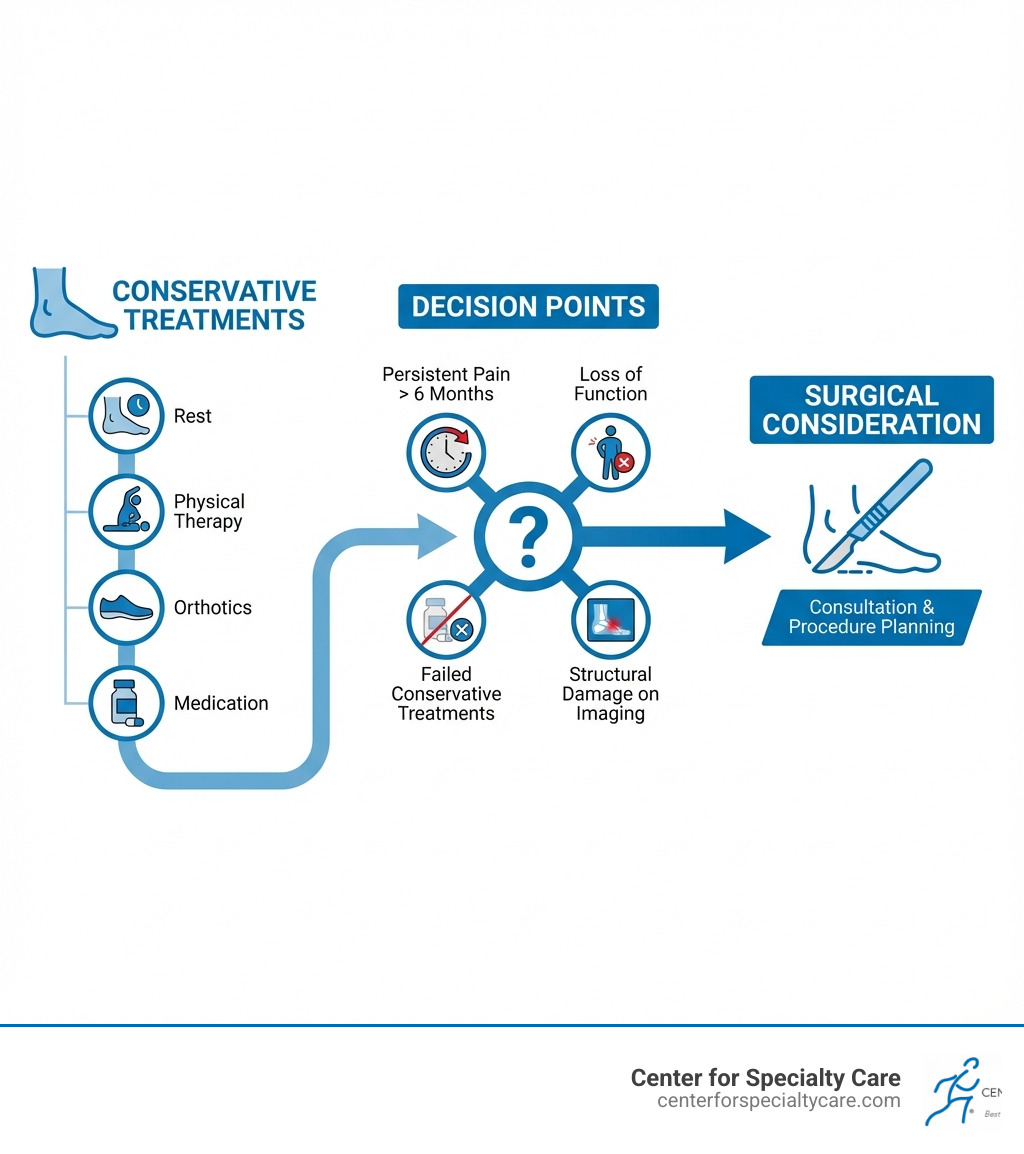
Most surgeons recommend trying non-surgical options first. Surgery becomes the right choice when pain prevents normal activities, when deformities worsen over time, or when an acute injury like a fracture requires immediate repair.
The goal of foot surgery isn’t just pain relief—it’s restoring your ability to walk, work, and enjoy life without limitations. Recovery times vary widely, from six weeks for a simple bunionectomy to up to a year for complex ankle reconstruction.
I’m Dr. Corey Welchlin, and I’ve been performing foot surgery options for over thirty years as the first permanent orthopedic surgeon in southern Minnesota and northern Iowa. Throughout my career at the Center for Specialty Care, I’ve specialized in both traditional and minimally invasive techniques that help patients return home the same day whenever possible.
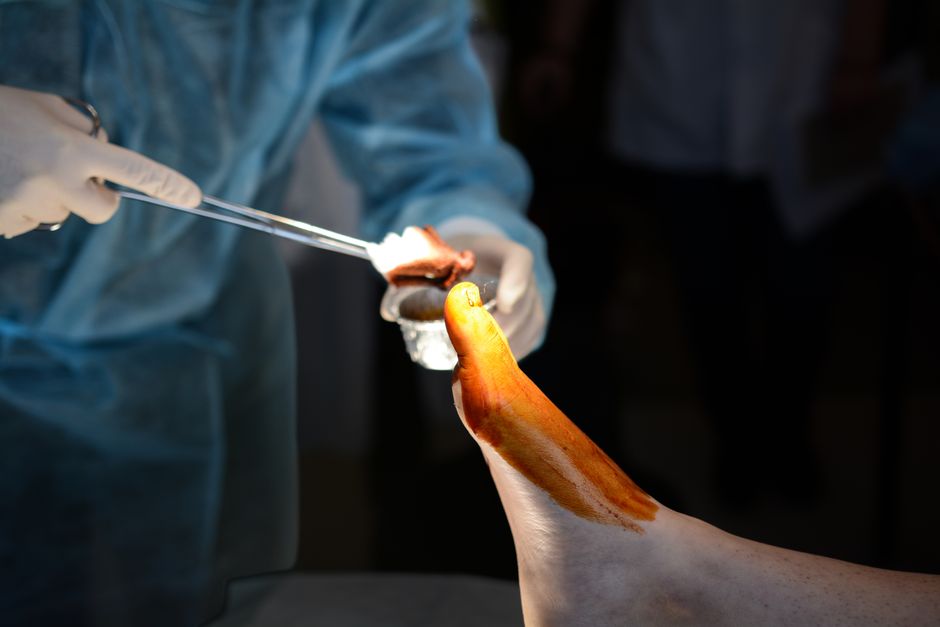
Foot surgery options terms to remember:
When Is Foot Surgery the Right Choice?
We understand that the idea of foot surgery can be daunting. It’s a significant decision, and typically, it’s a step we consider only after exploring all other viable non-surgical avenues. Our primary goal is always to get you back on your feet, comfortable and active, using the least invasive and most effective methods possible.
Many foot and ankle conditions, if left unaddressed, can progress and worsen over time, leading to increased pain and functional limitations. That’s why prompt evaluation by an orthopedic foot and ankle specialist is so important. We can help determine if your condition needs immediate intervention or can be managed with observation.
When do we typically consider surgery over nonsurgical treatments?
- Failure of Conservative Treatments: If you’ve tried non-operative options like physical therapy, custom orthotics, or medication for several months without relief, surgery may be the next step. We exhaust all conservative measures first.
- Persistent Pain and Functional Limitations: When chronic pain prevents you from working, exercising, or enjoying daily activities, surgery can offer lasting relief and restore your quality of life.
- Progressive Deformity: If deformities like bunions or hammertoes are worsening, causing pain or difficulty with footwear, surgical correction can prevent further complications.
- Acute Injuries: Severe injuries like ankle fractures or Achilles tendon ruptures often require immediate surgery to align bones, repair tissues, and ensure proper healing.
- Nerve Compression or Damage: Conditions like Morton’s Neuroma may require surgery if conservative treatments fail to relieve pain. While most cases improve without surgery, persistent ones may benefit from removing the inflamed nerve. Learn more about Understanding Morton’s Neuroma: An Orthopedic Guide to Foot Pain and Treatment.
- Advanced Arthritis: For severe ankle or big toe arthritis where cartilage has deteriorated, surgery might be the only way to alleviate pain and restore function.
- Diabetic Foot Complications: Complex issues like severe infections or non-healing ulcers in diabetic patients may require specialized surgery, such as Diabetic Foot Reconstruction, to preserve foot health.
At Center for Specialty Care, we see a range of common conditions that lead to considering foot surgery:
- Bunions (Hallux Valgus): Bony bumps at the base of the big toe that cause pain and difficulty with footwear.
- Hammertoes: Permanently bent, claw-like toes that lead to pain and calluses.
- Heel Spurs & Plantar Fasciitis: Chronic heel pain that may require surgery if conservative treatments fail. Read about Understanding Heel Spurs: An Orthopedic Guide to Symptoms and Treatment.
- Arthritis: Osteoarthritis (“wear and tear”) and rheumatoid arthritis can severely damage foot and ankle joints.
- Achilles Tendon Injuries: Chronic tendonitis and acute ruptures can be debilitating. Complete ruptures often benefit from surgical repair. Our article on Achilles Tendonitis 101: Orthopedic Insights for Managing and Preventing Tendon Pain provides more context.
- Foot Fractures: Complex fractures often need surgery for proper alignment and healing.
- Diabetic Foot Concerns: These require specialized care to prevent severe complications.

The decision for surgery is a collaborative one between you and your orthopedic specialist. We carefully evaluate your condition, lifestyle, and treatment goals to determine if surgery is the most appropriate path to restore your comfort and mobility. For a broader look at common foot issues, explore A Walk Towards Healthy Feet: Common Foot Problems and Solutions.
A Comprehensive Guide to Foot Surgery Options
The primary goal of foot and ankle surgery is to relieve chronic pain and restore function, helping you walk comfortably and return to your favorite activities. Surgical techniques vary widely and can include:
- Reconstructive Surgery: This complex surgery addresses significant deformities affecting balance and gait, often resulting from severe injuries or arthritis. It may involve multiple procedures like tendon repair, joint fusion, and bone grafting to rebuild the foot’s structure.
- Fusion Surgery: Used for severe arthritis, this procedure joins two or more bones into a single, solid piece. By eliminating painful joint movement, it provides stability but results in a stiff joint.
- Tendon Surgery: This can repair acute injuries like an Achilles tendon rupture or address chronic conditions by lengthening, shortening, or rerouting a tendon.
Specific foot surgery options for common ailments
Let’s dig into some of the specific foot surgery options we offer for common conditions:
- Bunionectomy: This procedure removes the bony bump at the base of the big toe and realigns the joint. We may use small screws or wires to hold the bones in their corrected position. Recovery typically takes about six weeks.
- Hammertoe Correction: Surgery aims to straighten the affected joint, which may involve removing a small piece of bone or fusing the joint. Recovery is usually a maximum of six weeks.
- Plantar Fascia Release: For chronic heel pain that hasn’t responded to conservative treatments, this procedure involves partially cutting the plantar fascia ligament to relieve tension. This surgery is rare, with recovery taking three to ten weeks.
- Metatarsal Surgery: This surgery addresses pain in the ball of the foot by cutting and repositioning the metatarsal bone to correct alignment and redistribute weight.
- Morton’s Neuroma Surgery: If conservative treatments fail, surgery involves decompressing the nerve or removing the enlarged, inflamed nerve tissue. Patients should be aware that some residual numbness in the toes can occur.
- Achilles Tendon Repair: For a torn Achilles tendon, surgery is often necessary to reconnect the torn ends, especially for active individuals. A full recovery typically involves four to six months of physical therapy.
Ankle Surgery: Fusion vs. Replacement
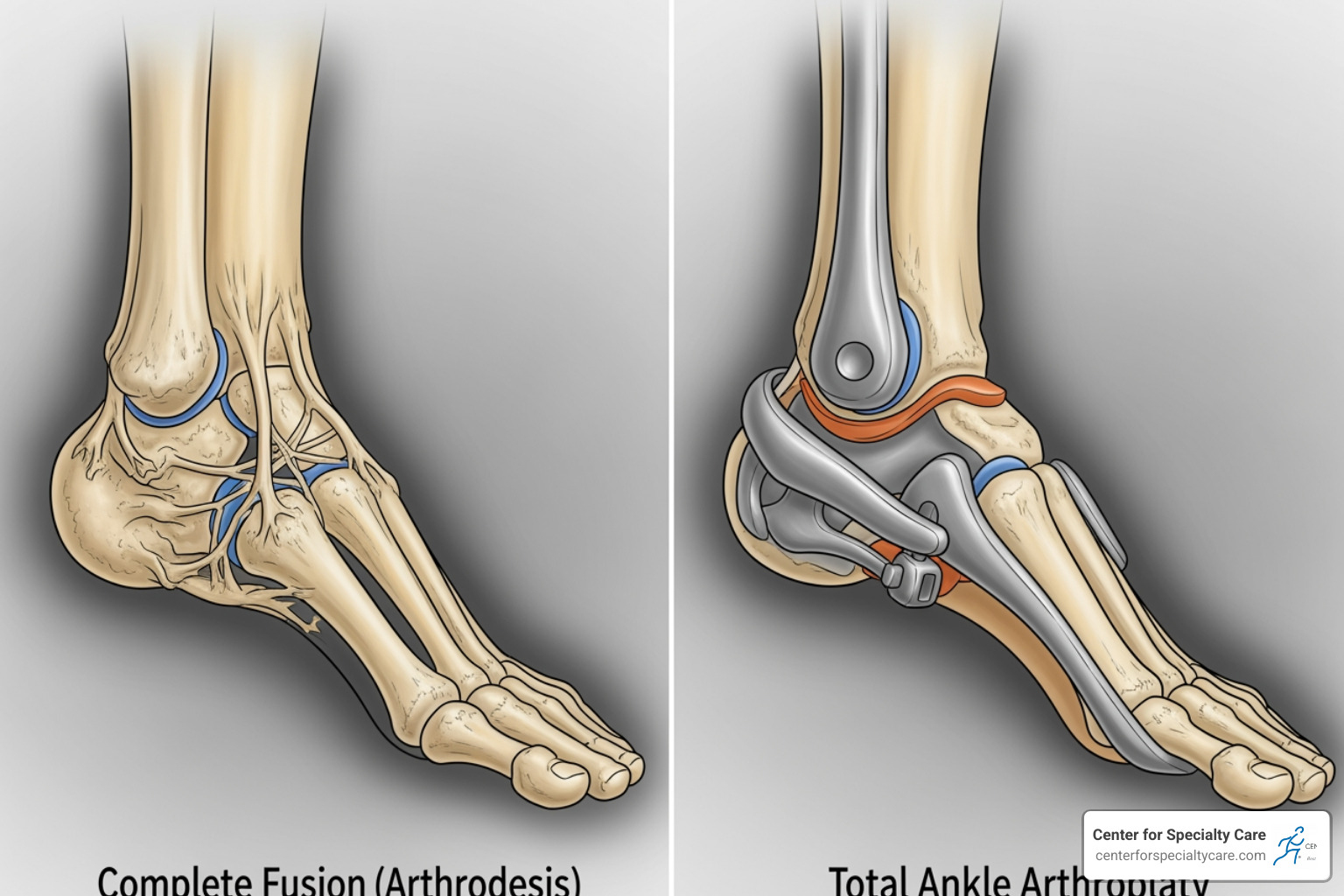
When advanced ankle arthritis causes severe pain, two primary foot surgery options are considered: ankle fusion and total ankle replacement. Both aim to alleviate pain but have different impacts on mobility.
- Ankle Fusion (Arthrodesis): This procedure treats advanced ankle arthritis by permanently joining the ankle bones into one solid unit, eliminating painful movement. We remove damaged cartilage and use screws or plates to hold the bones together while they fuse. The result is a stable, pain-free, but stiff joint. This is often a good option for younger, more active individuals or those with severe deformity.
- Total Ankle Replacement (Arthroplasty): This procedure replaces the damaged parts of the ankle joint with artificial components. The goal is to relieve pain while preserving as much natural ankle motion as possible. It’s often recommended for older, less active individuals who want to maintain a greater range of motion.
The choice between fusion and replacement depends on your age, activity level, and the severity of your arthritis. Both procedures have shown excellent long-term results in appropriate candidates.
The recovery timeline for ankle surgery can vary significantly. While many people can return to former activities after eight to twelve weeks, a full recovery might take six months to a year.
| Feature | Ankle Fusion (Arthrodesis) | Ankle Replacement (Arthroplasty) |
|---|---|---|
| Mobility | Limited to no motion at the ankle joint (stiff) | Preserves a greater range of motion |
| Pain Relief | Excellent, by eliminating joint movement | Excellent, by replacing damaged surfaces |
| Durability | Very durable, especially for high-impact activities | Less durable than fusion, potential for wear/loosening over time |
| Ideal Candidate | Younger, more active, severe deformity, bone loss | Older, less active, desire to maintain motion |
| Re-operation Risk | Lower for fusion itself, but can lead to adjacent joint arthritis | Higher risk for revision due to component wear or loosening |
| Recovery | Initial immobilization, followed by gradual weight-bearing | Initial immobilization, followed by gradual weight-bearing and PT |
Minimally Invasive Foot Surgery Options (MIFS)
Minimally Invasive Foot Surgery (MIFS) is an advancement that offers numerous benefits over traditional open surgery. We use specialized instruments and advanced imaging to perform procedures through very small incisions.
What is MIFS?
MIFS uses a scope with a video camera (arthroscopy) inserted through tiny incisions to visualize the surgical area, minimizing damage to surrounding tissues.
Benefits of MIFS:
- Smaller scars
- Lesser risk of infection
- Minimal blood loss and postoperative pain
- Quicker recovery and shortened hospital stay
- Faster return to work and normal activities
Conditions treated with MIFS:
A wide range of conditions can be treated with MIFS, including bunions, hammer toes, metatarsalgia, flat feet, and arthritis. Ankle arthroscopy is a prime example of a minimally invasive approach for conditions like ankle impingement or injuries. Our team at Center for Specialty Care is committed to exploring MIFS options whenever appropriate. For more on ankle care, visit our Ankle page.
The Surgical Journey: Preparation, Risks, and Recovery
Starting on a surgical journey for your foot can feel like a significant undertaking, but understanding each phase can help ease your mind. At Center for Specialty Care, we believe in transparent communication and thorough preparation to ensure the best possible outcomes for our patients in Fairmont MN, Estherville IA, Buffalo Center IA, and St James MN.
Preparing for Your Procedure
Proper preparation is key to a smooth surgery and recovery. We will guide you through each step:
- Pre-operative Evaluation: This includes a review of your medical history, allergies, and medications, along with a thorough evaluation of your foot and ankle.
- Diagnostic Tests: We may order X-rays, MRI scans, blood tests, or a gait analysis to confirm the diagnosis and plan the most effective surgical approach.
- Medication Review: You’ll receive specific instructions on which medications to stop or continue before surgery. It’s crucial to follow these precisely.
- Home Preparation: Prepare your home to aid recovery. This includes creating a single-floor living space, arranging for mobility aids (crutches, walker), setting up a stable chair for elevation, making your bathroom safer with grab bars or a shower bench, and removing tripping hazards like loose rugs.
- Arranging Support: Arrange for a ride home and for help with daily tasks like cooking and cleaning during your initial recovery.
Understanding the Risks and Complications
While we strive for excellent outcomes, it’s important to be aware of the potential risks associated with any surgical procedure. We will discuss these thoroughly with you. General risks include infection, bleeding, nerve injury, blood clots, and anesthesia complications. Specific procedures carry unique risks, such as non-union (failed fusion) in fusion surgery or implant loosening in ankle replacements. Factors like smoking, obesity, and poorly managed chronic conditions can increase these risks. Following our instructions is crucial for minimizing complications.
Post-Operative Care
Your commitment to post-operative care is just as important as the surgery itself. We will provide detailed instructions, but here are the general principles:
- RICE Method: Rest, Ice, Compression, and Elevation are fundamental for managing pain and swelling. Keep your foot liftd above heart level as much as possible.
- Pain Management: We will provide pain relievers as needed. Managing pain effectively allows you to rest and participate in rehabilitation.
- Wound Care: You’ll receive instructions on how to care for your incision site to prevent infection.
- Immobilization and Weight-Bearing: You may need to wear bandages, splints, surgical shoes, or casts. It’s critical to follow our instructions on when and how much weight you can put on your foot.
- Physical Therapy: Engaging in physical therapy is often a crucial part of recovery, helping you regain strength, flexibility, and balance.
- Maintaining Circulation: Gentle exercises like ankle pumps and wiggling your toes (if allowed) can help maintain blood flow and prevent clots.
For a more in-depth look at what to expect, refer to our Patient’s Guide to Podiatric Surgery: Expectations and Outcomes.
What to Expect: The Foot Surgery Recovery Timeline
The journey to full recovery after foot surgery is a process, and its length varies significantly depending on the type of procedure, your overall health, and your commitment to the recovery regimen. We always emphasize that recovery is not a race, but a careful, step-by-step process.
Here’s a general overview of typical recovery times for different foot surgery options:
- Bunionectomy: For a simple bunionectomy, you might need to rest for only a few weeks, with full recovery often taking about six weeks. During this time, you’ll likely wear a special surgical shoe or boot and gradually increase weight-bearing as tolerated.
- Hammertoe Surgery: Recovery for hammertoe surgery is generally quick, with a maximum of six weeks. Similar to bunions, a surgical shoe or boot is typically used, and physical therapy may be recommended to restore toe flexibility.
- Plantar Fasciitis Surgery: This surgery, reserved for extreme cases, has a recovery time that can range anywhere from three to ten weeks for a full recovery. Initial rest and immobilization are followed by a gradual return to activity.
- Achilles Tendon Repair: Recovery for Achilles tendon surgery is more extensive, often taking four to six months, with dedicated physical therapy being absolutely essential. This allows the tendon to heal strongly and regain its full function.
- Ankle Surgery (Fusion or Replacement): Ankle surgery can have a longer recovery period. Most people can return to their former activities after eight to twelve weeks. However, depending on the complexity of the procedure and individual healing, it might take six months to up to a year for a full recovery. This often involves an initial period of non-weight-bearing in a cast or boot, followed by intensive physical therapy.
Key aspects of recovery:
- Variability: These are averages. Your personal recovery timeline might be shorter or longer. Factors like age, overall health, and adherence to post-operative instructions play a big role.
- Commitment to Regimen: Your dedication to following our instructions, including wound care, medication schedules, and activity restrictions, is paramount.
- Physical Therapy: For many foot surgery options, especially those involving joints or tendons, physical therapy is a critical component of recovery. It helps restore motion, strength, and flexibility, ensuring you regain optimal function. Our focus is not just on healing the surgical site, but on rehabilitating your entire foot and ankle system. For conditions like Extensor Tendonitis, understanding the recovery and maintaining foot health is key, as discussed in our article Extensor Tendonitis: Navigating Through Recovery and Maintaining Foot Health.
We will work closely with you throughout your recovery, providing personalized guidance and support to help you achieve your best possible outcome.
Conclusion: Taking the Next Step Towards Healthy Feet
Choosing to undergo foot surgery is a significant decision, one that we at Center for Specialty Care approach with the utmost care and precision. Our goal is to empower you with comprehensive information, enabling you to make an informed decision about your health. We understand that chronic foot and ankle pain can severely impact your quality of life, and we are dedicated to providing the most effective foot surgery options to help you regain your mobility and live pain-free.
Whether it’s a nagging bunion, a debilitating arthritic ankle, or a complex tendon injury, our team of specialists in Fairmont MN, Estherville IA, Buffalo Center IA, and St James MN offers personalized care custom to your unique needs. We pride ourselves on 100% patient satisfaction, ensuring that from your initial consultation to your final rehabilitation, you receive compassionate and expert support. With quick appointment availability, we ensure you won’t have to wait long to start your journey towards healthier feet.
If you’re experiencing persistent foot or ankle pain that hasn’t responded to conservative treatments, it might be time to explore your surgical options. Don’t let discomfort hold you back any longer.
Take the next step towards healthy, happy feet. Find more about our specialized care and schedule a consultation with us today on our Podiatry services at Center for Specialty Care page. We look forward to helping you walk comfortably again.