
Unlocking Spine Relief: Your Guide to the Intracept Procedure
December 1, 2025
Warm Up to Wellness: How Heat Therapy Soothes Aches
December 3, 2025
Hurt rotator cuff while sleeping: 2025 Guide to Relief
Why Nighttime Shoulder Pain Disrupts Your Sleep (And How to Fix It)
If you hurt rotator cuff while sleeping, you know the frustration of nighttime pain that steals your rest. The good news is that simple adjustments to your sleeping position, pillow placement, and pre-bed routine can dramatically reduce your discomfort and help you sleep through the night.
Quick Relief Strategies:
- Sleep on your back or uninjured side—never on the painful shoulder.
- Place a pillow under your arm to support the injured shoulder.
- Use a body pillow to prevent rolling onto the injured side.
- Apply ice for 15-20 minutes before bed to reduce inflammation.
- Take an over-the-counter pain reliever (like ibuprofen) an hour before sleep.
- Try a medium-firm mattress to prevent your shoulder from sinking too deeply.
Why does rotator cuff pain worsen at night? When you lie down, gravity can increase stress on the shoulder joint. At the same time, reduced blood flow and natural inflammatory cycles during sleep can heighten pain and stiffness. Research confirms that people with rotator cuff tears struggle with sleep quality, experiencing more frequent awakenings and shorter sleep duration.
Side sleeping, a common preference, increases pressure on the rotator cuff tendons, which can worsen injuries. However, simple modifications can provide substantial relief. By adjusting your position and using pillows strategically, you can sleep comfortably even with a rotator cuff injury.
I’m Dr. Corey Welchlin, a board-certified orthopedic surgeon specializing in rotator cuff repair and joint surgery for over three decades in southern Minnesota and northern Iowa. I’ve helped countless patients who hurt rotator cuff while sleeping find relief through conservative treatments and minimally invasive surgery. Let me walk you through the proven strategies that can help you reclaim your rest.
Hurt rotator cuff while sleeping terms to remember:
Understanding Your Nighttime Shoulder Pain
If you hurt rotator cuff while sleeping, understanding what’s happening inside your shoulder is the first step toward relief.

Your rotator cuff is a group of four muscles and their tendons (the supraspinatus, infraspinatus, teres minor, and subscapularis) that wrap around your shoulder joint. They stabilize the joint and allow you to lift and rotate your arm.
How Does a Rotator Cuff Injury Occur?
Rotator cuff injuries can be sudden or develop over time.
Acute injuries happen instantly from events like a fall on an outstretched arm or a direct blow to the shoulder. These forceful events can tear the tendons, causing immediate, severe pain.
Degenerative tears are more common and develop slowly as tendons wear down. Repetitive overhead activities, the natural aging process, and reduced blood supply can weaken the tendons. Conditions like shoulder impingement, where tendons are pinched, can also cause fraying over time, similar to a rope rubbing against a rough edge. Bone spurs can worsen this friction.
For a comprehensive look at how these injuries develop, you can explore scientific research on rotator cuff tears.
Why Does Rotator Cuff Pain Often Worsen at Night?
Nighttime pain intensifies for several reasons, making it hard to rest when you hurt rotator cuff while sleeping.
- Inflammation: Your body’s inflammatory response can increase during sleep. With fewer daytime distractions, pain signals become more noticeable.
- Gravity: When you lie down, gravity can pull on the injured tendons, creating stress on the damaged tissue, especially if you lie on the affected side.
- Reduced Blood Flow: During rest, circulation to the shoulder decreases. This can lead to stiffness and heightened pain sensitivity.
Understanding these factors allows you to take targeted steps to minimize pain and work with your body’s natural processes.
How to Sleep if You Hurt Your Rotator Cuff While Sleeping
When you’re dealing with a rotator cuff injury, getting the rest your body needs to heal can feel impossible. However, with thoughtful adjustments to your sleeping setup, you can dramatically improve your comfort.

The secret is to minimize pressure, maintain proper alignment, and support the joint throughout the night.
The Best Sleeping Positions for Rotator Cuff Pain
Your sleeping position is critical when you hurt rotator cuff while sleeping.
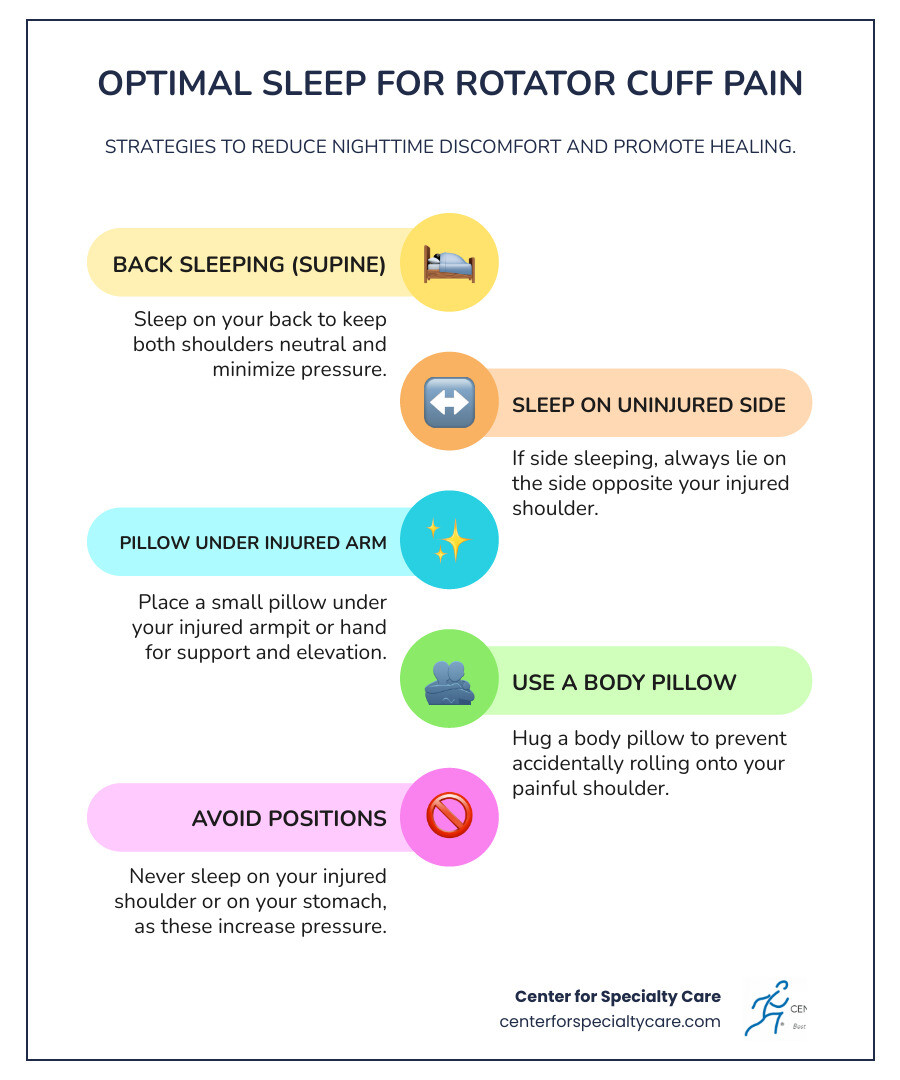
- Back Sleeping (Supine): This is your best option. It distributes your weight evenly and keeps your shoulders in a neutral, relaxed position. This position creates the least amount of pressure on your rotator cuff tendons.
- Sleeping on Your Uninjured Side: If you can’t sleep on your back, this is the next best choice. Keep the painful shoulder on top, away from the mattress, to prevent compression.
Positions to Avoid: Avoid stomach sleeping, as it forces your neck and shoulders into awkward, stressful angles. Most importantly, never sleep directly on your injured shoulder, as this compresses the irritated tendons and can delay healing.
Strategic Pillow Placement for Shoulder Support
Pillows are powerful tools for supporting an injured shoulder.
- For Back Sleepers: Tuck a small pillow under the arm of your injured shoulder. This keeps the joint in a neutral position and takes tension off the rotator cuff.
- For Side Sleepers: Hug a body pillow. This supports your top arm (the injured one) and prevents it from falling forward. It also acts as a barrier to stop you from rolling onto your painful side.
- For Spinal Alignment: Placing a pillow between your knees helps keep your spine aligned, which can reduce overall discomfort.
- For Severe Pain: Sleeping in a recliner or on a wedge pillow that lifts your torso can provide significant relief, especially after an acute injury or surgery. This inclined position naturally supports the shoulder and reduces pressure.
You might also consider specialized pillows designed for shoulder issues, but experimenting with standard pillows is often enough to find what works for you.
How Your Mattress Can Affect a Hurt Rotator Cuff While Sleeping
Your mattress is just as important as your pillows when you hurt rotator cuff while sleeping.
A medium-firm mattress is typically best. It’s firm enough to support your spine and keep your shoulders aligned but soft enough to avoid creating pressure points. A mattress that is too soft can allow your shoulder to sink into an awkward, strained position. A quality mattress distributes your body weight evenly, reducing pressure on sensitive areas like your injured shoulder. If your pain is consistently worse in the morning, your mattress might be part of the problem.
At-Home Remedies for Nighttime Pain Relief
You’ve optimized your sleeping setup, but what if your shoulder is still throbbing before bed? A few simple at-home remedies can help you transition into a more comfortable night’s sleep.
Using Hot and Cold Therapy Before Bed
Hot and cold therapy are effective tools, but they work differently.
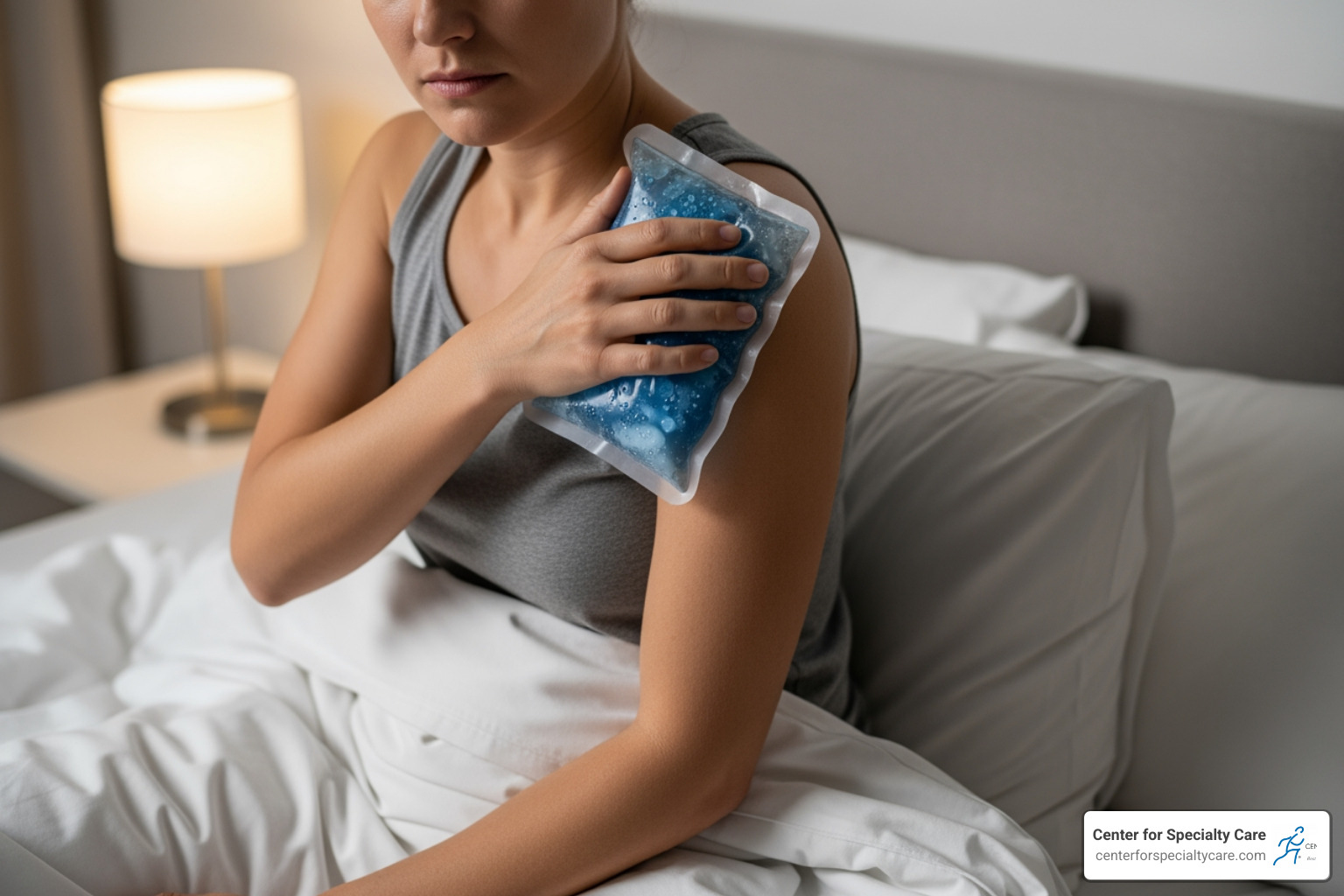
- Cold Therapy: Best for fresh injuries and active inflammation. Applying an ice pack (wrapped in a towel) for 15-20 minutes before bed can reduce swelling and numb the pain. This is especially helpful if your shoulder feels hot or swollen after you hurt rotator cuff while sleeping.
- Heat Therapy: Ideal for chronic pain and muscle stiffness. A heating pad or warm towel for 10-15 minutes can increase blood flow, relax tight muscles, and soothe deep aches.
Feel free to experiment to see which method gives you the most relief.
Over-the-Counter Pain Relievers for a Hurt Rotator Cuff While Sleeping
OTC pain relievers can be an effective part of your nighttime strategy.
- NSAIDs (nonsteroidal anti-inflammatory drugs) like ibuprofen (Advil) and naproxen (Aleve) tackle both pain and inflammation. Taking them about an hour before bed can be very effective.
- Acetaminophen (Tylenol) is excellent for pain but doesn’t target inflammation. It’s a good alternative if you can’t take NSAIDs.
- Topical pain relievers, such as creams and gels, can be applied directly to the shoulder for localized relief.
While these are available without a prescription, always follow package instructions. For more information, you can read about considerations for using NSAIDs. Before starting any new medication, we encourage you to consult with one of our doctors at Center for Specialty Care to ensure you’re using the safest and most effective approach for your situation.
When to Seek Professional Help for Your Shoulder Pain
While home remedies offer relief, there comes a point when professional attention is necessary. If you continue to hurt rotator cuff while sleeping despite your best efforts, it’s time to seek help. Delaying can make recovery more difficult.
Schedule an appointment with our team at Center for Specialty Care if you experience:
- Persistent or worsening pain that doesn’t respond to home care.
- Severe weakness in your arm or trouble with daily tasks.
- A sudden popping or snapping sound followed by immediate pain.
- Radiating pain down your arm.
- Visible deformity or significant swelling of the shoulder.
- Immediate weakness following an injury.
Note: If shoulder pain is accompanied by chest pain, dizziness, or shortness of breath, call 911 immediately, as these could be signs of a heart attack.
Long-Term Treatment Options for Rotator Cuff Injuries
At Center for Specialty Care, we create personalized treatment plans. Many patients find relief without surgery.
- Physical Therapy: Our therapists design custom programs to strengthen shoulder muscles, improve flexibility, and restore motion. For many, this is all that’s needed to manage symptoms and sleep well.
- Corticosteroid Injections: These injections provide powerful, rapid relief by reducing inflammation. This creates a pain-free window to engage in physical therapy.
- Rest with a Sling: For some injuries, a sling provides necessary support while preventing stiffness.
- Arthroscopic Surgery: For significant tears or when conservative treatments fail, this minimally invasive procedure can repair torn tendons. Recovery is typically faster than with open surgery.
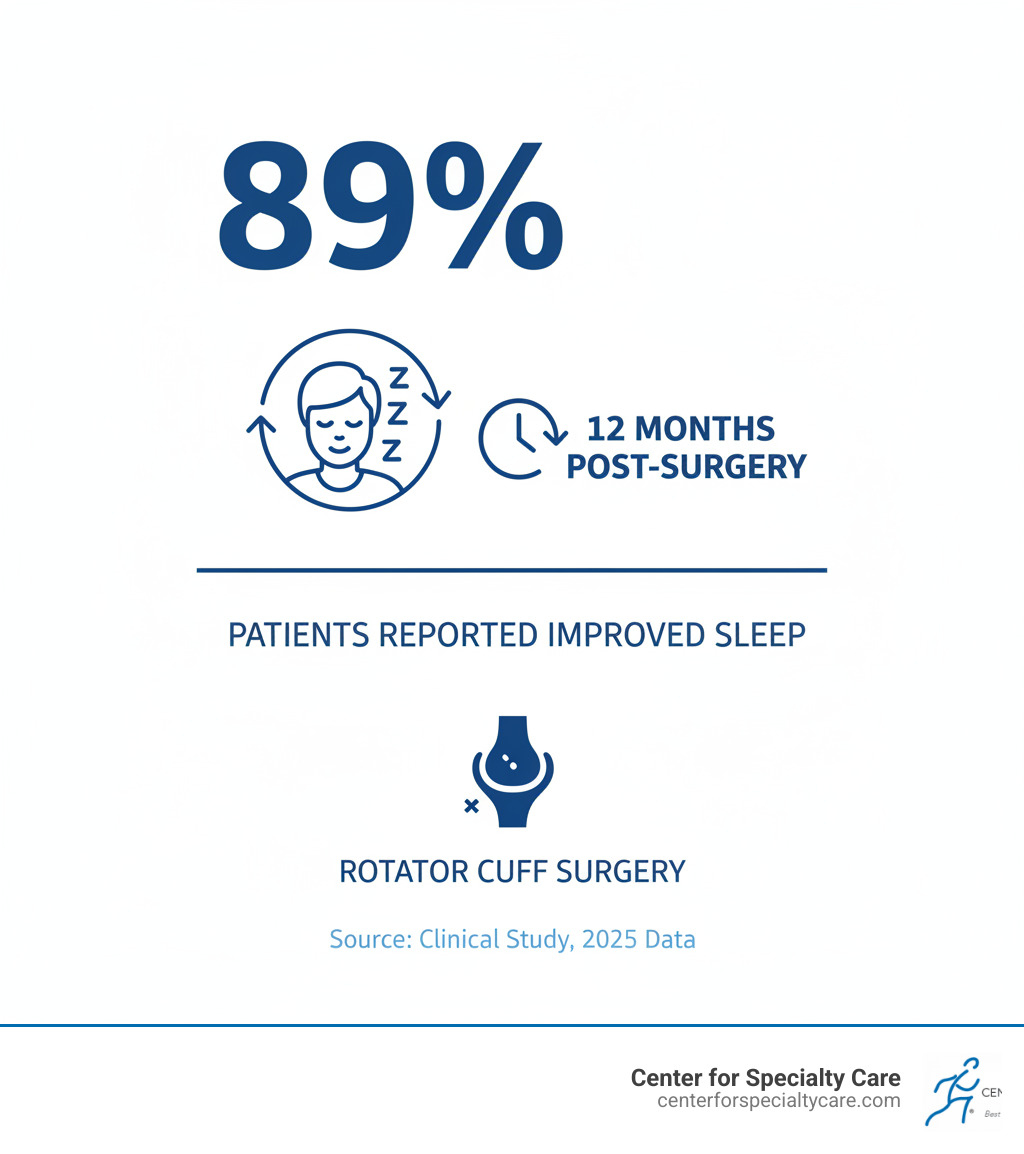
The results can be life-changing. One study found that 89% of patients reported better sleep 12 months after rotator cuff surgery. However, research also shows that postponing necessary surgery can decrease the likelihood of a successful repair. Early evaluation is key.
At Center for Specialty Care, we’re committed to personalized care and quick appointment availability. Our specialists in Fairmont, Estherville, Buffalo Center, and St. James are ready to create a plan that gets you back to sleeping soundly.
Frequently Asked Questions about Rotator Cuff Pain and Sleep
When shoulder pain keeps you awake, you likely have questions. Here are answers to some of the most common ones we hear.
Can sleeping on your side cause a rotator cuff tear?
While side sleeping doesn’t typically cause a sudden tear, it can contribute to degenerative tears over time. Consistently sleeping on the same shoulder creates prolonged pressure, which can reduce blood flow and cause the tendons to wear down.
A recent study highlighted this connection, finding that 89.7% of patients with rotator cuff tears preferred sleeping on their side, a significantly higher percentage than in people without shoulder problems. So, while it’s not a direct cause, it’s a major contributing factor if you repeatedly hurt rotator cuff while sleeping on the same side. You can read more in the study on side sleeping and rotator cuff tears.
Is it better to wear a sling to bed for a rotator cuff injury?
This depends on your specific injury, and you should always follow your doctor’s advice. A sling can be essential after an acute injury or surgery to immobilize the shoulder and prevent harmful movements. However, prolonged, unnecessary immobilization can lead to stiffness (“frozen shoulder”). For many injuries, strategic pillow placement provides better support without being overly restrictive. We will provide clear, personalized guidance on whether a sling is right for you.
How long does it take for rotator cuff pain at night to go away?
The timeline varies depending on the injury’s severity.
- Minor Strains/Tendinitis: You may feel relief within a few weeks with proper rest and care.
- Partial Tears: Healing can take several months and often requires physical therapy. Nighttime pain should gradually decrease during this time.
- Full-Thickness Tears: These typically don’t heal on their own, and the pain can persist indefinitely without treatment. Many patients with full tears who hurt rotator cuff while sleeping eventually need surgery for relief.
Ignoring persistent pain can lead to permanent weakness. The sooner you get a proper diagnosis, the sooner you can get back to sleeping comfortably. If your pain has lasted more than a few weeks, it’s time to have one of our orthopedic specialists take a look.
Conclusion
Living with a rotator cuff injury that disrupts your sleep is exhausting. When you hurt rotator cuff while sleeping night after night, it can feel overwhelming. But you don’t have to accept this as your new normal.
We’ve covered practical strategies that can genuinely improve your comfort, from adjusting your sleep position and using pillows strategically to implementing at-home pain management. These are the approaches I’ve seen help countless patients finally get the rest they need. However, self-care works best when guided by a professional who understands your specific injury.
At Center for Specialty Care, our core principle is personalized care that puts your needs first. Our orthopedic specialists in Fairmont, MN, Estherville, IA, Buffalo Center, IA, and St. James, MN, create treatment plans designed to resolve your pain and restore your quality of life—including uninterrupted sleep. Whether you need physical therapy, injections, or advanced arthroscopic surgery, we’re here to guide you. 89% of our surgical patients report improved sleep within a year of treatment.
Don’t let nighttime shoulder pain control another night of your life.
Schedule an appointment with our shoulder experts today