

When Your Shoulder Pops and Goes Numb: A Symptom Guide
November 28, 2025
Sweet Dreams, Pain-Free Shoulders: A Guide to Relieving Nighttime Rotator Cuff Pain
December 2, 2025
Intracept Procedure Spine: 5+ Years of Proven Relief
Why Chronic Low Back Pain Doesn’t Always Respond to Traditional Treatments
The intracept procedure spine treatment offers a targeted solution for a specific type of chronic low back pain called vertebrogenic pain. Here’s what you need to know:
Quick Answer: What is the Intracept Procedure for Spine Pain?
- What it treats: Vertebrogenic pain—chronic low back pain originating from damaged vertebral endplates
- How it works: Uses radiofrequency energy to ablate (heat and deactivate) the basivertebral nerve, stopping pain signals
- Procedure type: Minimally invasive, outpatient, same-day, implant-free
- Recovery time: 1-2 weeks for most patients
- Duration of relief: 5+ years of sustained pain relief for most patients
- Who qualifies: Chronic low back pain for 6+ months, failed conservative care, MRI showing Modic changes (Type 1 or 2)
- FDA status: FDA-cleared as safe and effective
Vertebrogenic pain doesn’t just hurt—it changes how you live, making simple acts like bending, walking, or sitting a challenge.
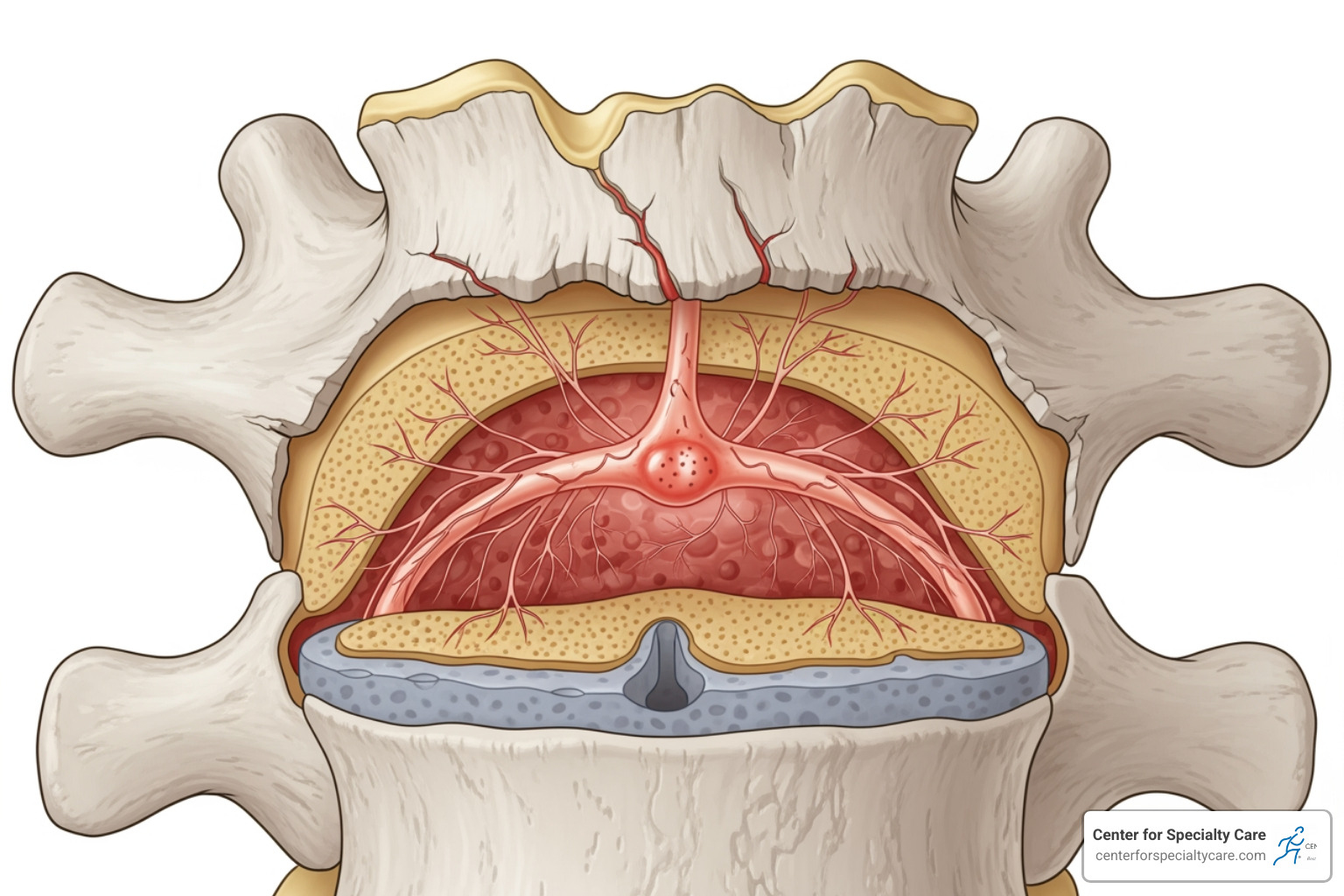
This specific type of chronic low back pain comes from damage to your vertebral endplates—the protective tissue covering the top and bottom of each vertebra where it meets the spinal disc. When these endplates become damaged through wear and tear, they develop inflammation. The basivertebral nerve (BVN) within each vertebra then transmits these pain signals from the inflamed endplates to your brain.
Unlike pain from herniated discs or facet joints, vertebrogenic pain has a distinct source—and the Intracept procedure offers a direct solution by targeting it.
The procedure is minimally invasive, performed in an outpatient setting, and preserves your spine’s overall structure. It doesn’t require implants or fusion, which keeps your future treatment options open.
I’m Dr. Corey Welchlin, a board-certified orthopedic surgeon at the Center for Specialty Care. For over three decades, we have helped thousands of patients in the Fairmont, Minnesota, region find relief from chronic pain. We offer a range of treatments, including the intracept procedure spine for vertebrogenic pain, and our team provides personalized care to address the root cause of your pain.
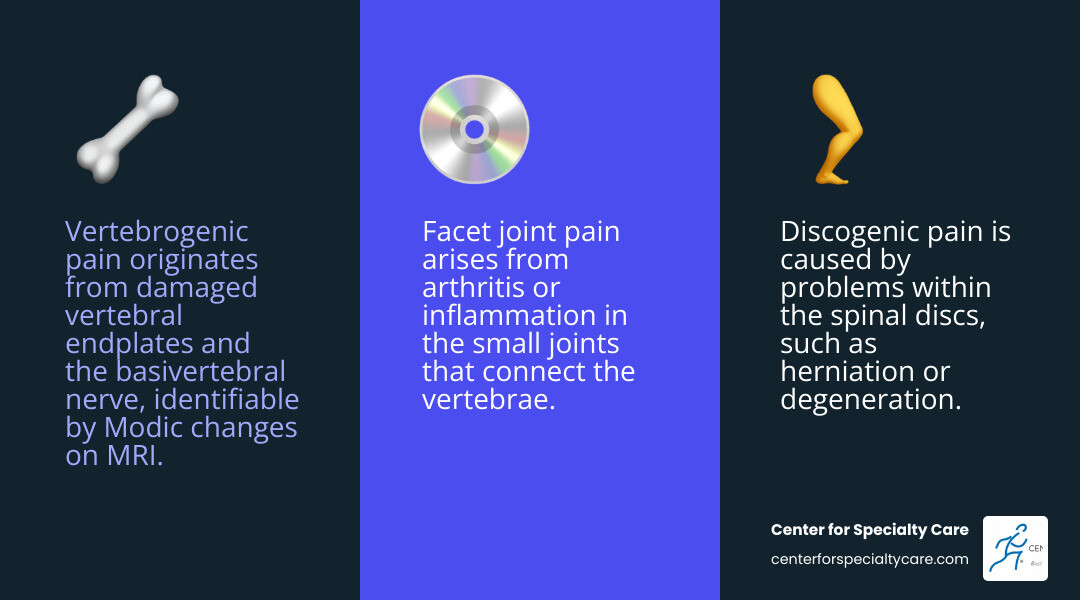
Easy intracept procedure spine glossary:
Understanding Vertebrogenic Pain: The “Why” Behind the Ache
If you have chronic low back pain that hasn’t responded to treatment, you may have vertebrogenic pain. For years, this condition was often misidentified as general disc-related pain. We now know the source is often not the disc, but the vertebral endplates.
Think of your endplates as protective caps between your vertebrae and your spinal discs. These thin layers of cartilage and bone help deliver nutrients to your discs and spread your body’s weight evenly across your spine.
When these endplates get damaged through wear and tear or disc degeneration, they become inflamed. That inflammation irritates the basivertebral nerve (BVN), which runs through the center of your vertebra. This nerve sends pain signals from your inflamed endplates to your brain. Understanding this connection allows us to target the problem directly with treatments like the intracept procedure spine approach.
The key difference is that vertebrogenic pain comes from inside the vertebra itself, not from a bulging disc or arthritis in your facet joints. For more background on various back and spine conditions, we have additional resources available.
What Causes This Specific Low Back Pain?
Vertebrogenic pain starts with damage to your vertebral endplates. Over time—from aging, repetitive stress, or disc problems—these endplates can develop microscopic cracks and damage.
When that happens, the adjacent bone marrow responds with inflammation. This inflammatory response is what triggers the basivertebral nerve to fire off pain signals.
Here’s how vertebrogenic pain differs from other types of back pain. Discogenic pain comes from tears inside the disc. Facet joint pain stems from arthritis in the small joints connecting your vertebrae. Sacroiliac joint pain originates where your spine meets your pelvis. Myofascial pain is muscle-related. But vertebrogenic pain is all about endplate inflammation and the basivertebral nerve carrying those signals.
This distinction matters because treating the source—not just the symptoms—gives you the best chance at lasting relief. If you’re curious about other spine issues, we’ve put together a helpful guide on common spinal conditions, causes, symptoms, and treatment options.
Signs, Symptoms, and Diagnosis
Vertebrogenic pain has a consistent pattern. The pain typically sits right in the middle of your low back—not off to one side or radiating down your leg, but centered in the lower spine.
The pain is distinctive because it worsens with certain activities. Sitting for long periods, bending forward, or physical activity often trigger the pain. If this sounds familiar, vertebrogenic pain may be the cause.
The gold standard for diagnosis is an MRI scan. Unlike X-rays, an MRI reveals what’s happening inside the bones and surrounding soft tissues. We specifically look for Modic changes—distinctive patterns in your vertebral endplates and bone marrow that signal inflammation.
Before considering specialized procedures, we recommend at least six months of conservative care, such as physical therapy, anti-inflammatory medications, or activity modification. If you’ve tried these without adequate relief, it strengthens the case that vertebrogenic pain is the culprit. Our pain management team can help guide you through these options.
What are Modic Changes and Why Do They Matter?
Modic changes are specific findings on MRI scans that show what’s happening in your vertebral endplates and bone marrow. They are named after Dr. Michael Modic, who first identified them.
Modic Type 1 changes indicate active inflammation and bone marrow swelling. This type strongly suggests ongoing inflammation and pain. Type 1 changes are a primary indicator that you’re a good candidate for the intracept procedure spine treatment.
Modic Type 2 changes show fatty degeneration in the bone marrow. While Type 2 represents a more chronic change than Type 1, it can still be a significant source of pain. Patients with Type 2 changes also respond well to Intracept.
Modic Type 3 changes indicate bone hardening. These represent an older, more stable process and generally don’t cause the same level of pain. Type 3 changes aren’t usually an indication for the Intracept procedure.
At Center for Specialty Care, identifying Type 1 or Type 2 Modic changes on your MRI confirms the source of your pain. This allows us to directly target the basivertebral nerve for lasting relief. This precision approach means we aren’t guessing about the cause of your pain; we are seeing it clearly and treating it specifically.
The Intracept Procedure for Spine Pain: A Targeted, Minimally Invasive Solution
If you have chronic low back pain despite months of conservative treatment, you may wonder if major surgery is your only option. The intracept procedure spine treatment offers a middle ground.
This FDA-cleared procedure targets vertebrogenic pain at its source. It is performed in an outpatient setting, and you go home the same day. The technique uses radiofrequency ablation (controlled heat) to deactivate the basivertebral nerve. Unlike more invasive surgeries, it does not require fusion or implants, alter your spine’s structure, or limit future treatment options.
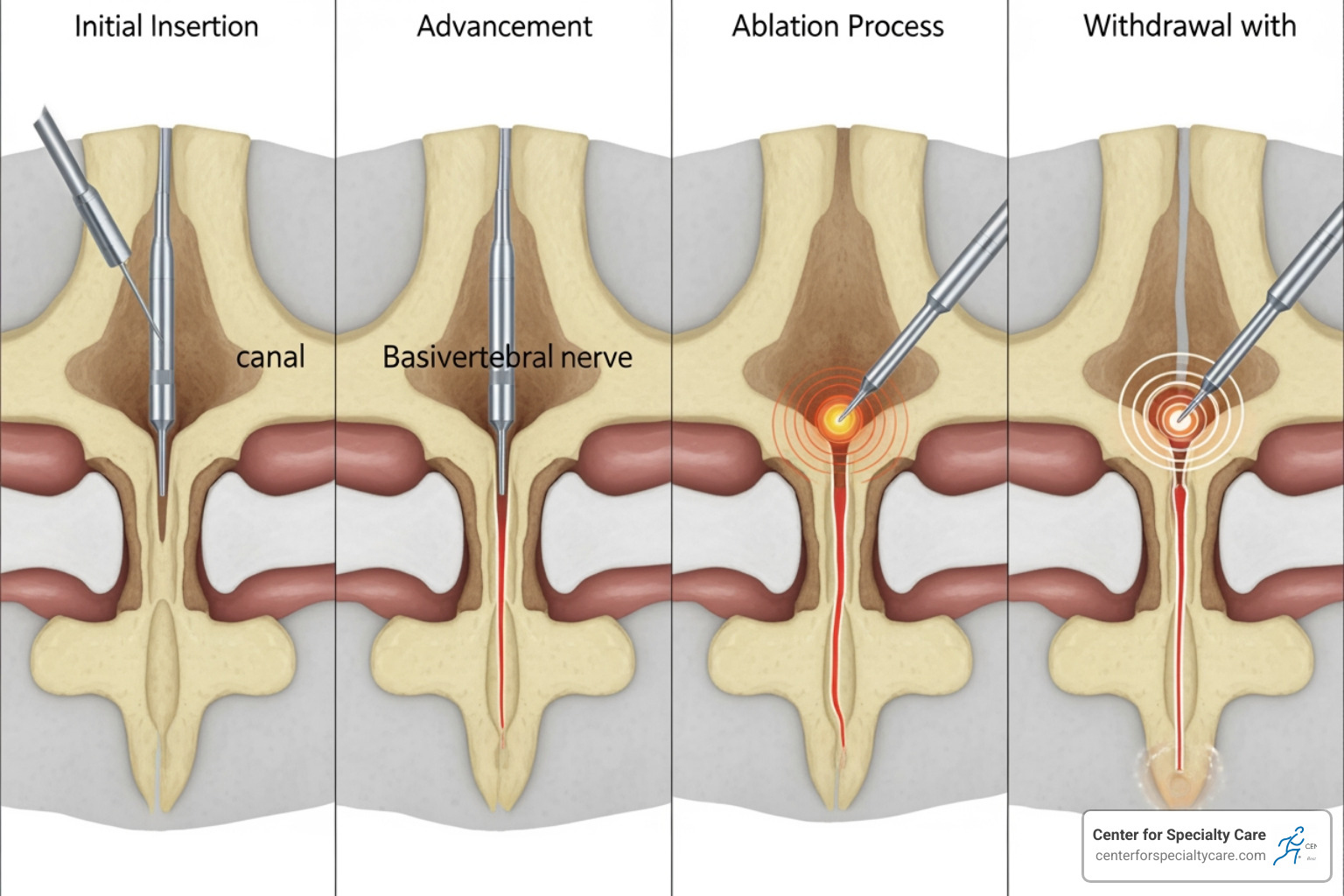
How the intracept procedure spine treatment works
The intracept procedure spine treatment is performed under general anesthesia, so you won’t feel anything. The process typically takes 60 to 90 minutes, and we use real-time fluoroscopic imaging (continuous X-ray) to ensure precision.
We start by making a small incision (about one centimeter) in your lower back. Through this opening, we guide a thin tube called a cannula through the pedicle and into the affected vertebral body.
Once in position, we create a channel within the vertebra leading to the basivertebral nerve. A specialized radiofrequency probe is then inserted through this channel and positioned at the nerve.
Finally, the radiofrequency generator is activated, delivering controlled heat through the probe. This energy ablates (deactivates) the basivertebral nerve, disrupting its ability to send pain signals from the damaged endplates to the brain.
If you’d like to see exactly how this works, you can watch a detailed procedure walkthrough that shows each step visually.
Recovery and Outlook for the intracept procedure spine
Recovery from the Intracept procedure is typically straightforward compared to traditional spinal surgery. Most patients return to their normal routines much faster than expected.
The first few days after your procedure, you may experience some soreness, minor swelling, or bruising at the incision site. This is normal and manageable with over-the-counter pain relievers. We recommend taking it easy for about 48 hours—resting and avoiding exercise.
Within one to two weeks, most patients have fully recovered from the procedure itself. Some feel ready to return to light work within a few days. Everyone heals at their own pace, and we’ll provide detailed post-treatment instructions.
Returning to more demanding activities depends on your daily life. If your job involves heavy lifting or you’re eager to get back to sports, you’ll need to be patient. We’ll create a personalized timeline to prioritize proper healing. Our physical therapy team can also support your recovery and help you build strength safely.
The long-term outlook is where the Intracept procedure really shines. Clinical studies show most patients experience sustained pain relief and improved function for five years or longer after a single treatment. This durable relief allows patients to return to activities like playing with grandchildren or simply bending without pain. Many report relief lasting even beyond the five-year mark.
Is the Intracept Procedure Right for You?
Choosing the right treatment for chronic low back pain can be overwhelming. The intracept procedure spine treatment is a unique, targeted approach that sits between conservative care and more invasive surgeries.
| Feature | Intracept Procedure | Physical Therapy & Conservative Care | Spinal Fusion Surgery |
|---|---|---|---|
| Recovery Time | 1-2 weeks for full recovery, 2-3 days for light activity | Ongoing, no acute recovery needed | 6-12 months for full recovery, weeks for initial mobility |
| Invasiveness | Minimally invasive (small incision) | Non-invasive | Highly invasive (open surgery) |
| Implant Use | Implant-free | No implants | Requires implants (screws, rods, cages) |
| Mechanism | Ablates BVN to stop pain signals from endplates | Strengthens muscles, improves flexibility, reduces strain | Joins vertebrae together to eliminate motion and pain |
| Spine Structure | Preserves existing spine structure | Preserves existing spine structure | Alters spine structure, limits motion |
The Intracept approach addresses the root cause of vertebrogenic pain without permanently altering your spine’s structure. It preserves mobility, avoids implants, and allows for a quick recovery. For patients who have not found relief with conservative care, this precision can make all the difference.
Cost and insurance are practical considerations. As a newer, specialized procedure, insurance coverage for the intracept procedure spine treatment can vary. However, its FDA-cleared status aids in the approval process. At Center for Specialty Care, our team in Fairmont, Estherville, Buffalo Center, and St. James helps you steer your benefits. We provide coding and payment guides for the reimbursement process, so you understand what’s covered.
Who is a Good Candidate?
The Intracept procedure is not for everyone. We carefully evaluate each patient to ensure this treatment is the right fit.
You might be an excellent candidate for the intracept procedure spine treatment if you have had chronic low back pain for at least six months. You’ve already tried conservative treatments (like physical therapy, medications, or injections) for at least six months without success. Your MRI shows Modic Type 1 or Type 2 changes in your vertebral endplates (typically between L3 and S1), which are the signs of inflammation causing vertebrogenic pain.
Your pain also has a characteristic pattern: it’s in the middle of your low back and worsens with physical activity, prolonged sitting, or bending forward.
We also ensure you don’t have conditions that would make the procedure unsafe, such as severe heart or lung issues, active infections, or certain implanted electronic devices.
Benefits and Long-Term Effectiveness
The clinical evidence for the Intracept procedure is remarkable, with patients consistently reporting life-changing improvements.
Pain reduction is substantial. Clinical studies show pain scores improved by 53% over 24 months. Even more impressive, 65% of patients reported at least a 50% reduction in their back pain, while 36.2% experienced at least a 75% reduction. Some studies show that 22.4% of people achieved complete pain relief six months after the procedure.
Improved function is another key benefit. The data shows an improvement of more than 20 points in the Oswestry Disability Index (ODI) at three months. This means you’re more capable in your daily activities, whether that’s gardening or getting through your workday without discomfort.
Many patients also experience a significant decrease in opioid use. The Intracept procedure offers a path to reduce or eliminate dependence on pain medication, which can dramatically improve your quality of life.
Patient satisfaction is high. Nearly 80% of patients who’ve had the Intracept procedure said they would do it again for the same condition.
Perhaps most importantly, the durable relief lasts. Studies show that most patients experience significant pain reduction for five years or longer. The improvements in pain and function remain stable, and 70% of patients were able to resume the activity level they enjoyed before their pain began.
These statistics represent real people getting back to real life. You can read the clinical study results yourself to dive deeper into the science.
Potential Risks and Complications
While the intracept procedure spine treatment is minimally invasive with an excellent safety profile, no medical procedure is entirely without risk. Understanding these possibilities helps you make an informed decision.
The most common potential complications are minor. These include bleeding at the incision site, infection (which is rare), temporary increased back pain that subsides during recovery, and a small chance of nerve damage to surrounding nerves. Very rarely, minor neuromuscular stimulation can occur.
There are also specific situations where the Intracept procedure is not appropriate. This includes patients with implantable electronic devices like pacemakers, active infections, pregnancy, or severe cardiac or pulmonary compromise. The procedure is also not performed on skeletally immature patients or when the treatment area is less than 10mm from vital structures.
Your safety is our absolute priority at Center for Specialty Care. We conduct a thorough evaluation to ensure the Intracept procedure is both effective and safe for your specific health situation. We will discuss all considerations with you in detail.
Frequently Asked Questions about the Intracept Procedure
Considering a medical procedure naturally comes with questions. Here are answers to the most common questions our patients ask about the intracept procedure spine treatment.
How long does the Intracept procedure take?
The entire intracept procedure spine treatment typically takes between 60 and 90 minutes. It is performed as an outpatient, same-day surgery under general anesthesia. You will arrive at our facility, have the procedure, rest in our recovery area for a short time, and head home the same day. This is a significant advantage compared to traditional spine surgeries that require hospital stays.
Is the Intracept procedure painful?
During the actual procedure, you won’t feel a thing, as it is performed under general anesthesia. After the anesthesia wears off, it’s normal to experience some soreness at the incision site, similar to a minor injury. This post-procedure discomfort is typically manageable with over-the-counter pain relievers like acetaminophen or ibuprofen and resolves within a few days.
We’ll send you home with detailed instructions for managing any discomfort, and our team is always available if you have concerns during your recovery.
What is the success rate of the Intracept procedure?
The intracept procedure spine treatment has a high success rate. Clinical studies show impressive results for patients with vertebrogenic pain:
- Over 65% of patients reported at least a 50% reduction in back pain.
- 36.2% experienced at least a 75% reduction in pain.
- Many patients experience durable relief lasting five years or longer.
- 70% of patients were able to resume their previous activity levels.
These results demonstrate that Intracept is not a temporary fix but a long-term solution. You can read the clinical study results for more details. At Center for Specialty Care, we can help determine if you are a candidate for this life-changing procedure.
Take the Next Step Towards Spine Pain Relief
Living with chronic low back pain doesn’t have to be your forever story. As we’ve explored, vertebrogenic pain originates from damaged vertebral endplates, and Modic changes on an MRI can pinpoint this source. The intracept procedure spine treatment offers a targeted, minimally invasive solution. By using radiofrequency ablation to treat the basivertebral nerve, it addresses the root cause of pain, not just the symptoms. Clinical studies show significant, durable relief lasting five years or more, allowing patients to return to the activities they love.
At the Center for Specialty Care, serving Fairmont, Estherville, Buffalo Center, and St. James, we understand that your pain is personal. Your journey is unique, and so should be your treatment plan. Our team takes the time to listen, evaluate your specific condition, and determine whether the intracept procedure spine treatment aligns with your needs and goals. We’ve built our reputation on 100% patient satisfaction because we believe in personalized care that puts you first.
If you’ve had chronic low back pain for six months or longer, conservative treatments haven’t worked, and your MRI shows Modic changes, it’s time to explore your options. You don’t need to keep accepting pain as part of your daily routine.
We’re here to help you reclaim your life, whether that means returning to work without discomfort or simply sitting through dinner without pain. Your relief starts with a conversation.