
The Ultimate Guide to Stretching Out Shoulder Blade Knots
November 27, 2025
Unlocking Spine Relief: Your Guide to the Intracept Procedure
December 1, 2025
Shoulder Popping and Numbness: 1 Worry Solved
Why Shoulder Popping and Numbness Deserve Your Attention
Shoulder popping and numbness are common symptoms, but it’s crucial to know when they are harmless versus when they signal a problem needing medical attention. This guide will help you understand the causes and protect your shoulder health.
Quick Answer: What Causes Shoulder Popping and Numbness?
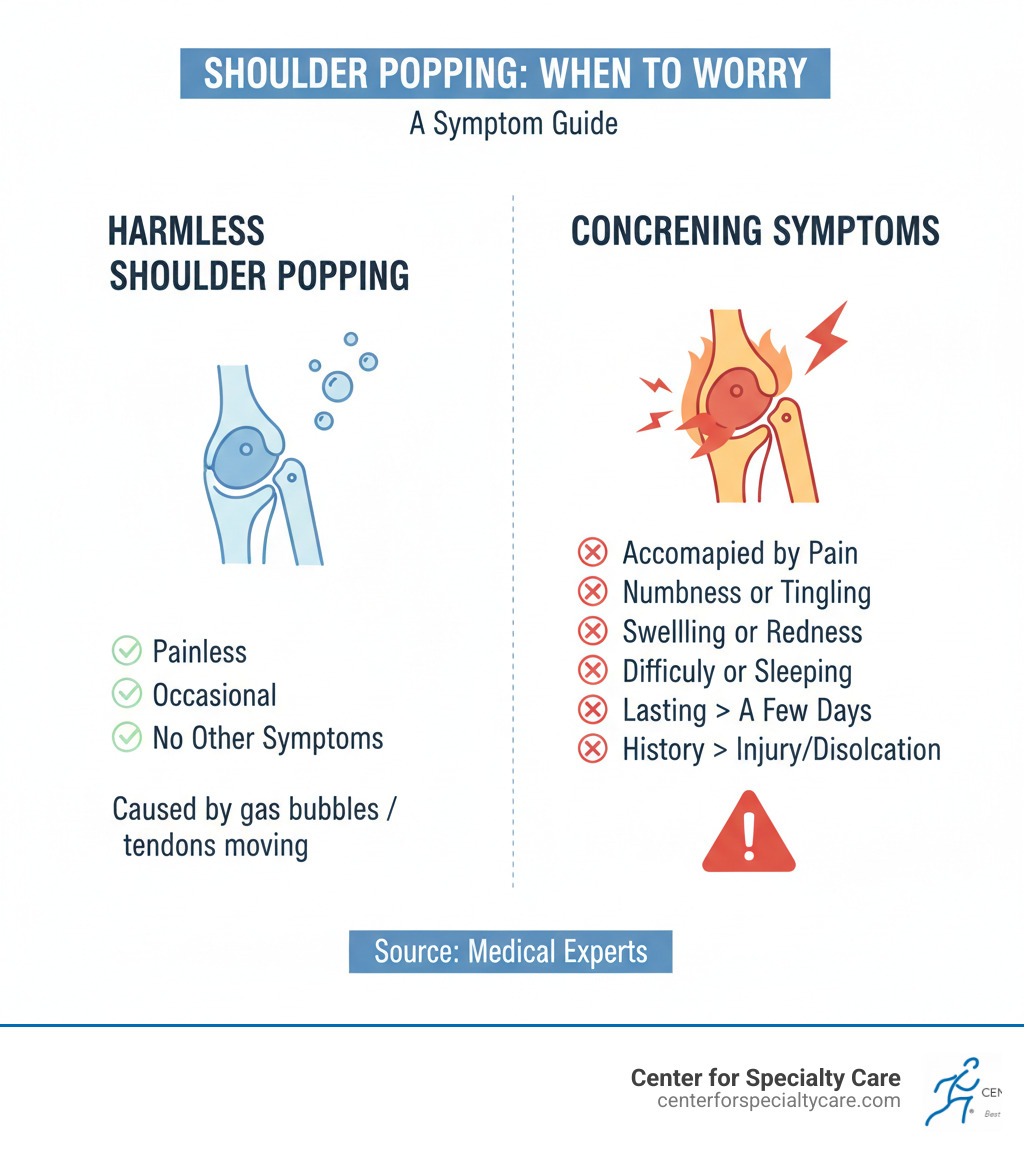
- Harmless popping alone: Usually gas bubbles releasing in the joint (cavitation), like cracking knuckles.
- Popping with pain: May indicate labral tears, bursitis, rotator cuff injuries, or osteoarthritis.
- Numbness or tingling: Often caused by nerve compression in the neck or shoulder.
- Both symptoms together: Can signal shoulder impingement, thoracic outlet syndrome, or a significant injury.
- When to see a doctor: If symptoms persist, worsen, or include weakness, swelling, or pain that disrupts sleep.
The key distinction is whether the pop occurs with other symptoms. A painless pop is usually fine. But when accompanied by numbness, tingling, weakness, or pain, your body is signaling that something needs attention.
Shoulder impingement is a frequent cause of these combined symptoms. Another cause, thoracic outlet syndrome, is diagnosed over three times more often in women than men, typically between ages 20 and 50.
I’m Dr. Corey Welchlin, a board-certified orthopedic surgeon serving the Fairmont, Minnesota, and northern Iowa region since 1990. For over three decades, I’ve helped patients resolve shoulder popping and numbness with both conservative treatments and, when needed, surgery.
Common shoulder popping and numbness vocab:
Understanding the “Pop”: Common Causes of Shoulder Popping
Your shoulder’s remarkable flexibility comes from a complex arrangement of the humerus (upper arm bone), scapula (shoulder blade), and clavicle (collarbone). A ring of cartilage called the labrum deepens the socket for stability, while muscles, tendons, and fluid-filled sacs called bursae allow smooth movement.
A “pop” in your shoulder (crepitus) can mean different things. The most important question is: does it hurt? This distinction helps determine if the pop is harmless or needs attention.
Harmless Popping: Cavitation
Most of the time, a popping sound is caused by gas bubbles (oxygen, nitrogen, carbon dioxide) in your joint’s natural lubricant, the synovial fluid. When you move, pressure changes can cause these bubbles to form and pop, similar to cracking your knuckles. If your shoulder pops without pain or swelling and you have a full range of motion, it’s completely normal. For similar sounds, see our guide on shoulder clicking when raising your arm.
Concerning Causes of Shoulder Popping
When a pop is accompanied by other symptoms, your shoulder is signaling an underlying problem. Painful popping, a catching or grinding sensation, weakness, instability, swelling, or limited range of motion are all warning signs.
When these signs appear with shoulder popping and numbness, several conditions could be the cause:
- Labral Tear: Damage to the cartilage ring around your socket, often causing clicking, pain, and instability. The American Academy of Orthopaedic Surgeons offers a guide on shoulder joint tears, including labral tears.
- Shoulder Instability: Stretched or torn ligaments can cause the shoulder to partially or fully dislocate, often with a distinct pop.
- Bursitis: Inflammation of the cushioning sacs around the joint, which can cause a soft popping sound with pain and tenderness.
- Osteoarthritis: The wearing down of cartilage leads to bone-on-bone grinding, creating grating or cracking noises with pain and stiffness. You can learn more about shoulder osteoarthritis.
- Rotator Cuff Injuries: Tears or inflammation in the tendons that stabilize your shoulder can cause weakness, pain, and sometimes a popping sensation.
If your shoulder pop comes with pain, weakness, or a feeling that something isn’t right, it’s time to have it checked out. Addressing these conditions early at our Fairmont clinic leads to better outcomes.
Decoding the “Numbness”: Why Your Shoulder or Arm Feels Asleep
Numbness or a “pins and needles” feeling in your shoulder or arm is often a sign of nerve irritation or compression. Nerves are the body’s messaging system, and when their pathways are disrupted, you can experience numbness, tingling, or weakness.
The brachial plexus, a nerve network running from your neck down your arm, is a key player. A problem anywhere along this path can cause radiating symptoms. Understanding the origin of your numbness is crucial for effective treatment, a process we specialize in at our clinics in Fairmont, Minnesota, St. James, and Estherville, Iowa.
Pinched Nerves (Cervical Radiculopathy)
Surprisingly, shoulder numbness often originates in the neck. A pinched nerve in your cervical spine, or cervical radiculopathy, can send numbness and pain down into your shoulder and arm. This happens when a nerve root is compressed as it exits the spine.
Common causes include a herniated disc, where a spinal disc presses on a nerve, or bone spurs that narrow the nerve pathways. The hallmark symptom is radiating pain and numbness that follows a specific pattern down the arm. While many cases improve with rest, persistent symptoms require professional evaluation. You can learn More on pinched nerves and their treatment.
Direct Nerve Injury or Compression
Sometimes, the nerve issue is located in the shoulder itself. Direct trauma or compression can damage local nerves and cause numbness.
- Shoulder Dislocation: When the upper arm bone pops out of its socket, it can stretch or tear nearby nerves, often causing lingering numbness even after the joint is relocated. If you’ve been in an accident, our guide on Shoulder pain after car accident may be helpful.
- Rotator Cuff Injury Swelling: Significant inflammation from a rotator cuff tear can sometimes crowd the tight spaces in the shoulder, putting pressure on nerves and leading to numbness.
- Brachial Plexus Injury: Severe trauma, such as from a fall or collision, can damage this entire nerve bundle, causing intense pain, weakness, and profound numbness throughout the arm.
When shoulder popping and numbness occur together, especially after an injury, prompt evaluation is important as it points to conditions that benefit from early intervention.
The Connection: What Causes Shoulder Popping and Numbness Together?
When you experience both shoulder popping and numbness, it suggests a complex issue where a structural problem is affecting nerve function. In the tight space of your shoulder, when one part is inflamed or out of place, it can easily impact its neighbors. This combination of symptoms is something we diagnose regularly at our clinic in Buffalo Center, Iowa.

Shoulder Impingement Syndrome
Shoulder impingement is a primary cause of combined shoulder popping and numbness. It occurs when rotator cuff tendons and the subacromial bursa get pinched under the acromion (a bony shelf on the shoulder blade). This pinching causes pain and weakness when lifting your arm, a popping sensation from the irritated tissues, and numbness from pressure on nearby nerves. Fortunately, conservative treatments like physical therapy and injections are effective in up to 60% of cases. Learn more by asking, What is Shoulder Impingement?.
Thoracic Outlet Syndrome (TOS)
This condition occurs when nerves and blood vessels in the narrow space between your collarbone and first rib are compressed. The most common form, neurogenic TOS, directly compresses the brachial plexus nerves. Symptoms include numbness and tingling in the arm and hand (especially the ring and pinky fingers), aching neck/shoulder pain, and a weak or “clumsy” hand. A popping sensation can arise from the movement of the collarbone or first rib against compressed tissues. Women are over three times more likely than men to be diagnosed with TOS, usually between ages 20 and 50.
Significant Shoulder Injuries
A single traumatic event can damage both joint structures and nerves, causing shoulder popping and numbness simultaneously. These injuries require prompt medical care.
- Shoulder Dislocation: The arm bone popping out of its socket can damage nerves like the axillary nerve, causing numbness. The resulting joint instability leads to ongoing popping or catching.
- Severe Labral Tears: A significant tear in the cartilage rim of the socket creates instability (popping, catching) and can cause inflammation that irritates nearby nerves, leading to numbness.
- Fracture Malunion: An improperly healed shoulder fracture can create bony irregularities that cause grinding or popping as tendons move over them. These irregularities can also press on nerves, causing numbness. For more, explore More on shoulder trauma.
When popping and numbness occur together, your body is sending a clear signal that multiple structures are involved and need professional evaluation.
Diagnosis and Treatment for Shoulder Popping and Numbness
When shoulder popping and numbness persist, it’s time to find the root cause. At our clinic in Fairmont, Minnesota, we focus on accurate diagnosis to create a treatment plan that works for you.

When to See a Doctor
You should schedule an appointment if your symptoms:
- Last more than a few days without improvement.
- Are getting worse.
- Disrupt your sleep or daily activities.
- Include weakness or a feeling that your shoulder might give out.
- Involve visible swelling, redness, or bruising.
- Started after an injury, such as a fall or car accident.
Diagnostic Process
Diagnosis begins with a conversation about your symptoms and medical history. This is followed by a physical examination where we assess your shoulder’s movement, strength, and areas of tenderness. To get a complete picture, we may use imaging tests:
- X-ray: Shows bones, revealing fractures, arthritis, or bone spurs.
- MRI: Provides detailed images of soft tissues like tendons, ligaments, and the labrum to spot tears or inflammation.
- CT Scan: Offers more detailed bone imaging for complex fractures.
- Electrodiagnostic Studies (EMG/NCS): Measure nerve and muscle function to pinpoint nerve compression.
Non-Surgical Treatment Options
Most cases of shoulder popping and numbness respond well to conservative treatment. We always start with the least invasive options:
- Rest and Activity Modification: Avoiding movements that aggravate your symptoms is a crucial first step.
- Physical Therapy: A skilled therapist guides you through exercises to strengthen muscles, improve flexibility, and restore proper movement. Learn about the best therapy for shoulder pain and shoulder treatment with physical therapy.
- Anti-inflammatory Medications: Over-the-counter or prescription medications can reduce pain and swelling.
- Corticosteroid Injections: These powerful anti-inflammatory injections are delivered directly to the problem area for significant relief. We offer several types of injections for shoulder pain.
When is Surgery Necessary?
We consider surgery if conservative treatments fail to provide relief or if there’s significant structural damage, like a large rotator cuff tear or severe instability. Waiting too long with severe nerve compression can lead to permanent damage.
Many procedures are arthroscopic, using small incisions for less pain and faster recovery. Common surgeries include:
- Subacromial Decompression: Creates more space for tendons in cases of impingement.
- Labral or Rotator Cuff Repair: Reattaches torn cartilage or tendons to restore stability and strength.
- Nerve Decompression Surgery: Relieves pressure on compressed nerves in conditions like thoracic outlet syndrome.
If surgery is needed, our experienced team can help. Learn more about finding a rotator cuff surgeon for expert treatment.
Prevention and Self-Care Strategies
The best way to deal with shoulder popping and numbness is to prevent it. Small changes to your daily routine can make a huge difference in keeping your shoulders healthy.

Exercises for Shoulder Health
Shoulder health relies on a balance of strength and flexibility. Strong, supple muscles protect the joint from issues that cause shoulder popping and numbness.
- Strengthen and Stretch: Focus on strengthening your rotator cuff and upper back muscles with exercises like resistance band rotations. Equally important is maintaining flexibility through gentle stretches for your chest and shoulder capsule. A flexible shoulder is less prone to impingement.
- Warm-Up and Cool-Down: Always prepare your muscles for activity with a light warm-up and finish with gentle stretching to aid recovery and reduce injury risk.
The Shoulder conditioning program from the American Academy of Orthopaedic Surgeons is an excellent resource for targeted exercises.
Lifestyle and Posture Adjustments
Your daily habits significantly impact shoulder health. Many problems I see in my Minnesota and Iowa patients stem from repetitive stress and poor posture.
- Mind Repetitive Motions: If your work or hobbies involve frequent overhead activities, take regular breaks and focus on proper technique to reduce stress on your shoulders.
- Lift Properly: When lifting heavy items, bend your knees and keep the object close to your body to avoid straining your shoulders and neck.
- Improve Your Workstation: Position your monitor at eye level and use a supportive chair to avoid hunching, which can compress nerves in your neck and shoulder.
- Lighten the Load: Consistently carrying a heavy bag on one shoulder creates muscle imbalances. Use a backpack to distribute weight evenly or switch sides frequently.
These small adjustments can prevent the long-term development of shoulder popping and numbness.
Frequently Asked Questions about Shoulder Popping and Numbness
Shoulder popping and numbness can be confusing. As an orthopedic surgeon serving the Fairmont, Minnesota, and Iowa communities for over 30 years, I’ve answered many questions on this topic. Here are some of the most common.
Why does my shoulder pop without pain?
Painless popping is usually harmless. It’s often caused by cavitation—the release of gas bubbles from the fluid inside your joint, similar to cracking your knuckles. It can also be a tendon or ligament snapping over a bone as you move. If there is no pain, swelling, or weakness, and your range of motion is normal, the noise is likely not a cause for concern.
Can shoulder popping and numbness go away on its own?
Sometimes. If the symptoms are from a minor strain or sleeping in an awkward position, they might resolve with a few days of rest. However, shoulder popping and numbness together can indicate a more serious underlying issue like a labral tear, impingement, or a pinched nerve. These problems don’t typically fix themselves. If your symptoms persist for more than a few days, worsen, or interfere with your life, it’s time to get them evaluated.
What is the first thing to do for a numb and popping shoulder?
First, rest the shoulder. Stop any activity that seems to trigger or worsen the symptoms. Applying an ice pack for 15-20 minutes at a time (wrapped in a towel) can help reduce inflammation and provide temporary relief. Pay close attention to your body. If the pain is significant, the numbness is spreading, or you feel weakness in your arm, seek professional evaluation promptly. Our article on When to go to urgent care for shoulder pain can help you decide on the next step.
Early intervention often leads to simpler treatment and a faster recovery.
Your Next Steps for a Healthy Shoulder
You now know that shoulder popping and numbness can range from harmless to serious. A painless, occasional pop is usually fine. But when popping is paired with numbness, tingling, weakness, or persistent pain, your body is signaling that it needs professional attention.
The good news is that most shoulder problems respond well to treatment, especially when diagnosed early. An accurate diagnosis is the key to finding the right path to relief, whether through physical therapy, injections, or surgery.
At Center for Specialty Care, we have been helping patients in Fairmont, Minnesota, and northern Iowa with these exact challenges since 1990. We understand how shoulder issues can disrupt your life, and we are committed to 100% patient satisfaction through personalized care.
Our approach is to listen, diagnose thoroughly, and work with you to find the best treatment. We pride ourselves on quick appointment availability because we know you shouldn’t have to wait for answers. You don’t have to live with shoulder popping and numbness. Our team is ready to help you get back to feeling like yourself.
Learn more about our expert shoulder care and take the first step toward a healthy, pain-free shoulder today.