
The Ultimate Guide to Tendonitis Relief
July 8, 2026
Ouch, My Shoulder Blades! A Guide to Rhomboid Strain Symptoms
July 10, 2026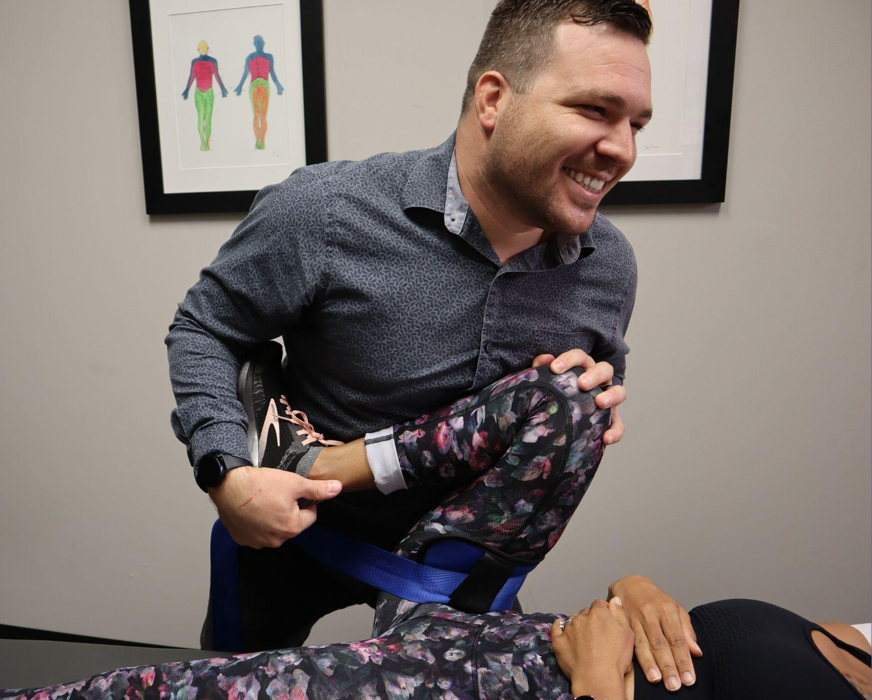
Put Your Best Foot Forward with Osteopathic Manipulation for Tendon Pain
When Your Feet Hurt, Your Whole Body Feels It
Foot tendon osteopathic manipulation is a hands-on, non-surgical treatment performed by a Doctor of Osteopathic Medicine (DO) to relieve tendon pain, restore mobility, and support your body’s natural healing — without drugs or surgery.
Here’s what you need to know at a glance:
| Question | Quick Answer |
|---|---|
| What is it? | Hands-on manual therapy targeting foot tendons and surrounding structures |
| Who performs it? | A licensed Doctor of Osteopathic Medicine (DO) |
| What conditions does it treat? | Achilles tendinopathy, plantar fasciitis, FHL tendinitis, and more |
| How many sessions? | Typically 3 sessions over 4 weeks to see meaningful improvement |
| Is it safe? | Yes — gentle, non-invasive, and appropriate for most patients |
| Does it work? | Research shows up to 67% pain reduction and significant functional gains |
Foot pain rarely stays in the foot. Because your feet support your entire body weight with every step, a tendon problem there can ripple up through your ankles, knees, hips, and spine. Yet many people either push through the pain or jump straight to medication — without knowing that a targeted, hands-on approach can produce measurable results in just a few weeks.
That’s exactly what the research shows. Studies on osteopathic treatment for Achilles tendinopathy found that patients experienced a 67% reduction in pain after just three sessions. For athletes, functional scores improved from an average of 50.5% to 74% on a validated tendon health scale — in under a month.
Whether your pain came on suddenly after a run or has been nagging you for months, understanding your options is the first step toward real relief.
I’m Dr. Corey Welchlin, a board-certified orthopedic surgeon trained at the Kirksville College of Osteopathic Medicine, where I developed a deep foundation in foot tendon osteopathic manipulation and its role in holistic musculoskeletal care. Over more than three decades at the Center for Specialty Care, I’ve seen how the right conservative treatment — applied early and precisely — can help patients avoid surgery and get back to doing what they love.
Simple guide to foot tendon osteopathic manipulation terms:
Understanding Foot Tendon Osteopathic Manipulation and How It Works
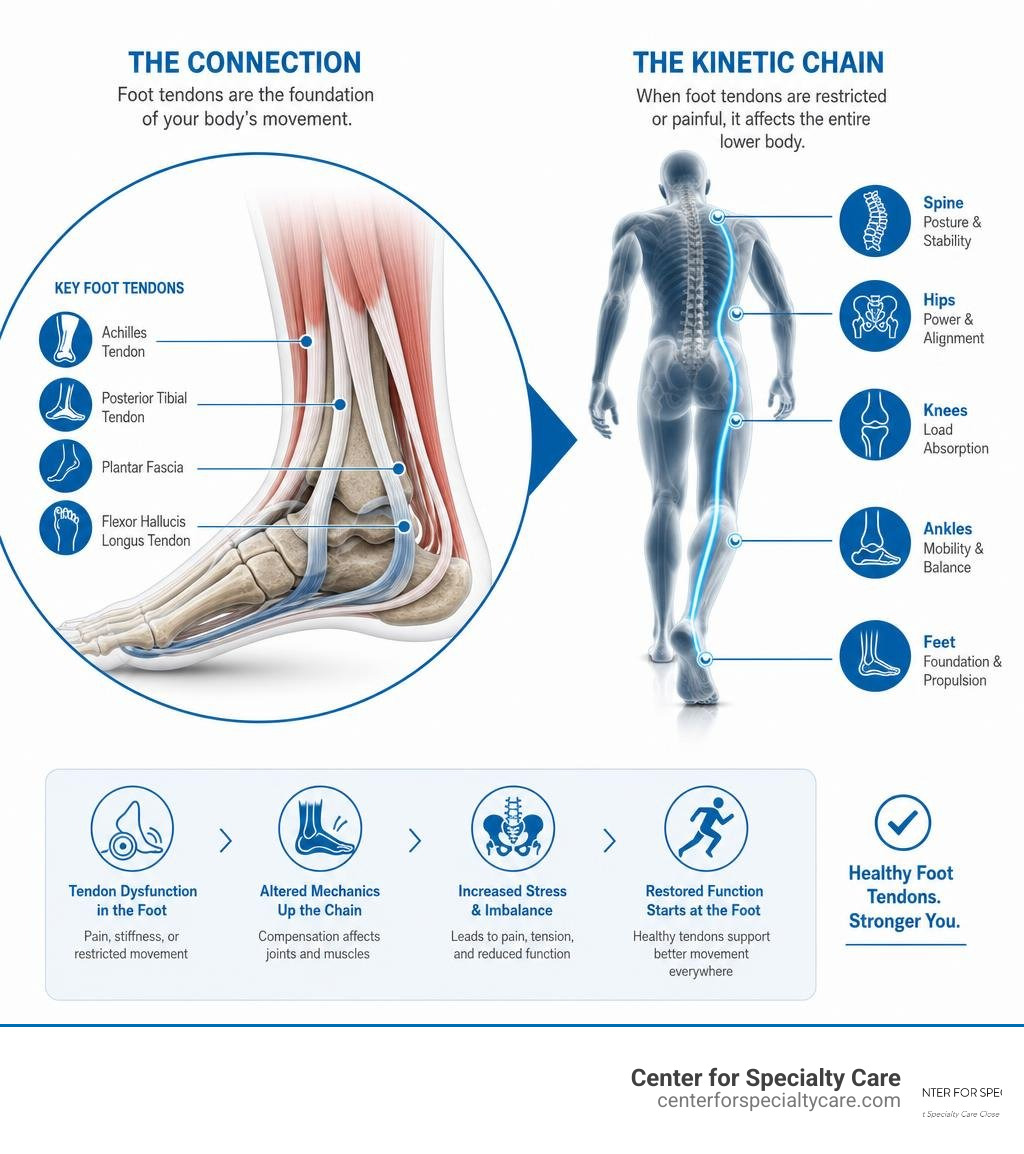
To understand how foot tendon osteopathic manipulation works, we must first look at the foot not as an isolated appendage, but as the foundation of your body’s entire kinetic chain. When you walk, run, or jump, your feet absorb forces several times your body weight. This pressure is distributed through a complex network of 26 bones, 33 joints, and over 100 muscles, tendons, and ligaments.
If a single joint in your midfoot becomes stiff or hypomobile, the tendons crossing that joint have to work twice as hard to move your foot. Over time, this microtrauma leads to inflammation, micro-tearing, and chronic pain. By restoring proper alignment and motion to these joints, osteopathic manipulation removes the mechanical strain on your tendons, allowing them to heal.
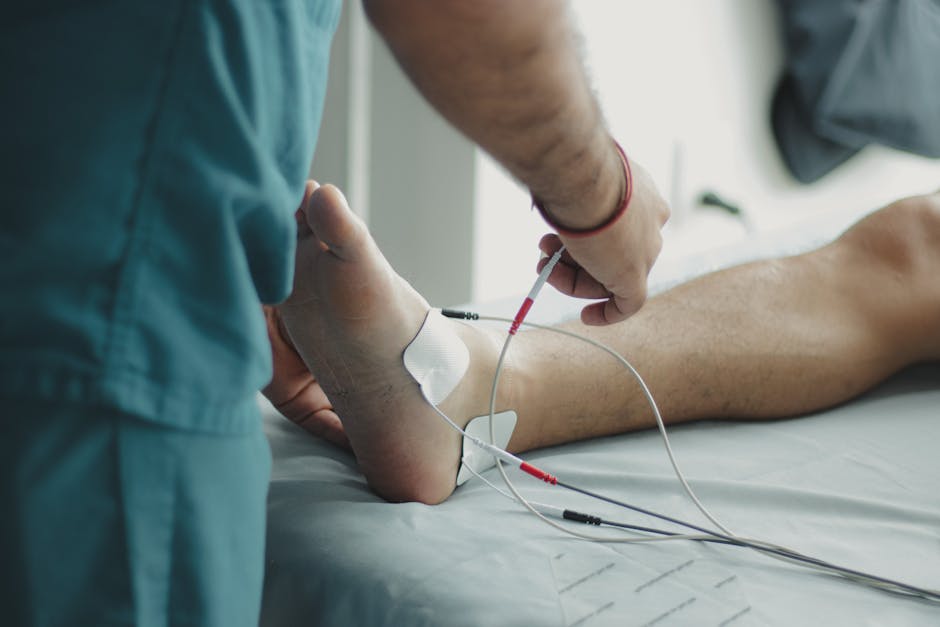
Furthermore, manual manipulation directly stimulates local circulation and lymphatic drainage. Tendons are notorious for having a poor blood supply, which is why they heal so slowly compared to muscles. Gentle, targeted hands-on techniques help clear out inflammatory fluid and bring fresh, oxygenated blood to the damaged tendon fibers, accelerating your body’s natural self-healing mechanisms.
What is Osteopathic Manipulative Treatment (OMT)?
Osteopathic Manipulative Treatment (OMT) is a set of hands-on techniques used by Doctors of Osteopathic Medicine (DOs) to diagnose, treat, and prevent illness or injury. DOs are fully licensed physicians who undergo the same rigorous medical school training as MDs, but with an additional 200 hours of specialized training in the musculoskeletal system and manual medicine.
In our clinics across southern Minnesota and northern Iowa, we use OMT to treat the whole person. We don’t just look at where your foot hurts; we evaluate your posture, your gait, and how your knees and hips align. This comprehensive, whole-body approach makes OMT a highly effective form of non-surgical orthopedic care, particularly for complex tendon issues that haven’t responded to standard treatments. To learn more about this medical specialty, you can read about Osteopathic Manual Medicine and how it integrates into modern healthcare.
How OMT Promotes Healing and Joint Mobilization
When we perform OMT on a patient with tendon pain, we use a variety of gentle, hands-on techniques designed to release tissue tension, improve joint mobility, and reduce pain. Unlike high-force chiropractic adjustments that focus primarily on the spine, OMT utilizes a wider range of soft-tissue and joint-mobilization techniques tailored specifically to peripheral joints like the foot and ankle. For more details on the breadth of these therapies, see how healthcare systems utilize Osteopathic Manipulative Treatment – Essentia Health.
To see how OMT fits into a comprehensive recovery plan, it helps to compare it to other common physical modalities:
| Feature / Modality | Osteopathic Manipulative Treatment (OMT) | Soft Tissue Mobilization (e.g., Graston) | Restorative Exercise (PT) |
|---|---|---|---|
| Primary Focus | Whole-body biomechanics, joint restriction, and nerve/fluid flow | Breaking up localized scar tissue and fascial restrictions | Strengthening muscles and improving functional movement |
| Who Performs It | Licensed DOs (or specially trained MDs) | Physical therapists, chiropractors, or athletic trainers | Physical therapists or rehabilitation specialists |
| Technique Style | Gentle manual manipulation, myofascial release, and joint mobilization | Instrument-assisted friction massage | Progressive loading, stretching, and stability exercises |
| Systemic Benefits | Improves lymphatic drainage, local blood flow, and nervous system regulation | Increases localized blood flow to the targeted tissue | Builds long-term tissue resilience and cardiovascular health |
Common Foot Tendon Conditions Treated with OMT
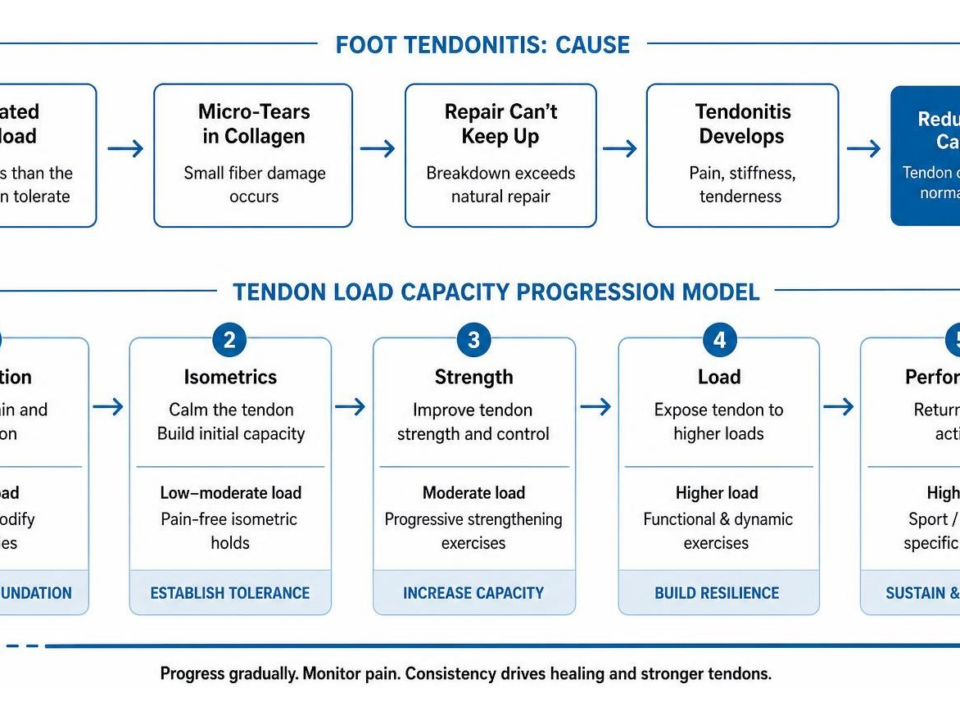
Tendon pain in the foot usually falls under the umbrella of tendonitis or tendinopathy. While “tendonitis” refers to acute inflammation, “tendinopathy” refers to a chronic state of degeneration where the tendon’s collagen fibers become disorganized and weak due to repetitive overuse. If you want a deeper dive into the anatomy of these structures, you can learn more about foot tendons to understand how they function.
In our practice, we frequently treat several key tendon conditions using osteopathic manipulation:
- Achilles Tendinopathy: Pain and stiffness in the large tendon at the back of your heel.
- Plantar Fasciitis: While technically a thick band of fascia rather than a tendon, it behaves similarly and responds beautifully to OMT.
- Flexor Hallucis Longus (FHL) Tendinitis: Pain along the inside of the ankle and arch, common in dancers and athletes who do a lot of push-off movements.
- Peroneal Tendonitis: Pain along the outer edge of the foot and ankle, often linked to lateral ankle instability.
If you are experiencing generalized discomfort, reading about foot and ankle pain or exploring our guide on stepping up to foot tendonitis can help you identify your symptoms.
Addressing Achilles Tendinopathy with Foot Tendon Osteopathic Manipulation
The Achilles tendon is the thickest and strongest tendon in the human body, but it is also one of the most frequently injured. Up to 9% of professional athletes in running and jumping sports are affected by midportion Achilles tendinopathy. However, it isn’t just an athlete’s injury — chronic Achilles pain also affects about a third of sedentary individuals between the ages of 35 and 45.
Patients with Achilles tendinopathy typically describe a dull, aching pain that is worst during their first steps in the morning. This morning stiffness occurs because the tendon tightens up overnight while your foot is relaxed. When we apply foot tendon osteopathic manipulation, we target the tight calf muscles (gastrocnemius and soleus) and the restricted joints of the ankle and midfoot. For a deeper look at managing this condition, you can discover orthopedic insights for managing Achilles pain or read our clinical overview on Achilles tendon pain.
Plantar Fasciitis and FHL Tendinitis
Plantar fasciitis and Flexor Hallucis Longus (FHL) tendinitis often go hand-in-hand because of their close anatomical proximity along the bottom and inside of the foot. The FHL tendon runs right under the medial arch and is responsible for flexing your big toe. When the joints in the middle of your foot lose their mobility, the plantar fascia and the FHL tendon take on extra tension to keep your arch from collapsing.
Using OMT, we can manually mobilize restricted bones like the navicular and cuboid. This immediately reduces the tension on the bottom of your foot. If you are struggling with severe heel pain, you can find relief from plantar fasciitis through a combination of osteopathic care, supportive footwear, and home stretches.
Clinical Evidence: What the Research Says About OMT for Tendons
Many patients are surprised to learn that osteopathic manipulation is backed by solid clinical evidence. While it may feel like a relaxing massage or a gentle stretch, the physiological changes it produces have been documented in multiple clinical trials.

Key Statistics on Achilles Tendinopathy Recovery
The scientific literature shows outstanding outcomes for patients who receive OMT for chronic tendon issues. Key findings from recent research include:
- High Success Rate: Osteopathic manipulative treatment can reduce pain and improve function in 75% of patients with Achilles tendinopathy after just 3 sessions over 1 month.
- Significant Pain Reduction: In a randomized controlled trial, patients receiving osteopathic treatment experienced an average 67% reduction in pain (dropping from a 6.7 to a 2.2 on the Numerical Rating Scale). You can read the randomized controlled trial on chronic achillotendinitis for a closer look at the data.
- Faster Mornings: OMT reduced the duration of morning pain and stiffness in Achilles tendinopathy by an average of 32.5 minutes.
- Improved Quality of Life: The same clinical trials showed a 69% improvement in physical pain scores on the standardized SF-36 health questionnaire.
Case Studies: Real-World Success of Foot Tendon Osteopathic Manipulation
To see how these statistics translate into real life, we can look at a published case series involving athletes with midportion Achilles tendinopathy. The athletes in the study underwent three weekly sessions of OMT, utilizing techniques like Strain Counterstrain and the lymphatic pump.
To measure their progress, researchers used the Victorian Institute of Sport Assessment-Achilles (VISA-A) questionnaire, where a score of 100 represents a completely symptom-free, fully functional tendon.
- The Results: Following OMT, average VISA-A scores improved dramatically from 50.5% to 74%.
- Pain Relief: Acute and strong pain decreased by an average of 41 points on the VISA-A scale across the cases.
- Return to Play: Multiple athletes were able to return to full training faster than would be expected with traditional exercise-only protocols.
To explore these clinical outcomes in detail, you can explore the case series on OMT for Achilles tendinopathy. Additionally, combining these hands-on treatments with a structured exercise plan has been shown to yield superior results for high-demand athletes. This is highlighted in the study, Combined osteopathy and exercise management of Achilles tendinopathy in an athlete – The Journal of Sports Medicine and Physical Fitness 2018 January-February;58(1-2):106-12 – Minerva Medica – Journals.
What to Expect During and After Your OMT Session
If you’ve never experienced osteopathic manipulation, you might wonder what a typical session looks like. First and foremost, OMT is a highly personalized, interactive experience. We start with a thorough evaluation of your posture, standing alignment, and gait. We will ask you to perform simple movements, like a heel raise or a squat, to see how your feet, ankles, knees, and hips move together.
Effective OMT Techniques for Foot Tendons
Once we identify the areas of restriction and tissue tension, we will use specific hands-on techniques to address them. Some of the most effective techniques we use for foot tendon pain include:
- Strain Counterstrain: A very gentle, passive technique. We find a tender point in your calf or foot, place your foot in a position of maximum comfort to shorten the affected muscle/tendon, and hold it there for 90 seconds. This resets abnormal nerve signaling and allows the tight tissue to relax.
- Myofascial Release: We apply sustained, gentle pressure to the fascia (the connective tissue wrapping your muscles and tendons) to release restrictions and improve tissue elasticity.
- Lymphatic Pump Techniques: Applied to the lower extremities, these rhythmic pumping movements help clear localized swelling, reduce congestion, and improve fluid circulation around the healing tendon.
- High-Velocity, Low-Amplitude (HVLA) Thrusts: When appropriate, we use quick, gentle movements to restore motion to restricted joints in the ankle or midfoot. This is often the key to correcting an apparent structural issue, such as a rigid high arch (cavus foot) that is actually just a joint restriction.
Post-Treatment Care and Recovery Protocols
After your session, your body will continue to adjust to the changes made during treatment. To get the most out of your OMT session, we recommend following these simple self-care steps:
- Hydrate Well: Drink plenty of water to help flush out inflammatory byproducts released from the tight tissues during manipulation.
- Take a Short Walk: A gentle 10-to-15-minute walk right after your session helps your nervous system and muscles adapt to your corrected alignment.
- Avoid Strenuous Workouts: Give your body a 24-hour recovery window. Avoid heavy lifting, running, or high-impact jumping immediately after treatment to let the tissues settle.
- Listen to Your Body: It is normal to feel a mild soreness, similar to the feeling after a good workout, for 24 to 48 hours. If you feel any sharp pain, let us know right away.
Frequently Asked Questions about Osteopathic Foot Care
Is OMT safe for acute tendon tears?
OMT is safe and highly beneficial for partial tendon tears, but it must be modified. During the acute phase of a partial tear, we avoid high-force manipulation directly over the injured site. Instead, we focus on gentle techniques to reduce swelling, improve lymphatic drainage, and treat the surrounding joints to take the pressure off the healing tissue.
However, for a complete tendon rupture (where the tendon has torn completely in two), manual manipulation cannot reattach the tissue. In those cases, diagnostic imaging (like an MRI or ultrasound) is required, and surgical repair is often the best course of action.
How many OMT sessions will I need to see results?
While every patient is unique, the 3-session benchmark is a very common starting point. As shown in clinical trials, significant improvements in pain and mobility are often achieved with three weekly sessions over the course of a month. Chronic, long-standing conditions may require a few additional sessions, while acute issues might resolve even faster.
Can OMT be combined with other rehabilitative exercises?
Yes, absolutely! In fact, we highly recommend a multimodal approach. Combining OMT with progressive loading exercises (like eccentric calf drops for Achilles tendinopathy) yields the best long-term results. OMT restores the joint mobility and tissue flexibility you need to perform your rehab exercises correctly and without pain, creating a powerful synergistic effect.
Conclusion
At the Center for Specialty Care, we believe that you shouldn’t have to live with chronic foot pain or jump straight to invasive procedures. Our team is dedicated to providing personalized, compassionate care with a focus on non-surgical orthopedic options that support your body’s natural ability to heal.
Whether you are visiting us at our main clinic in Fairmont, MN, or at our convenient locations in Estherville, IA, Buffalo Center, IA, or St. James, MN, we are here to help you find lasting relief. With our commitment to 100% patient satisfaction and quick appointment availability, you won’t have to wait to start feeling better.
If you are ready to put your foot pain behind you, take the first step toward healthy feet and schedule an evaluation with us today. Let’s work together to get you back on your feet, pain-free!