No Arch, No Problem: Top Orthopedic Slippers for Flat Feet
July 7, 2026
Put Your Best Foot Forward with Osteopathic Manipulation for Tendon Pain
July 9, 2026
The Ultimate Guide to Tendonitis Relief
Why Tendonitis Relief Matters — and How to Find It Fast
If you’re dealing with tendonitis relief that feels just out of reach, here’s what works:
Quick answers for tendonitis relief:
- Rest the affected area — stop the activity causing pain
- Ice the tendon for up to 20 minutes, several times a day
- Compress with an elastic bandage to reduce swelling
- Elevate the injured area above heart level when possible
- Take NSAIDs (like ibuprofen) to reduce pain and inflammation
- See a doctor if symptoms don’t improve within 2-3 weeks
Tendonitis is one of the most common causes of musculoskeletal pain — and it tends to get worse if you ignore it. It affects people of all ages, but adults over 40 are especially vulnerable because tendons become less flexible and tolerate less stress as we age.
The pain can show up in your shoulder, elbow, knee, wrist, or heel. It often starts as a dull ache and builds into something that disrupts your work, sleep, and daily movement.
The good news? Most cases respond well to the right combination of rest, targeted treatment, and — when needed — professional care.
I’m Dr. Corey Welchlin, a board-certified orthopedic surgeon and sports medicine physician with over 30 years of experience helping patients find lasting tendonitis relief through both conservative and surgical approaches. As the founder of the Center for Specialty Care in Fairmont, Minnesota, I’ve treated countless patients across southern Minnesota and northern Iowa — and I’ll walk you through everything you need to know in this guide.
Understanding Tendonitis: Causes, Symptoms, and Common Locations
To find lasting tendonitis relief, we first need to understand what is actually going on under the skin.
A tendon is a tough, flexible band of fibrous tissue that anchors your muscle to your bone. When you contract a muscle, the tendon pulls the bone, causing movement. However, because tendons have a relatively limited blood supply compared to muscles, they heal slowly and are highly vulnerable to repetitive stress.
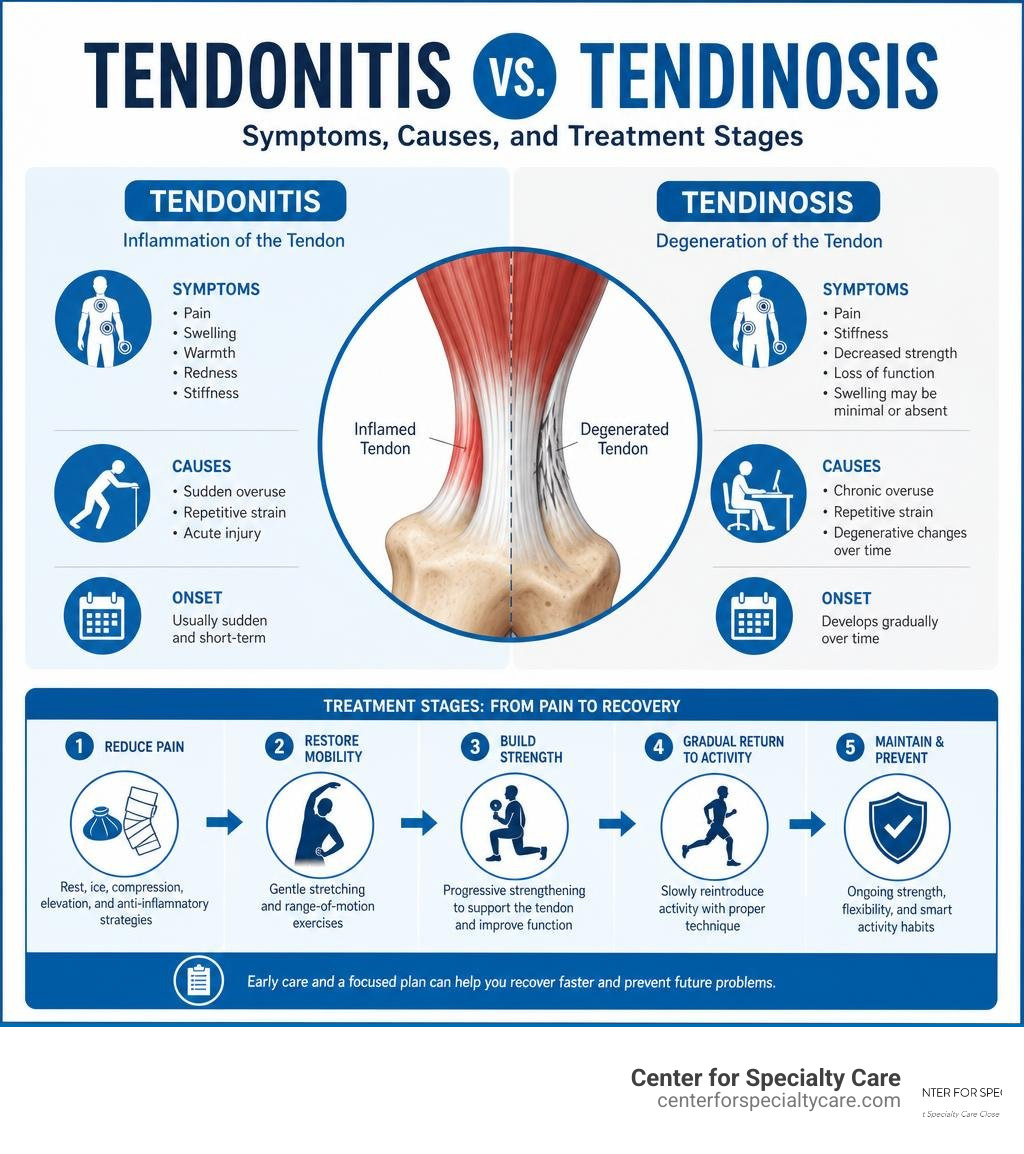
People often use the terms tendonitis, tendinosis, and tendinopathy interchangeably, but they represent different stages of tendon distress:
- Tendonitis (or Tendinitis): This is acute inflammation of the tendon. It usually happens suddenly after an intense workout, a sudden awkward movement, or a weekend of heavy manual labor.
- Tendinosis: This is chronic, non-inflammatory degeneration of the tendon. If you keep pushing through acute tendonitis without letting it heal, the collagen fibers in the tendon begin to break down, weaken, and develop microscopic tears.
- Tendinopathy: This is the broad, umbrella medical term that covers any pain, swelling, or structural issue involving a tendon, regardless of whether it is inflammatory (tendonitis) or degenerative (tendinosis).
As outlined in the Harvard Health guide on tendinitis, the root cause is almost always overuse or overload. When you perform the same movement thousands of times—whether it is swinging a tennis racquet, typing on an unergonomic keyboard, or hammering nails—the tendon experiences micro-wear. If you do not give it time to recover, these tiny micro-tears accumulate.
Age is another major risk factor. As we cross the age of 40, our tendons lose their elasticity, become stiffer, and tolerate much less physical stress. Other contributing factors include systemic conditions like diabetes, rheumatoid arthritis, thyroid disorders, and even certain medications (such as fluoroquinolone antibiotics or statins). For a deeper dive into how these structures function and support your skeletal system, check out our overview of tendon health.
Common Types of Tendonitis
While any tendon in the body can become inflamed, certain areas bear the brunt of our daily activities:
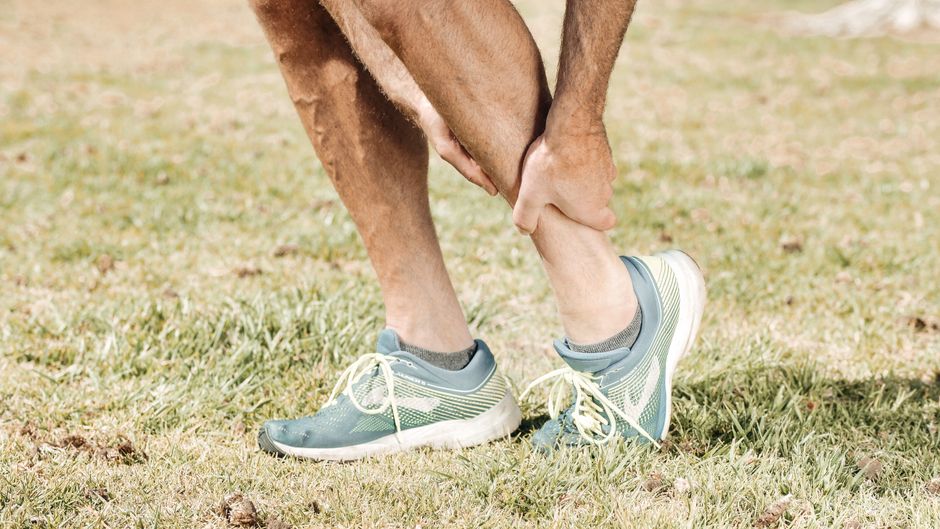
- Achilles Tendinitis: Affecting the thick tendon at the back of your heel, Achilles tendinitis accounts for roughly 15% of all running injuries. It is incredibly common in runners, basketball players, and “weekend warriors” who suddenly increase their exercise intensity. Learn more in our Achilles tendonitis insights.
- Lateral Epicondylitis (Tennis Elbow): This affects the tendons on the outside of your elbow. Despite the name, it affects 40% to 50% of all adult athletes who play racquet sports, as well as painters, plumbers, and office workers who type extensively.
- Medial Epicondylitis (Golfer’s Elbow): This affects the inner elbow tendons and is caused by repetitive wrist flexion and gripping.
- Rotator Cuff Tendonitis (Pitcher’s Shoulder): This is inflammation of the shoulder tendons, common in carpenters, painters, and swimmers who perform frequent overhead movements. The pain is notoriously worse at night, often disrupting sleep.
- Patellar Tendonitis (Jumper’s Knee): This affects the tendon connecting your kneecap to your shinbone, common in basketball and volleyball players due to repetitive jumping.
- De Quervain’s Tenosynovitis: Inflammation of the tendons on the thumb side of the wrist, which makes gripping or turning the wrist highly painful. Read more about managing wrist pain in our wrist tendonitis details.
Recognizing the Symptoms of Tendon Pain
How do you know you are dealing with tendonitis and not a joint issue like arthritis? The symptoms of tendonitis are usually localized right where the muscle attaches to the bone, rather than deep inside the joint itself.
According to the NHS guide on tendonitis symptoms, the hallmark signs include:
- A dull, aching pain that intensifies when you move the affected limb or joint.
- Tenderness and sensitivity when you press directly on the tendon.
- Mild swelling, sometimes accompanied by localized warmth or skin redness.
- A “grating” or crackling sensation (crepitus) when you attempt to move the joint.
- Stiffness in the morning or after periods of inactivity, which may temporarily loosen up with gentle movement.
If you are experiencing these symptoms, starting conservative care immediately is the best way to prevent acute inflammation from turning into a long-term, degenerative issue.
First-Line Home Care and Conservative Tendonitis Relief

Most mild to moderate cases of tendonitis can be successfully resolved at home. The golden rule of early-stage tendon recovery is the RICE protocol (Rest, Ice, Compression, Elevation), combined with activity modification.
- Rest (Relative Rest): Complete bed rest is actually counterproductive because it causes muscles to weaken and joints to stiffen. Instead, practice relative rest. This means avoiding the specific activity that triggered the pain (like running or overhead lifting) while staying active with low-impact alternatives like swimming, water aerobics, or stationary cycling.
- Ice: Applying cold therapy is crucial during the first 48 to 72 hours of an acute flare-up. It constricts blood vessels, numbs pain receptors, and limits localized swelling.
- Compression: Wrapping the area snugly (but not too tightly) with an elastic bandage or wearing a supportive brace helps control swelling and provides stability. Always remove compression wraps before going to sleep.
- Elevation: Whenever possible, prop the affected limb up on pillows so that it rests above the level of your heart to help drain excess fluid away from the inflamed tissue.
For a comprehensive breakdown of how to structure your early recovery phase, explore our detailed guide on how to treat tendonitis.
Choosing Between Ice and Heat for Tendonitis Relief
One of the most common questions we hear is: Should I use ice or heat? The answer depends entirely on the stage of your injury.
As noted in the Mayo Clinic advice on ice vs heat, ice is your best friend for sudden, acute injuries. If you just twisted your ankle or woke up with a throbbing elbow after a heavy workout, apply an ice pack wrapped in a thin towel for 15 to 20 minutes every 3 to 4 hours. This suppresses the immediate inflammatory response.
On the flip side, heat is designed for chronic, ongoing tendon pain (tendinosis). If you have been struggling with a stiff, achy Achilles tendon or shoulder for months, applying a heating pad or taking a warm bath helps dilate blood vessels, boost localized circulation, and deliver oxygen and nutrients to help repair the degenerated tissue.
For more specific guidance on making this choice, read our article on choosing ice or heat for tendonitis and discover the healing benefits of warmth in our guide to heat therapy benefits.
Natural Remedies and Lifestyle Modifications
Beyond the RICE protocol, several natural remedies and lifestyle adjustments can speed up your path to tendonitis relief:
- Epsom Salt Soaks: Dissolving Epsom salt (magnesium sulfate) in a warm bath can help relax surrounding muscles and ease joint stiffness.
- Anti-Inflammatory Diet: Incorporating foods rich in omega-3 fatty acids (like salmon, walnuts, and flaxseeds), leafy greens, berries, and turmeric can naturally help temper systemic inflammation.
- Supportive Footwear and Orthotics: If you suffer from Achilles, patellar, or foot tendonitis, wearing shoes with adequate arch support or using heel lifts can significantly reduce the mechanical strain placed on your tendons during daily walking.
- Ergonomic Adjustments: If your wrist or elbow hurts from computer work, adjust your chair height, use a split keyboard, or use a vertical mouse to keep your wrist in a neutral position.
For more evidence-based home therapies, take a look at the Cleveland Clinic natural remedies list.
Clinical Diagnosis and Medical Treatments
If your tendon pain does not improve after 2 to 3 weeks of dedicated home care, or if you experience sudden, severe pain accompanied by a popping sound, it is time to seek professional medical care.
To help you understand your options, here is a quick comparison of conservative versus advanced medical treatments:
| Treatment Level | Options Included | Best For | Typical Recovery |
|---|---|---|---|
| Conservative | RICE, OTC NSAIDs, Bracing, Activity Modification | Mild, acute tendonitis (under 3 weeks) | 2–3 weeks |
| Intermediate | Physical Therapy, Eccentric Loading, Dry Needling | Persistent tendonitis, early tendinosis | 4–12 weeks |
| Advanced | Corticosteroid Injections, Shockwave, PRP Injections | Chronic tendinopathy, failed conservative care | 1–6 months |
| Surgical | Minimally Invasive Tenotomy, Tendon Debridement | Severe tears, chronic degeneration, ruptures | 3–6+ months |
A proper clinical diagnosis begins with a thorough physical exam. We will gently press on the painful area, assess your joint’s range of motion, and perform specialized resistance tests.
While a physical exam is often enough to diagnose tendonitis, imaging tests are incredibly valuable. X-rays do not show soft tissues like tendons, but they are useful for ruling out bone fractures, bone spurs, or joint arthritis. To visualize the tendon itself, we utilize diagnostic ultrasound or MRI. Ultrasound allows us to evaluate the tendon in real-time as you move the joint, while an MRI provides highly detailed, cross-sectional images to identify microscopic tears, fluid accumulation, or complete ruptures.
To manage pain and swelling during this diagnostic phase, over-the-counter or prescription nonsteroidal anti-inflammatory drugs (NSAIDs) like ibuprofen, naproxen, or topical diclofenac gels are frequently recommended. Learn more about these initial clinical steps in the Mayo Clinic diagnosis and treatment overview and explore our medical pain relief options.
Physical Therapy and Strengthening Exercises
Once the initial, acute pain is under control, physical therapy is the cornerstone of long-term recovery. A physical therapist will design a customized exercise program focused on two main goals: restoring flexibility and building strength in the surrounding muscle groups to offload the vulnerable tendon.
For chronic tendinopathies, eccentric loading exercises are highly effective. Eccentric exercises involve strengthening the muscle while it is lengthening. For example, in Achilles tendinitis, this involves standing on the edge of a step, raising up on both calves, and then slowly lowering your heels down over a count of 5 seconds. This controlled loading stimulates collagen remodeling, helping to rebuild a stronger, more resilient tendon structure.
At the Center for Specialty Care, we can help guide your rehabilitation process, ensuring you perform these exercises safely and effectively to achieve optimal recovery.
Advanced Interventions for Long-Term Tendonitis Relief
When conservative measures and physical therapy are not quite enough to get you over the finish line, we offer several advanced, non-surgical interventions:
- Corticosteroid Injections: Cortisone is a powerful anti-inflammatory medication injected directly around the inflamed tendon sheath. It provides rapid, highly effective pain relief. However, because repeated steroid injections can weaken the tendon and increase the risk of a tendon tear, we use them selectively and sparingly.
- Dry Needling: This technique involves inserting fine, sterile needles directly into the damaged tendon tissue. It creates controlled, microscopic micro-traumas that stimulate blood flow and trigger the body’s natural healing cascade.
- Extracorporeal Shockwave Therapy (ESWT): This non-invasive procedure sends high-energy acoustic shockwaves through the skin to the painful tendon. It helps break up calcifications, stimulates blood circulation, and promotes cellular regeneration.
- Platelet-Rich Plasma (PRP) Injections: A cutting-edge regenerative medicine option where we draw a small sample of your own blood, spin it in a centrifuge to concentrate the platelets (which contain 5 to 10 times the normal concentration of growth factors), and inject it directly into the damaged tendon under ultrasound guidance. This biological “booster shot” accelerates tissue repair from the inside out. Learn more about these innovative approaches in our guide on regenerative medicine options and read the detailed Achilles tendinitis – Diagnosis & treatment – Mayo Clinic guidelines.
- Surgery: If you have tried conservative treatments for 6 to 12 months without success, or if you have a complete tendon rupture, surgery may be necessary. Modern orthopedic surgery is highly advanced, utilizing minimally invasive arthroscopic procedures to remove damaged scar tissue (debridement) or repair torn tendons with minimal downtime.
Frequently Asked Questions About Tendonitis
How long does tendonitis take to heal?
For mild, acute cases caught early, you can expect significant recovery within 2 to 3 weeks with proper rest and RICE protocols. However, if the tendon has progressed to chronic degeneration (tendinosis), healing typically takes 6 to 12 weeks of structured physical therapy. In severe cases requiring surgical repair, full recovery can take 6 months or more. You can read a detailed breakdown of recovery expectations in our article on extensor tendonitis recovery.
What happens if tendonitis goes untreated?
Ignoring tendon pain and pushing through the “no pain, no gain” mentality is a recipe for trouble. Untreated tendonitis can cause the tendon to lose its elasticity, leading to chronic tendinosis. Over time, the tendon weakens, develops microscopic tears, and becomes highly susceptible to a sudden, complete rupture (tear) that may require emergency surgical reconstruction. To understand the risks of neglecting these warning signs, read our article on tendon trouble risks.
How can I prevent tendonitis from returning?
The key to keeping tendon pain away is proactive joint care:
- Always Warm Up: Spend 5 to 10 minutes doing light cardiovascular exercise and dynamic stretching before any strenuous workout.
- Gradual Progression: Never increase your workout intensity, duration, or weight by more than 10% per week.
- Check Your Form: Work with a coach, trainer, or physical therapist to ensure you are using proper biomechanics during sports or work tasks.
- Cross-Train: Vary your workouts. If you run three days a week, swap out two days for low-impact swimming or strength training to give your lower-body tendons a break.
- Wear Proper Footwear: Replace athletic shoes regularly and ensure they provide adequate support for your specific foot mechanics. Read more about protecting your lower limbs in our guide on foot tendonitis prevention.
Conclusion

Finding lasting tendonitis relief does not have to be a guessing game. Whether your pain is a brand-new ache from a weekend project or a stubborn, chronic issue that has kept you sidelined for months, there is a clear path forward. By combining immediate home care, targeted physical therapy, and advanced regenerative or surgical options when necessary, you can rebuild your strength and get back to the activities you love.
At the Center for Specialty Care in Fairmont, Minnesota, we specialize in providing personalized, comprehensive orthopedic and pain management care. Serving patients across southern Minnesota and northern Iowa—including Estherville, Buffalo Center, and St. James—our priority is 100% patient satisfaction, customized treatment plans, and quick appointment availability so you don’t have to wait to start feeling better.
If you are ready to put tendon pain behind you, contact us today to schedule your consultation and explore our comprehensive pain management services.