

Rubbing Your Back the Right Way to Release Deep Knots
July 21, 2026
A Chilly Guide to Warming Up Your Rotator Cuff Recovery
July 23, 2026
Detailed Guide to Radiating Pain Causes
Radiating Pain: What It Is, What Causes It, and What to Do
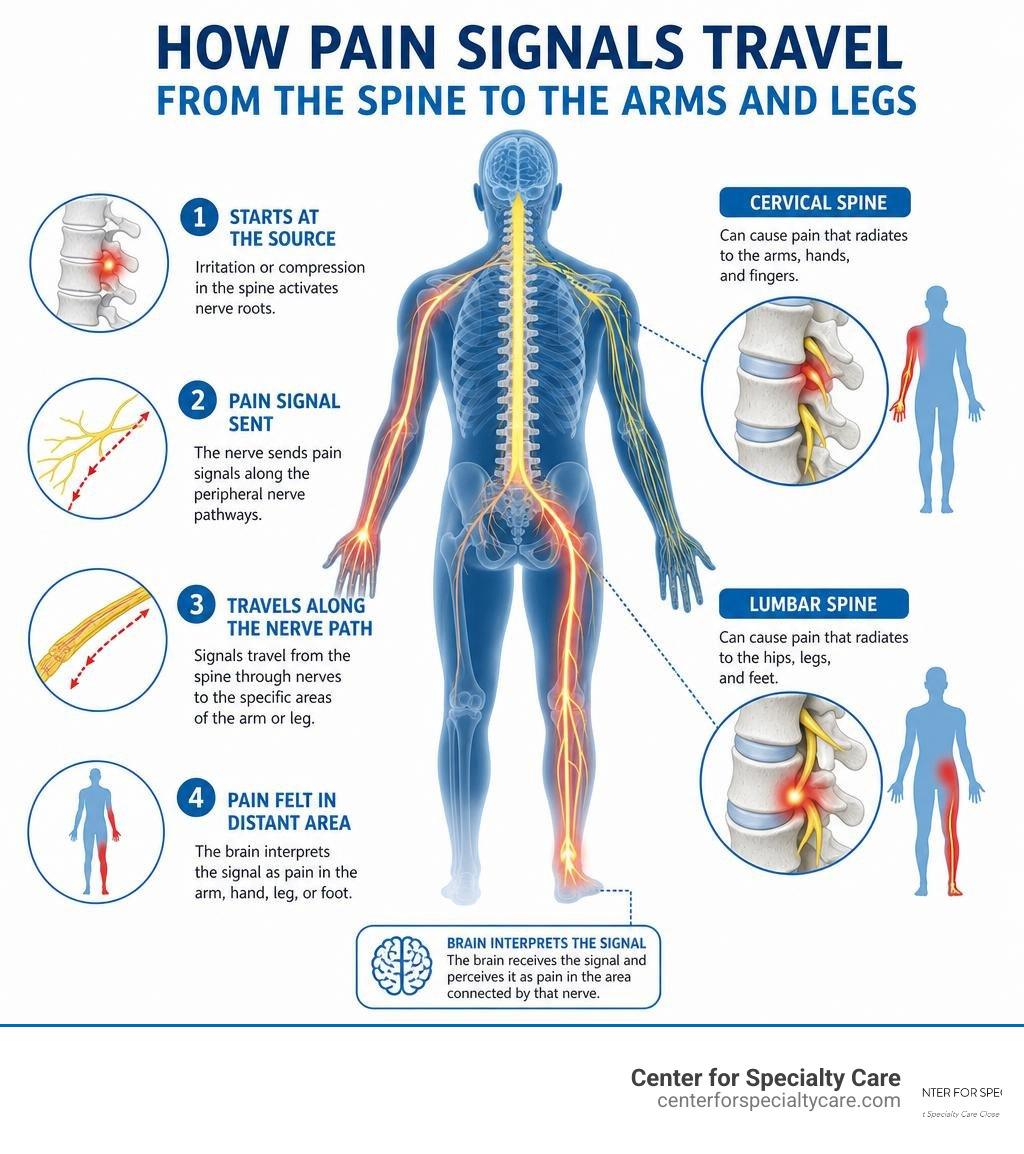
Radiating pain is pain that starts in one part of your body and travels to another — often following the path of a nerve. It can feel sharp, burning, electric, or tingly. And the place where you feel it is often not where the problem actually is.
Here’s a quick overview:
| What You Feel | What It Usually Means |
|---|---|
| Sharp pain shooting down your leg | Possible nerve compression in the lower back (sciatica) |
| Tingling from neck into fingers | Possible cervical disc or pinched nerve |
| Pain radiating to jaw or left arm | Possible cardiac issue — seek emergency care |
| Burning down the back of the leg | Possible sciatic nerve irritation |
| Numbness or weakness in hand | Possible cervical spine or carpal tunnel issue |
This is not the same as a muscle ache that stays put. Radiating pain travels — and that traveling pattern is often the most important clue your body gives you about what’s wrong.
The scale of the problem is significant. Low back pain alone — one of the most common sources of radiating pain — affected 619 million people globally in 2020, making it the leading cause of disability worldwide. Cases among working adults jumped by more than 52% between 1990 and 2021.
I’m Dr. Corey Welchlin, a board-certified orthopedic surgeon with over 30 years of experience diagnosing and treating radiating pain caused by spinal, nerve, and joint conditions at the Center for Specialty Care in Fairmont, Minnesota. Whether your pain is pointing to a herniated disc, a pinched nerve, or something that needs urgent attention, this guide will walk you through everything you need to know.
What Radiating Pain Means and How It Differs From Referred Pain
Radiating pain means pain spreads from one area of the body to another. The medical definition, according to the National Center for Biotechnology Information’s MedGen entry on radiating pain, describes it as pain perceived to extend or spread from one body area to another.
In everyday terms: your nervous system is sending a message along a route.
That route may involve:
- A spinal nerve root
- A peripheral nerve in the arm or leg
- An irritated or compressed nerve
- Inflammation near a nerve
- A narrowed space where a nerve exits the spine
Radiating pain is often described as:
- Shooting
- Burning
- Electric
- Zinging
- Tingling
- Numb
- Pins-and-needles
- Traveling in a line or stripe
A common example is sciatica. The problem may begin in the lower back, but the pain can travel through the buttock, down the thigh, into the calf, and sometimes into the foot.
Radiating Pain vs Referred Pain
Radiating pain and referred pain can both be confusing because the painful area may not be the true source. The difference is how the pain pattern behaves.
| Feature | Radiating Pain | Referred Pain |
|---|---|---|
| Main pattern | Travels along a nerve pathway | Felt in a different area from the source |
| Common cause | Nerve irritation, compression, or inflammation | Shared nerve signaling from organs, joints, or tissues |
| Sensation | Sharp, electric, burning, tingling, numb | Dull, aching, pressure-like, or sometimes sharp |
| Example | Low back pain shooting down the leg | Heart-related pain felt in the jaw or left arm |
| Clue | Often follows a predictable nerve route | May not follow a clear nerve line |
| Treatment focus | Relieve nerve pressure or irritation | Treat the true underlying source |
The Cleveland Clinic overview of referred pain explains that referred pain happens when the body feels pain in one place even though the actual issue is somewhere else. For example, shoulder pain can sometimes come from an abdominal or heart-related issue rather than the shoulder joint itself.
A quick way to remember it:
- Radiating pain travels.
- Referred pain is relocated.
And yes, the nervous system is brilliant, but sometimes it has the GPS accuracy of someone giving directions by saying, “Turn where the old gas station used to be.”
Why Pain Can Feel Like It Travels
Pain does not literally roll through the body like a marble. Instead, nerves transmit signals to the spinal cord and brain. The brain then interprets where the pain is coming from.
Research into “shooting pain” has shown that people describe pain movement in different ways, including downward movement, spreading expansion, upward movement, or no movement at all. A PubMed-indexed study on shooting pain mechanisms in lumbar radiculopathy and trigeminal neuralgia found that the experience of traveling pain may reflect complex nervous system processing rather than a simple one-way pain signal.
Other research on pain radiation suggests that the nervous system may map pain across a wider area than the original irritated tissue. That is one reason a small irritated nerve root in the spine can feel like a big, dramatic problem in the leg or arm.
Common Causes and Symptoms of Radiating Pain by Body Region
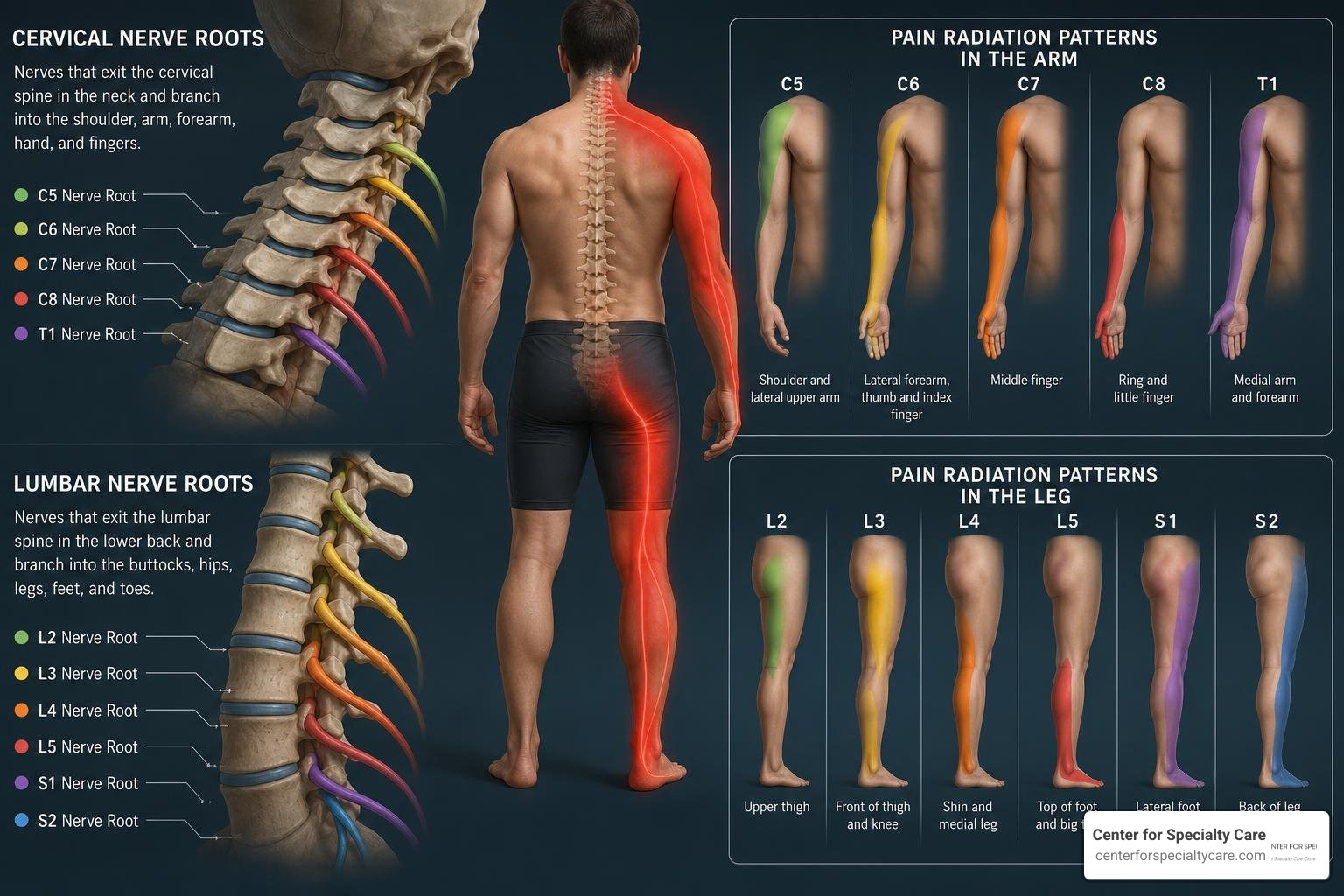
Radiating pain can affect many areas, but the most common patterns involve:
- Legs
- Arms
- Shoulders
- Neck
- Low back
- Buttocks
- Chest
- Ribs
- Jaw
- Hands or feet
The cause depends heavily on the path of the pain, the symptoms that come with it, and whether the issue is nerve-related, joint-related, muscular, or coming from an internal organ.
Radiating Pain in the Legs
Pain that travels down the leg is one of the most common forms of radiating pain we evaluate. It often starts in the lower back or buttock and moves into the thigh, calf, ankle, or foot.
Common causes include:
- Sciatica
- Lumbar herniated disc
- Lumbar spinal stenosis
- Bone spurs
- Piriformis syndrome
- Spondylolisthesis
- Sacroiliac joint irritation
- Peripheral nerve compression
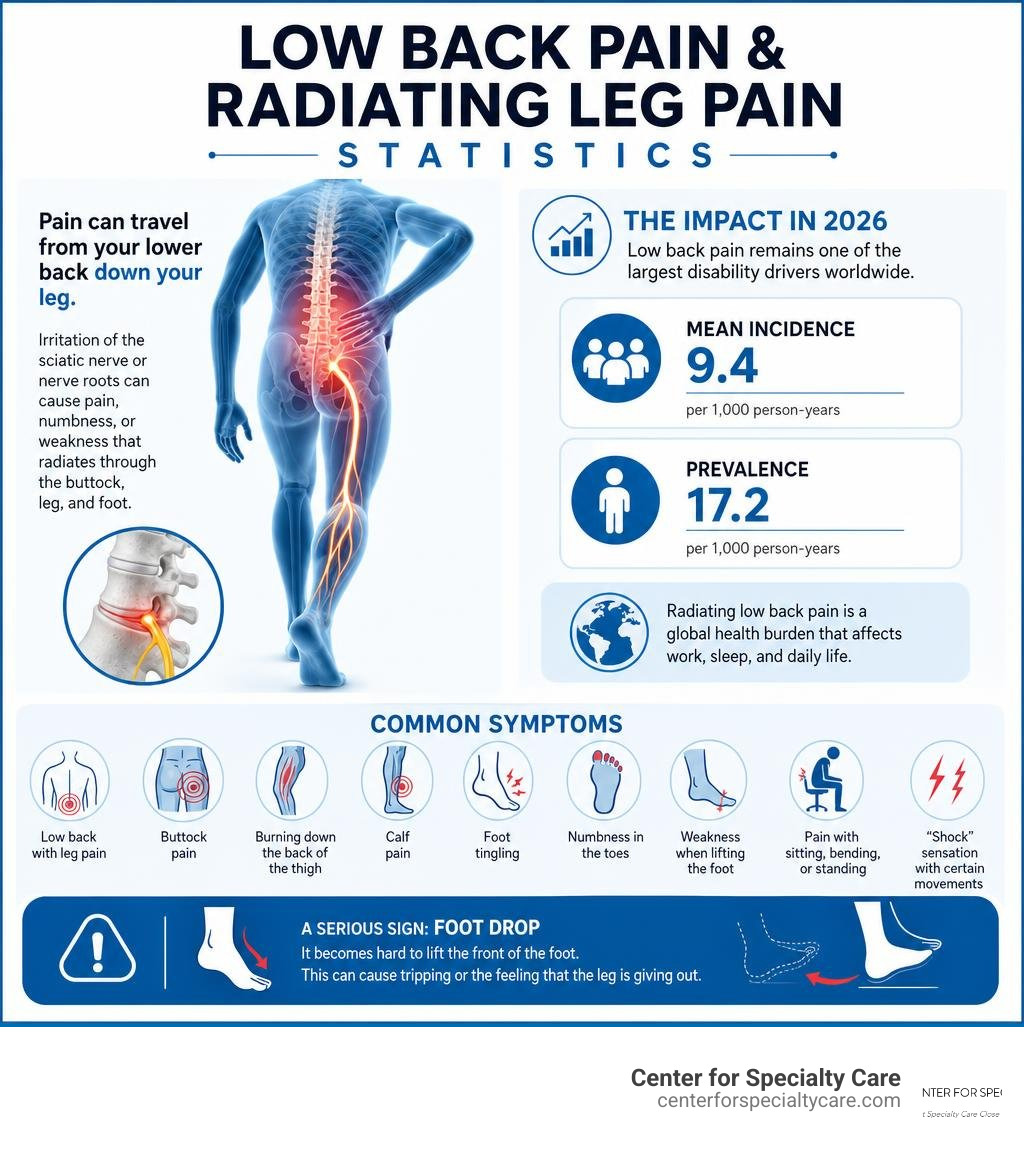
Sciatica is not technically a diagnosis by itself. It describes irritation of the sciatic nerve or the nerve roots that contribute to it. The sciatic nerve runs from the lower spine through the buttock and down the leg, which is why symptoms can travel so far.
Symptoms may include:
- Low back pain with leg pain
- Buttock pain
- Burning down the back of the thigh
- Calf pain
- Foot tingling
- Numbness in the toes
- Weakness when lifting the foot
- Pain with sitting, bending, or standing
- A “shock” sensation with certain movements
A serious sign is foot drop, where it becomes hard to lift the front of the foot. This can cause tripping or the feeling that the leg is giving out.
Low back pain is especially important in 2026 because it remains one of the largest disability drivers worldwide. Radiating low back pain has a reported mean incidence of 9.4 per 1,000 person-years and prevalence of 17.2 per 1,000 person-years. If back or leg pain is limiting your work, sleep, or daily movement, our team can help evaluate the source through doctor for back pain care.
Radiating Pain in the Arms and Shoulders
Pain that travels into the shoulder, arm, hand, or fingers often begins in the neck or upper spine. This is commonly related to cervical radiculopathy, which means a nerve root in the neck is irritated or compressed.
Common causes include:
- Cervical herniated disc
- Cervical spinal stenosis
- Bone spurs
- Pinched nerve in the neck or shoulder region
- Carpal tunnel syndrome
- Cubital tunnel syndrome
- Rotator cuff-related irritation
- Tennis elbow or golfer’s elbow
- Shoulder blade muscle dysfunction
Symptoms may include:
- Neck pain traveling into the shoulder
- Pain between the shoulder blades
- Tingling into the fingers
- Numbness in the hand
- Grip weakness
- Arm heaviness
- Burning pain down the arm
- Pain that worsens with neck movement
- Trouble with buttons, writing, or holding objects
Cervical nerve irritation can sometimes feel like the problem is in the shoulder or hand, even when the source is in the neck. That is why a careful exam matters.
For more detail, read our related guides on a pinched nerve in the shoulder blade and nerve pain in the shoulder.
Pain That Radiates to the Back, Chest, Ribs, or Jaw
Not all traveling pain comes from the spine. Pain that radiates into the chest, ribs, back, or jaw may involve the thoracic spine, ribs, digestive system, kidneys, gallbladder, pancreas, or heart.
Possible causes include:
- Thoracic herniated disc
- Rib joint irritation
- Intercostal nerve irritation
- Gallbladder disease
- Pancreatitis
- Peptic ulcer disease
- Kidney stones
- Angina
- Heart attack
- Shingles
- Lung-related conditions
Pain from the thoracic spine can wrap around the ribs in a band-like pattern. People may describe it as stabbing, burning, or tight.
However, chest, jaw, or left arm pain deserves special caution. Heart-related pain can feel like pressure, squeezing, heaviness, or discomfort that spreads to the left arm, jaw, neck, shoulder, or back. If those symptoms appear with shortness of breath, sweating, nausea, dizziness, or chest pressure, call emergency services immediately.
At Center for Specialty Care, we treat orthopedic and pain-related causes of radiating symptoms, but we also take possible medical emergencies seriously. Sometimes the best care is knowing when to refer quickly.
Symptoms That Often Accompany Radiating Pain
Radiating pain often comes with other symptoms that help identify the cause.
Common accompanying symptoms include:
- Sharp or shooting pain
- Burning
- Tingling
- Numbness
- Muscle weakness
- Muscle spasms
- Reduced reflexes
- Pain with coughing or sneezing
- Changes in walking pattern
- Loss of hand coordination
- Sleep disruption
- Difficulty sitting or standing
- Reduced range of motion
One helpful treatment clue is centralization. This means pain begins to move out of the arm or leg and back toward the spine during certain movements or treatment. While that may sound backward, it can be a positive sign that nerve irritation is improving.
When Radiating Pain Needs Medical Attention
Some radiating pain improves with time, movement changes, and conservative care. But some symptoms should not be watched casually from the couch while saying, “Maybe tomorrow.”
You should seek medical attention if radiating pain:
- Lasts more than a week
- Is getting worse
- Follows a fall, crash, or injury
- Causes numbness or weakness
- Keeps you from sleeping
- Limits walking, work, or daily tasks
- Keeps returning
- Does not improve with basic home care
- Is associated with fever or unexplained weight loss
- Occurs with a history of cancer or infection risk
When Radiating Pain Is an Emergency
Get emergency care right away if you have:
- Chest pressure or chest pain
- Pain spreading to the jaw, left arm, shoulder, or back
- Shortness of breath
- Sweating, dizziness, or nausea with chest symptoms
- Sudden severe weakness in an arm or leg
- Loss of bowel or bladder control
- Numbness in the saddle area, meaning the groin, inner thighs, or buttocks
- Severe pain after major trauma
- Stroke-like symptoms such as facial drooping, confusion, or trouble speaking
Loss of bowel or bladder control with saddle numbness may indicate cauda equina syndrome, a rare but serious spinal emergency. It needs immediate evaluation.
When to Schedule a Specialist Evaluation
A specialist evaluation is appropriate when symptoms are not an emergency but are interfering with life.
Schedule a visit if you have:
- Pain lasting more than one week
- Recurring flares
- Progressive numbness
- Persistent weakness
- Reduced mobility
- Trouble working
- Sleep loss
- Chronic pain
- Pain that has not responded to rest, ice, heat, or over-the-counter medication
Our orthopedic and pain management team offers both non-surgical and surgical care options, depending on the cause. You can learn more about our pain management options and chronic pain treatment.
How Healthcare Providers Diagnose the Cause
Diagnosis starts with listening. That may sound simple, but the story of the pain is often the roadmap.
We want to know:
- Where did the pain start?
- Where does it travel?
- What does it feel like?
- What makes it worse?
- What makes it better?
- Is there numbness, tingling, or weakness?
- Did it follow an injury?
- Are there medical red flags?
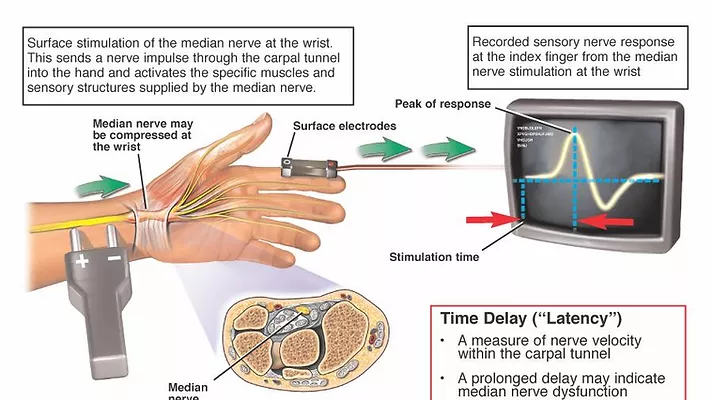
A good diagnosis combines history, physical exam, neurological testing, and sometimes imaging or lab work.
Clinical Exam and Movement Testing
A clinical exam may include:
- Posture assessment
- Gait evaluation
- Range of motion testing
- Reflex testing
- Sensation testing
- Manual muscle testing
- Grip strength testing
- Straight leg raise test
- Spurling test for cervical nerve irritation
- Nerve tension testing
- Functional movement screening
Movement testing helps determine whether certain positions reduce or worsen symptoms. For example, some lumbar disc-related symptoms improve with extension-based movements, while spinal stenosis symptoms may improve when leaning forward.
This is also where directional preference testing may help. If a repeated movement causes pain to move out of the leg and closer to the back, that can guide treatment.
Imaging, Lab Tests, and Nerve Studies
Depending on the symptoms, testing may include:
- X-rays to evaluate bones, alignment, arthritis, or bone spurs
- MRI to view discs, nerves, spinal canal narrowing, and soft tissue
- CT scan for detailed bone imaging
- Ultrasound for certain tendon, nerve, or soft tissue issues
- EMG and nerve conduction studies to assess nerve function
- Blood tests for inflammation, infection, or systemic disease
- Cardiac testing if symptoms suggest heart involvement
- Abdominal imaging if gallbladder, kidney, or digestive causes are suspected
Not everyone needs imaging right away. Many cases of radiating pain can begin with conservative care if there are no red flags. But imaging becomes more important when pain is severe, persistent, worsening, or associated with neurological changes.
Why the Pain Location Is Not Always the Problem Location
Pain location can be misleading.
Examples:
- Finger tingling may come from the neck.
- Leg pain may come from the lower back.
- Shoulder blade pain may come from a cervical nerve.
- Jaw pain may come from the heart.
- Rib pain may come from the thoracic spine or an organ.
This is why we avoid treating only the painful spot without asking why it hurts there. The goal is to identify the source, not just chase symptoms around the body like a very unpleasant scavenger hunt.
Treatment, Exercises, and Home Care for Radiating Pain
Treatment depends on the cause, severity, and whether nerves are being compressed or irritated. At Center for Specialty Care, we provide personalized care for patients in Fairmont, Minnesota, and surrounding communities in Minnesota and Iowa, including Estherville, Buffalo Center, and St. James.
Most treatment plans start conservatively unless there is an emergency or severe neurological deficit.
Helpful resources include our guide to managing radiating pain and our approach to comprehensive pain treatment.
Conservative Treatment Options
Conservative care may include:
- Relative rest
- Activity modification
- Ice for acute inflammation
- Heat for muscle tightness
- Nonsteroidal anti-inflammatory drugs, when medically appropriate
- Acetaminophen, when appropriate
- Muscle relaxants in select cases
- Physical therapy
- Manual therapy
- Massage
- Bracing or splinting
- Ergonomic changes
- Sleep positioning changes
- Gentle walking
- Gradual return to activity
Relative rest does not mean lying flat for a week and hoping the spine sends an apology letter. It means avoiding the specific activities that worsen symptoms while keeping safe movement in your day.
Physical Therapy and Exercises That May Help
Physical therapy can be very effective for many types of radiating pain, especially when symptoms are related to nerve irritation, mobility restrictions, weakness, or poor movement patterns.
Exercises may include:
- Sciatic nerve glides
- Cervical nerve glides
- Cervical retractions
- Lumbar extension exercises
- Core strengthening
- Hip mobility work
- Hamstring stretching
- Thoracic mobility drills
- Posture training
- Walking programs
- Gradual strengthening
- Shoulder blade stabilization
The right exercise depends on the diagnosis. For example, a person with disc-related sciatica may respond well to certain extension movements, while someone with spinal stenosis may need a different plan.
A key sign of progress is centralization: pain moves out of the arm or leg and closer to the spine. A concerning sign is peripheralization: pain travels farther down the limb or becomes more intense.
For upper body symptoms, our team can also help with pain relief for shoulder symptoms.
Injections and Interventional Pain Management
When pain limits function or does not improve with basic care, interventional pain management may help reduce inflammation and improve mobility.
Options may include:
- Epidural steroid injections
- Selective nerve root blocks
- Facet joint injections
- Trigger point injections
- Peripheral nerve blocks
- Radiofrequency ablation for certain chronic spine pain patterns
- Diagnostic injections to confirm a pain source
The goal is not just temporary relief. The goal is to reduce pain enough so you can move better, sleep better, participate in therapy, and return to daily activities.
Learn more about our pain management clinic information.
When Surgery May Be Considered
Surgery is not the first step for most radiating pain. But it may be necessary when there is severe compression, progressive weakness, or symptoms that do not improve with appropriate conservative treatment.
Surgical options may include:
- Discectomy for certain herniated discs
- Decompression for spinal stenosis
- Removal of bone spurs
- Cervical or lumbar fusion in selected cases
- Carpal tunnel release
- Emergency spinal surgery for cauda equina syndrome or severe neurological compromise
At our clinic, we offer both surgical and non-surgical options, so recommendations are based on what fits the patient, not a one-size-fits-all approach.
Lifestyle Changes and Home Remedies That Support Recovery
Healthy habits can reduce nerve irritation, improve healing, and lower the chance of recurrence.
Helpful recovery habits include:
- Stay gently active.
- Avoid prolonged bed rest.
- Walk regularly if it does not worsen symptoms.
- Use ice for new or inflamed pain.
- Use heat for muscle tightness.
- Maintain a healthy weight.
- Eat balanced, anti-inflammatory meals.
- Stay hydrated.
- Stop smoking or reduce tobacco use.
- Practice stress reduction.
- Improve workstation ergonomics.
- Lift with your legs, not your back.
- Warm up before exercise.
- Stretch consistently.
- Increase activity gradually.
- Prioritize sleep quality.
The nervous system likes movement, blood flow, and consistency. It does not like panic, poor sleep, and sudden weekend-warrior heroics after six months of chair-based training.
Long-Term Effects of Untreated Radiating Pain
Untreated radiating pain can sometimes lead to lasting problems, especially if the underlying cause involves nerve compression.
Possible long-term effects include:
- Chronic nerve pain
- Persistent numbness
- Muscle weakness
- Permanent nerve damage
- Reduced mobility
- Balance problems
- Falls
- Sleep disruption
- Work limitations
- Depression or anxiety related to chronic pain
- Loss of hand dexterity
- Worsening disability
- Delayed diagnosis of serious disease
Not every case becomes serious, but persistent or progressive symptoms should be evaluated. Early diagnosis often means more treatment choices and a better chance of avoiding long-term limitations.
Frequently Asked Questions About Radiating Pain
How long does radiating pain usually last?
It depends on the cause. Mild nerve irritation may improve in a few days to a few weeks. Disc-related sciatica or cervical radiculopathy may take several weeks or longer. Chronic cases can last months if the underlying problem is not addressed.
Many people begin to feel improvement within a few weeks of consistent conservative care, including physical therapy, activity modification, and inflammation control. However, nerve healing can be slow. If symptoms are worsening, causing weakness, or not improving, it is time for an evaluation.
Is it better to rest or stay active with radiating pain?
In most cases, gentle activity is better than complete bed rest. The best approach is relative rest:
- Avoid movements that sharply worsen pain.
- Keep walking if tolerated.
- Change positions often.
- Use gentle stretching or nerve glides if recommended.
- Avoid heavy lifting until symptoms improve.
- Return to activity gradually.
Too much rest can increase stiffness, reduce circulation, and slow recovery. That said, pushing through severe radiating pain is not the answer either. The sweet spot is safe movement guided by the diagnosis.
Do I need an MRI before starting treatment?
Not always. Many patients can begin conservative care after a thorough clinical evaluation, especially if there are no red flags.
An MRI may be recommended if:
- Pain is severe or persistent
- Symptoms are worsening
- There is progressive numbness or weakness
- Surgery or injections are being considered
- There are signs of infection, cancer, trauma, or serious neurological compression
- Conservative treatment has not helped
Imaging is useful, but it is only one piece of the puzzle. We match imaging findings with symptoms and exam results because many people have disc changes on MRI that are not actually causing their pain.
Conclusion
Radiating pain is a clue, not just a complaint. Whether it travels down the leg, into the arm, around the ribs, or toward the jaw, the pattern can help reveal the true source.
At Center for Specialty Care, we focus on finding that source and building a personalized treatment plan around you. We offer comprehensive orthopedic and pain management care, including conservative treatment, physical therapy guidance, injections, and surgical options when needed.
Our goal is simple: help you understand what is happening, relieve pain, restore function, and get you back to life with confidence. We are proud to offer quick appointment availability and a commitment to 100% patient satisfaction.
If radiating pain is limiting your sleep, work, walking, or daily comfort, schedule care with our team through our pain management services.