
Say Goodbye to Nighttime Shoulder Pain: Your Guide to Restful Sleep
October 3, 2025
Say Goodbye to That Knot in Your Rhomboid: A Step-by-Step Guide
October 7, 2025
Pain Relief Shoulder: Ultimate Guide 2025
Why Shoulder Pain Demands Immediate Attention
Pain relief shoulder solutions are essential for the roughly 18% of people worldwide who experience shoulder discomfort at some point in their lives. Whether you’re struggling to brush your hair, reach for items overhead, or simply get comfortable at night, shoulder pain can transform simple daily tasks into overwhelming challenges.
Quick Pain Relief Options:
- Immediate relief: Ice packs for 15-20 minutes, over-the-counter NSAIDs like ibuprofen
- Home remedies: Rest, gentle stretching, heat therapy for chronic stiffness
- Professional care: Physical therapy, corticosteroid injections, minimally invasive procedures
- Emergency signs: Seek immediate help for chest pain, breathing difficulty, or sudden severe pain
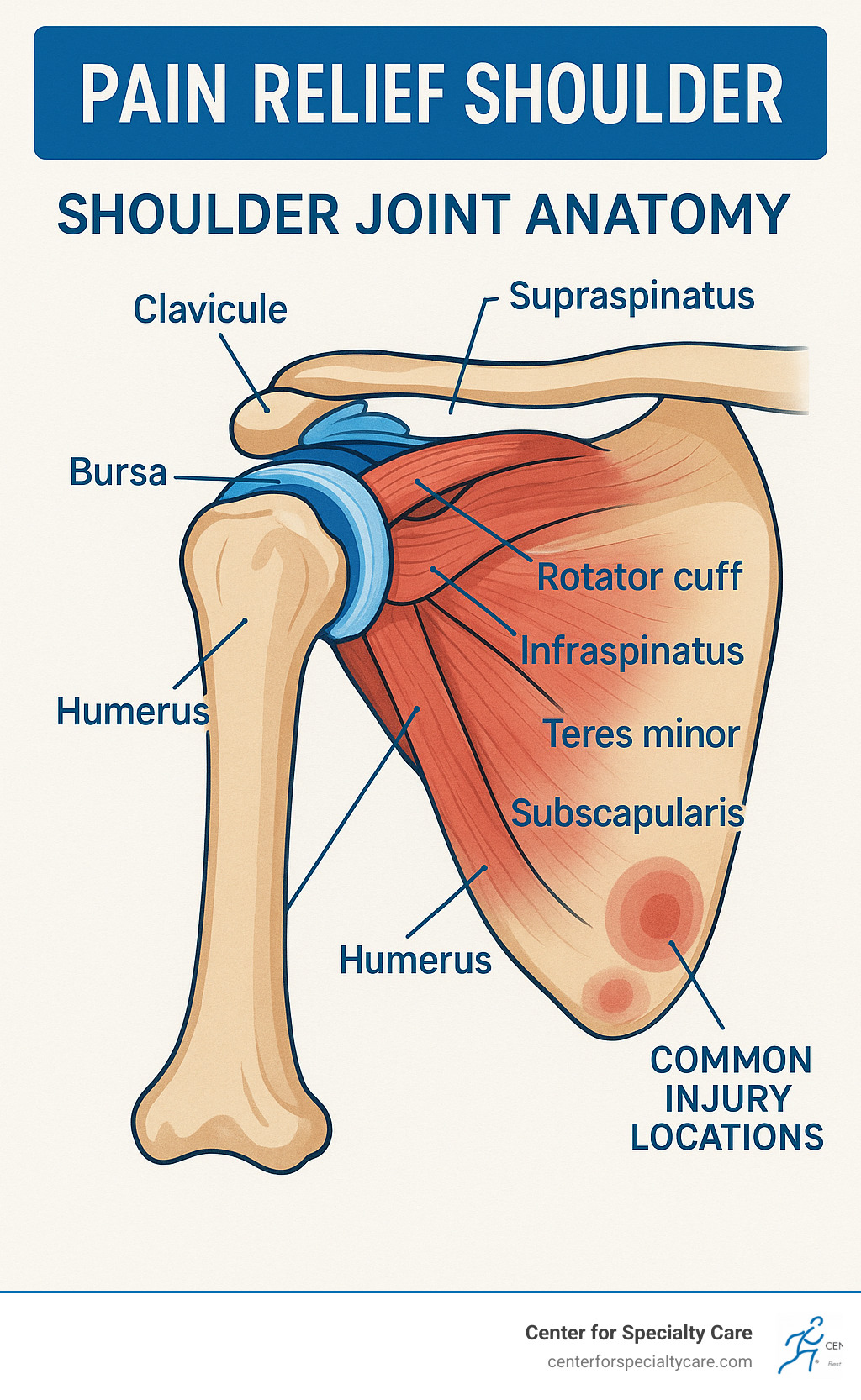
The shoulder stands as the most movable joint in your entire body, which explains why shoulder injuries are so common. This incredible range of motion comes at a cost – the complex structure of bones, muscles, tendons, and ligaments that enable movement also makes your shoulder vulnerable to various types of damage.
From minor muscle strains that resolve with simple home care to serious rotator cuff tears requiring surgical intervention, shoulder problems span a wide spectrum. The good news? Most shoulder pain responds well to treatment when addressed promptly and appropriately.
I’m Dr. Corey Welchlin, a board-certified orthopedic surgeon with over three decades of experience specializing in pain relief shoulder treatments, including arthroscopic surgery and rotator cuff repair. At the Center for Specialty Care in Fairmont, Minnesota, I’ve helped thousands of patients regain pain-free shoulder function through both conservative and surgical approaches.
Pain relief shoulder further reading:
- partially dislocated shoulder symptoms
- shoulder feels out of place but not dislocated
- shoulder popping
Understanding Your Shoulder Pain: Causes and When to Seek Help
Your shoulder is truly remarkable – it’s the most movable joint in your entire body, allowing you to throw a baseball, give hugs, and reach that top shelf. But this incredible flexibility comes with a catch: all that movement makes your shoulder particularly vulnerable to injury.
Think of your shoulder like a golf ball sitting on a tee. It’s designed for maximum mobility, but that same design makes it less stable than other joints. This complexity means that effective pain relief shoulder treatment starts with understanding what’s actually causing your discomfort.
The tricky part? Not all shoulder pain is created equal. What feels like a simple ache could be anything from a minor muscle strain to something requiring professional attention. Learning to recognize the difference can save you weeks of unnecessary discomfort and guide you toward the right solution.
Understanding common shoulder problems helps you make informed decisions about your care and know when it’s time to seek professional help.
Common Causes of Shoulder Discomfort
When your shoulder hurts, the culprit is usually one of the muscles, tendons, ligaments, bones, or cartilage that make up this complex joint. Let me walk you through the most common troublemakers we see at our clinic.
Rotator cuff injuries top the list – and for good reason. These four small but mighty muscles and their tendons wrap around your shoulder like a cuff, keeping everything stable while you move. When they’re damaged through overuse, aging, or injury, you’ll definitely feel it. About two million people visit doctors each year for rotator cuff problems, and the risk increases with each decade of life.
Tendinitis is simply inflammation of a tendon, often from repetitive motions or overuse. If you’ve been painting the house, playing tennis, or doing any activity that involves repetitive arm movements, this might be your issue. The good news? It usually responds well to rest and proper treatment.
Bursitis involves those small, fluid-filled cushions called bursae that protect your bones, tendons, and muscles. When these get inflamed – usually from repetitive motion or a direct injury – they cause pain and tenderness that can make even simple movements uncomfortable.
Impingement syndrome happens when your rotator cuff tendons get pinched between the bones of your shoulder, especially when you lift your arm. It’s like trying to thread a needle while someone’s squeezing the thread – everything gets compressed and painful.
Frozen shoulder, medically known as adhesive capsulitis, is one of the more mysterious conditions we encounter. The shoulder joint capsule literally thickens and stiffens, severely limiting your range of motion. It typically affects people between 40 and 60 years old and can take up to three years to fully resolve. The name says it all – your shoulder feels truly “frozen.”
Osteoarthritis in the shoulder is less common than in knees or hips, but it still affects many people. The cartilage that cushions your bones gradually wears away, leading to that bone-on-bone friction that causes pain and stiffness. Here’s an important tip: if you have arthritis, avoiding movement because of pain actually makes things worse by allowing muscles to stiffen and shorten.
Fractures and dislocations usually result from falls, sports injuries, or direct trauma. A fracture means you’ve broken one of the shoulder bones – the upper arm bone, collarbone, or shoulder blade. A dislocation occurs when the upper arm bone pops out of the shoulder socket, and trust me, you’ll know immediately if this happens.
Sometimes shoulder pain comes with unusual sounds – clicking, grinding, or popping. If you’re experiencing these symptoms along with pain, you might find our guide on shoulder clicking and pain causes effective relief particularly helpful.
When to See a Doctor
While many minor shoulder aches respond well to home care, certain signs clearly indicate it’s time for professional evaluation. Ignoring persistent pain can lead to complications that are much harder to treat later.
Pain that persists for more than a few days deserves attention, especially if it’s not improving with rest and basic self-care measures. If your pain is actually getting worse after a couple of weeks, that’s definitely your cue to seek help.
Inability to carry objects or raise your arm signals something more serious than a simple strain. Your shoulder should allow you to perform basic daily activities without significant difficulty or weakness.
Limited range of motion is another red flag. If you find it increasingly difficult to move your shoulder in certain directions, or if it feels like it’s “freezing up,” early intervention can prevent long-term stiffness.
Joint deformity after a fall or injury, where your shoulder looks “out of place” or visibly different, requires immediate medical attention. This could indicate a fracture or dislocation that needs prompt treatment.
Sudden swelling or bruising often points to an acute injury like a severe sprain or fracture. Don’t wait to see if this improves on its own.
Numbness or weakness in your arm or hand suggests possible nerve involvement, which needs prompt evaluation to prevent permanent damage.
Pain that prevents sleep or wakes you at night typically indicates a more significant inflammatory process or injury that won’t resolve with simple rest.
At Center for Specialty Care, we understand that waiting weeks for an appointment when you’re in pain is unacceptable. That’s why we pride ourselves on quick appointment availability – because your comfort and peace of mind matter. If you’re looking for expert care, our guide on finding the best orthopedic shoulder specialist near me can help you understand what to look for.
Red Flag Symptoms: Is It More Than Just the Joint?
Here’s something that surprises many people: sometimes shoulder pain isn’t actually about your shoulder at all. It can be “referred pain” from another part of your body, and some of these situations require immediate emergency attention.
Seek emergency medical help immediately if your shoulder pain comes with chest tightness or pressure, difficulty breathing, sweating, dizziness or lightheadedness, nausea, or pain radiating down your left arm or into your jaw or neck. These symptoms, especially when sudden and intense, can indicate a heart attack. Don’t hesitate – call 911 right away.
Less commonly, shoulder pain can signal other serious conditions. Pancoast tumors, a type of lung cancer located in the upper part of the lung, can cause persistent shoulder blade pain along with upper back discomfort. If you have ongoing shoulder blade pain, especially with a history of smoking, discuss this with your doctor.
Even conditions like carpal tunnel syndrome, while primarily affecting the hand and wrist, can indirectly lead to shoulder pain. Changes in how you move or hold your hand and wrist can strain your shoulder over time, creating a chain reaction of discomfort.
Your health and safety are our absolute top priority. When in doubt, it’s always better to err on the side of caution and seek professional evaluation. These warning signs exist for a reason – they help us catch serious conditions early when treatment is most effective.
Effective Strategies for Pain Relief Shoulder Care at Home
When shoulder pain strikes, your medicine cabinet and a few simple techniques can often provide surprising relief. I love empowering my patients with effective self-care strategies because, honestly, you shouldn’t have to rush to the doctor for every minor ache. These home remedies serve as your pain relief shoulder first line of defense, helping reduce inflammation and get you back to feeling like yourself again.
The beauty of home care lies in its accessibility. Most of what you need is probably already in your house, and these methods work particularly well for those nagging minor issues that seem to pop up after a long day of yard work or sleeping in an awkward position.
Immediate At-Home Methods for Minor Shoulder Pain Relief
Picture this: you wake up with a stiff, achy shoulder, and you’ve got a full day ahead. Before you panic, try these proven approaches that have helped countless patients find relief right from their own homes.
Rest and activity modification might sound obvious, but you’d be amazed how many people try to “push through” shoulder pain. Your body is telling you something important, so listen to it! This doesn’t mean becoming a couch potato – gentle movement can actually help – but definitely avoid heavy lifting or those repetitive overhead motions that make you wince.
The R.I.C.E. method remains a gold standard for acute injuries, and for good reason. Rest gives your tissues time to heal, while ice applied for 15-20 minutes several times a day works like nature’s own anti-inflammatory. Always use a towel between the ice and your skin – nobody wants frostbite on top of shoulder pain! Compression with a gentle elastic wrap provides support without cutting off circulation, and elevation can help reduce swelling, though this can be tricky with shoulder injuries.
Over-the-counter medications can be real game-changers. NSAIDs like ibuprofen (brands like Advil or Motrin) tackle both pain and inflammation – it’s like getting two benefits in one pill. Acetaminophen focuses purely on pain relief without the anti-inflammatory effects. Both have their place in your pain relief shoulder toolkit.
Don’t overlook topical pain relief gels either. These creams and gels with ingredients like menthol or diclofenac deliver relief right where you need it, often with fewer side effects than oral medications. Simply rub them into the affected area and let them work their magic.
The Role of Heat and Ice Therapy
The eternal question: should you reach for the ice pack or the heating pad? I get asked this constantly, and the answer isn’t as complicated as you might think. The key lies in understanding what’s happening with your shoulder pain.
For acute injuries – think sudden pain from lifting something heavy or sleeping wrong – ice is your friend for the first 48-72 hours. It reduces inflammation and numbs that sharp, angry pain that makes you want to hold your breath. Apply ice for 15-20 minute intervals, giving your skin time to warm up between applications.
Heat therapy shines with chronic stiffness and muscle soreness – those deep, achy feelings that seem to settle into your shoulder like an unwelcome houseguest. Heat increases blood flow, relaxes tight muscles, and can make that stiffness melt away. A warm shower, heating pad, or even a rice sock heated in the microwave can provide wonderful relief.
Application guidelines are crucial for both methods. Never apply ice or heat directly to your skin – always use a barrier like a towel. Stick to 15-20 minute sessions to avoid tissue damage, and pay attention to how your body responds. If something makes your pain worse, stop immediately.
The timing matters too. Some patients find that alternating between ice and heat works wonders, especially for injuries that are a few days old. Start with ice to control any lingering inflammation, then switch to heat to relax those tight, guarding muscles.