The Ultimate Guide to Relieving Rhomboid Trigger Points
July 4, 2026
The Ultimate Guide to Tendonitis Relief
July 8, 2026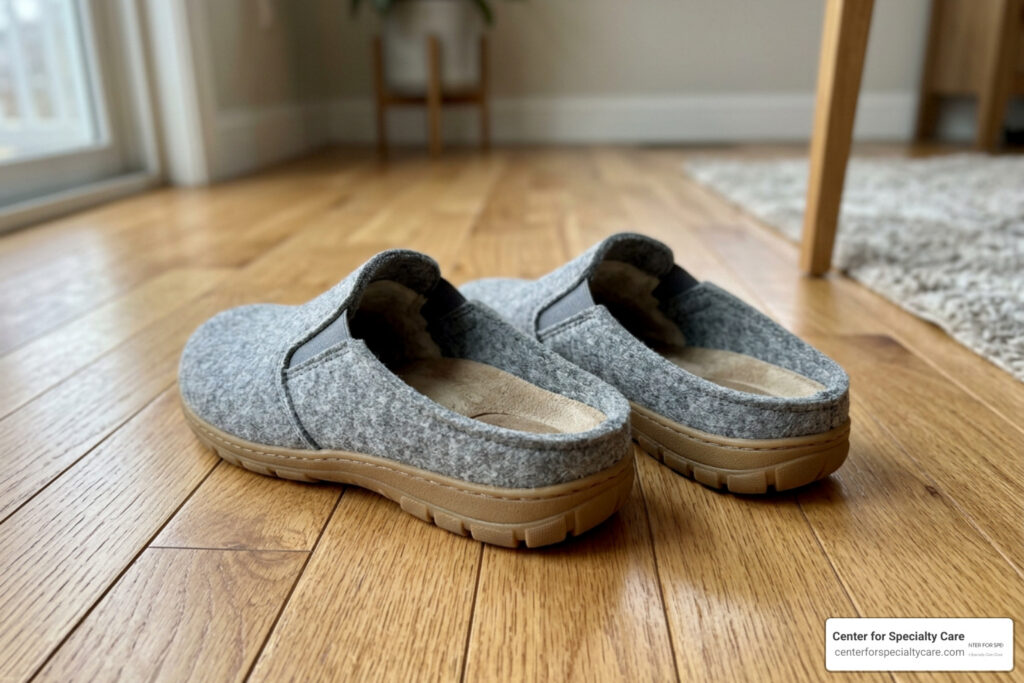
No Arch, No Problem: Top Orthopedic Slippers for Flat Feet
Why Flat Feet Make Your Choice of Slipper Matter More Than You Think
If you have flat feet, choosing the right orthopedic slippers for flat feet isn’t just about comfort — it’s about protecting your joints from the ground up, every single day.
Here are the top orthopedic slipper types recommended for flat feet:
- Adjustable mesh slip-on slippers — breathable, wide-fit design with Velcro closure for swelling
- Thick-sole arch support house slippers — extra cushioning and shock absorption for plantar fasciitis relief
- Cozy shearling slippers with built-in orthotics — metatarsal support with premium materials for all-day wear
- Cork-blend wedge slippers — anatomical arch support with a customizable arch booster for flat feet and overpronation
Most people don’t think twice about what they put on their feet at home. But if you have flat feet, those hours spent padding across tile, hardwood, or concrete in unsupportive slippers — or worse, barefoot — can quietly undo a lot of good.
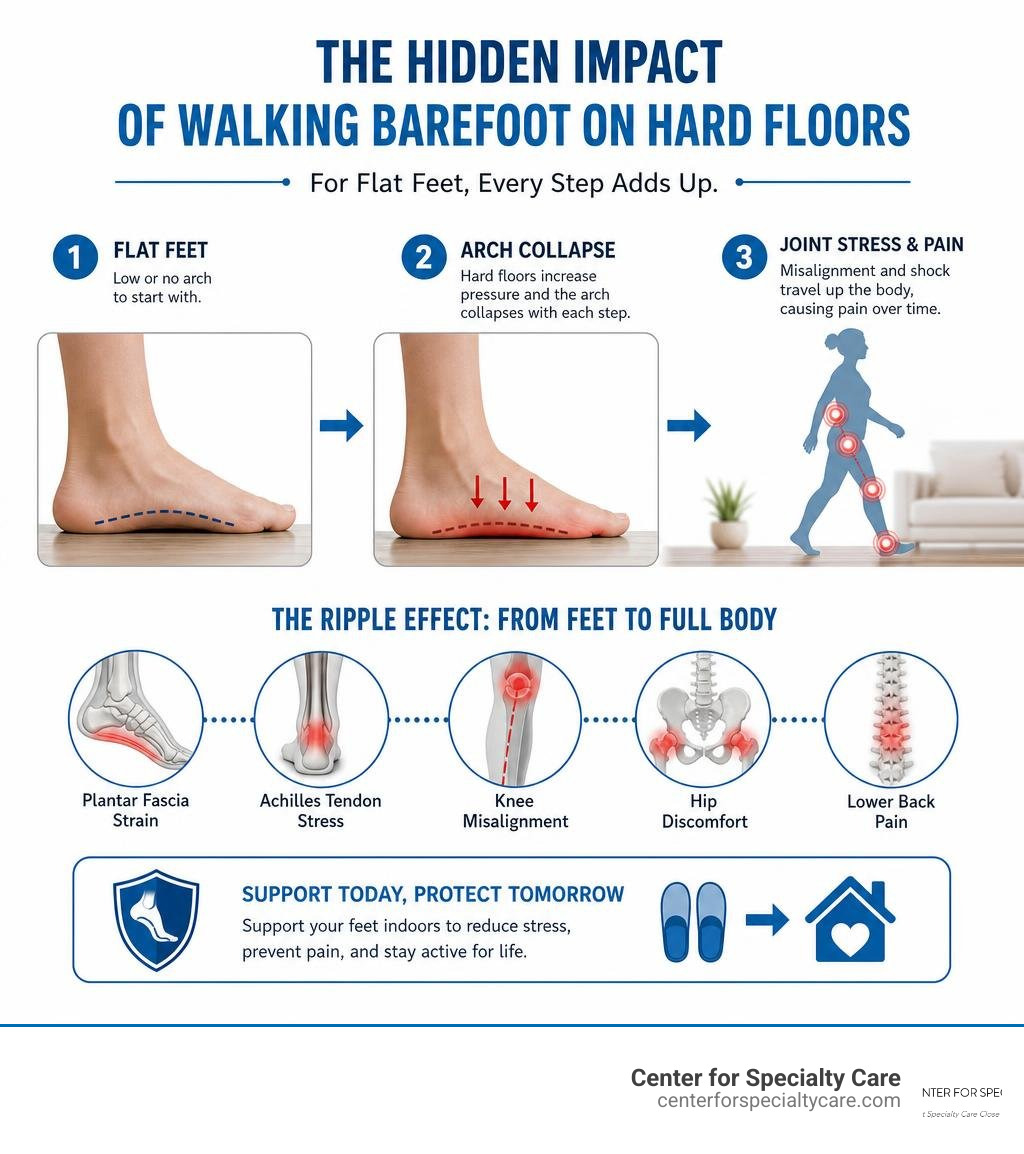
Adults average 3,000 to 5,000 indoor steps every day. On hard floors, each of those steps generates ground reaction forces up to 1.5 to 2 times your body weight. Without proper arch support, flat feet allow the arch to collapse further with every step, which stresses the plantar fascia, strains the Achilles tendon, and sends misalignment rippling up through your knees, hips, and lower back.
Research shows that consistent arch support can reduce plantar fascia tension by 15 to 25% compared to going barefoot. And studies link unsupported evening activity — like walking around the house in flat slippers — to morning heel pain in 62% of plantar fasciitis sufferers.
The good news: the right pair of slippers can make a real difference.
I’m Dr. Corey Welchlin, a board-certified orthopedic surgeon with over 30 years of clinical experience treating musculoskeletal conditions — including the kind of foot, knee, and hip pain that often traces back to flat feet and poor indoor footwear support. In this guide, I’ll walk you through the best orthopedic slippers for flat feet so you can make a confident, informed choice.
Orthopedic slippers for flat feet terms explained:
Why You Need Orthopedic Slippers for Flat Feet
To understand why supportive footwear is so critical at home, we have to look at the biomechanics of a flat foot. When you have a normal, functioning arch, your foot acts as a natural shock absorber. It flexes to absorb the impact of your step and then tenses to provide a rigid lever for pushing off.
When you have flat feet, that shock absorption mechanism is compromised. Instead of dispersing the impact, your foot collapses inward. This is known as overpronation.
When you walk barefoot on modern residential flooring—which is typically composed of 70% to 80% hard surfaces like tile, hardwood, or laminate—there is zero “give” in the ground. Your feet absorb 100% of the shock. Over time, this constant, unmitigated pressure can actually cause the protective fat pads on the soles of your feet to shrink, leading to increased sensitivity and localized pain.
By wearing orthopedic slippers for flat feet, you introduce a structured barrier between your soles and the floor. This structural support:
- Prevents Arch Collapse: A contoured footbed stops the medial arch from dropping, reducing the strain on your plantar fascia ligament by 15% to 25%.
- Deflects Ground Reaction Forces: High-quality midsoles absorb the micro-shocks of daily steps, shielding your ankles and knees from repetitive strain.
- Restores Body Alignment: Controlling overpronation keeps your ankles, knees, and hips in their neutral tracking positions, preventing secondary joint pain.
If you are already wearing custom orthotics in your outdoor shoes during the day, kicking them off the second you walk through the door is like taking off your glasses to read a book with tiny print. Continuous support is essential to prevent daytime therapeutic progress from being undone during your evening hours at home. For a deeper look at managing this condition, check out The Complete Guide to Flat Foot Arch Support.
Key Features of Supportive House Shoes
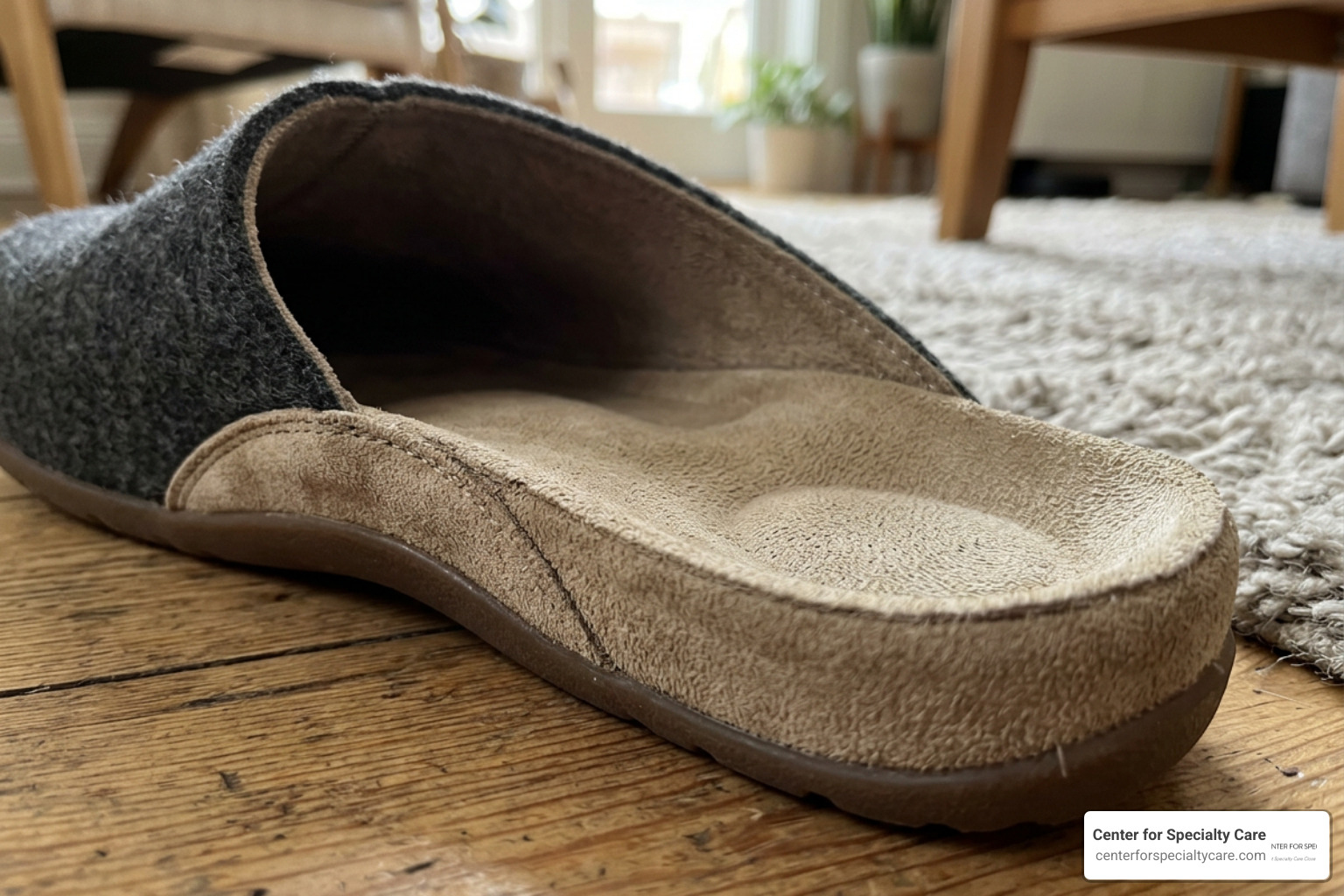
Not all house shoes are created equal. Slippers that are merely “soft” or “plush” can actually make flat foot pain worse. When your foot sinks into a squishy memory foam slipper with no structural integrity, your arch still collapses, and the lack of lateral stability can cause your foot to wobble, straining your tendons further.
When shopping for orthopedic slippers for flat feet, look for these five non-negotiable structural features:
- Structured Biomechanical Support: Look for a built-in arch contour that mimics the natural shape of a healthy foot. It should feel firm, not squishy.
- Deep Heel Cup: A deep heel cup (ideally 18mm to 25mm in depth) cradles your heel, holding the fatty pad of your heel directly under the bone for natural shock absorption while preventing lateral rolling.
- Firm Midsole: Choose materials like high-density EVA (ethylene-vinyl acetate) or cork blends. A firm midsole distributes pressure evenly across your entire footbed.
- Roomy Toe Box: A wide toe box (80mm to 90mm) allows your toes to splay naturally when you step, which improves balance and reduces pressure on bunions or sensitive forefoot areas.
- Non-Slip Traction: Slippers need high-traction rubber outsoles with a strong coefficient of friction (0.6 to 0.8) to prevent slips on slick kitchen tiles or hardwood floors.
To help you visualize the difference, here is how structured biomechanical support stacks up against simple, plush cushioning:
| Feature | Structured Biomechanical Support | Simple Cushioning (Plush Slippers) |
|---|---|---|
| Arch Elevation | Firm, contoured support (10-15mm elevation) | Flat or collapses completely under body weight |
| Heel Stability | Deep cup to prevent overpronation and heel slip | Flat heel bed with no lateral guidance |
| Pressure Distribution | Evenly redistributes weight rearward and across the arch | Focuses weight heavily on the heel and metatarsals |
| Durability | Retains shape and support for 12 to 24 months | Flattens out within a few weeks of daily wear |
| Joint Impact | Aligns the ankle, knee, and hip joints | Offers temporary softness but zero alignment correction |
Choosing the right structure is the first step toward pain-free walking indoors. For more advice on matching your foot shape to the right sole, read our guide on Flat Feet Fixes: Choosing the Right Arch Sole for Pain-Free Walking.
Top Types of Orthopedic Slippers for Flat Feet
Finding the perfect pair of slippers depends on your daily routine, your climate, and whether your feet tend to swell. Below, we break down the four most effective types of orthopedic slippers for flat feet to help you narrow down your selection.
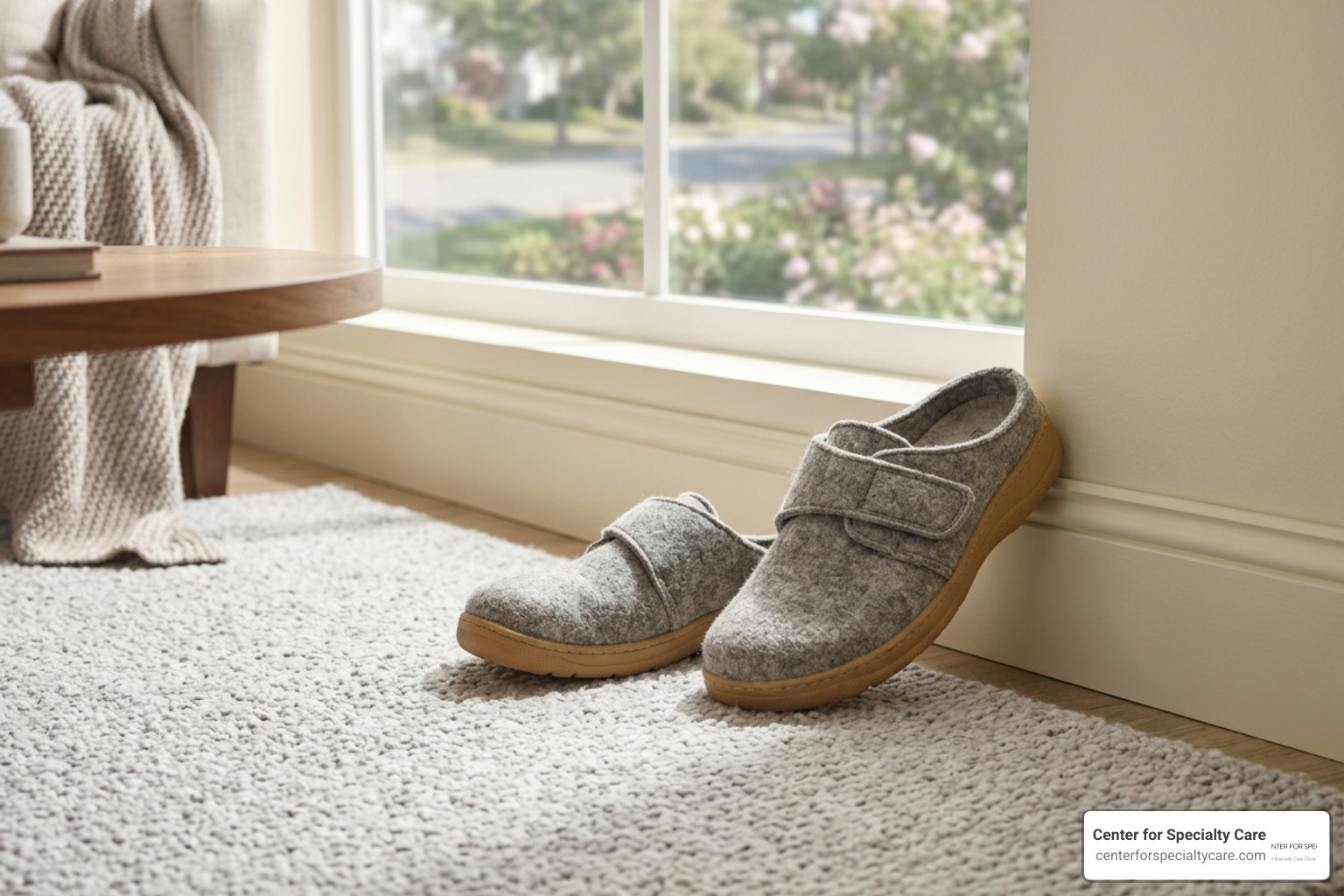
Adjustable Mesh Slip-On Orthopedic Slippers for Flat Feet
For individuals whose feet swell throughout the day—or those who struggle with bunions, hammertoes, or sensitive diabetic neuropathy—adjustable mesh slip-ons are an excellent choice.
These slippers feature a lightweight, breathable mesh upper that allows air to circulate, keeping your feet cool and dry. The standout feature is an adjustable Velcro closure that spans the instep. This allows you to customize the fit, loosening the slipper in the evening if your feet have swollen from a long day of standing. A wide, non-binding fit prevents friction against sensitive skin, making them a highly comfortable and practical choice for daily indoor wear.
If you are looking for a highly adjustable, breathable option, check out styles like the Orthopaedic Wide Fit Flats Mesh Slip-On Velcro Shoes to see how adjustable designs accommodate changing foot volumes.
Thick-Sole Arch Support House Slippers
If your home features hard concrete, cold tile, or laminate flooring, you need maximum shock absorption. Thick-sole arch support slippers are designed specifically to handle heavy-duty standing on unyielding surfaces.
These slippers typically utilize an extra-thick EVA midsole that dampens the micro-shocks of walking on hard floors. Often lined with warm fleece or shearling, they combine the cozy feel of a traditional slipper with the heavy-duty structural support of an athletic shoe. The robust rubber outsoles make them highly versatile, allowing you to transition seamlessly from standing at the kitchen counter to stepping outside to grab the mail.
For those dealing with severe morning heel pain, options like the Orthopedic Slippers for Plantar Fasciitis – Thick Sole Arch Support House Slippers offer the heavy-duty cushioning and rigid arch support required to calm inflamed tissues.
Cozy Shearling Orthopedic Slippers for Flat Feet
Who says orthopedic footwear can’t be luxurious? Cozy shearling slippers combine premium aesthetic appeal with medical-grade podiatric support.
These slippers feature a genuine shearling or wool lining that naturally wicks away moisture while regulating temperature, keeping your feet warm in the winter and cool in the summer. Beneath the plush lining lies a built-in orthotic footbed, complete with deep heel cups and dedicated metatarsal support. This metatarsal pad is especially helpful for flat-footed individuals who experience burning or tingling under the ball of the foot (metatarsalgia).
If you want a slipper that feels like a warm hug but supports like a medical orthotic, look into premium options like the Amble Slipper, which features advanced biomechanical footbeds wrapped in cozy shearling.
Cork-Blend Wedge Orthopedic Slippers
If you require highly firm, adaptive support, cork-blend wedge slippers are the gold standard. Cork is a remarkable natural material that offers firm structural support while gradually molding to the unique shape of your foot over a 10-hour break-in period.
These slippers often feature a slight heel-to-toe wedge drop (typically around 15mm), which reduces strain on the Achilles tendon and calf muscles. Many premium designs also include customizable features, such as removable arch boosters or adjustable spacers, allowing you to fine-tune the level of support to match your specific arch height. Wrapped in cozy faux fur or soft fabric, they offer a beautiful blend of style, warmth, and clinical-grade alignment.
For a highly customizable, adaptive fit, explore options like the Women’s Clara Arch Support Orthopedic Slippers, which utilize advanced anatomical arch systems to control overpronation.
Frequently Asked Questions about Orthopedic Slippers
To help you get the most out of your new footwear, we’ve answered some of the most common questions our patients ask about selecting and caring for their house shoes. For a wide selection of supportive home footwear, you can also browse the Orthopedic Slippers for Comfort at Home collection.
How often should you replace supportive slippers if you have flat feet?
Even the highest-quality orthopedic slippers will eventually lose their structural integrity. For individuals with flat feet, we recommend replacing your supportive slippers every 12 to 24 months, depending on how heavily you wear them.
Because flat feet put continuous, heavy pressure on the medial arch of the shoe, the supportive foam or cork will gradually compress over time. Keep an eye out for these signs of wear:
- The arch support feels “squishier” or compressed by 20% or more compared to when they were new.
- You notice uneven wear patterns on the outsole (e.g., the inner edge of the sole is wearing down faster due to overpronation).
- Your morning heel pain or knee stiffness begins to return.
Can orthopedic slippers help with knee, hip, or lower back pain?
Yes, absolutely! The human body functions as a closed kinetic chain. When your feet collapse inward due to flat feet, it forces your ankle bones to roll inward as well. This inward rotation forces your shin bone (tibia) and thigh bone (femur) to rotate inward, which misaligns your knee joint, tilts your pelvis forward, and puts extra strain on your lower back.
By wearing a slipper with structured arch support and a deep heel cup, you stabilize the foundation of this kinetic chain. Restoring proper foot alignment naturally reduces the rotational stress on your knees and hips, which can lead to a significant reduction in joint fatigue and lower back stiffness. If you are experiencing persistent pain up the kinetic chain, exploring formal Flat Feet Treatment options can help you find lasting relief.
Are slippers with removable insoles better for flat feet?
Slippers with removable insoles offer a massive advantage because they allow for complete customization. If you have a severe flat foot condition and wear custom-molded orthotics prescribed by a podiatrist, a slipper with a removable footbed allows you to slip your custom inserts right inside.
This ensures you receive the exact prescription support you need, even when relaxing at home. It also makes the slippers much easier to clean, as you can remove the insoles to hand wash them or replace them with fresh inserts when they wear out. To learn more about selecting the right inserts for your footwear, read our guide on how to Support Your Sole with These Top Arch Inserts.
Conclusion
Taking care of flat feet doesn’t stop when you kick off your outdoor shoes. By investing in a high-quality pair of orthopedic slippers for flat feet, you provide your body with the continuous, 24-hour skeletal alignment it needs to remain pain-free, comfortable, and active.
At the Center for Specialty Care, we are dedicated to helping you live without limits. We pride ourselves on providing personalized, compassionate orthopedic and podiatric care designed to achieve 100% patient satisfaction. Whether you are looking for non-surgical solutions like custom orthotics or require expert surgical care, our team in Fairmont, MN, and our surrounding clinics in Estherville, IA, Buffalo Center, IA, and St. James, MN, are here to provide quick appointment availability and top-tier expertise.
If you are tired of dealing with morning heel pain, aching arches, or joint fatigue, don’t wait to seek professional guidance. Schedule a consultation with our podiatry experts today, and let us help you take your first step toward pain-free walking!