The best way to find a foam roller that actually works
June 26, 2026
All About Knot on Back: Common Causes
July 1, 2026
Flat Feet Fixes: Choosing the Right Arch Sole for Pain-Free Walking
Why the Right Arch Sole for Flat Feet Can Change How You Move
An arch sole for flat feet is one of the most effective — and most overlooked — tools for relieving chronic foot, knee, and back pain. If your feet feel sore by midday, or you notice your ankles rolling inward when you walk, a supportive insole could make an immediate difference.
Quick Answer: What makes a good arch sole for flat feet?
| Feature | What to Look For |
|---|---|
| Arch support | Firm, semi-rigid shell — not soft cushioning |
| Heel cup | Deep cup (4mm+) with medial heel post |
| Arch height | Low profile for rigid flat feet; medium/aggressive for flexible flat feet |
| Material | EVA foam, cork, or structured polypropylene |
| Length | Full-length or 3/4 length depending on shoe type |
Flat feet — medically called pes planus — affect roughly 20–30% of adults worldwide. And up to 60% of people with flat feet experience pain or related issues in their joints, knees, or lower back. Yet many people either go unsupported entirely, or reach for soft gel insoles that feel comfortable but do nothing to correct the underlying alignment problem.
The good news? Research shows that 70–80% of people with symptomatic flat feet improve with the right arch support — whether custom or over-the-counter.
This guide walks you through exactly what to look for, when to go custom, and how to choose the right insole for your specific foot type.
I’m Dr. Corey Welchlin, a board-certified orthopedic surgeon and founder of the Center for Specialty Care in Fairmont, Minnesota, with over 30 years of experience treating musculoskeletal conditions — including the joint misalignment and chronic pain that the wrong (or missing) arch sole for flat feet so often causes. In the sections ahead, I’ll break down the biomechanics, the features that actually matter, and when it’s time to move beyond off-the-shelf solutions.
Key arch sole for flat feet vocabulary:
Understanding Flat Feet and the Need for Support
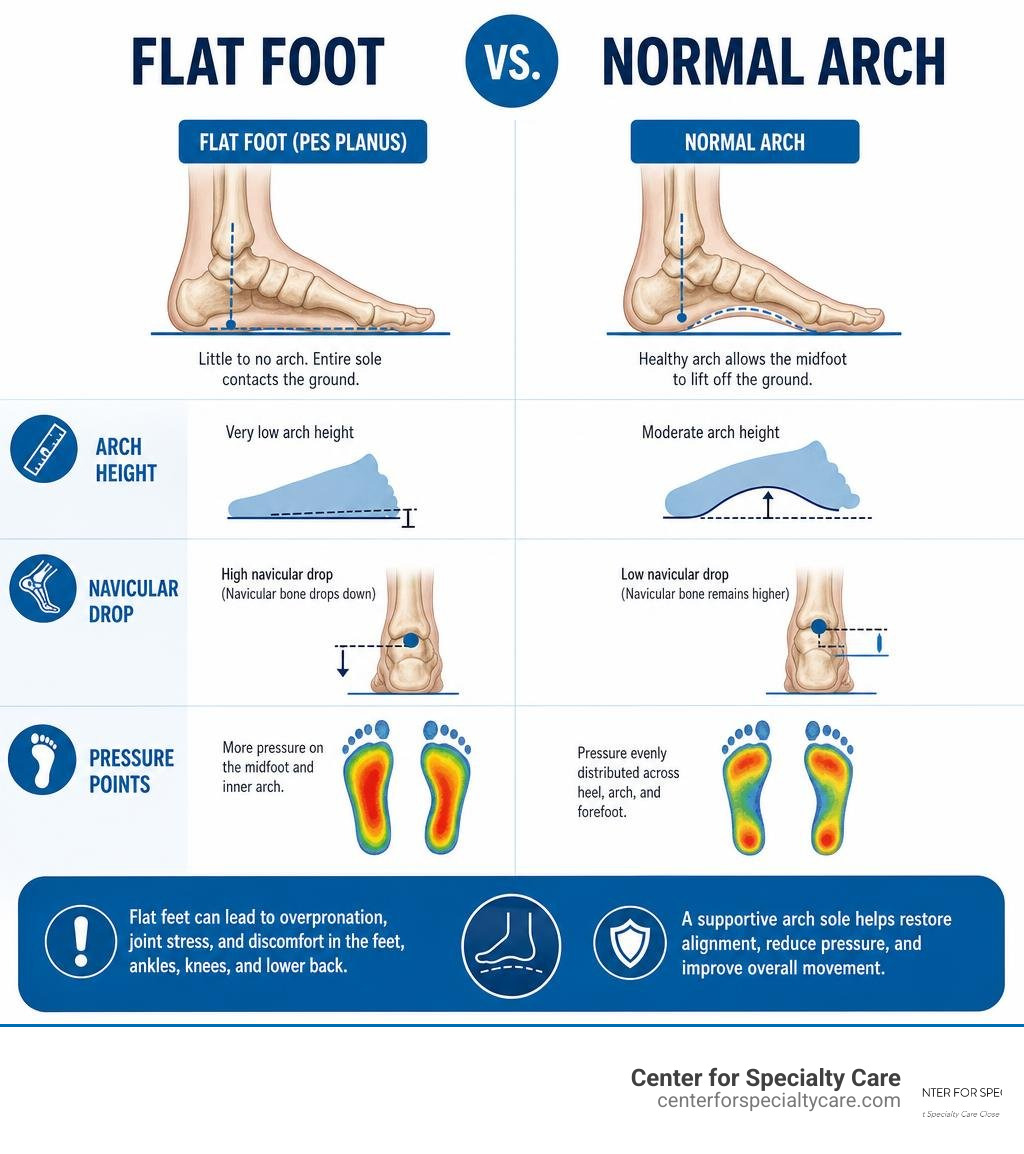
When we talk about flat feet, we are referring to a structural variation where the medial longitudinal arch of the foot is either very low or completely collapsed. In a healthy foot, this arch acts like a natural spring, absorbing shock with every step and distributing our body weight evenly across the entire foot. When the arch collapses, the entire sole of the foot makes contact with the ground, which alters how forces travel up through our skeletal system.
Without a supportive arch, the body struggles to absorb the impact of walking on hard, flat, modern surfaces. This leads to chronic foot fatigue, sore muscles, and a domino effect of alignment issues that can travel all the way up to your lower back.
What is Pes Planus?
In our orthopedic practice, we categorize flat feet (pes planus) into two primary types: flexible and rigid.
- Flexible Flatfoot: This is the most common variety. If you sit down and look at your foot, you might see a visible arch. However, the moment you stand up and place your weight on your feet, that arch completely flattens out.
- Rigid Flatfoot: In this case, the arch is absent whether you are standing, sitting, or dangling your feet. Rigid flatfoot is often associated with bone or joint abnormalities, such as tarsal coalition, and can be more challenging to manage without professional intervention.
Genetics play a major role in whether you develop flat feet, but aging, repetitive strain, obesity, and injuries can also cause once-healthy arches to gradually fall over time. To dive deeper into the differences between these types and how they develop, you can read The Complete Guide to Flat Foot Arch Support.
Symptoms That Indicate You Need Foot Support
How do you know if your flat feet are actually causing problems? Many people live with low arches without ever feeling a single twinge of pain. However, if you begin to notice any of the following warning signs, it is time to consider adding a structured arch sole for flat feet to your footwear:
- Persistent Heel or Arch Pain: A dull ache in the center of your foot or a sharp, stabbing pain near your heel when taking your first steps in the morning.
- Overpronation: Your shoes wear down unevenly, particularly on the inner edge of the sole, because your ankles roll inward as you walk.
- Morning Stiffness: Your feet and calves feel incredibly tight and inflexible when you first get out of bed.
- Tired, Heavy Legs: A feeling of deep muscular fatigue in your shins and calves after only short periods of standing or walking.
If these symptoms sound familiar, you may be experiencing the early signs of structural strain. Learn more about identifying common foot ailments in our comprehensive overview, A Walk Towards Healthy Feet: Common Foot Problems and Solutions.
How an Arch Sole for Flat Feet Restores Natural Alignment

Many people mistakenly believe that an insole works simply by “cushioning” a sore foot. While comfort is a welcome byproduct, the true purpose of a high-quality arch sole is biomechanical correction.
An effective insole alters the ground reaction forces acting on your foot. By filling the empty space beneath your collapsed arch with a firm, structured material, the insole provides vital sensory feedback to your brain. This neuro-feedback encourages your muscles to fire more efficiently, stabilizing your foot and preventing it from collapsing inward under your body weight.
Biomechanics of Overpronation
When the arch collapses, the foot naturally rolls inward to find stability. This inward rolling is called overpronation. As the foot pronates excessively, the tibia (shin bone) rotates inward, which forces the knee to twist out of its natural alignment. This mechanical chain reaction can eventually strain the hips and lower back.
By wearing structured insoles designed specifically for overpronation, such as those discussed in the Insoles for Flat Feet, Fallen Arches, & Pronation – PowerStep collection, you can halt this inward collapse. The right insert acts as a physical barrier and a guided ramp, keeping your ankle in a neutral position and allowing your body to absorb shock naturally.
Single vs. Dual Transverse Arch Support
While most off-the-shelf insoles focus solely on the longitudinal arch (the long arch running from heel to toe), advanced biomechanical research highlights the importance of the transverse arch (the arch running across the ball of your foot).
A landmark study published in the PMC database, Dual Transverse Arch Foot Orthosis Improves Gait Biomechanics in Females with Flexible Flatfoot – PMC, demonstrated that supporting both the longitudinal and transverse arches provides far superior results. The study showed that a dual-arch design significantly increases overall foot stiffness and reduces “navicular drop” (the collapsing of the main midfoot bone) compared to traditional single-arch supports. This dual support helps distribute pressure across the entire forefoot, dramatically improving walking and jogging mechanics.
Key Features to Look For in Supportive Insoles
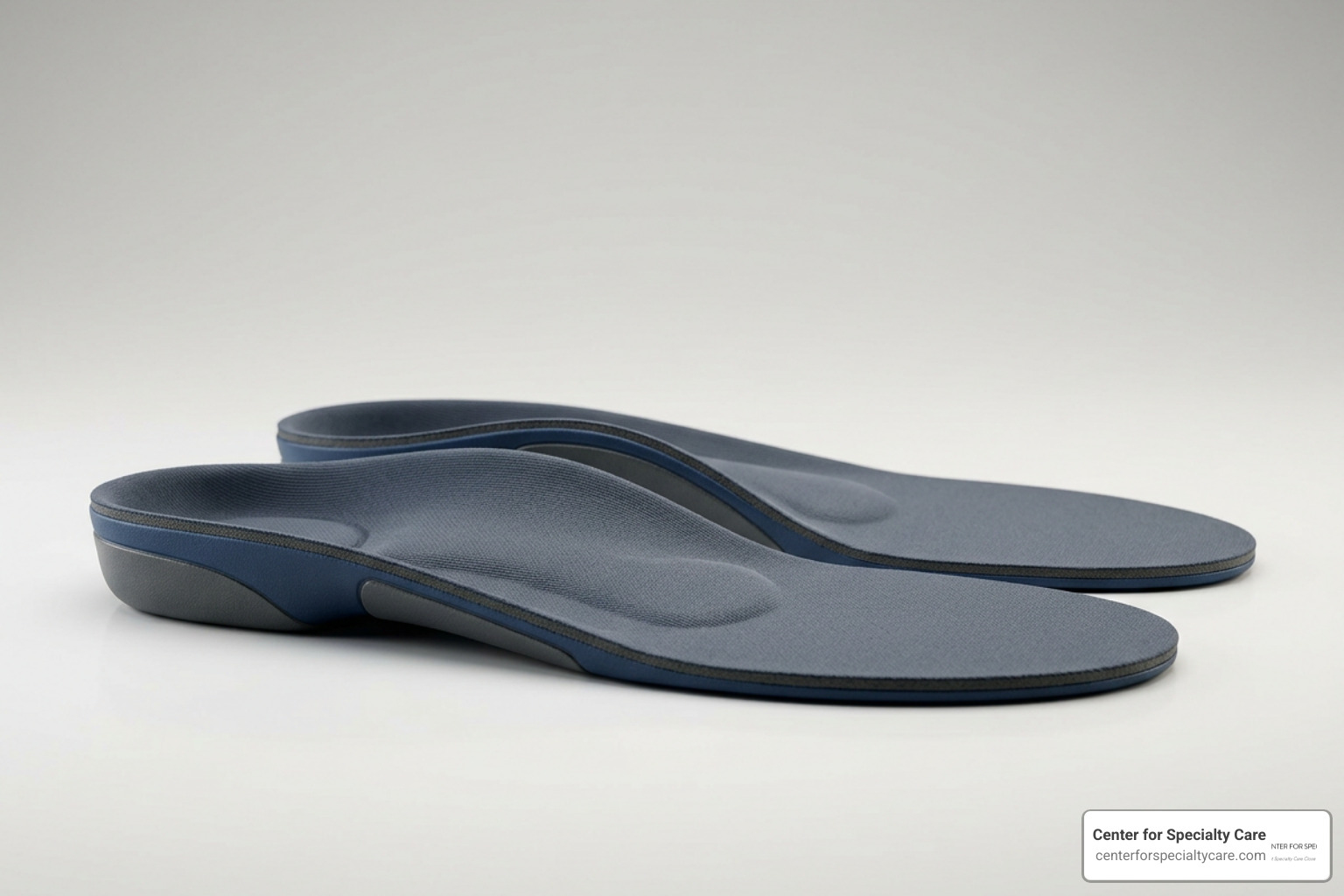
Not all insoles are created equal. If you walk into a typical drugstore, you will find rows of squishy, gel-filled pads. While these might feel nice for the first five minutes, they lack the structural integrity required to support a collapsed arch. To find an arch sole for flat feet that actually works, you need to look for specific engineering features.
Selecting the Right Arch Sole for Flat Feet Based on Arch Height
One of the most common mistakes people make is buying an aggressive, high-arch insole because they think “more support is better.” If you have rigid flat feet, forcing a high, unyielding arch support under your foot will only cause severe pain and bruising.
- For Rigid Flat Feet: Look for a low-profile, gentle arch support. Products like the Low Arch Bananas™ | Flat Cork Insoles by Primal Soles are designed to provide a natural, minimalist level of support that respects the rigid shape of your foot without forcing it into an unnatural position.
- For Flexible Flat Feet: You can tolerate a medium to aggressive arch support. Because your arch collapses only under weight, a firmer, semi-rigid shell will hold your foot in its correct, elevated alignment before it has a chance to drop.
Material Matters: Cork, Foam, and Gel
The materials used in your insoles determine how well they absorb shock, how long they last, and how comfortable they feel throughout the day.
- EVA Foam: Ethylene-vinyl acetate is a lightweight, durable polymer that provides excellent shock absorption and moderate structure. It is the gold standard for athletic and everyday insoles.
- Natural Cork: Cork is an exceptional, sustainable material that naturally molds to the unique shape of your foot over time while remaining firm enough to provide genuine structural support. For those who need a bit more performance-oriented support, cork-based options like the High Arch Cortiças™ | Performance Cork Insoles by Primal Soles offer a fantastic eco-friendly alternative to synthetic plastics.
- Shock-Absorbing Gel: Gel is great for localized pressure relief (like under a sore heel), but it should never be the primary material of your arch support because it collapses too easily under load.
To explore how different materials and pad placements can target specific areas of your foot, read our guide on How Foot Pads for Flat Feet Can Save Your Soles. If you are looking for a reliable daily driver with a balanced medium-density design, you might also consider looking into structured options like the Mysole Arch: Comfortabele Inlegzool voor Normale Voeten.
Heel Cups and Stability Features
A truly effective arch sole for flat feet must control the heel. If your heel is allowed to wobble or slide outward, your arch support will not align properly with your foot.
Look for insoles that feature a deep heel cup (ideally 4mm or deeper) to cradle your heel fat pad directly beneath your calcaneus bone. Additionally, insoles with a medial heel post — a slightly raised, firmer wedge on the inner side of the heel — can actively prevent your heel from rolling inward (valgus deviation). For more tips on selecting inserts with these specific stability features, check out our advice in Support Your Sole with These Top Arch Inserts.
Custom Orthotics vs. Over-the-Counter Solutions
When shopping for foot support, you will eventually face a major decision: should you buy over-the-counter (OTC) insoles, or invest in professional custom orthotics?
OTC insoles are pre-fabricated to fit general arch shapes and shoe sizes. They are highly accessible, affordable, and work beautifully for mild to moderate cases of flat foot pain. However, if you have a severe skeletal deformity, significant leg length discrepancy, or chronic, unyielding pain, a professional podiatric evaluation is highly recommended.
When to Choose a Custom Arch Sole for Flat Feet
Custom orthotics are medical devices built from a highly precise, three-dimensional model of your unique foot. At the Center for Specialty Care, we use advanced casting or 3D digital scanning to capture your foot in its ideal, non-weight-bearing position.
Custom solutions are highly recommended if you:
- Have severe, rigid flat feet that do not respond to OTC options.
- Experience chronic complications like Posterior Tibial Tendon Dysfunction (PTTD).
- Require specialized modifications, such as a built-in metatarsal pad, specific heel lifts, or targeted relief zones for diabetic foot care.
For women, finding supportive, low-profile options that fit into dress shoes can be particularly challenging. Learn more about tailored solutions in our article, The Best Orthotics to Help Women with Flat Feet Stand Tall.
Evaluating Cost, Durability, and Lifespan
While custom orthotics require a higher upfront investment, they are constructed from medical-grade materials designed to last for years, making them highly cost-effective over time.
| Feature | Over-the-Counter (OTC) Insoles | Custom Orthotics |
|---|---|---|
| Average Cost | $30 – $80 | $350 – $600+ |
| Lifespan | 6 – 12 months | 2 – 5 years (can be refurbished) |
| Customization | None (trim-to-fit only) | 100% matched to your foot anatomy |
| Material Quality | Standard foam, gel, or plastic | Medical-grade polypropylene, graphite, or cork |
| Best For | Mild to moderate pain, preventative support | Severe pain, structural deformities, chronic injuries |
If you are trying to decide which route is best for your lifestyle and budget, consulting a specialist is the fastest way to get a clear answer. If you live in Southern Minnesota or Northern Iowa, you can find local expert care by reading Finding Relief Fast: A Guide to Podiatry Offices Near Me.
For those looking to explore high-quality OTC options first, checking out curated lists like the 10 Best Arch Support Insoles for Flat Feet (Pain Relief) or visiting specialty retailers like The Good Feet Store: Arch Supports That Do More Than Insoles can help you get a sense of what is available on the market.
Addressing Related Pain: Plantar Fasciitis, Knee, and Back Issues
Your feet are the literal foundation of your entire body. When that foundation is unstable, the entire skeletal structure is forced to compensate. An uncorrected flat foot can trigger a chain reaction of joint pain and muscle strain throughout your lower body.
The Link Between Flat Feet and Plantar Fasciitis
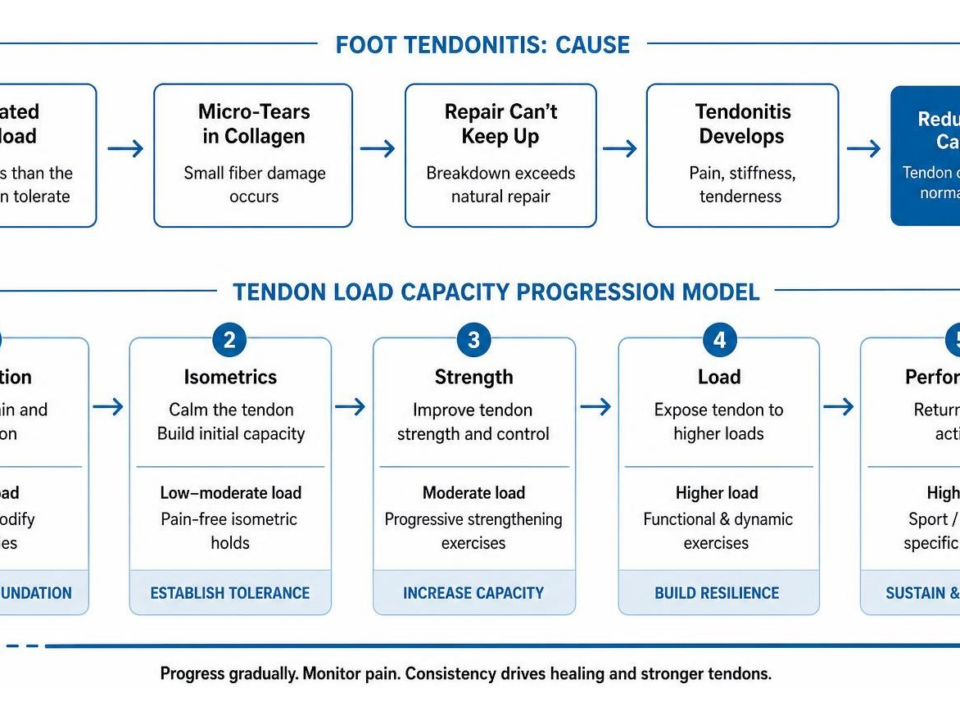
The plantar fascia is a thick, fibrous band of tissue that connects your heel bone to your toes, supporting your arch from underneath. When your arch collapses, this band is stretched far beyond its normal capacity. Over time, this repetitive stretching causes micro-tears and painful inflammation at the base of the heel — a condition known as plantar fasciitis.
Using a structured arch sole for flat feet takes the mechanical tension off the plantar fascia, allowing the tissue to heal. If you want to understand how your foot’s structural network of soft tissues works together, take a look at our detailed guide, Everything You Need to Know About Foot Tendons.
Alleviating Joint Strain and Improving Gait
Because flat feet cause your ankles to roll inward, they force your knees and hips out of their natural alignment. This can lead to:
- Patellofemoral Pain Syndrome: Commonly known as “runner’s knee,” caused by the kneecap tracking incorrectly.
- Knee Osteoarthritis: Uneven wear and tear on the cartilage inside the knee joint due to poor alignment.
- Lower Back Pain: Muscle spasms and joint stiffness caused by a tilted pelvis as your body tries to keep you balanced.
By restoring neutral alignment at the ground level, you can reduce wear and tear on your joints and walk with a much more efficient, pain-free gait. For more practical advice on keeping your feet healthy and active, read our Foot Health Tips.
For casual or warm-weather wear where closed-toe shoes aren’t an option, choosing recovery footwear like Dr Arch’s Arch Support Sandals – Dr. Arch’s can keep your feet aligned. Alternatively, if you want to experiment with advanced proprioceptive stimulation, products like the NuSole Magnetic Insoles | 3-Arch Support | Dr Bruce Whittingham combine structural physical support with embedded magnetic therapy to stimulate nerve endings and improve balance.
Frequently Asked Questions about Flat Foot Insoles
How long do insoles for flat feet typically last?
Most high-quality, over-the-counter insoles will maintain their structural support for 6 to 12 months of regular daily use. If you are using them for high-impact athletic activities or stand on your feet for 12-hour shifts, they may need to be replaced closer to the 6-month mark. Signs that your insoles need to be replaced include visible cracking in the plastic shell, compressed or worn-out foam, or a return of your original foot pain.
How do I choose the right size and fit for my insoles?
Most insoles are sold in size ranges (e.g., Men’s 9–10.5) and are designed to be “trim-to-fit.” To get the perfect fit, remove the existing factory insole from your shoe, place it directly on top of your new supportive insole, trace the outline with a pen, and carefully trim away the excess material at the toe with a pair of sharp scissors. Always make sure the arch of the insole aligns perfectly with the physical arch of your foot before trimming.
Can flat feet insoles help with knee and back pain?
Yes, absolutely! Because your feet are the foundation of your body’s kinetic chain, correcting overpronation at the ground level prevents your shin bones and knees from rotating inward. This stabilizes your pelvis and lower spine, reducing muscle strain and joint wear throughout your entire body.
Take the First Step Toward Pain-Free Walking
Choosing the right arch sole for flat feet is a simple, highly effective way to reclaim your mobility and live without chronic pain. Whether you start with a high-quality over-the-counter insert or require a custom-molded medical orthotic, supporting your arches is an investment in your long-term health.
If you are tired of dealing with foot fatigue, heel pain, or joint discomfort, our team at the Center for Specialty Care is here to help. With convenient locations in Fairmont, MN, St. James, MN, Estherville, IA, and Buffalo Center, IA, we offer comprehensive orthopedic and podiatric care tailored entirely to your lifestyle. We pride ourselves on personalized care, quick appointment availability, and our commitment to helping our patients stand tall and walk comfortably.
To read more about finding the right care team in our area, check out The Fairmont Guide to Expert Foot and Ankle Care or locate our nearest office directly through our Podiatrist Near Me directory.
Ready for a professional evaluation? Schedule an appointment today with the Center for Specialty Care Podiatry Services and let us help you find the perfect fit for pain-free walking!