All About Knot on Back: Common Causes
July 1, 2026
Are Your Tendons Happy? What Wearable Tech Can Tell Us About Foot Health
July 3, 2026
Say Goodbye to Aches with Buffalo Center Pain Solutions
When Buffalo Center Pain Gets in the Way of Your Life
Buffalo Center pain stops people from doing the things they love — walking without a limp, sleeping through the night, or simply getting through the day without wincing.
If you’re looking for quick answers, here’s what you need to know:
Quick Guide to Buffalo Center Pain Relief
| Your Situation | What to Know |
|---|---|
| Chronic back or neck pain | Conservative care (physical therapy, targeted exercise) is often the first step |
| Joint pain or osteoarthritis | Non-surgical and minimally invasive options are available before considering surgery |
| Nerve pain or neuropathy | Interventional procedures like nerve blocks can reduce symptoms significantly |
| Post-surgical or injury pain | Multidisciplinary programs combine rehab, medication management, and interventional care |
| Unsure where to start | A full evaluation with a specialist is the best first move |
Pain is common — globally, about 38% of people experience low back pain in any given year, and neck pain is the 6th leading cause of disability in the United States. For those over 65, roughly one in three people live with osteoarthritis. These aren’t just statistics — they represent real limitations on real lives.
Whether your pain came on suddenly after an injury or has been building quietly for years, the right care plan can make a meaningful difference in your quality of life.
I’m Dr. Corey Welchlin, a board-certified orthopedic surgeon and founder of the Center for Specialty Care in Fairmont, Minnesota — where I’ve spent over 30 years helping patients across southern Minnesota and northern Iowa find lasting relief from the kind of Buffalo Center pain that holds them back. In this guide, I’ll walk you through the conditions, treatments, and practical steps that can help you move forward.
Understanding the Spectrum of Chronic and Acute Pain
To tackle pain effectively, we first have to understand what we are dealing with. Pain is generally divided into two main categories: acute and chronic.
Acute pain is your body’s alarm system. It is a direct response to tissue damage, such as a sprained ankle, a broken bone, or a surgical incision. It is sharp, immediate, and usually resolves as the underlying injury heals. Chronic pain, on the other hand, is like an alarm that refuses to turn off. It persists for months or even years, long after the initial injury has healed. In some cases, chronic pain develops without any obvious trigger at all.
When dealing with chronic issues like low back pain, neck pain, osteoarthritis, and tendonitis, the nervous system can become hyper-sensitized. This means the body continues to send pain signals to the brain even when the physical threat has passed. This is precisely what pain clinics are for — they help identify why those signals are still firing and find ways to turn down the volume.
For many of our neighbors in Buffalo Center, Iowa, and the surrounding areas, chronic musculoskeletal pain is a daily reality.
- Low Back Pain: With a global one-year prevalence of approximately 38%, low back pain is the leading cause of missed workdays and limited mobility. It can stem from degenerative disc disease, muscle strains, or facet joint arthritis.
- Neck Pain: Affecting roughly 25% of the U.S. population annually, neck pain often arises from poor posture, whiplash, or cervical spine degeneration.
- Osteoarthritis: This wear-and-tear arthritis affects one-third of adults over 65 in the United States, causing joint stiffness, swelling, and deep aching in the knees, hips, and hands.
- Tendonitis: Inflammation of the thick cords that attach muscle to bone can cause localized, sharp pain during movement, limiting your ability to lift, reach, or walk comfortably.
Managing these persistent issues requires a thoughtful, tailored strategy. Fortunately, modern medicine offers a wide array of chronic pain treatment options that focus on restoring function without immediately jumping to invasive surgery or relying long-term on heavy medications.
Navigating Buffalo Center Pain: Common Conditions and Symptoms
When you are suffering from Buffalo Center pain, finding the root cause is the most important step toward recovery. Pain rarely stays in one place, and the way it behaves can tell us a great deal about what is happening beneath the surface.

Many patients who visit our clinics describe complex symptoms that go beyond a simple ache. Let’s look at three of the most common issues we diagnose and treat:
- Sciatica: This occurs when the sciatic nerve, which runs from your lower back down through your hips and legs, becomes compressed or irritated. It typically causes a sharp, burning, or electric shock-like sensation that travels down one side of your lower body.
- Neuropathy: Often felt as numbness, tingling, or a “pins and needles” sensation, neuropathy is caused by nerve damage. It is common in patients with diabetes, but it can also result from circulatory issues, vitamin deficiencies, or physical trauma.
- Radiating Pain: This is pain that starts in one area, like your neck or lower back, and travels along a nerve pathway into your shoulders, arms, or legs.
If you are currently dealing with these shooting or burning sensations, we recommend reading our practical tips for managing radiating pain to help find daily comfort while you arrange a professional evaluation. For residents in our northern Iowa communities, having local access to specialized diagnostics is essential. If you are ready to seek professional care close to home, our guide to finding a pain clinic in Iowa can help you navigate your local options.
Tailored Solutions for Buffalo Center Pain Relief
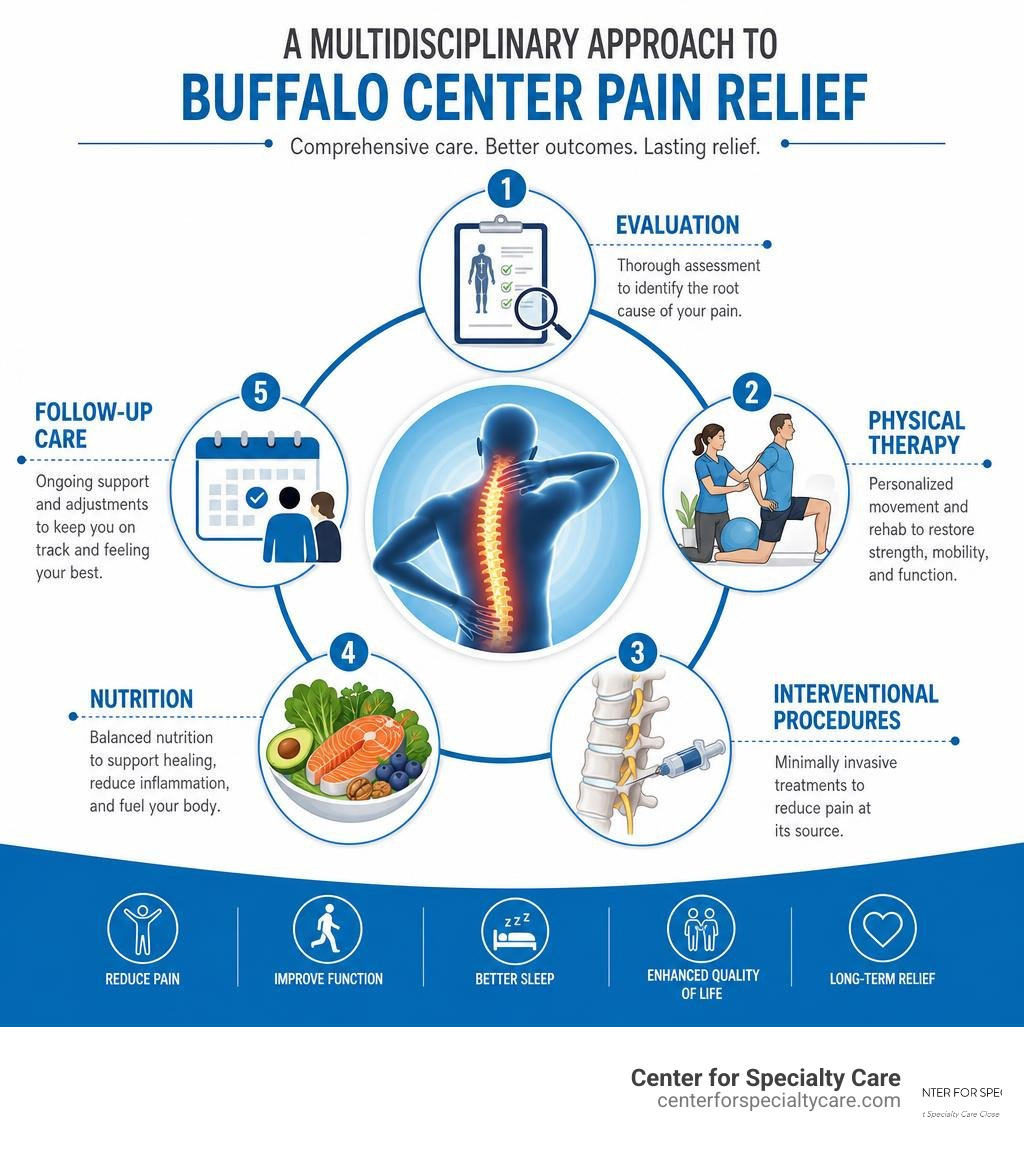
No two bodies are exactly alike, which means no two pain treatment plans should be identical either. At the Center for Specialty Care, we believe in personalized care that addresses the whole person, not just an isolated symptom.
Whether you are seeking tendonitis relief in your shoulder or trying to manage severe knee joint pain, we look at how your pain affects your daily life, your sleep, and your mobility. We combine advanced diagnostic imaging with a thorough physical examination to pinpoint the exact source of your discomfort.
Finding the right medical partner is crucial for this process. It is important to work with a team that values your input and takes the time to understand your goals. To help you in this search, we have compiled a resource on how to find a pain doctor who listens, ensuring you feel heard and respected throughout your recovery journey.
Why Addressing Buffalo Center Pain Early Matters
It is incredibly common for people to put off seeing a doctor, hoping their pain will eventually go away on its own. However, ignoring persistent Buffalo Center pain can lead to long-term consequences.
When you alter the way you walk or move to avoid pain, you place unnatural stress on other parts of your body. Over time, this compensation can cause secondary injuries, joint degeneration, and muscle imbalances. Furthermore, conditions involving nerve compression, such as sciatica or carpal tunnel syndrome, can lead to permanent nerve damage and muscle weakness if left untreated.
Early intervention is the key to preventing long-term disability. But how do you know when pain is an emergency? If you are experiencing sudden, severe back pain accompanied by weakness, numbness, or loss of bowel or bladder control, you need immediate medical attention. For less severe but highly disruptive flare-ups, you might wonder: Should you go to urgent care for back pain? Understanding your care options can save you time, money, and unnecessary stress.
Advanced Interventional and Non-Opioid Treatment Options
Modern pain management has moved far beyond the simple choice between taking pills or undergoing major surgery. Today, we utilize a wide range of advanced, non-opioid, and interventional treatments designed to target pain at its source.
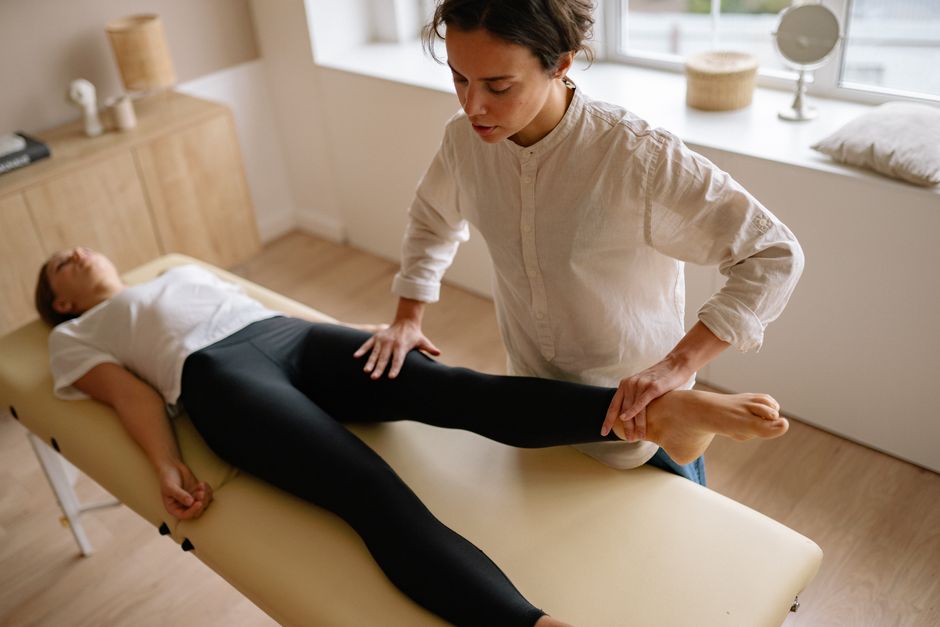
By combining conservative therapies with precise medical interventions, we can help patients achieve significant relief while minimizing side effects and downtime.
- Physical Therapy: Personalized exercise programs, manual therapy, and stretching help rebuild muscle strength, improve joint flexibility, and correct postural imbalances that contribute to pain.
- Nerve Blocks: These involve injecting a local anesthetic near specific nerves to temporarily block pain signals from reaching the brain. They can provide immediate relief and are often used to diagnose the exact pathway of your pain.
- Spinal Cord Stimulation: For chronic back or limb pain that hasn’t responded to other treatments, a small implanted device can send mild electrical pulses to the spinal cord, replacing pain signals with a gentle, soothing sensation.
- Injections: Epidural steroid injections, joint injections, and trigger point injections deliver powerful anti-inflammatory medication directly to the inflamed area, reducing swelling and pain.
To help you understand how these treatments compare, let’s look at the differences between conservative therapies and interventional procedures:
| Treatment Type | Primary Goal | Best For | Typical Recovery |
|---|---|---|---|
| Conservative Therapy (PT, Exercise, Bracing) | Rebuild strength, improve flexibility, and correct structural mechanics. | Mild to moderate muscle strains, early-stage arthritis, posture issues. | No downtime; gradual improvement over weeks. |
| Interventional Procedures (Injections, Nerve Blocks) | Directly block pain signals and reduce localized inflammation. | Severe chronic pain, herniated discs, nerve compression, joint inflammation. | Minimal downtime (often 1-2 days of rest). |
If you want to explore how these techniques are utilized in clinical settings, you can review these interventional pain management resources. At our clinics, we coordinate these therapies into a single, seamless plan. You can learn more about our comprehensive approach by exploring our comprehensive pain treatment options.
Navigating Insurance and Accessing Local Care
We understand that dealing with chronic pain is stressful enough without having to worry about insurance coverage and medical bills. That is why we work closely with our patients to make the financial aspect of care as clear and straightforward as possible.
Pain management services are covered by a wide variety of insurance providers, but the specific coverage details can vary based on your plan and the type of treatment you receive:
- Medicare and Medicaid: These government programs cover a broad range of medically necessary pain management services, including physician visits, physical therapy, diagnostic imaging, and many interventional procedures. To help you understand the specifics of your benefits, we recommend reading our guide on unraveling Medicare coverage for pain management.
- Workers’ Compensation: If your pain is the result of an on-the-job injury, Workers’ Compensation typically covers 100% of your approved medical treatments, rehabilitation, and necessary procedures.
- No-Fault Insurance: If you were injured in a motor vehicle accident, No-Fault insurance (personal injury protection) often covers your medical care, regardless of who caused the accident.
For our patients living in and around Buffalo Center, Iowa, local resources are available to help you coordinate your healthcare needs. You can find additional support, local office details, and assistance programs through the Buffalo Center community resources provided by the Iowa Department of Health and Human Services.
Frequently Asked Questions about Pain Management
What should I expect during my first visit to a pain clinic?
Your first visit is all about gathering information and getting to know you. We will perform a comprehensive evaluation, which includes taking a detailed medical history, discussing your pain symptoms, and performing a physical examination. If you have recent X-rays or MRI scans, we will review those as well, or we may order new diagnostic imaging if necessary. Our goal is to leave that first appointment with a clear diagnostic plan and a roadmap for your treatment. To help you prepare, you can read our detailed roadmap to pain clinics.
Are interventional pain management clinics legitimate?
Yes, fully legitimate pain management clinics are led by board-certified physicians who specialize in anesthesiology, physical medicine and rehabilitation, or orthopedics. These clinics rely on evidence-based, scientifically proven treatments and prioritize patient safety above all else. They focus on restoring function and reducing pain through a combination of therapies, rather than simply writing prescriptions. For more details on what to look for in a reputable provider, see our article on are pain management clinics legitimate?.
How do I find the best pain specialist near me?
The best pain specialist is one who offers a multidisciplinary approach, provides personalized treatment plans, and takes the time to listen to your concerns. Look for a provider with convenient local offices, quick appointment availability, and a reputation for patient satisfaction. If you are ready to take the next step, our guide on finding a pain management doctor near me can help you make an informed decision.
Conclusion
Living with chronic pain can feel exhausting, but you do not have to navigate this journey alone. At the Center for Specialty Care, we are dedicated to helping our neighbors in Fairmont, MN, Estherville, IA, Buffalo Center, IA, and St. James, MN, reclaim their lives from persistent aches and stiffness.
We pride ourselves on offering personalized care, quick appointment availability, and a commitment to patient satisfaction. Whether you need non-surgical joint treatments, physical therapy, or advanced interventional procedures, our team is here to support you every step of the way.
If you are ready to say goodbye to pain and start enjoying life again, we invite you to take the first step today. Discover the best pain management solutions with us and let us help you get back to doing what you love.