
Your Guide to Radiofrequency Ablation for Spine Pain
December 10, 2025
Say Goodbye to Tendonitis Pain: Your Relief Toolkit
December 12, 2025
Why does my shoulder hurt? Ultimate 2025 Relief Guide.
Understanding Your Shoulder Pain
Why does my shoulder hurt is one of the most common questions orthopedic specialists hear. Your shoulder is the most movable joint in your body, but this incredible range of motion comes at a cost—it’s also highly vulnerable to injury and pain.
Common reasons your shoulder hurts include:
- Rotator cuff problems (tendinitis, bursitis, or tears)
- Shoulder impingement
- Arthritis
- Frozen shoulder
- Acute injuries like dislocations or fractures
- Referred pain from your neck or other organs
Research shows that up to 70% of adults will experience shoulder pain at some point. The good news is that most cases respond well to treatment, especially with an early diagnosis. If you feel a dull ache when lying on your side or struggle to lift your arm, you’re not alone.
I’m Dr. Corey Welchlin, a board-certified orthopedic surgeon specializing in shoulder injuries for over three decades in southern Minnesota and northern Iowa. At the Center for Specialty Care, I’ve helped thousands of patients regain pain-free movement through both conservative treatments and advanced surgical techniques.
Why does my shoulder hurt word guide:
So, Why Does My Shoulder Hurt?
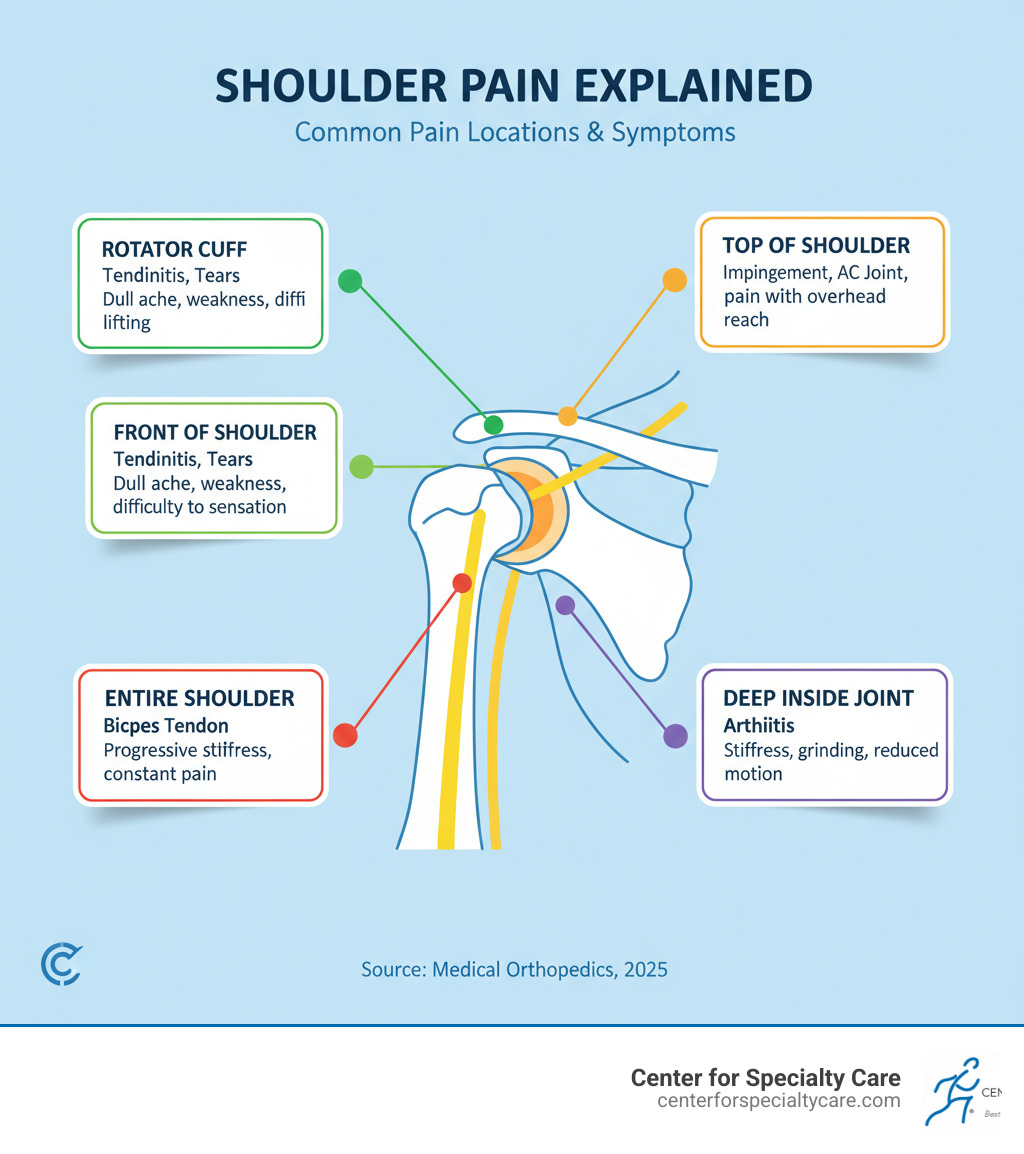
When you ask, “why does my shoulder hurt,” it’s often because the joint’s complex design has been compromised. Your shoulder’s ball-and-socket structure provides incredible mobility but relies heavily on muscles and tendons for stability. When one of these components is injured or inflamed, pain is the result.
- Rotator cuff problems are the leading cause of shoulder pain. The four rotator cuff tendons, which stabilize the joint, can become inflamed (tendinitis) or torn, causing a dull ache or sharp pain.
- Shoulder impingement syndrome occurs when these tendons get pinched in the narrow space under the acromion (the top of the shoulder blade), especially when lifting your arm.
- Arthritis is the gradual wear and tear of the joint’s cartilage, leading to bone-on-bone friction, a deep ache, and stiffness.
- Overuse injuries result from repetitive motions your shoulder isn’t accustomed to, like painting a room or starting a new workout, leading to strain and soreness.
- Traumatic injuries from a fall, accident, or sports impact can cause fractures, dislocations, or severe tears that require immediate attention.
- Referred pain can be tricky, as the discomfort originates elsewhere—like your neck or gallbladder—but is felt in the shoulder.
At our clinics in Fairmont, Estherville, Buffalo Center, and St. James, we see these conditions daily. Understanding the cause is the first step toward effective treatment.
The Most Common Culprits: Tendinitis and Bursitis
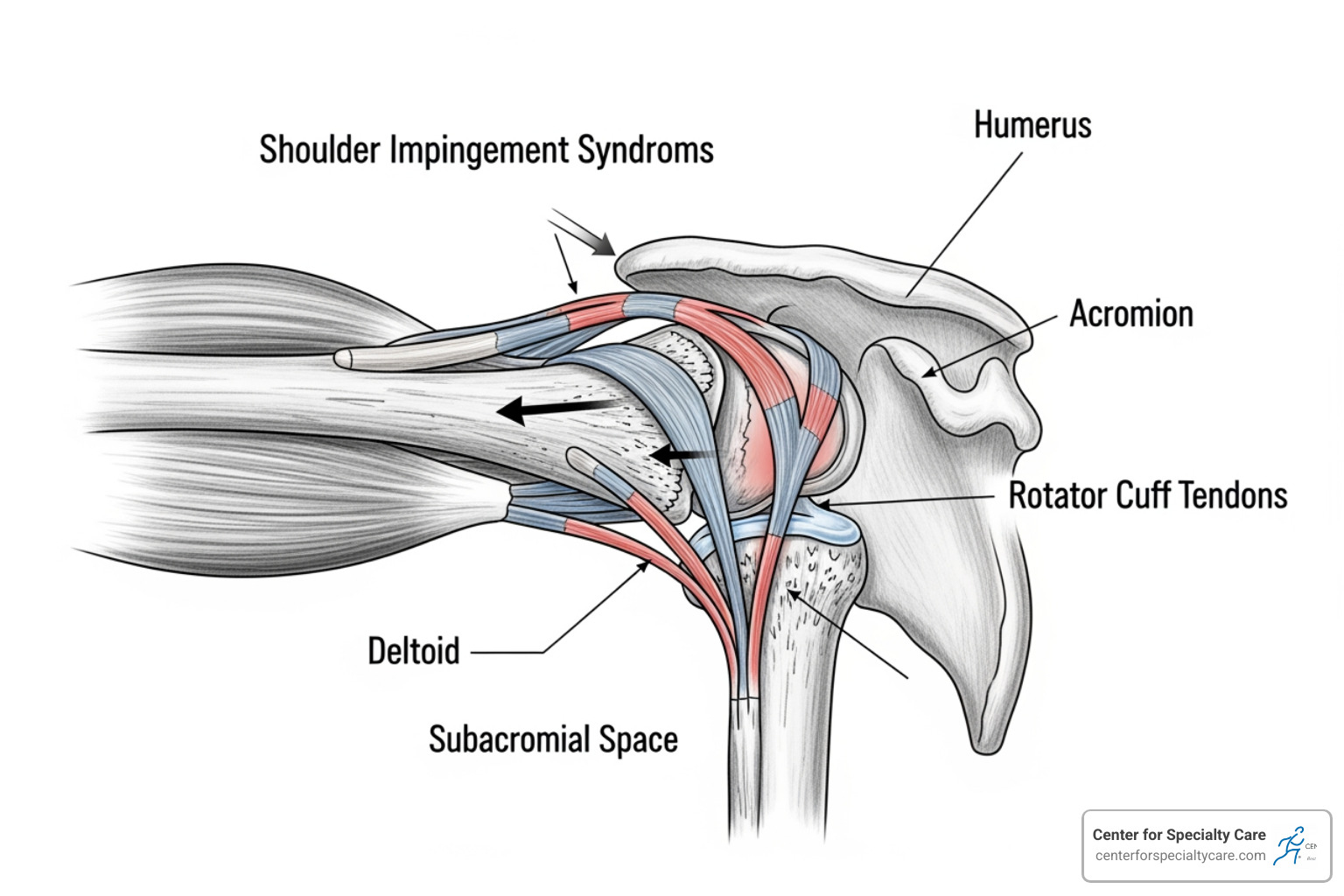
If you’re asking “why does my shoulder hurt,” there’s a high probability of tendinitis or bursitis. Rotator cuff tendinitis is inflammation of the tendons, often from rubbing against bone during overhead movements. The pain typically appears when you lift your arm, and it can worsen at night. Subacromial bursitis is inflammation of the bursa, a small fluid-filled sac that reduces friction. When it swells, it takes up space and makes movement painful. Both conditions are common in those who perform repetitive overhead activities and often occur together. For more context, the Common Causes of Shoulder Pain resource is helpful.
Shoulder Impingement Syndrome
Impingement syndrome is a frequent answer to “why does my shoulder hurt.” It happens when the space under your acromion narrows as you raise your arm, squeezing the rotator cuff tendons and bursa. This causes a painful arc of motion—a zone of sharp pain between 60 and 120 degrees of elevation. Reaching behind your back can also be difficult. Poor posture, like slouching, worsens the condition by further narrowing this space. It’s common in swimmers, painters, and anyone whose job requires frequent overhead work.
Arthritis in the Shoulder
Arthritis is another major reason why does my shoulder hurt, especially in those over 50. Osteoarthritis, or “wear and tear” arthritis, is the most common type. The protective cartilage wears away, causing bone to rub on bone. This results in a deep, aching pain, stiffness, and often a grinding sensation during movement. Post-traumatic arthritis can develop years after a significant injury like a fracture or dislocation. Unlike these, rheumatoid arthritis is an autoimmune disease that attacks the joint lining, often affecting both shoulders at once.
A Closer Look at Specific Shoulder Injuries
Sometimes the answer to “why does my shoulder hurt” is a specific, structural injury rather than general inflammation. These can be acute, happening suddenly from a fall or forceful movement, or chronic, developing slowly from repetitive stress. Correctly identifying the injury is key to effective treatment.
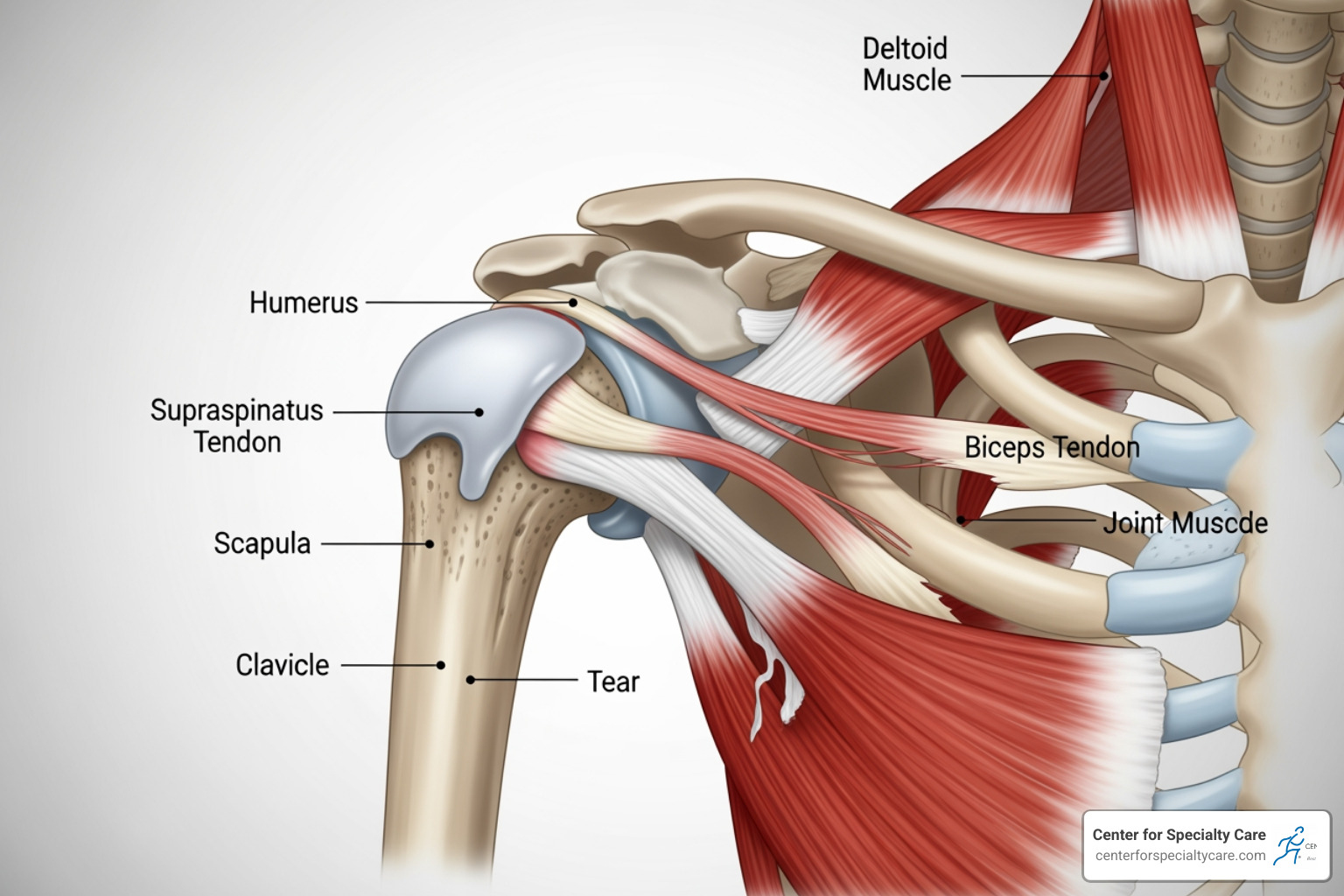
Why does my shoulder hurt from a rotator cuff tear?
A rotator cuff tear is one of the most common reasons why does my shoulder hurt, especially if you experience weakness and pain that worsens at night. Tears can be partial (frayed tendon) or full-thickness (tendon completely detached from the bone).
- Degenerative tears are most common, especially after age 40, as tendons wear down over time.
- Traumatic tears happen suddenly from a fall, lifting a heavy object, or a direct blow.
Key symptoms include a dull, deep ache, significant weakness when lifting your arm, and night pain that disrupts sleep. You might also feel a popping sensation with certain movements. While many tears, especially partial ones, respond well to non-surgical treatment like physical therapy, some may require surgical repair to restore function. Learn more on our rotator cuff tear page.
Frozen Shoulder (Adhesive Capsulitis)
Frozen shoulder is a perplexing condition where the joint capsule thickens and tightens, severely restricting movement. It typically progresses through three stages:
- Freezing: Gradual onset of pain and decreasing range of motion.
- Frozen: Pain may lessen, but stiffness becomes severe, making daily activities difficult.
- Thawing: Range of motion slowly begins to improve, a process that can take many months.
People with diabetes or thyroid disorders are at higher risk. The condition can also develop after a period of immobilization. Though it eventually resolves, treatment is focused on managing pain and restoring mobility through physical therapy.
Labral Tears (SLAP & Bankart) and Biceps Issues
The labrum is a ring of cartilage that helps stabilize your shoulder socket. A tear in this structure is another reason why does my shoulder hurt.
- SLAP tears occur at the top of the labrum where the biceps tendon attaches, often in overhead athletes. They cause a deep, aching pain and a catching sensation.
- Bankart lesions happen at the front of the labrum, almost always during a shoulder dislocation. They lead to shoulder instability, or a feeling that the shoulder is loose and may pop out again.
- A biceps tendon rupture often involves a sudden “pop” and sharp pain, followed by bruising down the arm and a visible “Popeye muscle” bulge. This injury causes significant weakness in bending the elbow and raising the arm.
These injuries require a precise diagnosis, as their symptoms can mimic other conditions but demand different treatment approaches.
How Doctors Diagnose and Treat Shoulder Pain
Getting the right diagnosis is the critical first step. At Center for Specialty Care, we start with conservative methods and only recommend surgery when it’s the best path forward. Our patient-centered approach is the foundation of what we do across our clinics in Fairmont, Estherville, Buffalo Center, and St. James.
Getting an Accurate Diagnosis
Figuring out “why does my shoulder hurt” begins with a conversation about your symptoms and medical history. This is followed by a thorough physical examination where I assess your shoulder’s movement, stability, and strength. I’ll check your range of motion and use special tests—specific maneuvers that stress different structures—to help pinpoint the injury.

When needed, we use diagnostic imaging to confirm a diagnosis. An X-ray is great for viewing bones to identify fractures, arthritis, or bone spurs. For a detailed look at soft tissues like tendons and ligaments, an MRI is the gold standard. We may also use CT scans for complex bone injuries or ultrasound to see soft tissues in real-time.
Non-Surgical Treatment Options
Most shoulder pain improves without surgery. Our first-line approach often includes:
- The RICE method: Rest, Ice, Compression, and Elevation to reduce initial pain and swelling.
- Physical therapy: This is crucial for recovery. A therapist guides you through exercises to restore range of motion, build strength, and improve posture.
- Anti-inflammatory medications: Over-the-counter NSAIDs like ibuprofen or naproxen can reduce pain and inflammation.
- Corticosteroid injections: An injection directly into the shoulder can provide powerful, targeted anti-inflammatory relief, often enabling more effective physical therapy.
- Activity modification: Learning to perform daily tasks in ways that don’t strain your shoulder can prevent re-injury.
When Is Surgery the Right Choice?
Surgery becomes an option when conservative treatments fail to provide adequate relief or for certain severe injuries. If you’re still in significant pain after several weeks of non-surgical care, we’ll discuss if surgery is right for you. Large rotator cuff tears, recurrent dislocations, or complex fractures often require surgical repair for the best outcome.
- Arthroscopic surgery is a minimally invasive technique used for rotator cuff repair, labral tear repair, and removing bone spurs. It allows for faster recovery and less pain than open surgery.
- Shoulder replacement (arthroplasty) is an excellent option for severe arthritis. We may replace just the ball (hemiarthroplasty) or both the ball and socket (total shoulder replacement). A reverse shoulder replacement is a specialized procedure for patients with severe rotator cuff damage.
We ensure you understand all risks and benefits before making a decision. For more information, visit Shoulder pain: MedlinePlus Medical Encyclopedia.
Preventing Future Pain and Ensuring Long-Term Health
Once we’ve figured out “why does my shoulder hurt” and started your recovery, our goal is to empower you to maintain long-term shoulder health. Preventing future problems often involves simple lifestyle adjustments and consistent habits.
Lifestyle Modifications and Good Posture
Small changes in your daily routine can have a big impact on your shoulder health.
- Ergonomics: Set up your desk with your monitor at eye level and your keyboard positioned so your elbows are at a 90-degree angle to reduce strain.
- Proper Lifting: Always lift with your knees, not your back, and keep heavy objects close to your body. Avoid sudden, jerking motions.
- Avoiding Overuse: Listen to your body. Take regular breaks from repetitive or overhead tasks. Increase exercise intensity gradually.
- Posture Correction: Practice sitting and standing tall with your shoulders relaxed, pulled back and down. Good posture properly aligns the shoulder joint.
- Sleeping Position: Avoid sleeping on your painful shoulder. Try sleeping on your back or on your good side with a pillow supporting your affected arm. For more tips, see
[Best sleeping positions for pain](https://health.clevelandclinic.org/best-sleeping-positions-for-pain/).
Why does my shoulder hurt during exercise and how can I prevent it?
Exercise is vital, but improper form can lead to injury. The question “why does my shoulder hurt during exercise” often has a preventable answer.
- Warm-Up and Cool-Down: Always start with dynamic movements like arm circles to prepare your muscles and end with static stretches to maintain flexibility.
- Focus on Key Muscles: A balanced strengthening program is essential. Include exercises for both rotator cuff strengthening (e.g., band rotations) and scapular stabilization (e.g., rows) to create a stable base for your arm.
- Maintain Mobility: Incorporate gentle stretches like cross-body arm stretches and pendulum swings to preserve your range of motion.
- Listen to Your Body: This is the most important rule. Stop immediately if you feel sharp pain. Pushing through pain can turn a minor issue into a major injury.
- Use Protective Gear: If you play contact sports, wearing the right equipment can prevent traumatic injuries like fractures and separations.
Frequently Asked Questions About Shoulder Pain
At Center for Specialty Care, we hear many of the same questions from patients wondering, “why does my shoulder hurt?” Here are answers to some of the most common concerns.
When should I worry about shoulder pain?
While most shoulder pain resolves with home care, certain symptoms warrant prompt medical attention. Seek help if you experience:
- Sudden inability to move your arm.
- A visible deformity or dislocation of the shoulder.
- Intense, sharp pain that doesn’t improve with rest.
- Significant, sudden swelling or bruising.
- Pain accompanied by fever, redness, or warmth, which could signal an infection.
- Numbness or tingling that radiates down your arm.
- Pain that persists for more than 2-4 weeks despite rest and ice.
If you have any of these warning signs, please contact us. We pride ourselves on quick appointment availability at our locations in Fairmont, Estherville, Buffalo Center, and St. James.
Can shoulder pain be a sign of a heart attack?
Yes, though it’s rare, shoulder pain—particularly in the left shoulder—can be a sign of a heart attack. This is known as referred pain.
Call 911 immediately if your shoulder pain is accompanied by any of these symptoms:
- Chest pain or pressure that may spread to the jaw, neck, or arm.
- Shortness of breath.
- Dizziness, lightheadedness, or sudden sweating.
- Nausea.
Most shoulder pain is musculoskeletal, but if you have any doubt, it is always safest to seek emergency medical care.
How can I relieve shoulder pain at night?
Night pain is a common complaint that severely disrupts sleep. These strategies can help:
- Adjust your sleeping position. Avoid sleeping directly on the painful shoulder. Try sleeping on your back or on the non-painful side.
- Use pillows for support. When on your back, place a pillow under your affected arm. When on your side, hug a pillow to support your top arm and prevent it from falling forward.
- Manage pain before bed. Taking an over-the-counter anti-inflammatory medication about an hour before sleep can help. Applying an ice pack for 15-20 minutes can also reduce inflammation and numb the pain.
For more detailed advice, this guide on Best sleeping positions for pain is a useful resource. If these tips don’t provide relief, it’s time to see a specialist.
Your Next Step Towards a Pain-Free Life
If you’ve been asking why does my shoulder hurt, know that you don’t have to live with the discomfort. Shoulder pain is treatable, and regaining your quality of life is possible.
The key is a personalized diagnosis. At Center for Specialty Care, we don’t use a one-size-fits-all approach. We take the time to understand your unique situation and recovery goals at our clinics in Fairmont, Estherville, Buffalo Center, and St. James.
I’ve seen thousands of patients return to the activities they love, from playing with their grandchildren to sleeping soundly through the night. Whether the solution is physical therapy or an advanced surgical procedure, our team is committed to finding the right path for you.
We pride ourselves on quick appointment availability and 100% patient satisfaction. Your comfort and recovery are our top priorities. Don’t wait another day to address your shoulder pain. Your journey to a pain-free life starts with reaching out to our team.
[Find personalized shoulder care with our specialists](https://centerforspecialtycare.com/shoulder/)