
The Definitive Guide to Shoulder Joint Anatomy
May 22, 2026
Watch how the Intracept procedure works
May 30, 2026
Don’t Get Burned: Choosing Between Ice and Heat for Strains
The 72-Hour Rule: Choosing Heat or Cold for an Inflamed Tendon
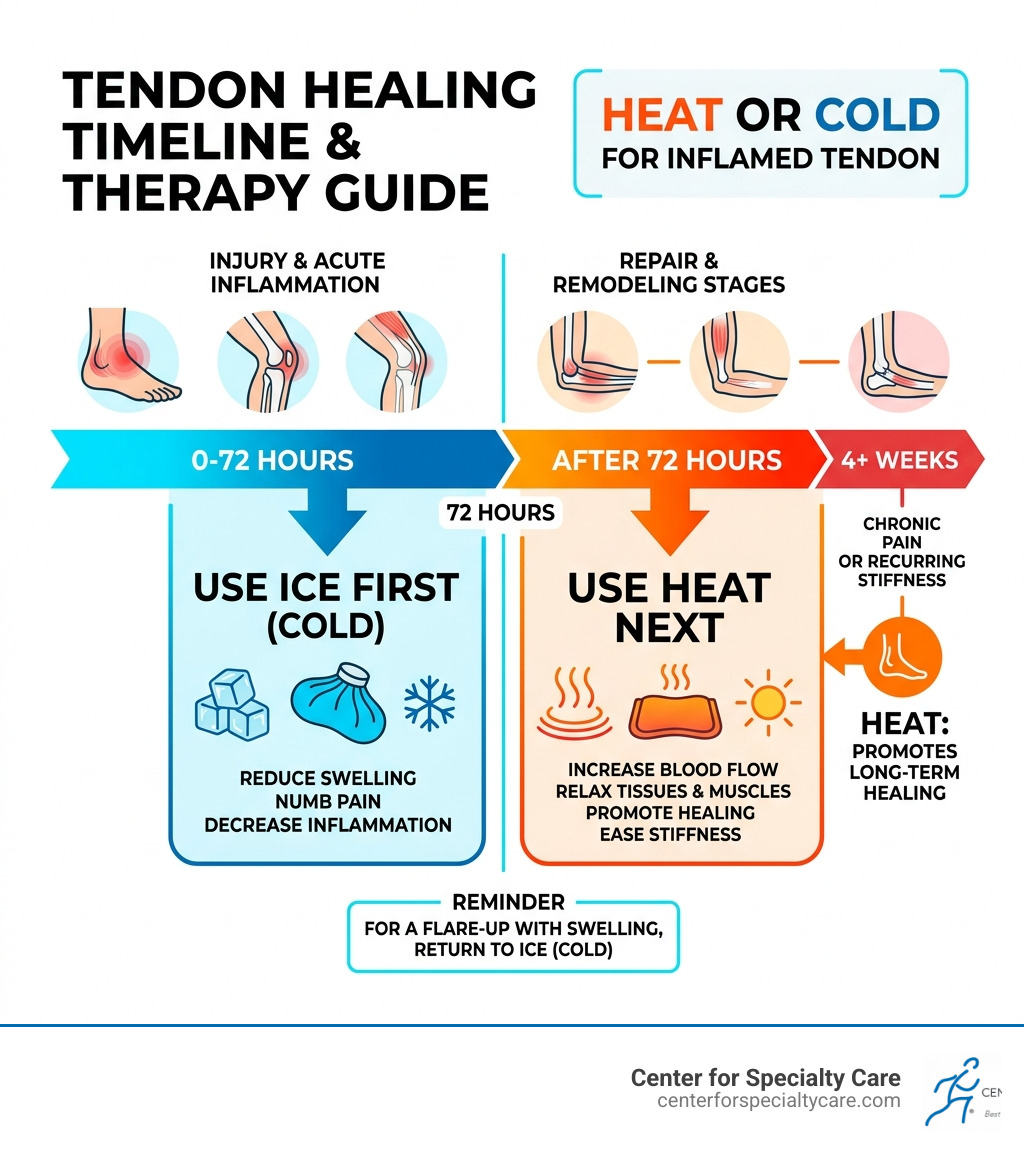
Heat or cold for inflamed tendon pain is one of the most common questions people have after a tendon injury — and the answer depends on one key factor: how long ago the injury happened.
Here’s the quick answer:
| Timing | Use | Why |
|---|---|---|
| First 48-72 hours | Ice (cold) | Reduces swelling and numbs pain |
| After 72 hours | Heat | Increases blood flow and relaxes tissue |
| Chronic pain (4+ weeks) | Heat | Promotes healing and eases stiffness |
| Flare-up with swelling | Ice (cold) | Controls re-inflammation |
Tendons are the tough, fibrous cords that connect your muscles to your bones. When they become inflamed — a condition called tendinitis — pain and swelling can stop you in your tracks. Whether it’s your Achilles, elbow, shoulder, or knee, the wrong temperature therapy at the wrong time can make things worse, not better.
Getting this choice right matters more than most people realize.
I’m Dr. Corey Welchlin, a board-certified orthopedic surgeon and sports medicine physician with over 30 years of experience treating tendon injuries — and guiding patients on the most effective use of heat or cold for inflamed tendon recovery is a routine part of that work. In the sections ahead, I’ll walk you through exactly when and how to use each therapy so you can heal faster and avoid common mistakes.
Simple guide to heat or cold for inflamed tendon terms:
Understanding Your Injury: Tendonitis vs. Tendinosis
Before you reach for the freezer or the heating pad, it helps to understand what is actually happening inside your body. Not all tendon pain is “inflammation,” even though we often use that word as a catch-all.
Tendonitis (or tendinitis) is an acute condition. It happens when a tendon is suddenly overloaded or subjected to repetitive motion, leading to micro-tears and a classic inflammatory response. Think of this as a “fire” in the tissue—it’s red, hot, swollen, and painful. This is common in athletes or weekend warriors who suddenly ramp up their activity level.
Tendinosis, on the other hand, is a chronic condition. It involves the long-term degeneration of the collagen fibers within the tendon. In these cases, there isn’t much active inflammation; instead, the tendon has become thickened, scarred, and less flexible. This is often what people mean when they talk about “chronic tendonitis” that has lasted for months.
Distinguishing between these two is vital because their needs are different. While you want to “put out the fire” of tendonitis, you want to “warm up and nourish” the collagen in tendinosis. Understanding these differences is similar to Decoding Osteoarthritis: Insights from Orthopedic Specialists on Managing Joint Health, where the stage of the condition dictates the treatment.
When to Use Cold Therapy for Acute Injuries
If you’ve just felt a “pop” in your heel or a sharp twinge in your shoulder while lifting, it’s time to head for the ice. During the first 24 to 72 hours, your body’s primary goal is to manage the sudden influx of fluid and white blood cells to the area.
Cold therapy works through vasoconstriction. This is a fancy way of saying it causes your blood vessels to narrow. By narrowing the vessels, you limit the amount of blood and fluid that can rush to the site, which directly reduces swelling. Furthermore, cold acts as a natural numbing agent by slowing down the speed at which your nerves send pain signals to your brain.
According to the Mayo Clinic, ice is the gold standard for sudden injuries to ease pain and swelling. If you use heat during this phase, you risk opening the “floodgates” (vasodilation), which can increase swelling by up to three times and significantly delay your recovery.
Best Practices for Applying Cold for Inflamed Tendon
Applying ice seems simple, but doing it incorrectly can lead to “ice burns” or even nerve irritation. Here is our recommended protocol for the first few days:
- Duration: Apply ice for 15 to 20 minutes at a time. Do not go longer, as your body may actually start to increase blood flow to the area to protect the skin from freezing.
- Frequency: Repeat the application every 2 to 3 hours while you are awake for the first two to three days.
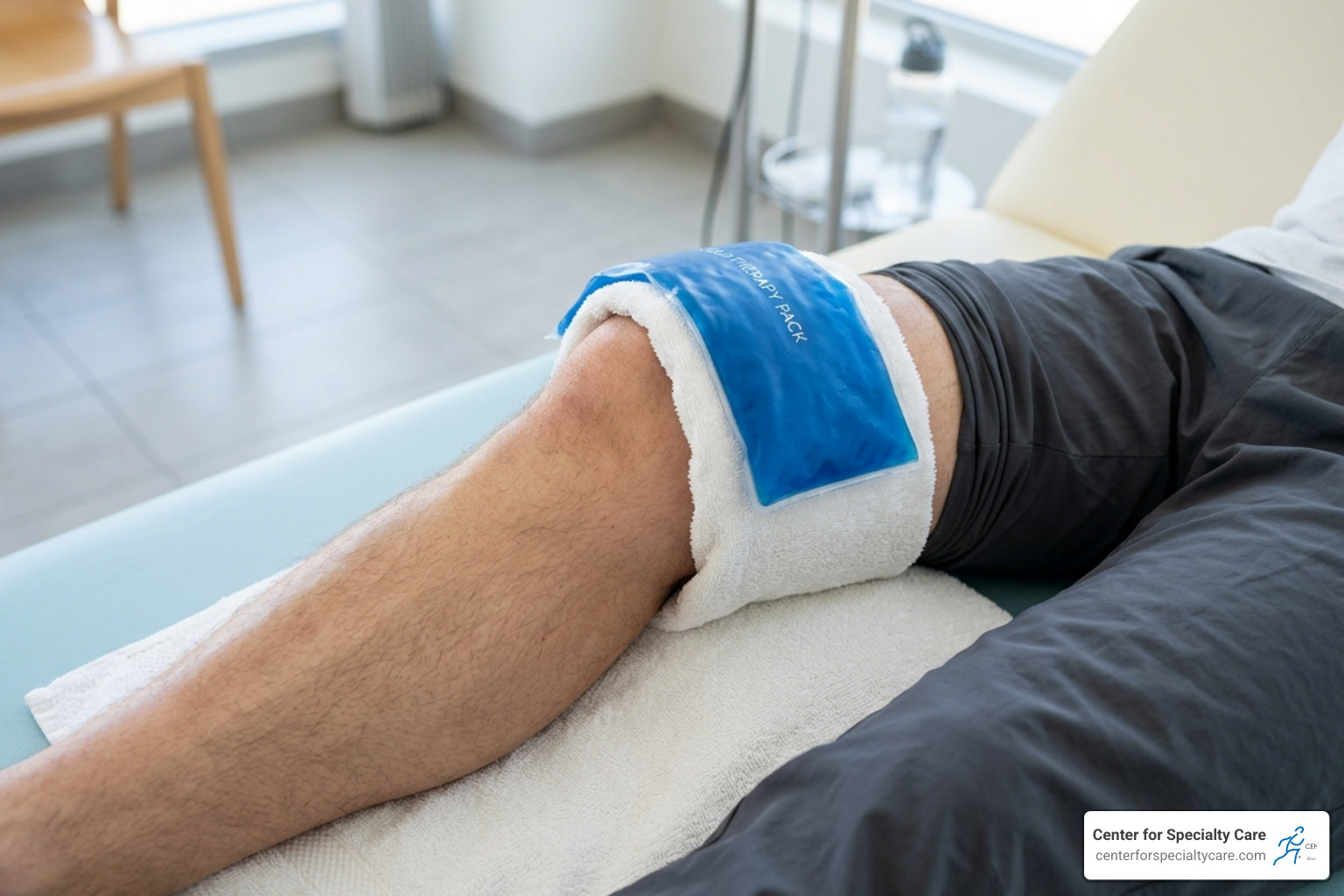
- Skin Protection: Never apply ice or a chemical cold pack directly to your skin. Always wrap it in a thin towel or cloth. This protects the delicate tissue and prevents frostbite.
- Nerve Precautions: If you have neuropathy or poor circulation (common in some diabetic patients), be extra cautious. If the area goes completely numb, remove the ice immediately.
- Movement: For certain areas, like the shoulder, you may want to gently move the joint after icing to prevent stiffness. For more specific tips, check out our guide on How to Get Rid of Shoulder Pain from Lifting Weights – Tips & Exercises.
When to Use Heat Therapy for Chronic Pain
Once the initial “fire” of inflammation has died down—usually after the 72-hour mark—the focus shifts from containment to repair. This is where heat therapy shines.
Heat causes vasodilation, which expands the blood vessels. This increases the delivery of oxygen and essential nutrients to the damaged tendon. Tendons naturally have a lower blood supply than muscles, which is why they take longer to heal. By applying heat, you are essentially giving the tendon the “fuel” it needs to rebuild its collagen fibers.
Heat also helps with tissue elasticity. If your tendon feels stiff and “crunchy” in the morning, heat can relax the surrounding muscles and make the tendon more pliable. This is particularly beneficial for conditions like Achilles tendon injuries, where stiffness can lead to re-injury during daily walks.
When to Switch to Heat for Inflamed Tendon
Knowing exactly when to make the switch can be tricky. Here are the signs that you are ready for heat:
- The 3-Day Mark: Most acute inflammation subsides after 72 hours.
- Swelling is Gone: If the area is no longer visibly puffy or red, heat is generally safe.
- Chronic Stiffness: If the injury happened weeks ago but still feels tight, heat is your best friend.
- Pre-Workout: If you are starting physical therapy or gentle stretching, applying heat for 10-15 minutes beforehand can “warm up” the tissue and prevent further micro-tears.
This transition is very similar to how we recommend treating other types of musculoskeletal tightness, such as How to Relieve a Stiff Neck After Waking Up.
Heat or Cold for Inflamed Tendon: A Comparison Guide
To help you decide, we’ve put together a simple comparison. The goal is to match the therapy to the current state of the tissue.
| Feature | Ice (Cold) | Heat |
|---|---|---|
| Primary Goal | Reduce swelling & numb pain | Increase circulation & flexibility |
| Best For | New injuries (0-72 hours) | Old injuries (3+ days) |
| Action | Constricts blood vessels | Dilates blood vessels |
| Risk | Skin damage (frostbite) | Increased inflammation if used too early |
| Application | 15-20 min every 2-3 hours | 15-20 min as needed |
Using the wrong therapy can be a setback. For example, applying heat to a freshly sprained ankle will likely cause it to throb and swell even more. Conversely, using only ice on a chronic, stiff Achilles tendon can actually make the tissue more brittle and prone to tearing.
Beyond Temperature: Comprehensive Tendon Recovery
While choosing between heat or cold for inflamed tendon pain is a great first step, it is rarely the only step needed for a full recovery. At Center for Specialty Care, we advocate for a multi-faceted approach to get you back to 100%.
- The R.I.C.E. Method: Rest, Ice, Compression, and Elevation remain the foundation of early tendon care.
- Physical Therapy: Once the pain is manageable, specific eccentric exercises (strengthening the tendon while it lengthens) are the “gold standard” for rebuilding tendon strength.
- Medications: Over-the-counter NSAIDs (like ibuprofen) can help with pain, but they should be used judiciously, as some studies suggest they might interfere with the very early stages of tendon healing.
- Advanced Diagnostics: If your pain doesn’t improve, we may use Open-Sided MRI to see the extent of the damage without the claustrophobia of traditional machines.
- Specialized Care: Tendon issues in the hands require a delicate touch. We provide comprehensive guides for Enhancing Hand Function: A Comprehensive Guide to MP Joint Health.
- Injections: For severe, persistent inflammation that doesn’t respond to home care, we can discuss options like Epidural Steroid Injections (for spinal-related issues) or localized cortisone shots.
Frequently Asked Questions about Tendon Therapy
Can I alternate between ice and heat for tendonitis?
Yes, this is called contrast therapy. It is usually most effective in the “sub-acute” phase (about 3 to 5 days after injury). By alternating between cold and heat, you create a “pumping action” in the blood vessels—constricting then dilating—which can help flush out lingering metabolic waste and bring in fresh, oxygenated blood. A common ratio is 3 minutes of heat followed by 1 minute of cold, repeated three times.
How long does it take for ice and heat to heal a tendon?
Ice and heat don’t “heal” the tendon on their own; they create the optimal environment for your body to do the work. For a mild case of tendonitis, you might feel significantly better within 2 to 3 weeks of consistent RICE and temperature therapy. For chronic tendinosis, the recovery timeline is longer—often 6 to 12 weeks—because the body has to physically remodel the collagen fibers.
When should I see a doctor for tendon pain?
While home remedies are a great start, you should schedule an appointment with us if:
- You cannot bear weight on the affected limb.
- There is a visible deformity or a “gap” where the tendon should be (suspected rupture).
- The pain is so severe it prevents sleep or daily activities.
- You experience numbness or tingling that doesn’t go away.
- The pain hasn’t improved after a week of home treatment.
Conclusion
Choosing between heat or cold for inflamed tendon relief doesn’t have to be a guessing game. By following the 72-hour rule—ice for the “fire” and heat for the “repair”—you can take control of your recovery from day one.
At Center for Specialty Care, we are committed to helping our neighbors in Fairmont, MN, and our surrounding communities in Iowa and Minnesota find lasting relief. Whether you need a personalized physical therapy plan or a surgical consultation, our goal is 100% patient satisfaction through expert, compassionate care.
Don’t let tendon pain linger and turn into a chronic problem. Schedule a consultation with our orthopedic specialists today and let’s get you back to the activities you love.