
Detailed Guide to Radiating Pain Causes
July 22, 2026
Stomach Sleeper Problems: How to Stop Shoulder Pain in Your Sleep
July 24, 2026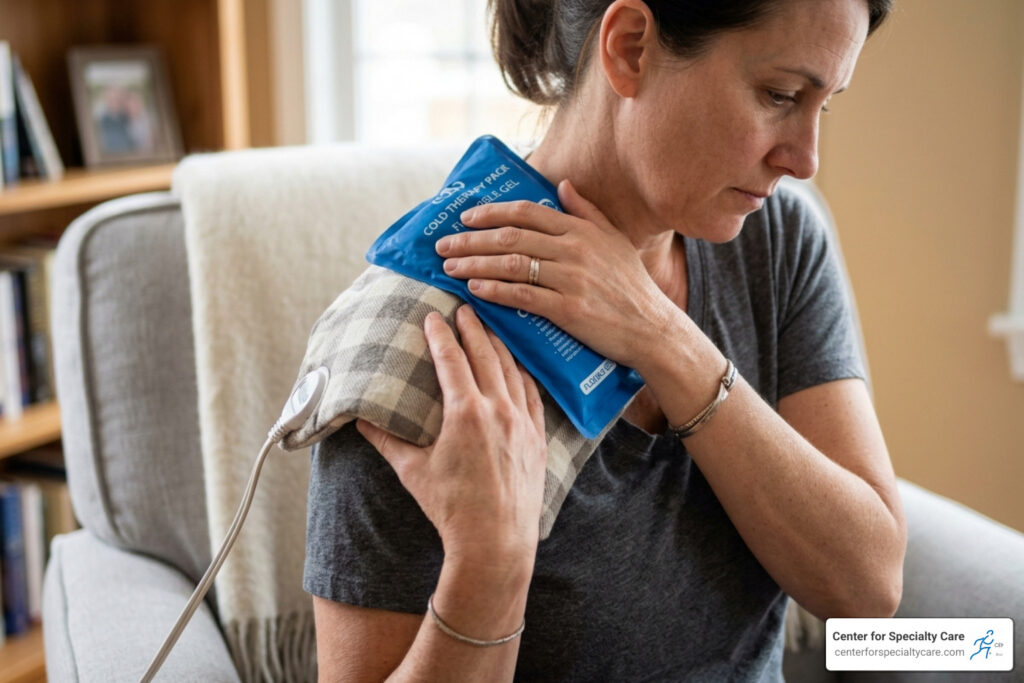
A Chilly Guide to Warming Up Your Rotator Cuff Recovery
Why Choosing Between Ice and Heat Can Make or Break Your Recovery
Ice or heat for rotator cuff tendonitis is one of the most common questions people ask when shoulder pain strikes — and getting it wrong can slow your healing or even make things worse.
Here’s the short answer:
| Situation | Use |
|---|---|
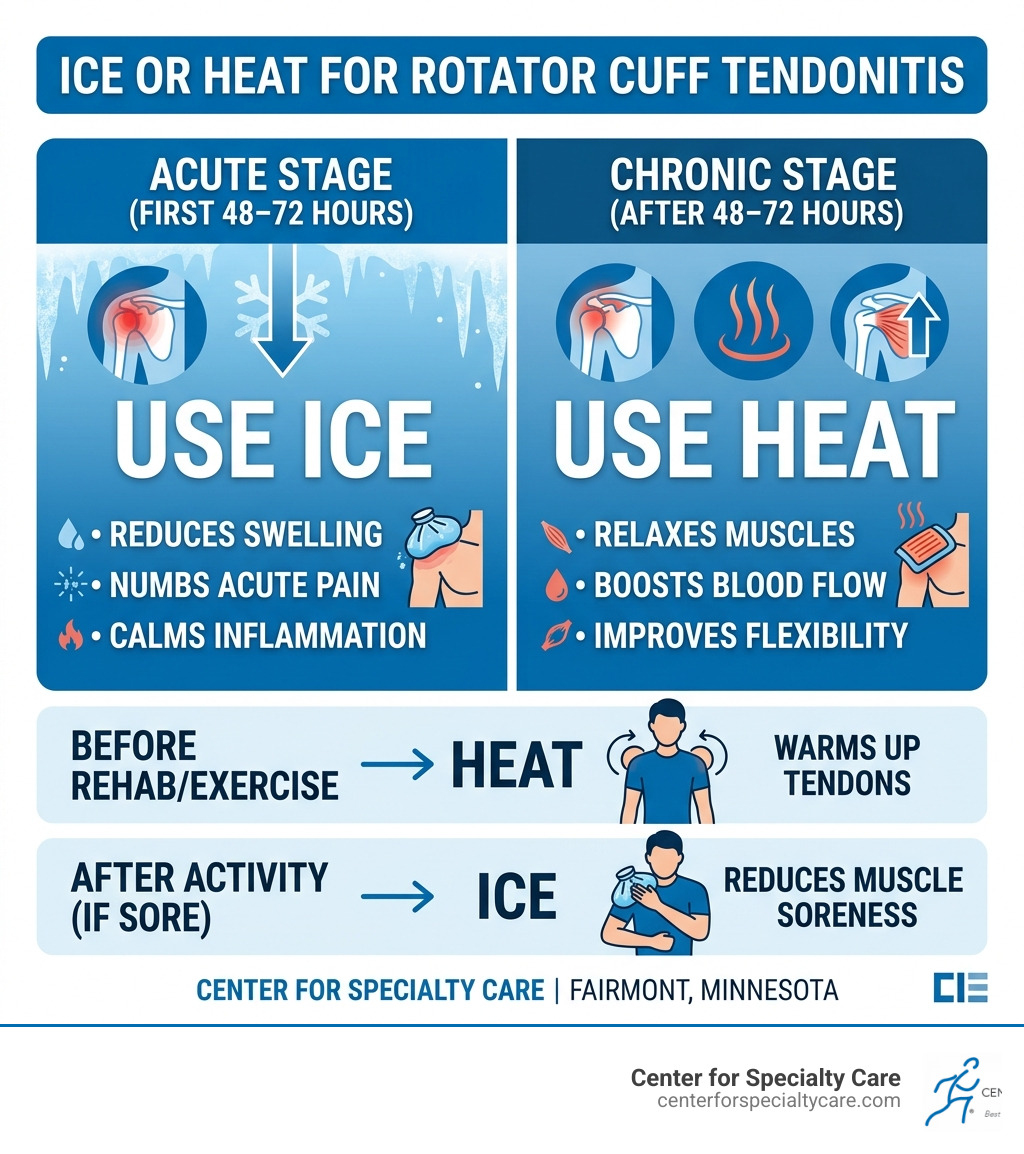
| Sudden injury or flare-up (first 48–72 hours) | Ice — reduces swelling and numbs pain |
| Swelling has gone down, pain is lingering | Heat — relaxes muscles and boosts blood flow |
| Before stretching or rehab exercises | Heat — warms up tendons and improves flexibility |
| After activity causes soreness | Ice — calms inflammation |
The key is timing. Ice works best in the acute phase, when inflammation is active. Heat works best in the chronic phase, when stiffness and tightness are the bigger problems.
Rotator cuff tendonitis happens when the tendons in your shoulder become inflamed — often from repetitive overhead movements, sports, or gradual wear over time. That dull, aching pain that worsens when you lift your arm or lie on your shoulder at night? That’s a classic sign. And while the condition is common, managing it well from day one can mean the difference between a few weeks of recovery and several frustrating months.
I’m Dr. Corey Welchlin, a board-certified orthopedic surgeon with over 30 years of experience treating rotator cuff injuries and other musculoskeletal conditions at the Center for Specialty Care in Fairmont, Minnesota. Guiding patients on practical recovery tools — including the correct use of ice or heat for rotator cuff tendonitis — is something I do every day, and in this guide I’ll walk you through exactly what to use, when, and how.
Basic ice or heat for rotator cuff tendonitis terms:
What is Rotator Cuff Tendonitis and What Causes It?
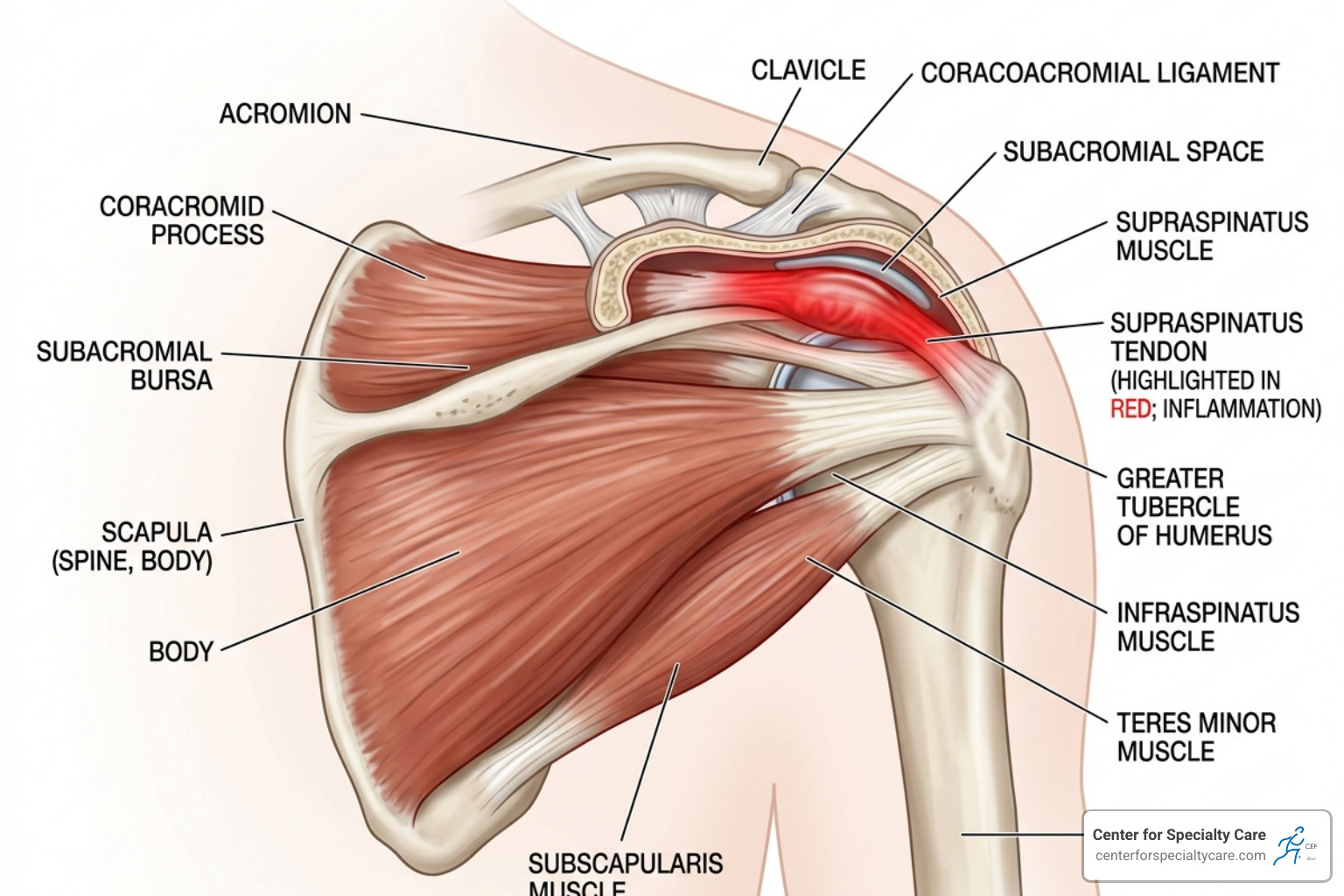
To understand whether to reach for the frozen peas or the heating pad, we first need to look at what’s actually happening inside that shoulder joint. Your rotator cuff is a clever group of four muscles and their attached tendons: the supraspinatus, infraspinatus, teres minor, and subscapularis. These parts work together like a well-oiled machine to keep your arm bone (humerus) sitting snugly in the shoulder socket while allowing you to reach, lift, and throw.
Rotator cuff tendonitis occurs when these tendons become irritated or inflamed. This often starts in the supraspinatus tendon because it lives in a tight neighborhood called the subacromial space. When you lift your arm, that space gets even smaller. If the tendon is already swollen, it gets pinched against the bone—a process often called “impingement.”
Common Causes of the Ache
In our Fairmont and Estherville clinics, we see this condition across all age groups, but the causes usually fall into three buckets:
- Repetitive Motion: This is the most common culprit. Whether you are a carpenter hammering overhead, a painter reaching for the ceiling, or a tennis player perfecting your serve, doing the same motion over and over can create “micro-tears” in the tendon tissue.
- Sudden Injury: Sometimes, a single event—like trying to catch a heavy falling object or a sudden fall onto an outstretched hand—can trigger acute inflammation.
- Age and Wear: As we move through 2026 and beyond, tendon tissue naturally thins and loses some elasticity as we age. This makes it easier for tendonitis to set in even during normal daily activities.
Ice or Heat for Rotator Cuff Tendonitis: A Comparison of Benefits
Deciding between ice or heat for rotator cuff tendonitis is essentially a choice between two different physiological “tools.” One calms the storm, while the other clears the debris.
The Case for Ice (Cryotherapy)
Ice is your first responder. When you apply cold to a sore shoulder, it causes vasoconstriction, which is a fancy way of saying your blood vessels narrow. This is crucial during the first few days of an injury because it limits the amount of fluid leaking into the tissues, which reduces swelling.
According to Mayo Clinic, ice is the gold standard for sudden injuries because it also acts as a natural numbing agent by slowing down the pain signals sent to your brain.
The Case for Heat (Thermotherapy)
Heat is your maintenance crew. It causes vasodilation, opening up the blood vessels to increase the flow of oxygen and nutrients to the area. This is vital for healing chronic “tendinosis”—a state where the tendon isn’t just inflamed, but is actually struggling to repair its own tissue. Heat also increases the elasticity of connective tissues, making it easier to move your shoulder without that “rusty hinge” feeling.
| Feature | Ice (Cryotherapy) | Heat (Thermotherapy) |
|---|---|---|
| Primary Goal | Reduce swelling & numb pain | Relax muscles & boost healing |
| Blood Vessel Effect | Vasoconstriction (narrowing) | Vasodilation (widening) |
| Best For | Acute flare-ups (0–72 hours) | Chronic stiffness & pre-exercise |
| Risk if Misused | Skin damage/frostbite | Increased inflammation/swelling |
When to Choose Ice or Heat for Rotator Cuff Tendonitis Relief
The general “Rule of Thumb” we share at the Center for Specialty Care is the 72-hour window.
- The First 72 Hours: If you just felt a “twinge” while lifting a box or if your shoulder is visibly swollen and warm to the touch, stick with ice. Using heat too early can actually increase internal bleeding and make the swelling worse—sometimes up to three times the normal amount!
- After 72 Hours: Once the initial “heat” of the injury has cooled off, you can transition to heat therapy. This is especially true if your shoulder feels stiff in the morning or if you have a dull ache that has been lingering for weeks.
If you aren’t sure which phase you’re in, it might be time to look into Finding The Best Shoulder Doctor Near Me What You Need To Know to get a professional diagnosis.
Safety Tips for Applying Ice or Heat for Rotator Cuff Tendonitis
Whether you’re using a bag of frozen peas or a high-tech heating pad, safety is paramount. We want to heal your shoulder, not give you a skin injury!
- The Towel Barrier: Never apply ice or heat directly to your skin. A thin towel or cloth acts as a protective shield against frostbite or burns.
- The 20-Minute Rule: Limit your sessions to 15–20 minutes. For ice, this gives your skin time to return to normal temperature and prevents nerve damage. For heat, it prevents “rebound” swelling.
- Frequency: For acute pain, you can ice every 4 to 6 hours. For chronic stiffness, a heating pad once or twice a day (especially before you start your day or your exercises) is usually sufficient.
- Moist Heat vs. Dry Heat: Whenever possible, choose moist heat (like a warm shower or a damp heated towel). Moist heat tends to penetrate deeper into the muscle tissue than dry heat from an electric pad.
For more detailed self-care instructions, the MedlinePlus Medical Encyclopedia offers a wealth of patient-focused tips.
Chilling Out: The Role of Cryotherapy in Acute Injury
When we talk about “acute” injury, we mean the “ouch!” moment. Maybe you were playing a game of catch in a Fairmont park and felt a sharp pull, or perhaps you spent all weekend painting the garage and now your shoulder is throbbing.
In these moments, your body is sending a flood of inflammatory chemicals to the shoulder. While inflammation is a natural part of healing, too much of it creates pressure in the subacromial space, which causes more pain.
Ice helps by:
- Reducing Internal Bleeding: It “constricts” the tiny vessels that may have been damaged.
- Dulling the Pain: It slows down nerve conduction, providing a much-needed break from the sharp, stabbing sensations.
- Preventing Secondary Damage: By keeping the swelling down, ice prevents the surrounding healthy tissues from being crushed or deprived of oxygen.
We often recommend ice not just for shoulders, but for many joint issues. For instance, if your shoulder pain is part of a larger pattern of joint discomfort, you might find our guide on Hip And Knee Pain Causes And Treatments helpful for understanding how we manage inflammation across the body.
Warming Up: Why Heat Helps Chronic Shoulder Stiffness
If your shoulder pain feels more like a “heavy, stiff weight” that’s been there for months, heat is likely your best friend. In chronic rotator cuff tendonitis—often called tendinosis—the problem isn’t usually “new” inflammation. Instead, the tendon has become scarred or thickened, and the surrounding muscles have tightened up to “guard” the joint.
Heat helps by:
- Increasing Tissue Elasticity: Think of your tendons like a stick of cold taffy. If you pull it while it’s cold, it snaps. If you warm it up, it stretches. Heating the shoulder before you do your daily chores or physical therapy makes the tissues more resilient.
- Boosting Circulation: More blood flow means more oxygen and nutrients to help those tired tendons repair themselves.
- Relaxing Muscle Spasms: Often, the “pain” you feel isn’t just the tendon; it’s the muscles in your neck and upper back working overtime to compensate for your weak shoulder.
As Harvard Health points out, using heat to “warm up” the joint is a critical step before performing the stretching and strengthening exercises that actually fix the underlying problem.
Frequently Asked Questions about Shoulder Therapy
Navigating ice or heat for rotator cuff tendonitis can be confusing. Here are the questions we hear most often at our Minnesota and Iowa locations.
Can I use ice and heat together for tendonitis?
Yes! This is often called “Contrast Therapy,” and it can be incredibly effective. The most common way to do this is sequential therapy:
- Use Heat BEFORE Activity: Warm up the shoulder for 15 minutes before you go to work, head to the gym, or do your physical therapy. This prepares the tissues for movement.
- Use Ice AFTER Activity: If you notice your shoulder is sore or throbbing after you’ve been active, apply ice for 15 minutes to “calm down” any new irritation.
This “one-two punch” helps you stay mobile while preventing the inflammation from spiraling out of control.
How long should I wait before switching from ice to heat?
Generally, you should wait at least 48 to 72 hours after a new injury or a major flare-up before introducing heat. A good sign that you’re ready for heat is when the sharp, stabbing pain transitions into a dull, heavy ache, and any visible swelling or redness has disappeared.
If you’ve been icing for three days and the pain is still intense, it’s a sign that the “acute phase” isn’t ending on its own. This is a great time to consult a specialist. You can learn more about how we diagnose various conditions in our article on Common Spinal Conditions Causes Symptoms And Treatment Options, which highlights our comprehensive approach to musculoskeletal health.
When should I see a doctor instead of using home remedies?
While ice or heat for rotator cuff tendonitis is a great starting point, they are “tools,” not “cures.” You should schedule an appointment with us if you experience:
- Inability to Sleep: If the pain wakes you up every time you roll over, it’s a sign of significant inflammation or a potential tear.
- Muscle Weakness: If you find it difficult to lift a coffee mug or reach for your seatbelt, you may have a tear rather than just tendonitis.
- Limited Range of Motion: If you can’t lift your arm past shoulder height, you are at risk for “Frozen Shoulder” (adhesive capsulitis), which requires professional intervention to resolve.
- No Improvement: If 7–10 days of rest, ice, and heat haven’t made a dent in your pain.
Complementary Treatments: Moving Beyond the Ice Pack
Ice and heat are fantastic for managing symptoms, but true recovery from rotator cuff tendonitis usually requires a multi-faceted approach. At the Center for Specialty Care, we focus on getting you back to 100% through several non-surgical and surgical paths:
1. Physical Therapy and Exercise
Once the pain is managed, we need to strengthen the “scapular stabilizers”—the muscles that hold your shoulder blade in place. Exercises like the “weighted pendulum” or “finger walks” up a wall can help regain motion without putting too much stress on the cuff. We always recommend lower weights and higher repetitions for these small, delicate muscles.
2. Medication
Over-the-counter NSAIDs (nonsteroidal anti-inflammatory drugs) like ibuprofen or naproxen can work alongside your ice packs to reduce internal swelling. Just be sure to talk to your provider if you find yourself needing them for more than a week or two.
3. Activity Modification
Sometimes, the best medicine is simply changing how you do things. This might mean:
- Using a footstool instead of reaching overhead.
- Sleeping on your back or the non-painful side with a pillow supporting your sore arm.
- Carrying your bag on the opposite shoulder.
4. Advanced Options
For stubborn cases, we may discuss corticosteroid injections to provide a powerful anti-inflammatory boost directly to the subacromial space. If a tear is suspected, we use advanced imaging like MRI to determine if a minimally invasive surgical repair is necessary.
Conclusion: Your Path to a Pain-Free Shoulder
Deciding between ice or heat for rotator cuff tendonitis doesn’t have to be a guessing game. Remember the simple mantra: Ice the fire, heat the stiffness. By using these tools correctly in the first few days and weeks of your recovery, you can significantly speed up your healing process and get back to the activities you love—whether that’s golf, gardening, or just reaching for a dish on the top shelf.
At the Center for Specialty Care, we are dedicated to providing the residents of Fairmont, MN, Estherville, IA, and the surrounding areas with the highest level of orthopedic care. Our goal is 100% patient satisfaction through personalized treatment plans that prioritize your unique needs and lifestyle. Whether you need a simple guided exercise program or a complex surgical repair, our team is here to provide quick appointment availability and compassionate care.
Don’t let shoulder pain hold you back in 2026. If your “chilly” home remedies aren’t providing the relief you need, it’s time to take the next step.
Learn more about our comprehensive orthopedic services or contact us today to schedule your personalized consultation. We’ll help you find the perfect balance of “cool” and “warm” to get your recovery moving in the right direction!