

Targeting Back Pain: The Science Behind Basivertebral Nerve Ablation
January 7, 2026
Protecting Your Peds: Understanding and Managing Diabetic Foot Problems
January 9, 2026
Treat Tendonitis with Heat or Cold: 2 Essential Rules for Relief
Understanding When to Treat Tendonitis with Heat or Cold
Treating tendonitis with heat or cold is one of the most common questions people ask when dealing with painful, inflamed tendons. The answer isn’t one-size-fits-all – it depends on whether your injury is new or has been bothering you for a while.
Quick Answer:
- Use ICE for the first 48-72 hours after injury or during acute flare-ups with swelling
- Use HEAT after 3+ days when swelling has decreased and you’re dealing with chronic stiffness
- Duration: Apply either therapy for 15-20 minutes at a time, with at least an hour between sessions
- Always use a towel or cloth barrier to protect your skin
Tendonitis is painful because the fibrous cords connecting your muscles to bones become inflamed or irritated. When you’re stuck between reaching for an ice pack or a heating pad, the stage of your injury makes all the difference. Ice works by constricting blood vessels to reduce inflammation and numb pain. Heat does the opposite – it increases blood flow, relaxes tight muscles, and helps chronic stiffness.
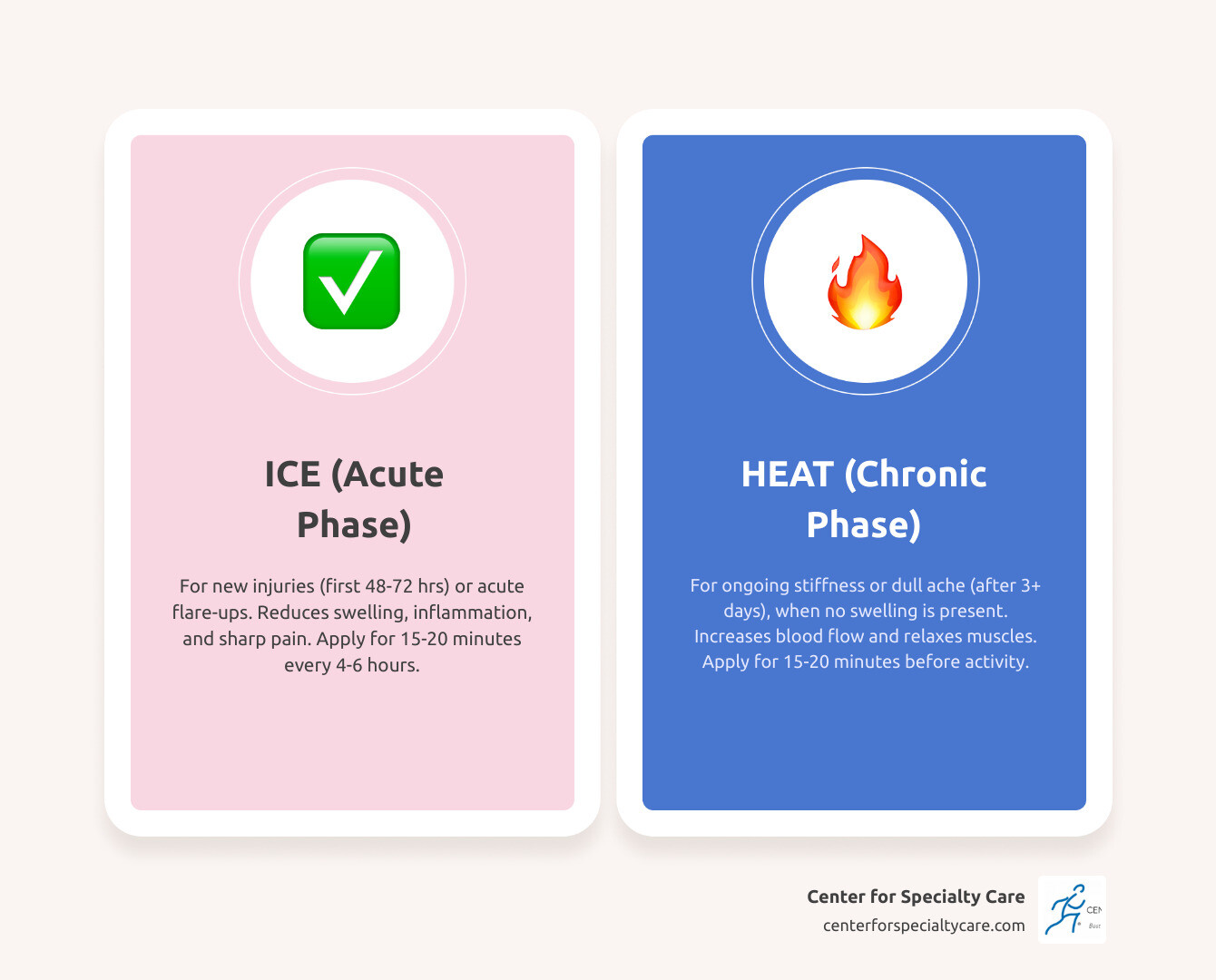
Treat tendonitis with heat or cold terms made easy:
First, What is Tendonitis? (And Why Does It Hurt?)
Before we dive into the great debate of heat versus cold, let’s get on the same page about what tendonitis actually is. Simply put, tendons are those tough, fibrous cords of connective tissue that act like strong ropes, attaching your muscles to your bones. They’re essential for movement, allowing us to walk, jump, lift, and even type!
Tendonitis is the medical term for when these vital tendons become inflamed or irritated. This irritation often manifests as pain, especially with movement, and can make everyday activities surprisingly difficult. Imagine a rope that’s frayed and angry – that’s a bit like what’s happening inside your body.
Tendonitis commonly affects various joints throughout the body. Some of the usual suspects include the shoulder (think rotator cuff tendonitis), elbow (hello, tennis elbow!), wrist, knee (jumper’s knee, anyone?), and the heel (Achilles tendonitis, a classic).
The symptoms of tendonitis can range from a dull, aching discomfort to sharp pain that worsens with specific movements. You might also notice swelling, stiffness, or even a grating or crackling sensation when you try to move the affected tendon. Reduced mobility and tightness in the joint are also common complaints.
So, what causes this unwelcome guest? Tendonitis often results from repetitive motions, overuse, or a sudden injury. Think about gardening all weekend after a long winter, or ramping up your exercise routine too quickly. Aging can also play a role, as our tendons naturally become less flexible over time. Poor posture, certain medications (like some antibiotics), and even systemic diseases such as rheumatoid arthritis or diabetes can contribute to its development.
It’s also important to understand a key distinction: tendonitis vs. tendinosis. While often used interchangeably, they’re actually different. Tendonitis is generally acute, meaning it has a sudden onset and involves inflammation. Tendinosis, on the other hand, is a chronic condition that develops over time, characterized by the degeneration of the collagen that makes up the tendon, often without significant inflammation. This distinction is crucial because it influences whether we recommend heat or cold. For more specific information, you can explore more on Achilles Tendonitis.
The Cold vs. Heat Rulebook for Tendonitis
Alright, now that we know what we’re up against, let’s get to the main event: when to treat tendonitis with heat or cold. The trick is to match the therapy to the stage and nature of your tendon pain. Think of it like this: ice is for fire, and heat is for stiffness.
Here’s a handy rulebook to guide your decision-making:
| Ice (Cold Therapy) | Heat (Heat Therapy) | |
|---|---|---|
| When to Use | For acute injuries (first 48-72 hours), when there’s visible swelling, or after an activity that causes a flare-up. | For chronic conditions (after 72 hours) with stiffness and soreness, but no significant swelling. |
| What It Does | Constricts blood vessels to reduce inflammation, swelling, and numb pain. | Dilates blood vessels to increase blood flow, relax muscles, and ease stiffness. |
| How to Apply | Use an ice pack, frozen gel pack, or even a bag of frozen peas wrapped in a towel. | Use a heating pad, warm compress, or take a warm bath. |
| Duration | 15-20 minutes at a time, several times a day. | 15-20 minutes at a time, as needed for stiffness. |
The Cold vs. Heat Rulebook for Tendonitis
Alright, now that we know what we’re up against, let’s get to the main event: when to treat tendonitis with heat or cold. The trick is to match the therapy to the stage and nature of your tendon pain. Think of it like this: ice is for fire, and heat is for stiffness.
Here’s a handy rulebook to guide your decision-making:
| Ice (Cold Therapy) | Heat (Heat Therapy) | |
|---|---|---|
| When to Use | Acute Tendonitis: Within the first 48-72 hours of injury or onset of pain, or during significant flare-ups with swelling. Also, after intense activity or exercise. | Chronic Tendonitis/Tendinosis: After the acute phase (typically after 72 hours) when swelling has subsided. Ideal for persistent stiffness, muscle soreness, or a dull ache. Also, beneficial before stretching or engaging in physical activity. |
| Key Benefits | – Reduces pain by numbing the area. – Decreases swelling by causing blood vessels to constrict (vasoconstriction). – Lowers inflammation. – Acts as a preventative measure post-workout to minimize inflammation. |
– Increases blood flow (vasodilation), which can aid healing. – Relaxes tight muscles and tendons, reducing stiffness. – Eases chronic pain and discomfort. – Prepares tissues for stretching and movement, improving flexibility. – Promotes muscle relaxation before activity. |
| How to Apply | – Use an ice pack, bag of frozen peas, or gel pack wrapped in a thin towel. – Lift the injured area if possible. – Move the ice pack gently to avoid frostbite. – Cold water immersion (CryoSpa cold therapy) for larger areas. |
– Use a heating pad, warm compress (moist heat is often more effective), hot water bottle, or warm bath/shower. – Ensure the heat source is comfortably warm, not painfully hot. – Infrared sauna for deeper, dry heat therapy. – Gel packs or heat wraps for convenience. |
| Recommended Duration | – Apply for 15-20 minutes at a time. – Repeat every 4-6 hours during the initial acute phase, or 2-3 times a day. – Allow at least 30 minutes between applications for skin to return to normal temperature. |
– Apply for 15-20 minutes at a time. – Can be used 2-3 times daily, or before specific activities. – Allow at least 30-40 minutes (or even an hour) between applications to prevent skin irritation. |
When to Use Ice (Cold Therapy)
When your tendon is acting like a grumpy, inflamed bear, ice is your best friend. We recommend using cold therapy during the acute phase, which is typically the first 48 to 72 hours after an injury or the onset of new pain. If you see visible swelling, feel a sharp pain, or have just had a particularly strenuous activity that might trigger a flare-up, reach for the ice.
The benefits of ice are pretty cool (pun intended!):
- Reduces inflammation: Ice causes blood vessels to constrict (vasoconstriction), which slows blood flow to the area. This helps to reduce the build-up of inflammatory chemicals.
- Numbs pain: The cold acts as a local anesthetic, dulling nerve sensations and providing temporary pain relief.
- Decreases swelling: By constricting blood vessels, ice minimizes internal bleeding and fluid accumulation, which are common culprits behind swelling.
To apply ice effectively, we advise:
- Duration: Apply the ice pack to the affected area for 15 to 20 minutes at a time.
- Barrier: Always place a thin towel or cloth between your skin and the ice pack to prevent frostbite or skin damage.
- Movement: If using direct ice (like ice cubes in a bag), move it around slightly to avoid prolonged contact with one spot, which can lead to ice burns.
- Frequency: During the initial 48-72 hours post-injury or during periods of heightened pain and inflammation, you can repeat this every 2-3 hours or every 4-6 hours.
- Rest between applications: Allow at least 30 minutes between icing sessions to let your skin return to its normal temperature.
For athletes and active individuals in our communities of Fairmont, Estherville, Buffalo Center, and St. James, incorporating ice into your recovery routine is a key part of our Sports Medicine insights.
When to Use Heat (Heat Therapy)
Once the initial “fire” of inflammation has subsided (usually after 72 hours), and you’re left with lingering stiffness, muscle soreness, or a dull ache, it’s time to bring on the heat. Heat therapy is generally recommended when there’s no visible swelling, and your primary goal is to relax tissues and improve flexibility. It’s particularly useful before engaging in stretching or physical activity.
The benefits of heat are quite comforting:
- Increases blood flow: Heat causes blood vessels to expand (vasodilation), which increases circulation to the area. This can deliver oxygen and nutrients, potentially aiding the healing process, and helps flush out metabolic waste products.
- Relaxes muscles and tendons: The warmth helps to loosen tight muscles and stiff tendons, reducing tension and promoting a greater range of motion.
- Eases chronic pain: By relaxing tissues and improving blood flow, heat can provide significant relief for persistent, chronic pain.
When applying heat, we suggest:
- Duration: Apply heat for 15 to 20 minutes at a time.
- Methods: You can use a warm towel, a heating pad, or a hot water bottle. Moist heat, like a warm, damp compress, often penetrates more deeply and can be more effective than dry heat. Taking a warm bath or shower can also provide relaxing, overall heat therapy.
- Temperature: Ensure the heat source is comfortably warm, not painfully hot, to avoid burns.
- Barrier: Always use a barrier between the heat source and your skin.
- Timing: Using heat before gentle stretching or rehabilitative exercises can warm up tissues, improve the effectiveness of the practice, and reduce the risk of further injury.
For more detailed guidance on leveraging warmth for your well-being, check out our tips for effective relief with heat.
How to Treat Tendonitis with Heat or Cold: Best Practices and Other Options

Now that we’ve covered the basics of when to treat tendonitis with heat or cold, let’s explore some best practices and other valuable tools in your recovery toolkit. Self-care is a journey, and it’s important to understand all your options.
Can I Alternate Between Heat and Ice?
“Why not both?” you might ask, and that’s a great question! Alternating between hot and cold therapy, often called contrast therapy or contrast baths, can indeed be beneficial in certain situations. The idea is that the alternating constriction (cold) and dilation (heat) of blood vessels creates a “pumping” action. This can help improve local circulation, potentially moving fluid out of the area and bringing in fresh blood and nutrients, which may reduce pain and stiffness.
Contrast therapy can be useful if you’re experiencing minor swelling but also find that heat helps relieve stiffness. If you decide to try it:
- Application: Start with cold for a few minutes, then switch to heat for a few minutes, and repeat this cycle.
- Sequence: A common recommendation is to start and end with cold, especially if there’s still any underlying inflammation.
- Listen to your body: If it feels good and provides relief, it’s worth incorporating. If it aggravates your symptoms, stick to one therapy at a time.
Safety First: Risks and Precautions
While heat and cold therapy are generally safe home remedies, it’s important to prioritize safety to prevent further injury.
- Skin Protection: This is paramount. Always, always place a towel or cloth between your skin and the ice pack or heating pad. Direct contact can lead to frostbite from ice or burns from heat. No one wants a new injury while treating an old one!
- Duration: Never apply heat or cold for longer than 20 minutes at a time. Prolonged exposure, even with a barrier, can still cause damage.
- Breaks: Allow at least 30-40 minutes (some sources even suggest an hour) between applications to give your skin a break and return to its normal temperature.
- Medical Conditions: If you have certain medical conditions, exercise extra caution and consult with a medical professional before using heat or cold therapy. These include:
- Diabetes: Decreased nerve sensation can make it harder to feel if the temperature is too extreme.
- Poor circulation: Heat and cold can affect blood flow, which is already compromised.
- Neuropathy: Similar to diabetes, nerve damage can reduce sensation.
- Decreased skin sensation: For any reason, if you can’t feel temperature changes well, you’re at higher risk.
- Avoid Sleeping: Never fall asleep with a heating pad or ice pack on your body. The risk of burns or frostbite without conscious monitoring is too high.
Beyond Heat and Cold: Other Effective Treatments
While heat and cold are fantastic tools, they’re often just one piece of a larger puzzle when it comes to effective tendonitis treatment. A comprehensive approach can help you find lasting relief.
Here are some other treatments that are often recommended:
- RICE Method: For acute injuries, remember RICE:
- Rest: Give the tendon a break from activities that aggravate it.
- Ice: As discussed, to reduce pain and swelling.
- Compression: Using a bandage can help reduce swelling.
- Elevation: Raising the injured area above your heart can also help with swelling.
- Over-the-Counter Medications: Nonsteroidal anti-inflammatory drugs (NSAIDs) like ibuprofen or naproxen can help reduce pain and inflammation. Topical gels containing NSAIDs can also be effective.
- Physical Therapy for recovery: This is often a cornerstone of tendonitis treatment. A physical therapist can guide you through specific exercises to stretch and strengthen the affected muscle and tendon, improve flexibility, restore function, and prevent future injuries.
- Corticosteroid Injections: For persistent pain and inflammation, a physician might recommend a corticosteroid injection directly into the tendon sheath. This can be very effective in controlling pain.
- Advanced Pain Management techniques: For more complex or chronic cases, pain management specialists may offer a range of advanced treatments, including various injections and therapies, to target the source of your pain.
- Activity Modification and Ergonomics: Sometimes, simply changing how you perform a task or adjusting your workstation can make a huge difference. A healthcare professional can help identify and address these factors.
- Surgery: In rare, severe cases, especially if a tendon is ruptured or conservative treatments fail, surgery might be considered.
How to Prevent Tendonitis from Coming Back
The best treatment is prevention! Here are some strategies to consider:
- Proper Warm-Ups: Always warm up your muscles and tendons before any vigorous activity or exercise. Think of it as gently waking them up before asking them to perform.
- Post-Activity Stretching: After your workout or activity, gently stretch the muscles and tendons you’ve used. This helps maintain flexibility and can prevent stiffness.
- Strengthening Exercises: Regular, targeted strengthening exercises help build resilience in your muscles and support your tendons. A physical therapist can design a program custom to your needs.
- Ergonomics at Work and Home: Pay attention to your posture and how you perform repetitive tasks. Adjust your computer setup, gardening tools, or sports equipment to minimize strain.
- Avoiding Overuse: This is a big one! Don’t suddenly increase the intensity or duration of an activity. Take regular breaks during repetitive tasks, and listen to your body’s signals. Don’t “push through” pain – that’s often your body’s way of saying “slow down!”
Frequently Asked Questions
Here are some answers to common questions about how to treat tendonitis with heat or cold.
How do I know whether to treat tendonitis with heat or cold?
This is the million-dollar question, and it boils down to the nature of your pain.
- Choose ICE for new, acute injuries (less than 72 hours old) where you see or suspect inflammation, swelling, or have sharp pain. This is typically what we refer to as “tendonitis.”
- Choose HEAT for chronic issues (lasting longer than 72 hours) where swelling has subsided, and you’re experiencing stiffness, muscle soreness, or a dull ache. This often aligns with conditions like “tendinosis.”
If you’re still unsure, consider what aggravates your pain. If movement or activity makes it worse and causes swelling, ice is likely the answer. If you wake up stiff and movement helps loosen it up, heat might be more beneficial.
Can using heat make my tendonitis worse?
Yes, absolutely. Using heat can make your tendonitis worse if applied too early in the injury process, especially when there’s active inflammation and swelling. Heat increases blood flow to the area, which is great for chronic stiffness but counterproductive for acute inflammation. If you apply heat to a fresh injury, you could actually increase the swelling and inflammatory response, leading to more pain and a longer recovery time.
Always wait until the initial acute symptoms (pain, swelling, redness, warmth) have subsided before introducing heat.
When should I seek professional medical help for tendonitis?
While home remedies like heat and cold can be very effective, there are times when it’s crucial to seek professional medical help. It’s important to see a doctor if:
- Your pain persists for more than a week or two despite consistent home treatment with rest, ice, and over-the-counter pain relievers.
- You experience severe pain that limits your daily function or prevents you from performing normal activities.
- You are unable to move the affected joint or put weight on the limb.
- You suspect a tendon rupture. This can be indicated by a sudden, sharp pain, a “pop” sensation, and significant weakness or inability to move the affected area. In such cases, seek urgent medical attention.
- Your symptoms worsen despite home care.
An orthopedic specialist can provide a thorough diagnosis, differentiate between tendonitis and tendinosis, and develop a personalized treatment plan that may include physical therapy, injections, or other interventions. For more guidance on seeking professional help, the Mayo Clinic offers additional resources.

Conclusion
Navigating aches and pains can be confusing, but when it comes to how to treat tendonitis with heat or cold, hopefully, this guide has brought some clarity. The core rule remains: ice for acute inflammation and swelling, and heat for chronic stiffness and muscle relaxation. By understanding the stage of your tendon injury, you can empower yourself with effective self-care strategies.
While home remedies are a great starting point, sometimes, a little extra help goes a long way. If your pain persists, worsens, or significantly impacts your life, it’s important to seek professional medical advice. An orthopedic specialist can provide a personalized, comprehensive treatment plan to help you get back to doing what you love.
Schedule a consultation with our orthopedic specialists today.