
The Ultimate Anatomy Guide: Muscles Connected to the Rotator Cuff
July 18, 2026
Rubbing Your Back the Right Way to Release Deep Knots
July 21, 2026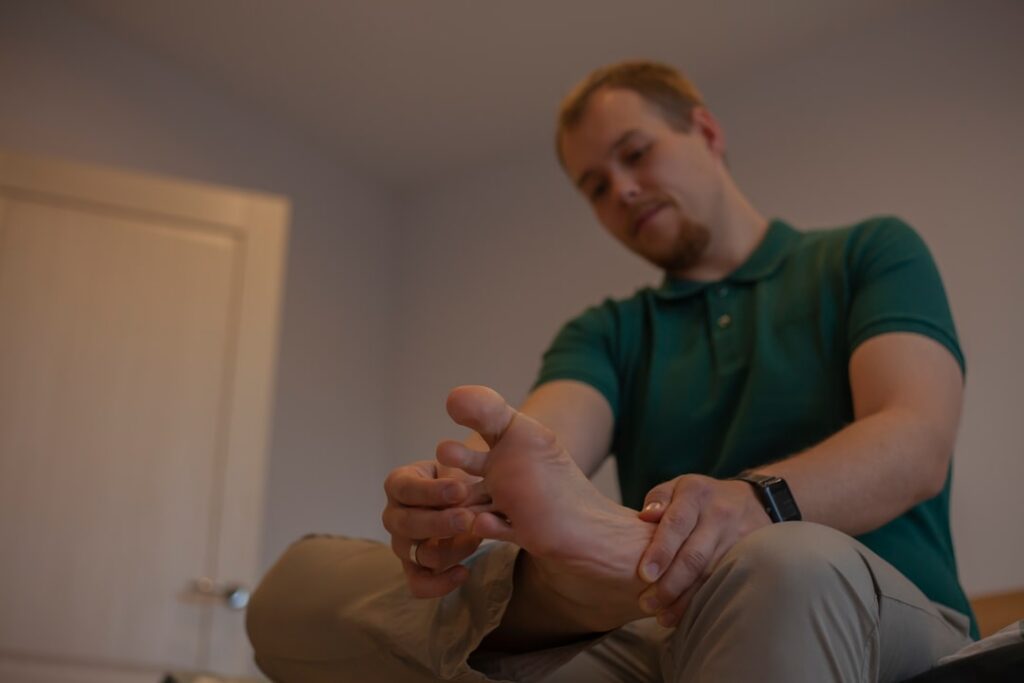
Extensor Tendonitis Joint Stiffness: Don’t Let Tight Tendons Ruin Your Walk
When Your Foot Won’t Cooperate: Understanding Extensor Tendonitis Joint Stiffness
Extensor tendonitis joint stiffness is one of the most frustrating foot problems you can deal with — pain and tightness right on top of your foot that makes every step feel like a struggle.
Here’s a quick summary of what you need to know:
- What it is: Inflammation of the extensor tendons along the top of the foot, leading to pain, swelling, and reduced joint movement
- Main symptoms: Aching pain on the top of the foot, stiffness especially in the morning or after rest, swelling, and discomfort that worsens with activity
- Common causes: Overuse, tight or poorly fitting shoes, tight calf muscles, and repetitive activity
- How to treat it: Rest, ice, compression, elevation (the RICE or POLICE method), NSAIDs, physical therapy exercises, and in rare cases, surgery
- Recovery outlook: Most people improve within 3 months — though some cases take up to a year
The good news? This is a temporary condition. With the right approach, most people make a full recovery without lasting problems.
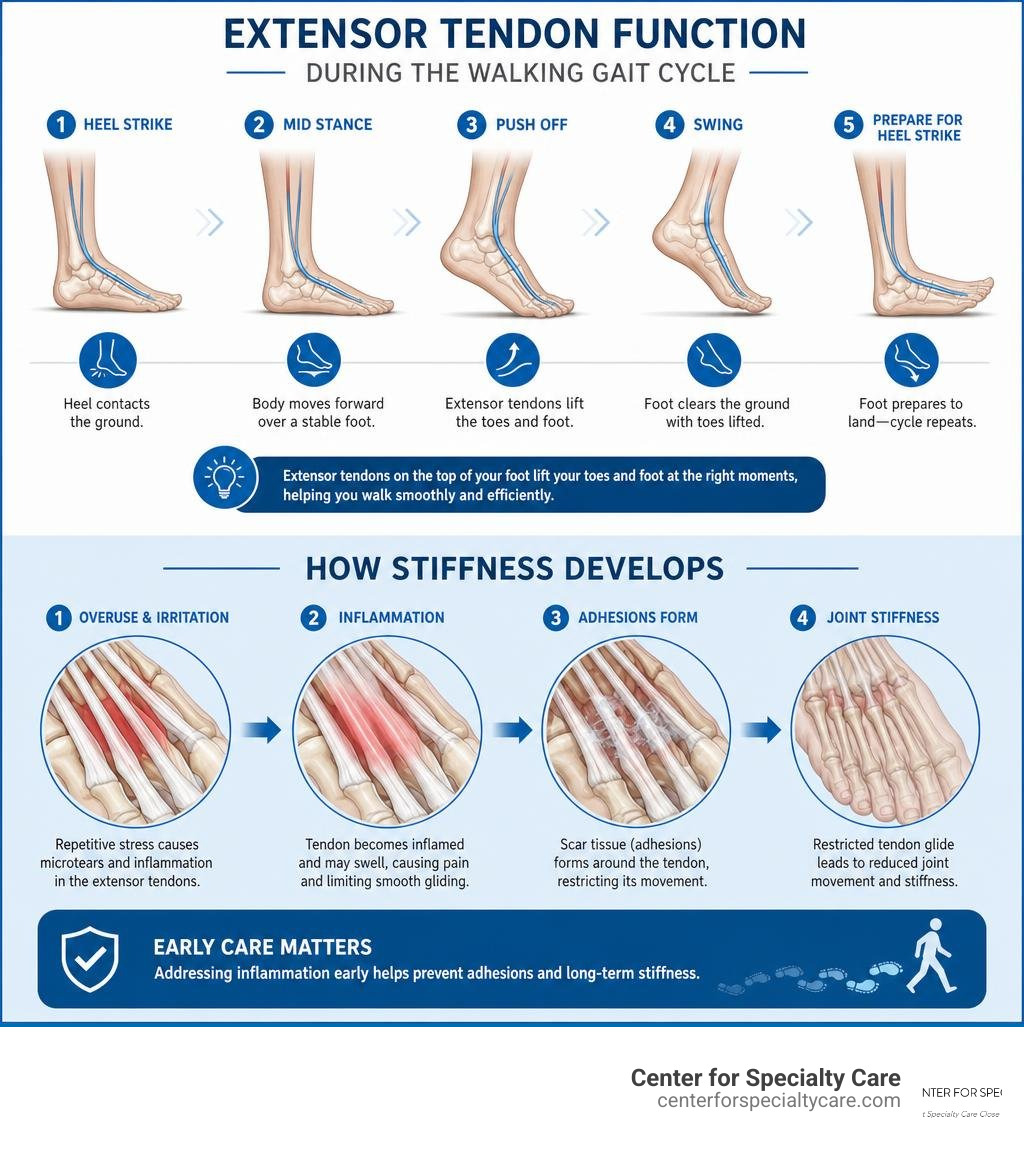
The extensor tendons run along the top of your foot and are responsible for lifting your toes and foot during every step you take. When these tendons become inflamed, even simple walking can become uncomfortable. Left unmanaged, that inflammation can lead to tendon adhesions, restricted joint movement, and the kind of stiffness that starts to affect your daily life.
This guide walks you through exactly what’s happening inside your foot, why stiffness develops, and — most importantly — what you can do about it.
I’m Dr. Corey Welchlin, a board-certified orthopedic surgeon and founder of the Center for Specialty Care in Fairmont, Minnesota, with over 30 years of experience treating musculoskeletal conditions including extensor tendonitis joint stiffness. In that time, I’ve helped countless patients go from hobbling through their day to walking — and running — pain-free again.
What is Extensor Tendonitis, Its Causes, and Symptoms
To understand why your foot feels so incredibly rigid, we first have to look at the anatomy of the top of your foot. The extensor tendons — primarily the extensor hallucis longus (EHL) and the extensor digitorum longus (EDL) — originate from relatively small muscles in the front of your lower leg. They cross the front of your ankle and travel down the top of your foot, anchoring directly into your toes. Their primary job is to lift your foot upward (dorsiflexion) and pull your toes up, working directly against the much larger, stronger Achilles tendon and calf muscles.
When we talk about tendon pain, we often use several terms that sound similar but mean very different things:
- Extensor Tendonitis: This refers to acute inflammation of the tendon, typically caused by sudden overexertion or direct pressure. It is characterized by active inflammatory cells, warmth, redness, and acute pain.
- Extensor Tendinopathy: This is a broader, more chronic term. It refers to the degeneration of the tendon’s collagen matrix over time. Instead of active inflammatory cells, histopathology reveals disorganized collagen fibers, micro-tears, and abnormal blood vessel growth (neovascularization).
To dive deeper into how these conditions present, you can Learn more about extensor tendonitis symptoms and care.
What Causes This Condition?
Extensor tendonitis is incredibly common, particularly among people who use their feet for work, sports, or hobbies. The most frequent culprits we see at our clinics in Minnesota and Iowa include:
- Repetitive Overuse: Rapidly increasing your running mileage, walking long distances on hard surfaces, or starting a demanding project like spring gardening after a winter of inactivity can overload the tendons.
- Tight Footwear and Laces: Wearing shoes that are too narrow or tying your shoelaces too tightly places direct, physical pressure on the extensor tendons as they pass over the bony instep of your foot.
- Tight Calf Muscles: If your calf muscles and Achilles tendon are tight, your foot is naturally pulled downward. Your extensor tendons have to work twice as hard to lift your foot while you walk, leading to rapid fatigue and irritation.
- Foot Structure Abnormalities: Having a high instep (high arches) or flat feet changes the mechanical pull on your tendons, making them highly susceptible to strain.

Recognizing the Symptoms
How do you know if you are dealing with extensor tendonitis rather than a simple muscle strain? Look out for these classic symptoms:
- Top of Foot Pain: A localized, aching pain right in the center or top of your foot.
- Swelling and Redness: Mild to moderate puffiness along the path of the tendons.
- Warmth: The top of your foot may feel noticeably warmer than the surrounding skin.
- Crepitus: A distinct “crunching” or grating sensation when you move your toes or flex your foot, caused by the tendon rubbing against its inflamed sheath.
- Stiffness: A feeling of tightness that makes it difficult to pull your toes upward or flex your ankle, especially when you first get out of bed.
For a detailed breakdown of these clinical signs, you can Read about extensor tendonitis symptoms.
How Extensor Tendonitis is Diagnosed
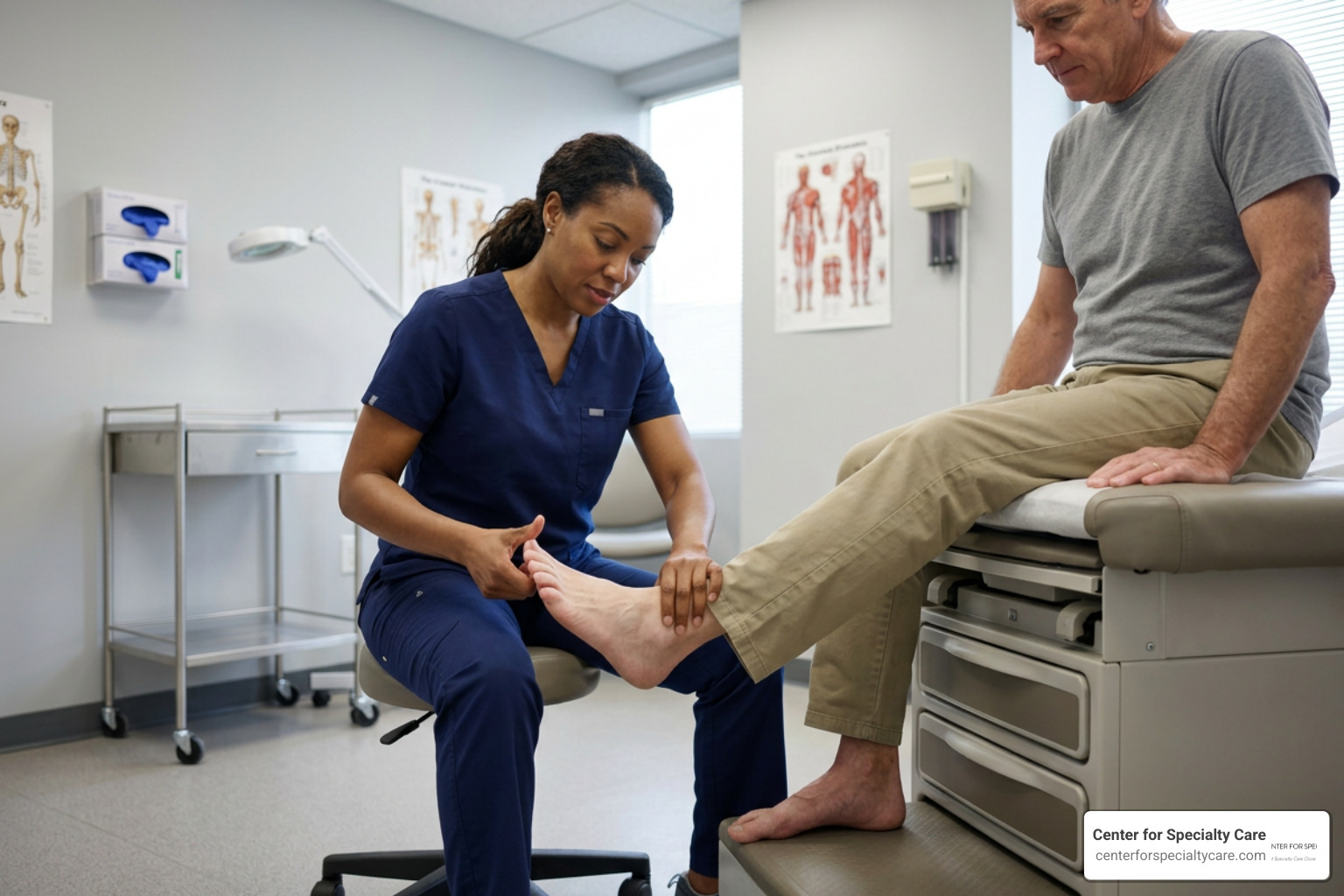
When you visit us at the Center for Specialty Care, we start with a thorough physical examination. We don’t just look at where it hurts; we evaluate your entire lower extremity mechanics.
One of the most reliable diagnostic tools we use is a resisted toe movement test. During this test, we will ask you to flex your foot downward, and then we will apply resistance as you attempt to pull your big toe or smaller toes upward. If this resisted movement triggers a sharp, localized pain on the top of your foot, it is a strong indicator of extensor tendonitis. We also evaluate your passive range of motion to see how far your joints can move without muscular effort.
While we can often diagnose extensor tendonitis through a physical exam, imaging tests are vital to rule out other conditions that mimic top-of-foot pain:
- X-rays: These do not show tendons, but they are crucial for ruling out metatarsal stress fractures (tiny cracks in the bones) or degenerative arthritis of the midfoot joints.
- Diagnostic Ultrasound: This allows us to see the tendons in real-time, checking for swelling, fluid accumulation in the tendon sheath, or micro-tears.
- MRI: Reserved for severe, stubborn, or complex cases, an MRI provides highly detailed images of both the soft tissues and bones, helping us detect deep tendon tears or atypical gout.
The Mechanics of Extensor Tendonitis Joint Stiffness
Many patients ask us, “Why does a tendon injury make my joints feel so incredibly stiff?” It’s a great question. Extensor tendonitis joint stiffness isn’t just in your head; there are concrete biological and mechanical reasons why your joints lock up when a tendon is injured.
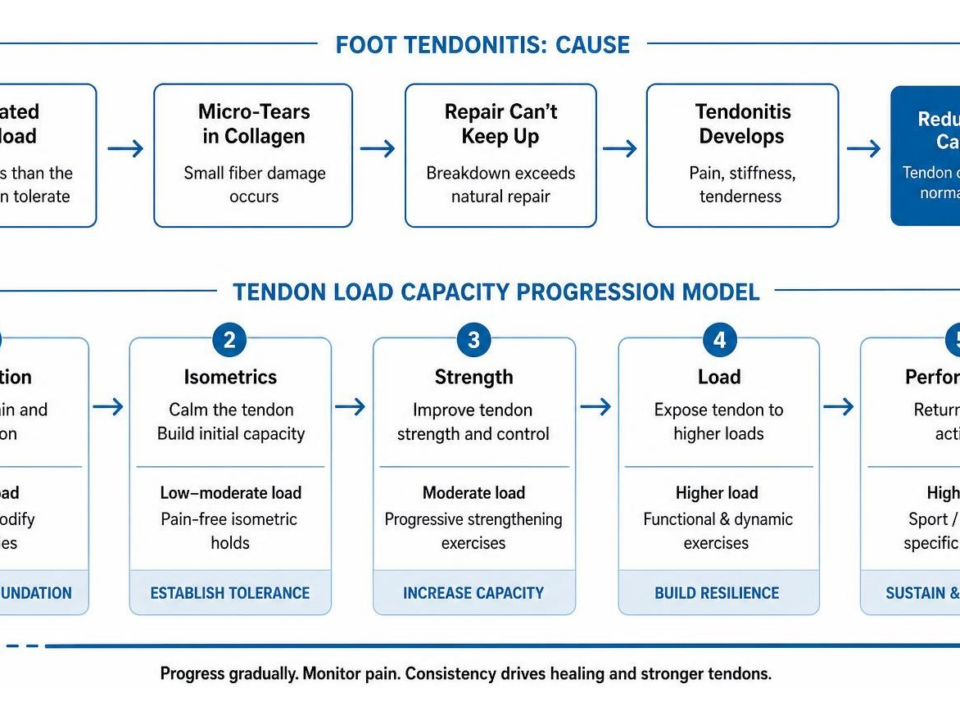
How Extensor Tendonitis Joint Stiffness Develops
When a tendon becomes inflamed, the body’s natural response is to flood the area with fluid (edema) to deliver healing cells. However, because the top of the foot has very little “extra” space and tight fascial compartments, this fluid builds up quickly.
Here is the step-by-step process of how this fluid accumulation leads to joint stiffness:
- Intracapsular Fluid and Swelling: Edema accumulates preferentially over the dorsum (top) of the foot. This fluid exerts pressure on the joint capsules of your midfoot and toes.
- Tendon Sheath Friction: The extensor tendons are housed in protective sheaths. When inflamed, the lubricating fluid inside these sheaths dries up or becomes thick, causing friction. The tendon can no longer glide smoothly, acting like a rusty brake cable.
- Restricted Gliding and Adhesions: If you rest too much or keep the foot completely still, the sticky inflammatory fluid begins to dry out, forming micro-adhesions (scar tissue) that literally glue the tendon to the surrounding skin, fascia, or bone.
- Collagen Remodeling: As the body attempts to repair the micro-tears, it lays down disorganized type-III collagen. This scar tissue is much stiffer and less elastic than healthy type-I collagen, permanently restricting the joint’s range of motion if not properly rehabilitated.
To explore the deeper surgical and clinical science behind soft tissue restrictions, you can Discover how extensor tendon stiffness is evaluated clinically.
Non-Surgical Treatments and Rehabilitation
The vast majority of our patients with extensor tendonitis joint stiffness recover beautifully without ever needing to step foot in an operating room. The secret is finding the perfect balance between protecting the injured tissue and keeping it moving.
For the first 24 to 72 hours of a painful flare-up, we recommend the POLICE protocol:
- Protection: Protect the foot from further injury by wearing supportive, stiff-soled shoes.
- Optimal Loading: Instead of complete bed rest (which promotes stiff scar tissue), engage in gentle, pain-free movement to keep the tissues active.
- Ice: Apply ice wrapped in a damp towel for 10 to 20 minutes, 2 to 3 times a day to control acute swelling.
- Compression: Use a light elastic bandage to help manage edema.
- Elevation: Keep your foot elevated above heart level when resting.
Over-the-counter nonsteroidal anti-inflammatory drugs (NSAIDs) like ibuprofen can assist with pain relief, but they should not be used for more than 10 consecutive days without consulting a physician.
We also heavily emphasize proper footwear and orthotics. If you have tight calves or high arches, custom orthotics can redistribute pressure away from the top of your foot.
When managing recovery, many patients ask about temperature therapy. You can learn more about this by reading Is heat or cold best for tendonitis? and exploring the Benefits of heat therapy. Generally, ice is best for acute flare-ups, while heat is excellent for warming up stiff, chronic tendons before stretching.
Physical Therapy Exercises to Combat Extensor Tendonitis Joint Stiffness
Once the initial, sharp pain begins to settle, movement becomes your best medicine. As we like to say in physical therapy, “motion is lotion” for stiff joints and tendons.
Here are four key exercises to restore flexibility and strength:
- Calf Stretches (Stretching the Gastroc/Soleus): Stand facing a wall, step one foot back, and keep your back heel flat on the floor. Hold for 30 seconds. This reduces the pulling force on your extensor tendons.
- Ankle Pumps: Sit with your legs straight out and slowly point your toes away from you, then pull them back toward your shins. Perform 20 repetitions to pump swelling out of the ankle joint.
- Toe Extensions and Tendon Glides: Gently pull your toes upward with your hand to stretch the bottom of your foot, then use your foot muscles to curl and extend your toes, breaking up sticky adhesions.
- Eccentric Calf Raises: Stand on the edge of a step, rise up on both feet, and slowly lower your heels down over a count of 3 to 5 seconds. This strengthens the entire lower leg complex.
To see how these movements fit into a structured recovery program, you can Explore physical therapy exercises for extensor tendons.
Advanced Conservative Modalities
For stubborn cases of extensor tendonitis joint stiffness that do not respond to basic home care, we offer several advanced non-surgical options:
- Corticosteroid Injections: If pain is severe, we can inject a steroid into the tendon sheath. We never inject corticosteroids directly into the tendon itself, as this can weaken the tissue and drastically increase the risk of a tendon rupture.
- Heat Therapy: Utilizing targeted heat for tendonitis can increase local blood flow, relax tight muscle fibers, and make collagen fibers more pliable before stretching.
- Platelet-Rich Plasma (PRP) Therapy: This cutting-edge treatment uses your own blood platelets to deliver concentrated growth factors directly to the damaged tendon tissue, accelerating natural healing.
- Serial Casting or Removable Boots: In severe cases where the patient cannot walk without significant pain, a short period of immobilization in a walking boot can allow the acute inflammation to quiet down. We carefully monitor this to ensure we do not trigger permanent stiffness, often utilizing the concept of Total End Range Time (TERT)—splinting the joint at its maximum comfortable stretch for several hours a day to safely remodel tight tissues.
When Is Surgery Indicated for Extensor Tendonitis?
While surgery is rarely required for extensor tendonitis, there are specific situations where a surgical procedure is the best path forward. We consider surgery when:
- Conservative treatments have completely failed after 6 to 12 months.
- An MRI reveals a significant, partial, or complete tendon tear.
- Severe tendon adhesions have locked the joints into a rigid, non-functional position.
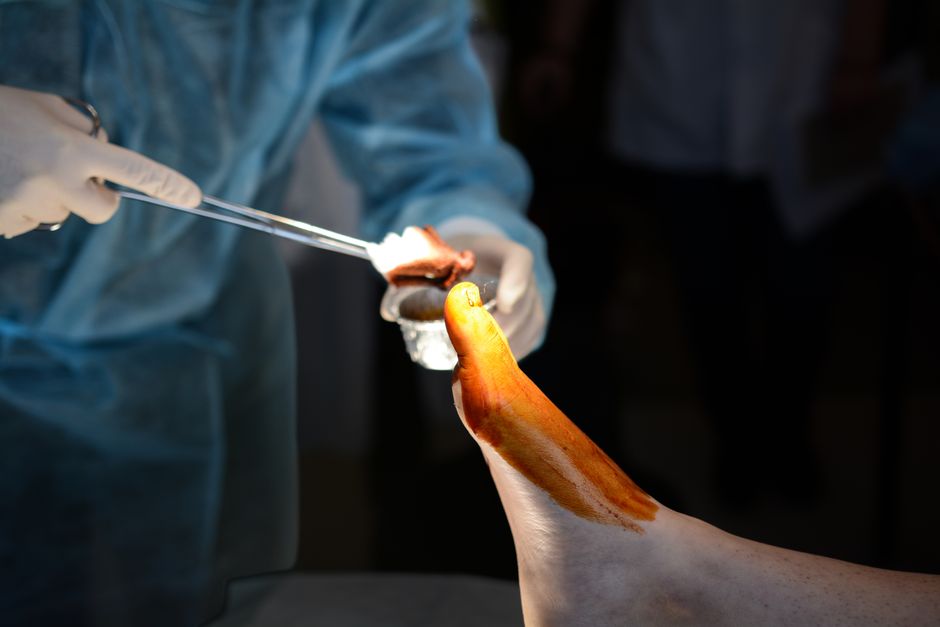
The primary surgical options include tenolysis (surgically shaving away the sticky scar tissue and adhesions surrounding the tendon) and arthrolysis (releasing a stiff joint capsule to restore movement).
Whenever possible, we utilize the WALANT (Wide-Awake Local Anesthesia No Tourniquet) technique. By using only local numbing medication and epinephrine, the patient remains fully awake. This allows us to ask the patient to actively flex and extend their toes during the surgery. We can instantly verify that we have cleared all the adhesions and restored full range of motion before we even close the incision!
| Recovery Phase | Non-Surgical Recovery | Surgical Recovery (Post-Tenolysis) |
|---|---|---|
| Initial Phase (Weeks 1-2) | Active modifications; POLICE protocol; gentle stretching. | Surgical shoe/boot; weight-bearing as tolerated; early gentle motion. |
| Intermediate Phase (Weeks 3-6) | Progressive strengthening; custom orthotics; normal walking. | Transition to supportive athletic shoes; structured physical therapy. |
| Advanced Phase (Months 2-3) | Return to high-impact sports; maintenance stretching. | Gradual return to running and impact activities; full strength recovery. |
Prognosis, Recovery Timeline, and Prevention
The overall prognosis for extensor tendonitis joint stiffness is excellent. This is a temporary injury, and almost everyone who follows a structured treatment plan makes a full recovery without any long-term impact on their ability to work, run, or play.
During your recovery, it is completely normal to experience occasional minor flare-ups. If you walk a bit too far or wear the wrong shoes, the top of your foot might ache. Don’t panic! Most minor flare-ups fully settle within 6 weeks if you temporarily scale back your activity and return to the POLICE protocol.
Preventing Future Stiffness
Once your foot feels great, you want to keep it that way. According to our June 2026 clinical guidelines, the most effective prevention strategies include:
- Proper Footwear: Avoid flat, completely unsupportive shoes if you have tight calves. Ensure your shoes have a spacious toe box and that your shoelaces are tied with even pressure (try “parallel lacing” to avoid pressure on the instep).
- Warm-Up Routines: Never jump straight into a hard workout. Spend 5 to 10 minutes performing ankle pumps, heel walks, and dynamic calf stretches to prepare your tendons for action.
- Listen to Your Body: If the top of your foot starts to ache, scale back your training volume by 20-30% for a week. It is far easier to treat mild irritation than chronic tendinopathy.
Frequently Asked Questions about Extensor Tendonitis
Can I walk or run with extensor tendonitis?
Yes, but with modifications. You should never “push through” sharp, stabbing pain. However, complete rest can actually worsen joint stiffness. We recommend staying active within a comfortable pain threshold. If walking or running triggers pain higher than a 3 out of 10, scale back your distance, loosen your shoelaces, or switch to low-impact activities like swimming or cycling until the tendon heals.
How long does it take for extensor tendonitis stiffness to go away?
For mild cases, the stiffness and pain usually resolve within 2 to 3 weeks of home care. For more severe or chronic cases, it can take 3 months to a year for the tendon to return to 100% normal. The timeline depends heavily on how early you address the symptoms and how consistently you perform your rehabilitation exercises.
What happens if extensor tendonitis is left untreated?
Ignoring the pain and continuing to overload the tendon can turn a simple, inflammatory “tendonitis” into a chronic, degenerative “tendinopathy.” Over time, the constant friction can lead to permanent tendon scarring, severe joint contractures, or even a spontaneous tendon rupture, which requires extensive surgical reconstruction.
Conclusion
You don’t have to live with the frustrating, limiting effects of extensor tendonitis joint stiffness. At the Center for Specialty Care, we are dedicated to helping our neighbors in Fairmont, Minnesota, and our surrounding clinics in Estherville, Buffalo Center, and St. James get back on their feet.
Our clinic’s core mission is to provide 100% patient satisfaction through highly personalized orthopedic care. We understand that your lifestyle, your job, and your goals are unique, which is why we never use a one-size-fits-all treatment plan. Plus, with our quick appointment availability, you won’t have to wait weeks in pain just to see a specialist.
If tight, painful tendons are keeping you from enjoying your daily walks, let us help you find relief. Take control of your recovery and maintain long-term foot health by scheduling an appointment with our compassionate orthopedic team today!