
The Lowdown on Degenerative Disc Disease: Symptoms, Causes, and Care
November 10, 2025
Finding Your Perfect Heat Pad: Recommended Solutions for Tendonitis
November 12, 2025
Rotator cuff pain clinic: 3 Steps to Expert Relief
Why Finding the Right Care for Your Shoulder Matters
A rotator cuff pain clinic specializes in diagnosing and treating injuries affecting the muscles and tendons of the shoulder joint. These clinics provide comprehensive care, from initial diagnosis and non-surgical treatments to advanced surgical repair when necessary.
What to expect at a rotator cuff pain clinic:
- Accurate diagnosis using physical exams and advanced imaging like X-ray, MRI, or ultrasound.
- Non-surgical treatments such as physical therapy, medication, and injections.
- Surgical options including arthroscopic repair and joint replacement.
- Personalized recovery plans custom to your specific injury and lifestyle.
Over 2 million Americans face rotator cuff problems annually. If you have a dull ache in your shoulder, pain that worsens at night, or weakness when lifting your arm, you’re not alone. Most people improve with conservative treatment, and even surgical patients often return home the same day. Whether your pain is from repetitive work or a sudden injury, specialized care significantly improves your recovery.
I’m Dr. Corey Welchlin, a board-certified orthopedic surgeon and founder of the Center for Specialty Care. For over three decades, our rotator cuff pain clinic has focused on minimally invasive techniques and same-day surgical options to help patients in southern Minnesota and northern Iowa recover faster.
This guide covers everything from recognizing symptoms to understanding your treatment and recovery options.
Related content about Rotator cuff pain clinic:
Understanding Rotator Cuff Pain: Causes, Symptoms, and When to Get Help
Shoulder pain can interfere with daily activities and sleep, but understanding the cause is the first step toward relief. Let’s explore the specifics of rotator cuff injuries.
What is a Rotator Cuff Injury?
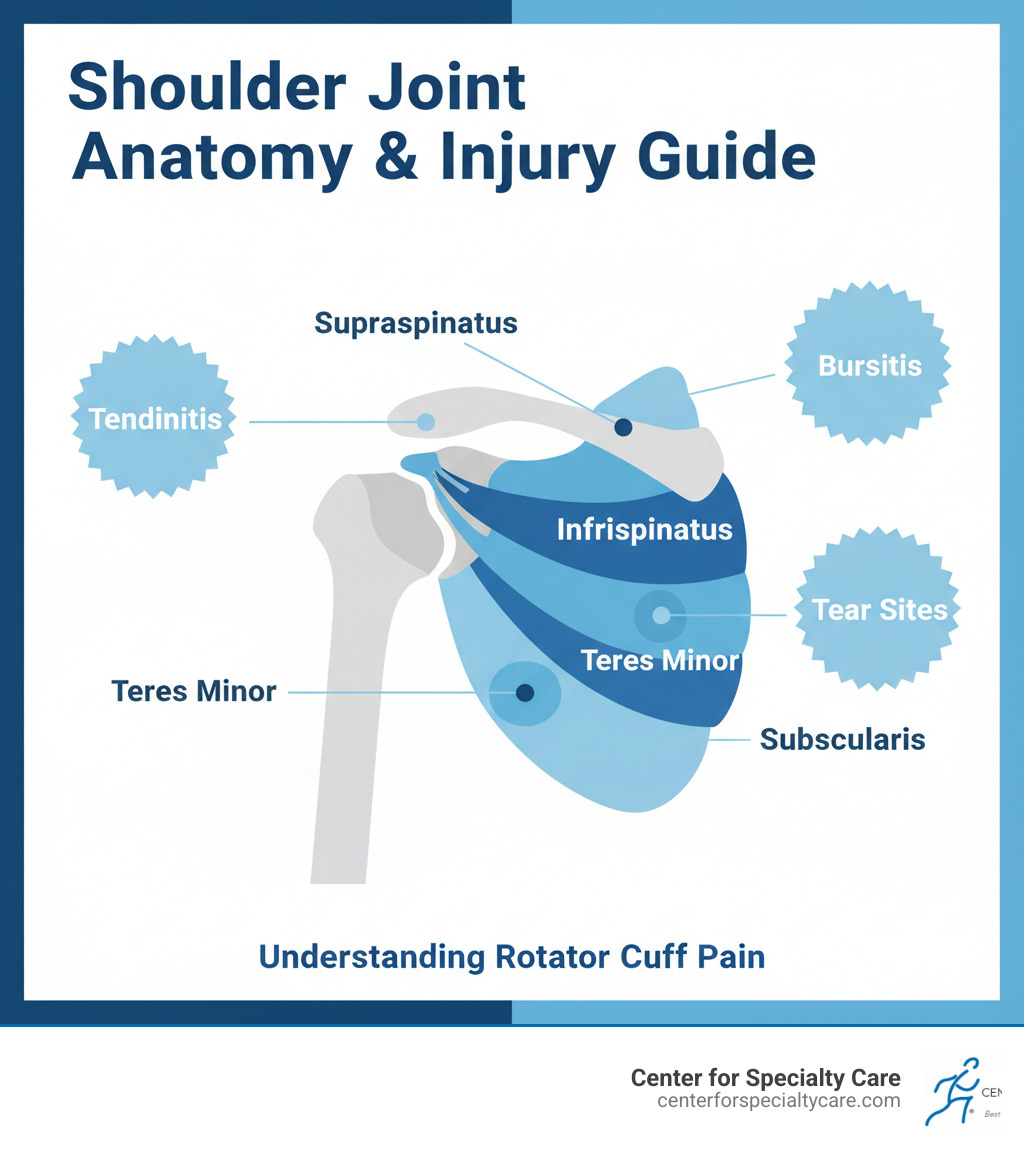
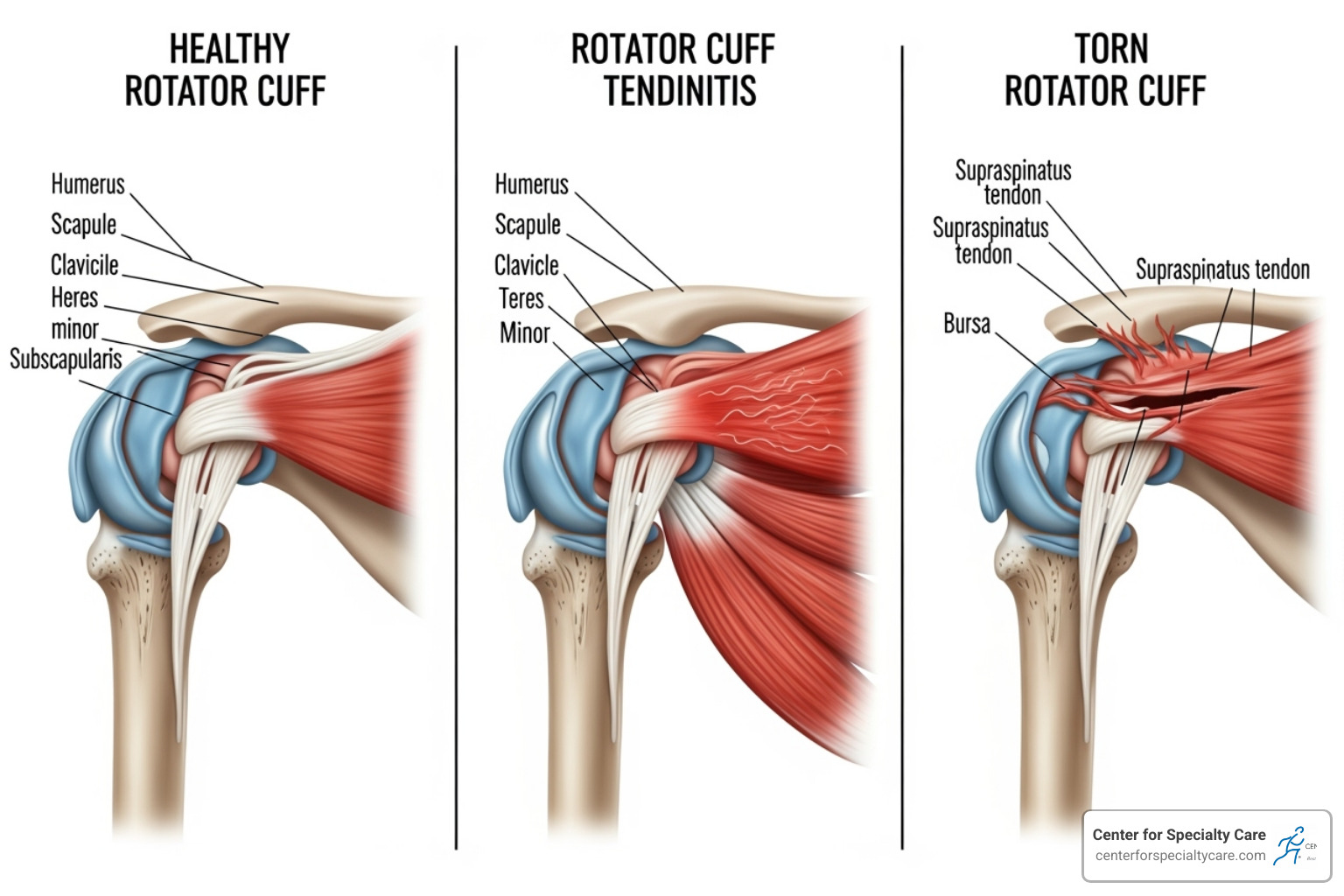
Your shoulder’s incredible range of motion makes it flexible but also vulnerable to injury. The rotator cuff—a group of four muscles and their tendons—stabilizes the shoulder joint, keeping the head of your upper arm bone (humerus) secure in the socket of your shoulder blade (scapula).
These muscles (supraspinatus, infraspinatus, teres minor, and subscapularis) work together to lift and rotate your arm. When this system is damaged, you’ll likely experience pain, weakness, and reduced mobility.
Rotator cuff injuries include:
- Tendinitis: Inflammation of the tendons, often from overuse.
- Bursitis: Inflammation of the bursa, the fluid-filled sac that cushions the joint.
- Partial tears: The tendon is damaged or frayed but not fully detached. About 80% of people with partial tears improve with non-surgical treatment.
- Full-thickness tears: The tendon has completely separated from the bone, which may require more intensive treatment.
Key Symptoms and Warning Signs
Recognizing the warning signs of a rotator cuff injury can help you get treatment sooner. The most common symptom is a dull, deep ache in your shoulder.
Many people find their pain worsens at night, leading to sleep disturbance. Lying on the affected side is often uncomfortable. You might also notice arm weakness, making tasks like lifting groceries or combing your hair difficult. This weakness is especially noticeable with overhead motion. Some people experience pain radiating down the arm or a clicking or popping sensation. If you’re experiencing these persistent signs, it’s time to get evaluated at a rotator cuff pain clinic.
For more information on shoulder sounds, see our guide on Shoulder Clicking and Pain: Causes, Effective Relief.
Common Causes and Risk Factors
Rotator cuff injuries can develop suddenly or gradually. Common causes include:
- Repetitive overhead activities: Jobs like painting or carpentry, and sports like tennis, baseball, or swimming, put constant stress on the shoulder.
- Acute trauma: A fall onto an outstretched arm or lifting something too heavy can cause an immediate tear. For more on this, read our article on Shoulder Pain After Car Accident: Causes, Recovery Tips.
- Degenerative wear and tear: As we age, tendons lose elasticity and blood flow decreases, making them more susceptible to damage. Bone spurs can also develop and irritate the rotator cuff.
Risk factors include age over 40, certain occupations involving overhead work, and a family history of shoulder problems.
Shoulder Impingement and When to See a Doctor
Shoulder impingement syndrome, which accounts for about half of all shoulder pain cases, occurs when rotator cuff tendons get pinched against the shoulder blade as you lift your arm. This compression causes inflammation and pain, especially with overhead movements. If left untreated, it can lead to a rotator cuff tear.
Seek medical attention if:
- Your pain is persistent and hasn’t improved after a week of rest and ice.
- You experience sudden weakness after an injury.
- You have an inability to use your arm for basic tasks.
For help finding the right specialist, see our article on Doctor for Shoulder Problems: Your Guide to Specialized Care. Early diagnosis and treatment are key to a faster recovery.
Diagnosis and Treatment at a Rotator Cuff Pain Clinic
When shoulder pain disrupts your life, you need a team that understands the complexity of the shoulder joint. That’s what you’ll find at our rotator cuff pain clinic.
Why Choose a Rotator Cuff Pain Clinic?
While a general practitioner can be a starting point, a specialized rotator cuff pain clinic offers a depth of experience that is crucial for an accurate diagnosis and effective treatment. Misdiagnosis can lead to prolonged pain and frustration.
Benefits of specialized care include:
- Comprehensive treatment plans with a full spectrum of options under one roof.
- A multidisciplinary team of orthopedic surgeons, radiologists, and physical therapists collaborating on your care.
- Personalized care that considers your lifestyle, work, and recovery goals.
At Center for Specialty Care, we are committed to 100% patient satisfaction. We prioritize quick appointment availability across our locations in Fairmont MN, Estherville IA, Buffalo Center IA, and St James MN, offering minimally invasive techniques and same-day surgical options to help you recover faster.
The Diagnostic Process: What to Expect
Your visit begins with a thorough conversation about your symptoms, when the pain started, and what activities make it worse. This history provides crucial clues about your condition.
Next is a physical examination. We will assess your range of motion and strength by asking you to move your arm in various directions. We will also check for tenderness in specific areas of your shoulder.

To confirm our findings, we use advanced imaging. X-rays help us see your bones and rule out issues like arthritis or bone spurs. For a detailed look at soft tissues like tendons, we use ultrasound or MRI. An MRI provides the most comprehensive view of your shoulder’s muscles, tendons, and ligaments, allowing us to pinpoint the exact location and severity of a tear.
Non-Surgical Treatment Options
Most rotator cuff injuries don’t require surgery. About 80% of people with partial tears improve with conservative treatments. We always start with the least invasive options.
- Physical therapy is the foundation of most treatment plans. Our therapists design personalized exercise programs to restore flexibility and strengthen shoulder muscles. Learn more in our article on Shoulder Treatment with Physical Therapy: Recovery, Pain Relief.
- Activity modification involves avoiding movements that aggravate your shoulder, giving it a chance to heal.
- Rest and ice can reduce acute pain and inflammation.
- Anti-inflammatory medications like ibuprofen can help manage pain. For more information, you can consult resources like the NHS guide on Ibuprofen.
- Corticosteroid injections deliver powerful anti-inflammatory medication directly into the shoulder for significant temporary relief. We will discuss the pros and cons to help you make an informed decision. Explore your options in our guide on Types of Injections for Shoulder Pain Relief: Treatment Options.
Advanced Surgical Procedures
Sometimes, surgery is the best path to a full recovery, especially if conservative treatments haven’t worked after several months, or if you have a large or complete tear. Acute tears from a sudden injury may also require prompt surgical attention. Our article Will a Torn Rotator Cuff Heal on Its Own? Key Recovery Facts explains this further.
At Center for Specialty Care, we specialize in minimally invasive techniques:
- Arthroscopic repair: We use a tiny camera and small incisions to reattach the torn tendon to the bone. Most patients go home the same day.
- Open repair: A slightly larger incision may be needed for very large or complex tears, allowing for direct access to the damaged tendon.
- Tendon transfer: If a tendon is too damaged to repair, we may transfer a healthy nearby tendon to restore function.
- Reverse shoulder replacement: For massive, irreparable tears or severe arthritis, this procedure reverses the shoulder’s anatomy, allowing the deltoid muscle to lift the arm. This provides significant pain relief and improved function.
The Road to Recovery: Timelines, Prevention, and Home Care
Understanding your recovery journey can make all the difference. Our team at Center for Specialty Care is here to guide you through every step.
Typical Recovery Timelines
Recovery time varies based on injury severity, treatment type, and individual factors. Here’s a general overview:
-
Non-Surgical Recovery: With conservative treatments like physical therapy, you may notice improvement within a few weeks, but full recovery can take up to a year. Many people feel significantly better within 6 to 12 weeks. Consistent effort is key.
-
Post-Surgery Recovery: This process is longer and occurs in phases.
- Initial Immobilization (4-6 weeks): Your arm will be in a sling to protect the repair. This rest period is critical for healing.
- Early Rehabilitation (2-4 months): You’ll begin physical therapy to gently restore range of motion and start light strengthening exercises. Most people regain significant function within four to six months.
- Full Recovery (up to 12-18 months): Complete restoration of strength and endurance takes time. Dedication to your physical therapy program is essential for the best outcome. For more tips, see Shoulder Treatment: Physical Therapy Tips for Fast Recovery.
At-Home Remedies and Recommended Exercises
There’s a lot you can do at home to manage pain and support your recovery.
Managing Pain at Home:
- Rest and activity modification: Avoid movements that cause pain, especially heavy lifting or overhead activity.
- Ice packs: Apply ice for 15 minutes at a time, several times a day, to reduce pain and swelling.
- Over-the-counter pain relievers: Medications like ibuprofen can help manage pain and inflammation.
Gentle Exercises to Support Recovery:
Once approved by your doctor or physical therapist, these exercises can help restore mobility. Stop if you feel sharp pain.
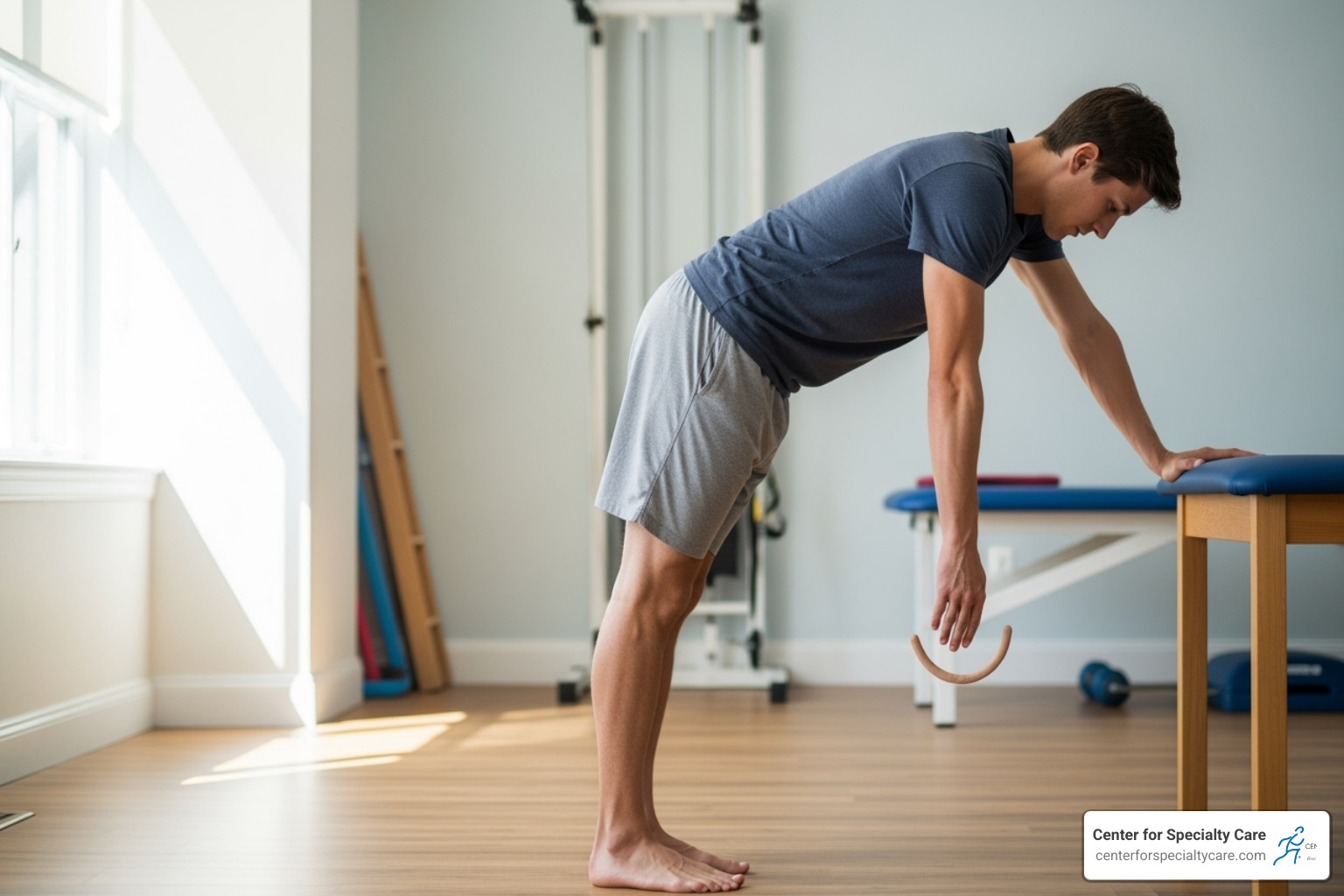
- Pendulum swings: Lean forward and let your affected arm hang down. Gently swing it in small circles, forward and back, and side to side.
- Wall slides: Stand facing a wall and slide your hands up as high as you comfortably can, then slowly slide them back down.
- Wall push-ups: Stand facing a wall and place your hands on it. Slowly bend your elbows to lower your chest toward the wall, then push back.
- Shoulder rotation exercises: Lie on your back with elbows bent at 90 degrees. Use your unaffected arm to gently rotate the affected arm outward.
Always consult your physical therapist before starting a new exercise regimen.
How to Prevent Future Rotator Cuff Injuries
Proactive measures can keep your shoulders healthy and prevent re-injury.
- Strengthening exercises: Continue a maintenance program to keep the muscles supporting your shoulder strong.
- Proper posture: Avoid slouching to reduce strain on your shoulders, especially when sitting.
- Avoiding overuse: Take frequent breaks during repetitive tasks and gradually build intensity in new activities.
- Warming up before activity: Spend 5-10 minutes warming up your shoulder muscles before sports or heavy lifting.
- Ergonomics: Adjust your workspace to promote good posture and minimize awkward reaching.
By incorporating these strategies, you can significantly reduce your risk of another rotator cuff injury. For more expert advice, explore our guide on Best Therapy for Shoulder Pain: Expert Solutions & Relief.
Frequently Asked Questions about Rotator Cuff Pain
When you’re dealing with shoulder pain, it’s natural to have questions. Here are clear, straightforward answers to some of the most common questions we hear at our rotator cuff pain clinic.
How can I relieve rotator cuff pain at night?
Night pain is a frustrating symptom of a rotator cuff injury. Here are some strategies to help you rest better:
- Avoid sleeping on the affected side. This puts direct pressure on the inflamed tendons.
- Use pillows for support. Sleeping in a recliner or propped up in bed can take pressure off the joint. If you sleep on your back, place a small pillow under your affected arm. If you sleep on your good side, hug a pillow to prevent your injured arm from drooping.
- Manage pain before bed. Taking an approved over-the-counter pain reliever or applying an ice pack for 15-20 minutes before bed can help reduce inflammation and discomfort.
Can a rotator cuff tear heal without surgery?
Yes, many rotator cuff tears can improve without surgery, but it depends on the type of tear.
Partial tears, where the tendon is damaged but not completely detached, often respond very well to conservative treatment. About 80% of people with partial tears find relief through physical therapy, activity modification, and medication. Your body has a great capacity to heal when given the right support.
However, complete, full-thickness tears rarely heal on their own because the tendon has fully separated from the bone. An accurate diagnosis from a specialist at a rotator cuff pain clinic is crucial to determine the severity of your tear and the best course of action. Our article on Will a Torn Rotator Cuff Heal on Its Own? Key Recovery Facts provides more detail.
What exercises should I avoid with a rotator cuff injury?
While gentle exercise is vital for recovery, certain movements can aggravate an injury and should be avoided.
- Listen to your body. Stop any movement that causes sharp, shooting pain.
- Avoid heavy lifting. This puts excessive strain on compromised tendons.
- Avoid sudden, jerking motions. Your shoulder needs smooth, controlled movements.
- Avoid overhead pressing movements. Exercises like military presses can cause impingement and worsen inflammation. Reaching far behind your back can also cause pain and should be done with caution.
Always follow the guidance of your physical therapist, who can help you safely progress your activity levels as your shoulder heals.
Conclusion: Your Path to a Pain-Free Shoulder
Living with rotator cuff pain can disrupt every aspect of your life, from simple daily tasks to getting a good night’s sleep. But you don’t have to accept this as your new normal. Relief is possible, and the path starts with an accurate diagnosis and the right care team.
At Center for Specialty Care, we have spent over three decades helping people reclaim their lives from shoulder pain. Our rotator cuff pain clinic is dedicated to understanding your unique situation and helping you achieve your personal recovery goals—whether that’s returning to work, playing with your grandchildren, or simply sleeping without pain.
We believe in personalized care, not one-size-fits-all solutions. We offer a full spectrum of treatments, from physical therapy and injections to advanced, minimally invasive surgical techniques like arthroscopic repair. We always start with conservative options and recommend surgery only when it’s truly necessary, prioritizing approaches that get you home the same day whenever possible.
Our multidisciplinary team of orthopedic surgeons, physical therapists, and imaging specialists works together for you. Serving communities across Fairmont MN, Estherville IA, Buffalo Center IA, and St James MN, we offer quick appointment availability because we know that when you’re in pain, you can’t wait.
It’s time to listen to what your shoulder is telling you. Take control of your health and refind what it feels like to move freely and live without pain.
Take the first step toward shoulder pain relief by scheduling your appointment today. Your pain-free future is waiting.