
Shoulder Blade Nerve Pain: Release the Beast and Find Comfort
December 17, 2025
Decoding the Dollars: Your Guide to Intracept Procedure Pricing
December 19, 2025
Shoulder popping causes: Harmless vs. Serious 2025
Why Understanding Shoulder Popping Matters for Your Health
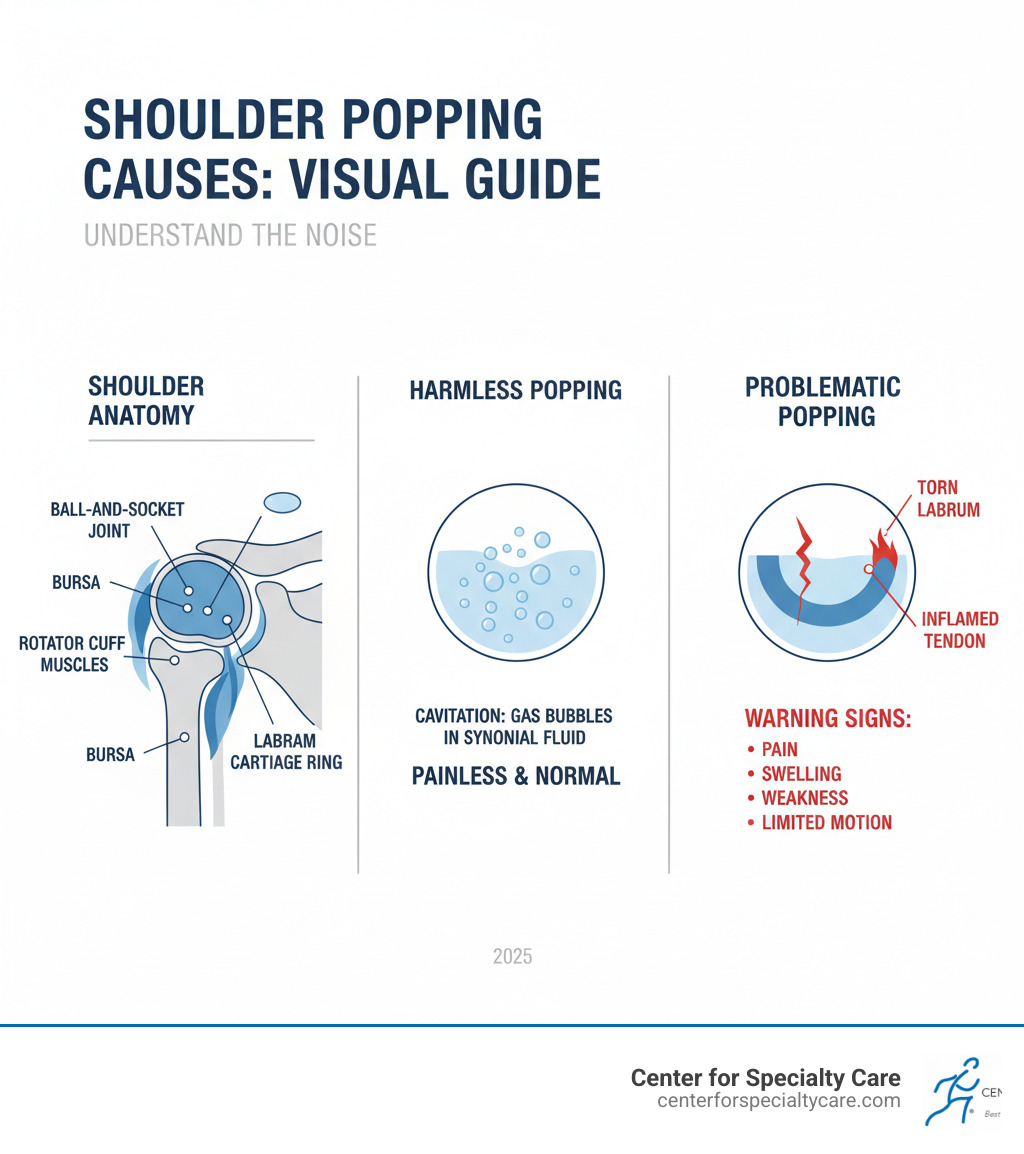
Shoulder popping causes can range from harmless joint sounds to signs of a serious injury. Hearing clicks, pops, or grinding from your shoulder is a common reason people seek orthopedic care.
Quick Answer: Common Shoulder Popping Causes
- Harmless cavitation: Gas bubbles releasing from joint fluid.
- Tendon movement: Tendons sliding over bone during motion.
- Labral tears: Damage to the cartilage ring in the shoulder socket.
- Rotator cuff injuries: Tears or inflammation in stabilizing muscles.
- Bursitis: Inflammation of the fluid-filled sacs that cushion the joint.
- Osteoarthritis: Cartilage breakdown causing bone-on-bone contact.
- Shoulder instability: Loose ligaments allowing abnormal joint movement.
The key distinction is simple: painless popping is usually harmless, while popping with pain, swelling, weakness, or limited motion signals a problem needing professional evaluation.
Your shoulder is the body’s most mobile joint, but this flexibility makes it prone to injury. Up to 70% of adults will experience shoulder pain, and ignoring painful symptoms can lead to worsening damage, chronic instability, or frozen shoulder. Understanding the cause of your shoulder sounds is the first step toward preventing minor issues from becoming major problems.
I’m Dr. Corey Welchlin, a board-certified orthopedic surgeon with over 30 years of experience treating shoulder conditions for patients in southern Minnesota and northern Iowa. Having performed thousands of rotator cuff repairs and joint replacements, I know that early, accurate diagnosis is crucial for effective treatment and long-term health.
Find more about shoulder popping causes:
Harmless Pops vs. Problematic Clicks: Understanding the Difference
Most shoulder sounds are harmless. The most common cause is cavitation, where tiny gas bubbles (oxygen, nitrogen, carbon dioxide) form and pop in the synovial fluid that lubricates your joint. This is the same phenomenon as cracking your knuckles. Another normal sound occurs when tendons move over bone as you rotate your arm.
Medical professionals call these sounds crepitus. While crepitus can indicate an underlying issue, it’s not automatically a problem. The key is whether or not there is pain.
When Popping Signals a Problem
Pain changes everything. While painless clicking is usually benign, popping accompanied by other symptoms warrants attention. Here are the primary red flags:
- Pain with movement: A sharp discomfort or persistent ache that occurs with the pop or click.
- Swelling, warmth, or redness: These signs around the shoulder point to inflammation that needs evaluation.
- Weakness in the arm: Difficulty lifting objects or performing daily tasks can signal a muscle or tendon injury.
- Limited range of motion: If you can’t move your arm through its normal arc or feel persistent stiffness, it’s a clear warning sign.
- Shoulder instability: A feeling that the shoulder is loose, could “give way,” or might slip out of place. This is often accompanied by a catching or locking sensation, where the joint momentarily gets stuck.
A persistent, rough grinding sound can also indicate cartilage damage. If your popping started suddenly after an injury or fall, or if symptoms worsen with activity and don’t improve with rest, your shoulder needs professional help. Even constant painless popping may suggest an instability that could lead to future problems.
If you’re experiencing any of these symptoms, it’s time to get answers. Learn more about when to see a doctor for shoulder problems and understand what’s happening inside your shoulder.
The Most Common Shoulder Popping Causes and Related Conditions
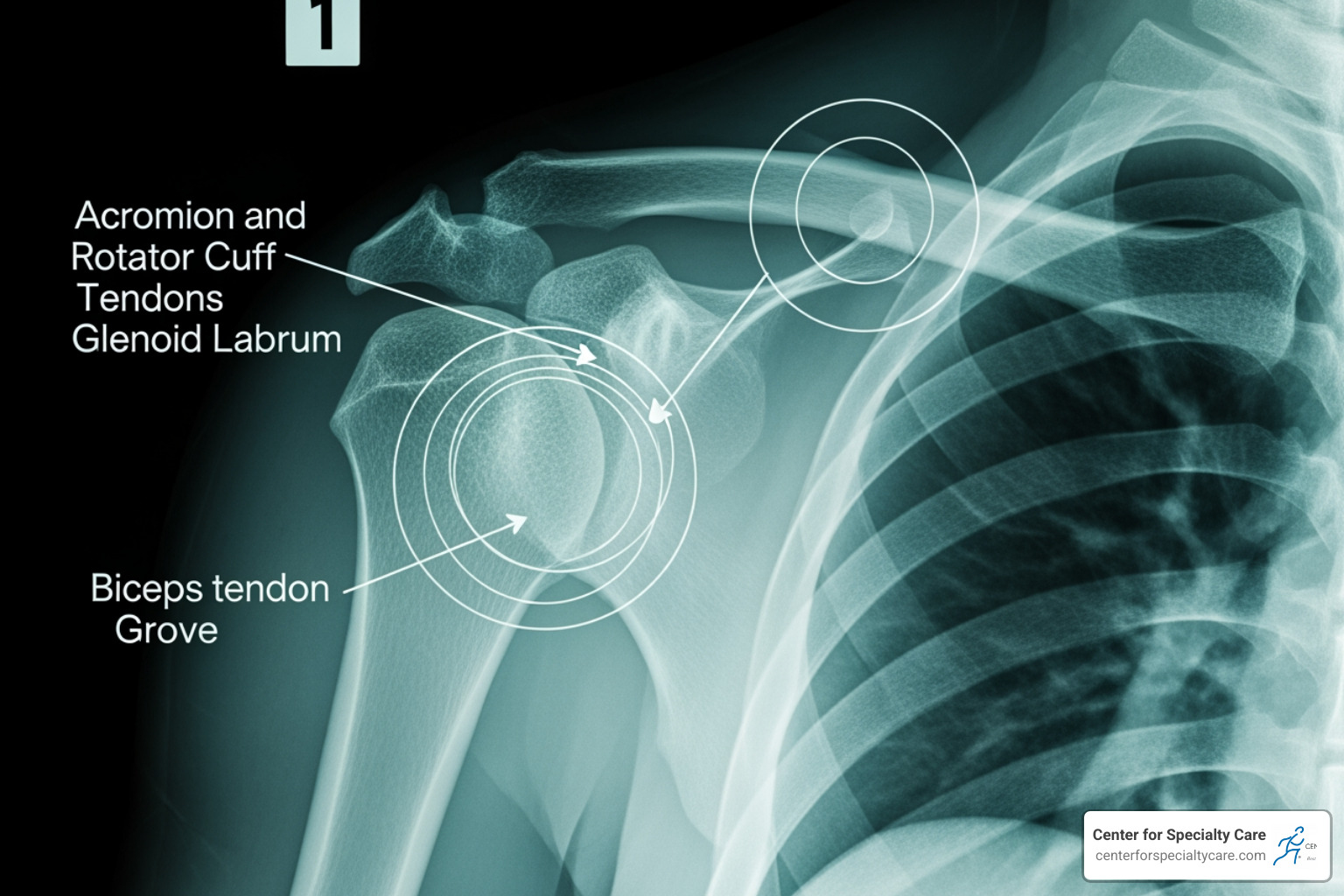
To understand shoulder popping, we must first look at the joint’s anatomy. The shoulder, or glenohumeral joint, is a complex ball-and-socket structure where the humerus (upper arm bone), scapula (shoulder blade), and clavicle (collarbone) meet. A network of ligaments (connecting bone to bone) and tendons (anchoring muscle to bone) provides stability. The rotator cuff—a group of four muscles and their tendons—powers movement, while the labrum (a cartilage ring) deepens the socket. Bursae, small fluid-filled sacs, reduce friction. Damage or inflammation to any of these parts can cause popping and clicking.
Mechanical and Structural Issues
These issues often develop gradually from daily habits.
- Poor posture and muscular imbalances: Slouching or rounded shoulders can cause misalignment, leading to tendons and muscles rubbing improperly. This is a common issue for those who sit at a desk or drive for long periods.
- Scapulothoracic bursitis (snapping scapula syndrome): Inflammation of the bursa between the shoulder blade and rib cage can cause a painful snapping or popping sound with overhead arm movement. Scientific research on snapping scapula syndrome has improved our understanding of this condition.
- Tendons or ligaments snapping over bone: Sometimes, a tendon can snap over a bony prominence as you move, like a guitar string being plucked. While often painless initially, this can lead to irritation over time.
Injury-Related Shoulder Popping Causes
When popping is paired with pain, an injury is often the culprit.
- Labral tears: A tear in the labrum (cartilage ring) can cause grinding, popping, and pain. SLAP tears affect the top of the labrum, while Bankart tears occur at the front and bottom, often with a dislocation. These injuries result from falls, direct hits, or repetitive overhead motions. A study on labral tears details their impact on shoulder function.
- Rotator cuff injuries: These range from inflammation (tendinitis) to partial or complete tears. Many develop from wear and tear, but they can also happen suddenly. Symptoms include a dull ache, weakness, and popping sounds. Learn more about rotator cuff tears.
- Shoulder instability: This occurs when the humerus slips partially (subluxation) or completely (dislocation) out of the socket. This can become a chronic issue, with popping sounds resulting from the abnormal joint movement.
- Biceps instability: One of the most common causes of painful clicking is when the long head of the biceps tendon slips out of its groove at the front of the shoulder, creating a distinct snap, often during rotational movements.
Degenerative and Other Shoulder Popping Causes
- Osteoarthritis: As the most common form of shoulder arthritis, this condition involves the gradual wearing away of cartilage. The resulting bone-on-bone contact creates grinding, cracking, and popping, along with pain and stiffness.
- Osteochondromas: These are benign (non-cancerous) bone growths that can cause popping as soft tissues slide over them. While usually harmless, they can sometimes press on nerves or blood vessels. The American Academy of Orthopaedic Surgeons provides detailed information on osteochondromas.
- Biceps tendinopathy: Inflammation of the long head of the biceps tendon, common in weightlifters or those with jobs involving repetitive overhead motion, can cause pain and popping at the front of the shoulder.
Effective Treatment and Management Strategies
At Center for Specialty Care, our goals are to relieve your pain, restore shoulder function, and prevent recurrence. Your treatment plan will depend on the specific cause of your shoulder popping and its impact on your life.

At-Home Care and Preventative Exercises
For mild, painless popping, or new, minor discomfort, these strategies can be your first line of defense.
- Rest and activity modification: Avoid movements that trigger the popping or pain. Give your body a chance to heal.
- Ice: Apply a cold compress for 15-20 minutes several times a day to reduce inflammation and numb pain.
- Over-the-counter anti-inflammatories: Medications like ibuprofen or naproxen can help manage pain and swelling.
- Posture correction: Poor posture is a common culprit behind shoulder popping causes. Sit and stand tall, with your shoulders rolled back and down, to reduce stress on the joint.
- Gentle exercises: Strengthening and stretching are key to long-term shoulder health.
- Pendulum swings: Lean forward, let your arm dangle, and gently swing it in small circles.
- Wall push-ups: A gentler alternative to floor push-ups to build strength.
- External rotation with a resistance band: Keep elbows at your sides and rotate your forearms outward to strengthen the rotator cuff.
- Scapular retractions: Squeeze your shoulder blades together.
For more guidance, see our guide on exercises for shoulder pain from lifting weights.
Professional Treatments: Physical Therapy and Beyond
If home care isn’t enough, or if your popping is painful and persistent, it’s time for professional help.
Physical therapy is the cornerstone of treatment for most shoulder popping causes. Our therapists design personalized programs to strengthen your rotator cuff and scapular stabilizers, improve range of motion, and correct posture. They also use manual therapy techniques like joint mobilization and soft tissue massage to improve joint mechanics and release tight muscles. Physical therapy not only treats the current problem but also equips you to prevent future issues. Learn more about physical therapy for shoulder treatment and recovery.
Corticosteroid injections can provide significant relief when inflammation is the primary issue. Using ultrasound guidance, we deliver medication directly to the source of pain and swelling. This can reduce symptoms enough to allow you to participate fully in physical therapy. Explore more about shoulder injection options for pain relief.
Surgical intervention may be considered for serious injuries like significant labral or rotator cuff tears, or chronic instability that doesn’t respond to conservative care. We always start with the least invasive options and only recommend surgery when it offers the best chance for you to return to your activities without pain.
Frequently Asked Questions about Shoulder Popping
We hear these questions daily in our Fairmont, Estherville, Buffalo Center, and St. James clinics. Here are answers to common concerns about shoulder popping causes.
How can I tell if my shoulder popping is serious?
The most important indicator is pain. If your shoulder pops without pain, it’s likely harmless cavitation or normal joint mechanics. However, if the popping is accompanied by pain, swelling, weakness, or a feeling of instability, your body is sending an alarm signal. Other red flags include redness, warmth, limited motion, or a catching sensation. If the popping started after an injury, seek immediate medical attention. When in doubt, an evaluation can provide peace of mind and prevent a minor issue from worsening.
Can ignoring painful shoulder popping lead to long-term damage?
Yes. Ignoring painful popping is like ignoring a “check engine” light. A minor issue can escalate into a more serious one. For example, a small rotator cuff tear can enlarge, chronic instability can develop, and arthritis can accelerate. One of the most frustrating outcomes is frozen shoulder (adhesive capsulitis), a condition causing severe stiffness and pain that can take months to resolve. Early diagnosis and treatment lead to better outcomes and protect your shoulder’s long-term health.
What is the first step I should take for a newly painful, popping shoulder?
First, rest your shoulder and avoid activities that cause pain. This doesn’t mean complete immobilization (unless a significant injury occurred), but simply backing off from aggravating movements. Apply ice for 15-20 minutes at a time to reduce inflammation, and consider over-the-counter anti-inflammatory medication. If the pain is severe, resulted from an injury, or doesn’t improve after a few days of self-care, it’s time to schedule an appointment. We prioritize quick appointment availability to identify the shoulder popping causes and start treatment before the problem progresses.
Take Control of Your Shoulder Health

You now know that shoulder popping causes range from harmless gas bubbles to serious injuries like rotator cuff or labral tears. The most important takeaway is to let pain be your guide. Painless popping is usually not a concern, but when accompanied by pain, weakness, swelling, or instability, your body is signaling a problem that shouldn’t be ignored.
Waiting for a painful shoulder to get better on its own can be risky. A minor issue can progress to a larger tear, chronic instability, or even a debilitating frozen shoulder.
Early intervention is key. When addressed early, many shoulder problems can be resolved with conservative treatments like physical therapy and posture correction. At Center for Specialty Care, we believe in personalized attention without the long wait. Our team in Fairmont, Estherville, Buffalo Center, and St. James takes the time to understand the specific cause of your shoulder popping and create a custom treatment plan. From comprehensive physical therapy to advanced surgical techniques, we offer a full spectrum of care.
Your shoulder is essential for countless daily activities. Don’t let popping and pain limit your life. Whether you need reassurance that your clicking is normal or comprehensive treatment for a painful condition, we’re here to help you move freely again.