
Getting Zapped: Your Back Ablation Procedure Explained
March 16, 2026
Support Your Sole with These Top Arch Inserts
March 18, 2026
Sore Achilles? Here’s How to Choose Between Ice and Heat for Relief
Why Choosing the Right Treatment Matters for Your Achilles Pain
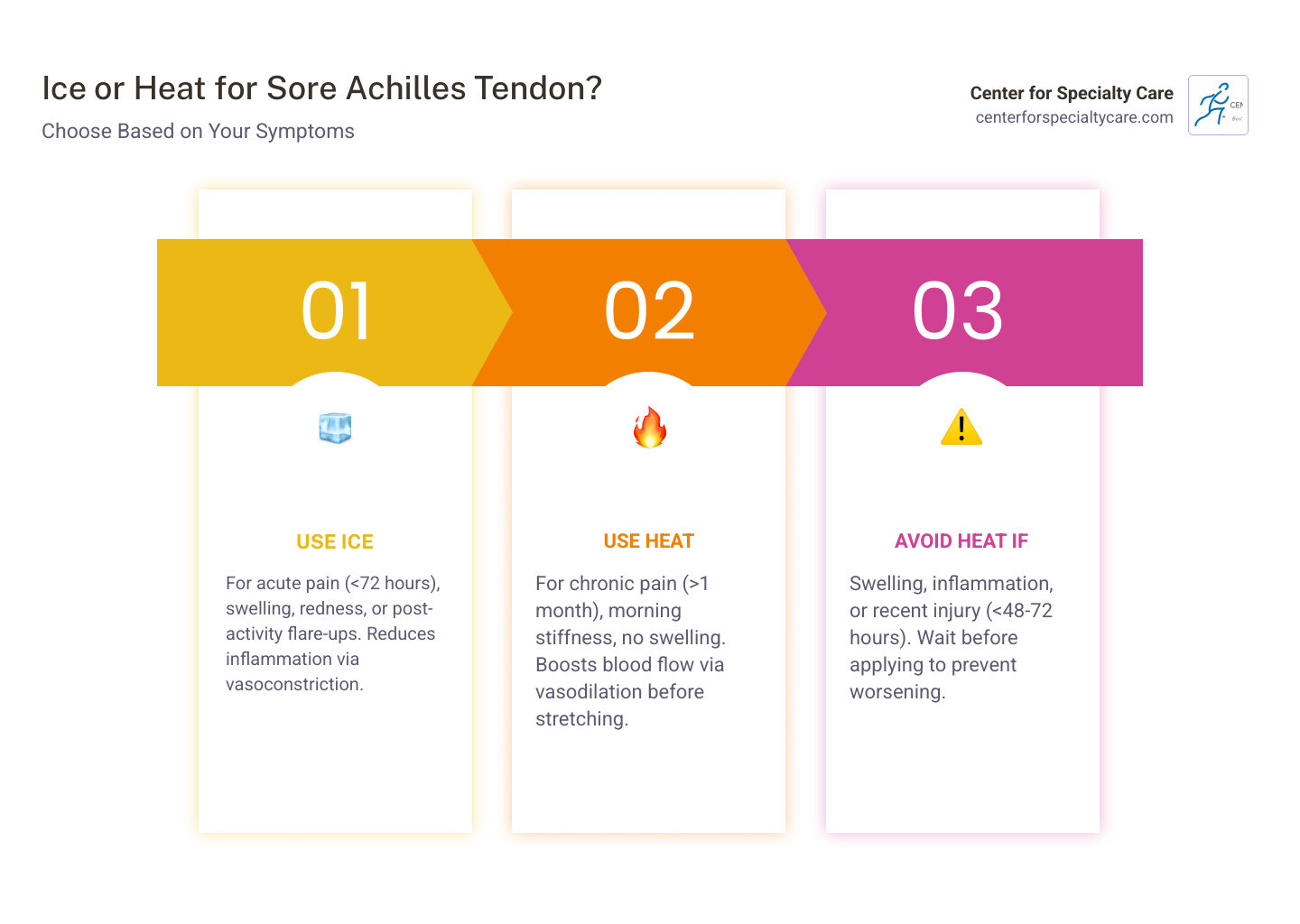
Ice or heat for sore achilles tendon depends on whether your injury is new or long-standing:
Use Ice When:
- Pain started within the last 72 hours (acute injury)
- You notice swelling, warmth, or redness
- Pain flares up after activity or exercise
- You suspect a recent strain or overuse injury
Use Heat When:
- Pain has lasted more than 1 month (chronic condition)
- Your Achilles feels stiff in the morning
- No visible swelling is present
- You’re preparing for gentle stretching or exercise
Avoid Heat If:
- Your tendon is swollen or inflamed
- The injury happened recently (wait at least 48-72 hours)
- You see redness or feel warmth in the area
The Achilles tendon connects your calf muscles to your heel bone and handles enormous stress during walking, running, and jumping. When it becomes painful, your body is signaling that something needs attention—whether that’s acute inflammation from a recent strain or chronic degeneration from repetitive overuse.
Understanding the difference between tendonitis (acute inflammation) and tendonosis (chronic collagen breakdown) is essential because each responds differently to temperature therapy. Research shows that applying ice numbs nerve endings for temporary pain relief, while heat increases blood flow to support long-term healing—but only when used at the right time.
As Dr. Corey Welchlin, a board-certified orthopedic surgeon with over 30 years of experience treating musculoskeletal injuries in southern Minnesota and northern Iowa, I’ve guided countless patients through the decision of ice or heat for sore achilles tendon relief. My approach emphasizes evidence-based treatments that address both immediate pain and long-term recovery.
Ice or heat for sore achilles tendon glossary:
- ice pack for achilles tendon
- heating pad for achilles tendonitis
- is heat or cold best for tendonitis
Understanding Your Injury: Achilles Tendonitis vs. Tendonosis
Before you reach for the freezer or the heating pad, we need to talk about what is actually happening inside your heel. Most people use the term “tendonitis” as a catch-all, but in orthopedics, there is a massive difference between tendonitis or tendonosis.
The Acute Phase: Achilles Tendonitis
Tendonitis is an acute condition. This is when the tendons become actively inflamed or irritated, usually due to a sudden increase in activity or a specific injury. If you just finished a long run in Fairmont or a weekend tournament in Estherville and your heel is throbbing, red, or swollen, you likely have tendonitis. In this stage, the body is sending inflammatory cells to the site to begin repairs.
The Chronic Phase: Achilles Tendonosis
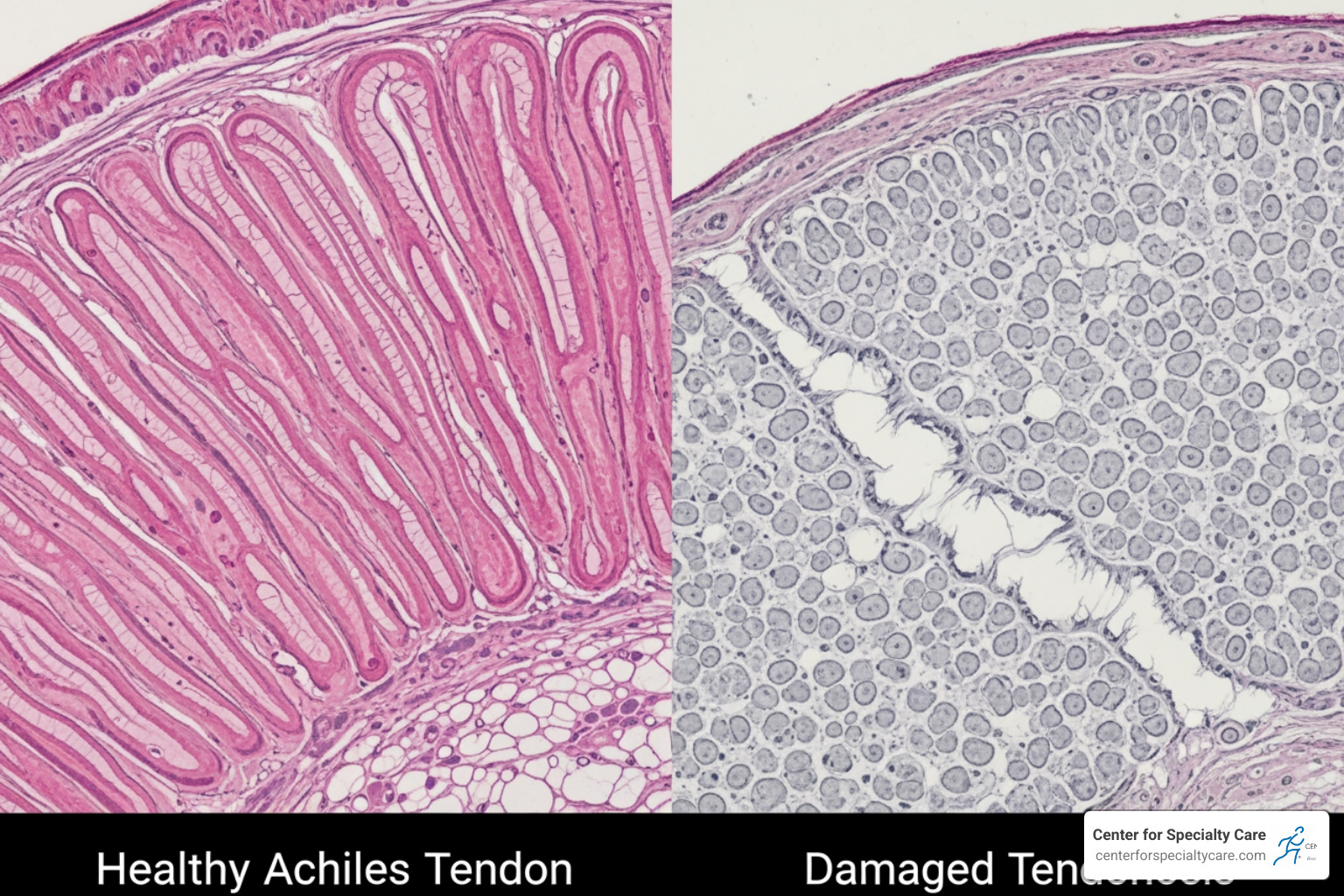
If your pain has been lingering for months, it has likely developed into tendonosis. Tendonosis is a chronic condition characterized by the breakdown of collagen, the structural protein that gives your tendon its strength.
In tendonosis, there is actually very little inflammation. Instead, the tendon tissue is deteriorating because it hasn’t healed properly over time. Symptoms include a dull ache, restricted movement, and sometimes the formation of a tender lump on the tendon itself. Because there is no active swelling, icing a “lump” caused by tendonosis won’t do much for the underlying structural issue.
When to Use Ice or Heat for Sore Achilles Tendon
Choosing between ice or heat for sore achilles tendon relief is all about timing. Think of ice as your “emergency brake” for pain and heat as your “accelerator” for blood flow.
| Feature | Ice (Cold Therapy) | Heat (Thermal Therapy) |
|---|---|---|
| Best For | Acute injury (new) | Chronic pain (long-term) |
| Primary Goal | Reduce swelling & numb pain | Increase flexibility & blood flow |
| Timing | First 72 hours after injury | After 72 hours / Morning stiffness |
| Physiology | Vasoconstriction (narrows vessels) | Vasodilation (widens vessels) |
For a deep dive into these conditions, check out our Achilles Tendonitis 101 guide.
The Case for Ice
Ice works through vasoconstriction—it narrows the blood vessels to limit the amount of fluid and inflammatory markers reaching the injury site. This is vital during the first few days of a flare-up to keep swelling under control. It also numbs the nerve endings, providing a natural “painkiller” effect without the side effects of oral medications.
The Case for Heat
We often get asked, does heat help tendonitis? The answer is yes, but specifically for chronic cases or after the initial inflammation has subsided. Heat promotes vasodilation, which helps encourage blood flow to an area that naturally has a limited supply. This is particularly helpful for morning stiffness, where the heat “wakes up” the tendon and makes it more pliable before you start your day.
Contrast Baths: The Best of Both Worlds
If you have minor lingering swelling but find that heat relieves your discomfort, you might benefit from contrast baths. This involves alternating between cold and warm water to create a “pumping” action in the blood vessels, which can help clear out metabolic waste while soothing the joint.
Is Ice or Heat for Sore Achilles Tendon Better After a Workout?
This is where the science gets interesting. While many athletes instinctively reach for ice after a workout, research on blunted training response suggests we should be careful.
Routine icing after strength training can actually blunt the anabolic signaling that tells your body to strengthen the tissue. In other words, if your goal is to make your Achilles stronger through rehab exercises, over-icing might actually slow down your progress. Cold water immersion and aggressive icing should be reserved for managing severe pain that prevents you from sleeping or walking, rather than as a standard cooldown method after every gym session.
When to See a Doctor for Ice or Heat for Sore Achilles Tendon Relief
While home care is a great first step, some ankle pain requires professional intervention. You should schedule a podiatry or orthopedic consultation at one of our locations in Fairmont, MN or Estherville, IA if:
- You heard a loud “pop” or “snap” (a sign of a rupture).
- You cannot stand on your tiptoes.
- The pain is so severe you cannot walk normally.
- Your symptoms haven’t improved after two weeks of home care.
If you are in the UK, you might get help from 111 online, but here in Southern Minnesota and Northern Iowa, the Center for Specialty Care offers quick appointment availability to get you an accurate diagnosis.
Step-by-Step Guide to Safe Application
Using ice or heat for sore achilles tendon relief is only effective if done safely. The skin over the Achilles is thin, making it susceptible to temperature-related injuries.
How to Apply Ice Safely
- Wrap It Up: Never apply ice directly to the skin. Use a thin cloth or a damp towel to prevent frostbite.
- The 10-Minute Rule: Keep the ice on for no more than 10 minutes at a time. If the area goes numb, remove it immediately.
- Space It Out: Allow at least 30 minutes to an hour for the skin to return to a normal temperature before reapplying. To prevent over-icing, ensure there are at least 6-hour intervals between major icing sessions.
- Move the Ice: Don’t let the pack sit in one exact spot for the full duration; shifting it slightly helps prevent frostbite.
How to Apply Heat Safely
- Moderate Temperature: Use a heating pad on a medium setting or a warm (not scalding) towel.
- Check Your Skin: Remember to watch for redness or irritation. Heat can be applied for longer than ice (15-20 minutes), but you should never fall asleep with a heating pad on.
- Advanced Options: For those with chronic stiffness, an infrared sauna can provide deep-penetrating heat that warms the body more directly than traditional saunas.
Comprehensive Treatments Beyond Temperature Therapy
While ice or heat for sore achilles tendon relief provides comfort, it is rarely a “cure” on its own. To truly heal, we need to address the mechanical stress on the tendon.
- Relative Rest: This doesn’t mean sitting on the couch for a month. It means swapping high-impact activities like running for low-impact ones like swimming or cycling.
- Heel Lifts: Using a small insert in your shoe can temporarily shorten the distance the tendon has to stretch, giving it a break while it’s inflamed.
- Eccentric Exercises: This is the gold standard for tendonosis. Slow, controlled heel drops help rebuild the collagen structure.
- Understanding Blood Supply: It is a myth that tendons have “bad” blood supply. In reality, the blood supply is exactly right for a tendon; it just requires specific loading protocols to stimulate repair.
- Footwear: Ensure you are wearing supportive shoes that don’t rub against the back of the heel, as this can irritate the bursa and the tendon.
Frequently Asked Questions about Achilles Relief
Can I use ice and heat at the same time?
Not exactly at the same time, but alternating them (contrast therapy) is very effective for chronic stiffness with occasional swelling. Usually, you would do 3 minutes of heat followed by 1 minute of cold.
Does icing actually speed up tendon healing?
Surprisingly, ice does not speed up healing. It is a pain management tool. Healing requires blood flow, nutrients, and appropriate mechanical loading (exercise). Ice is great for getting through a painful day, but it won’t “fix” the tendon structure.
How many times a day can I ice my Achilles?
You can ice up to 3 times per day during an acute flare-up. However, ensure you have at least 6 hours between sessions to allow the deep tissues to return to their optimal functioning temperature.
Conclusion
Deciding between ice or heat for sore achilles tendon relief doesn’t have to be a guessing game. If it’s swollen and new, go with ice. If it’s stiff and old, try heat.
At the Center for Specialty Care, we are committed to 100% patient satisfaction and personalized care. Whether you are visiting us in Fairmont, MN, or one of our Iowa locations in Estherville or Buffalo Center, our team is ready to help you move beyond temporary relief and into a permanent recovery. Don’t let Achilles pain keep you on the sidelines—reach out to us for a comprehensive evaluation today.