How to Do Exercises for Tendonitis in Foot Without Tripping Up
August 6, 2026
In-Depth Guide to Extensor Tendonitis
August 8, 2026
When Scapula Pain Goes South: Radiating Shoulder Blade Pain Explained
When Shoulder Blade Pain Radiates Down Your Arm — Here’s What It Means
Shoulder blade pain radiating down the arm is one of the most common — and most misunderstood — complaints seen in orthopedic care. It can start as a dull ache between your shoulder blades and slowly creep into your upper arm, forearm, or even your fingers.
Here’s a quick overview of what’s likely going on:
| What You Feel | What It Often Means |
|---|---|
| Aching or burning from shoulder blade into upper arm | Rotator cuff irritation or muscle strain |
| Tingling or numbness down to the fingers | Pinched nerve in the neck (cervical radiculopathy) |
| Pain with arm heaviness and weak grip | Thoracic outlet syndrome |
| Sudden sharp pain with chest tightness | Possible cardiac emergency — call 911 |
| Dull ache under right shoulder blade | Possible referred pain from an internal organ |
The shoulder joints are among the most mobile in the human body. That mobility is a strength — but it also makes the area highly vulnerable to wear, nerve compression, and injury.
Pain doesn’t always come from where you feel it. Sometimes the source is your neck. Sometimes it’s a compressed nerve. In rare cases, it’s not a musculoskeletal issue at all — it’s a signal from an internal organ. Understanding why the pain is traveling matters, because the cause shapes the treatment.
I’m Dr. Corey Welchlin, a board-certified orthopedic surgeon with over 30 years of experience treating shoulder blade pain radiating down the arm at the Center for Specialty Care in Fairmont, Minnesota. In this guide, I’ll walk you through the most common causes, warning signs, and treatment options so you know exactly what to do next.
Shoulder blade pain radiating down arm terms to learn:
Understanding Shoulder Blade Pain Radiating Down Arm
To understand why pain travels from your upper back down to your fingertips, we have to look at how your upper body is wired. The shoulder blade, or scapula, is a flat, triangular bone nestled in your upper back. It does not sit there in isolation; it is suspended by a complex web of muscles, ligaments, and tendons that connect it to your spine, neck, ribs, and upper arm bone (humerus).

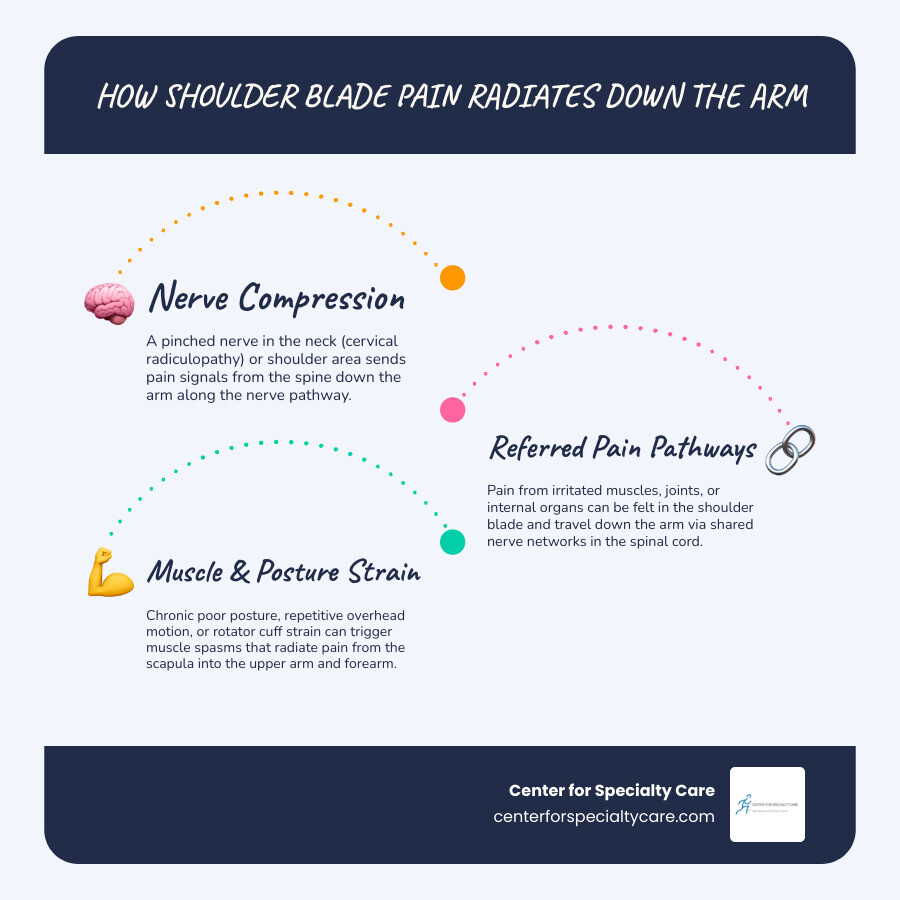
When you experience shoulder blade pain radiating down the arm, it is often a classic demonstration of how our nervous system communicates. The nerves that control and provide sensation to your shoulder, arm, and hand all originate in your cervical spine (your neck). These nerves exit the spinal cord, pass near the shoulder blade, and travel all the way down to your fingers. If a nerve is irritated, compressed, or inflamed anywhere along this pathway, your brain may register the pain as a traveling sensation.
This phenomenon is closely tied to the concept of Referred Pain: What It Is, Causes, Treatment & Common Areas. Referred pain occurs because the sensory nerves from different parts of your body share the same “highway” of pathways back to the spinal cord and brain. When these signals cross, your brain can easily mistake the true origin of the pain, projecting it onto an entirely different area. This is why a neck issue can feel like severe scapula pain or an aching forearm.
Direct vs. Referred Scapular Pain
When diagnostic specialists evaluate upper back pain, we first categorize it into direct pain or referred pain:
- Direct Scapular Pain: This originates directly within the scapular bone, the surrounding muscles (such as the rhomboids, trapezius, or infraspinatus), or the local joints. Direct pain is usually highly localized. If you press on a specific spot on your shoulder blade and it hurts intensely, or if the pain flares up only when you move your arm in a specific direction, you are likely dealing with direct musculoskeletal strain.
- Referred Scapular Pain: This originates somewhere else—such as the cervical spine, the shoulder joint itself, or even your internal visceral organs. If you are experiencing a dull, deep ache pain under scapula, it might be referred from a completely different area.
For example, a clinical indicator known as Kehr’s sign describes a phenomenon where a ruptured spleen refers sharp pain directly to the left shoulder blade. Similarly, gallbladder disease or a gallstone can cause a sharp, cramping pain under the right shoulder blade. Even conditions like peptic ulcers, lung diseases (like bronchitis or localized tumors), or cardiovascular events like a myocardial infarction (heart attack) can send pain signals to the scapular region. The brain receives these visceral pain signals along the same pathways as the skin and muscles of the shoulder, leading to a confusing sensory experience.
Common Causes of Radiating Scapular and Arm Pain
When patients visit our clinics in southern Minnesota and northern Iowa, they often ask, “How did this happen?” The transition from a localized backache to a radiating arm issue usually points to a few specific culprits involving the cervical spine, nerve pathways, or localized joint dysfunction.
Musculoskeletal Causes of Shoulder Blade Pain Radiating Down Arm
Many cases of radiating upper back pain start with the muscles and tendons surrounding the shoulder joint:
- Rotator Cuff Injuries and Irritation: The rotator cuff is a group of four muscles and tendons that stabilize the shoulder joint. If these tendons become inflamed (tendonitis) or torn, pain can radiate upward toward the shoulder blade and downward into the upper arm. Interestingly, clinical research (such as studies by Lewis in 2015) has shown that many adults have rotator cuff tears visible on MRIs without experiencing any pain or symptoms at all. However, when they do become symptomatic, the pain can be highly disruptive.
- Subacromial Pain Syndrome: This is the most common reason for shoulder pain. It occurs when the tendons of the rotator cuff or the subacromial bursa become compressed or irritated within the narrow space beneath the acromion (part of the shoulder blade). This irritation often manifests as a deep, aching pain in the upper arm that worsens when reaching overhead or sleeping on the affected side.
- Muscle Strain and Overuse: Repetitive overhead movements are a primary cause of localized muscle strain. Professionals who perform repetitive daily tasks—such as carpenters, painters, and overhead athletes—frequently strain their scapular stabilizers. This strain creates painful knots, or trigger points, which can refer a dull, aching pain down the arm.
To explore these musculoskeletal connections further, you can read our guide on why your shoulder blade hurts and how to fix it. For additional insight into how these structures interact, you can also refer to the clinical discussion on Pain from the Shoulder Blade Radiating Down the Arm | Vinmec.
Nerve-Related Conditions and Compression
When the pain is described as “electric,” “burning,” or accompanied by “pins and needles,” the nervous system is almost certainly involved.
- Cervical Radiculopathy (Pinched Nerve in the Neck): This occurs when a nerve root exiting the cervical spine becomes compressed or irritated. This compression is often caused by a herniated disc or age-related bone spurs (cervical spondylosis). As noted by Blanpied et al. (2017), cervical radiculopathy symptoms frequently extend below the elbow, traveling along specific nerve pathways (dermatomes) all the way to the fingers. If you have a pinched nerve in shoulder blade regions, the root cause is very often located in your neck.
- Thoracic Outlet Syndrome (TOS): This is a group of disorders that occur when the blood vessels or nerves in the space between your collarbone and your first rib (the thoracic outlet) become compressed. According to the Thoracic outlet syndrome – Symptoms and causes – Mayo Clinic database:
- Neurogenic TOS: This accounts for approximately 95% of all TOS cases. It involves the compression of the brachial plexus (the network of nerves that controls muscle movement and sensation in the shoulder, arm, and hand).
- Venous TOS: Occurring in about 4% of cases, this involves damage or compression of the subclavian vein, which can lead to sudden arm swelling or a bluish discoloration.
- Arterial TOS: The rarest form, accounting for about 1% of cases, occurs when the subclavian artery is compressed, resulting in a cold, pale arm and a weakened pulse.
- Demographics: TOS is most commonly diagnosed in adults between the ages of 20 and 50, and women are more than three times as likely to be diagnosed with it than men.
- Brachial Neuritis: Also known as Parsonage-Turner syndrome, this is an uncommon neurological condition characterized by the sudden onset of severe shoulder and scapular pain, followed by rapid muscle weakness and wasting in the arm. It is sometimes triggered by a recent infection or immunological event.
For a deeper look into how these nerve issues manifest in the hands and fingers, you can review the clinical analysis on Right Shoulder Pain Radiating to Arm & Fingers | CC Physiotherapy.
Posture and Lifestyle Factors
In our modern, screen-centric world, lifestyle habits play a massive role in upper back and arm discomfort.
- Forward Head Posture & “Office Syndrome”: Sitting at a desk, typing on a laptop, or scrolling on a mobile phone for hours forces the head forward and rounds the shoulders. As highlighted by Falla et al. (2018), forward head posture significantly increases mechanical stress on the cervical spine and the muscles that stabilize the shoulder blades. This constant strain leads to chronic muscle tightness, poor joint mechanics, and eventual nerve irritation.
- Breathing Mechanics: When we are stressed or sit with poor posture, we tend to breathe shallowly using our upper chest and neck muscles (such as the scalenes) rather than our diaphragm. Over time, overusing these accessory breathing muscles can compress the nerves exiting the neck, contributing directly to radiating arm pain.
To learn more about how daily habits shape your spinal health, take a look at the complete guide to shoulder blade pain causes. You can also find practical postural tips in the resource Shoulder Pain Radiating Down Arm? Real Reason And Quick Tips – V Cure.
Diagnosing and Treating Radiating Shoulder Pain
Because shoulder blade pain radiating down the arm can stem from so many different sources, a precise and thorough diagnosis is the first step toward lasting relief.

When you visit us at the Center for Specialty Care, we begin with a comprehensive physical examination. We will:
- Assess Range of Motion: We check how well you can move your neck and shoulder joints to see if certain movements trigger your symptoms.
- Perform Neurological Tests: We evaluate your reflexes, muscle strength, and sensation patterns down your arm.
- Conduct Specialized Nerve Tension Tests: Tests like the Spurling’s maneuver (gently compressing the neck to see if it reproduces arm pain) or Adson’s test (used to evaluate thoracic outlet syndrome) help us pinpoint nerve irritation.
- Utilize Advanced Diagnostics: Depending on our findings, we may order X-rays to look at bone structures and joint spacing, or an MRI to evaluate soft tissues, spinal discs, and compressed nerves.
To understand how these diagnostic steps help us build your personalized recovery plan, you can read our detailed guide to radiating pain causes.
Home Care and Self-Treatment Options
For mild, early-stage cases of radiating pain, conservative self-care can be highly effective in reducing inflammation and relaxing tight muscles.
- Maintain Proper Posture: Adjust your computer screen to eye level, keep your feet flat on the floor, and take a 5-minute break to stretch or walk every hour.
- Optimize Your Sleep Setup: Avoid sleeping directly on the painful shoulder. If you sleep on your back, support your arm with a pillow. If you sleep on your side, sleep on the uninjured side and hug a pillow to keep your shoulder from collapsing forward. We recommend using a supportive pillow that is approximately 10 cm high under your head to maintain natural cervical alignment.
- Apply Alternating Heat and Ice: Apply ice for 10–15 minutes to numb sharp, acute pain, or use a heating pad to relax tight, aching muscles and improve local blood flow.
- Support Your Nutrition: Supplementing your diet with vitamins B, C, D, and E can support nerve health and boost your immune system, while calcium helps maintain bone density.
- Incorporate Epsom Salt Baths: A warm bath with Epsom salts can help soothe overall muscle tension and reduce stress-related pain sensitivity.
For more practical home remedies, check out our managing radiating pain tips for relief.
Professional Medical and Physical Therapy Treatments
If your pain does not improve after a couple of weeks of home care, it is time to seek professional medical care. We offer a wide range of non-surgical and surgical options tailored to your specific needs.
- Targeted Physical Therapy: This is the cornerstone of recovery. As supported by research (Kuhn, 2009), active, exercise-based physical therapy is highly effective for shoulder and neck rehabilitation. A physical therapist will guide you through manual therapy (hands-on joint and muscle mobilization), targeted stretching, and progressive strengthening of your rotator cuff and scapular stabilizers. They may also teach you specific exercises like Chin Tucks, Scapular Setting, and Nerve Glides to gently mobilize irritated nerves.
- Medication Management: Short-term use of over-the-counter pain relievers, non-steroidal anti-inflammatory drugs (NSAIDs), or muscle relaxants can help reduce localized swelling and break the pain cycle, allowing you to participate more comfortably in physical therapy.
- Corticosteroid Injections: If severe pain prevents you from moving your arm or sleeping, a targeted corticosteroid injection into the subacromial space or near the irritated nerve root can provide rapid, temporary relief.
- Complementary Therapies: Integrating traditional Eastern medicine practices, such as acupuncture, alongside modern physical therapy can help relax tight muscle groups and modulate nerve pain signals.
- Surgical Options: We reserve surgery for cases where conservative treatments have failed, or when there is progressive nerve compression causing muscle weakness. Procedures like a minimally invasive rotator cuff repair or a cervical decompression can relieve pressure on compressed structures and restore function.
To learn more about these professional options, explore our guide on pain relief shoulder.
Warning Signs and Complications
While many cases of radiating shoulder and arm pain are related to simple muscle strains or posture, some symptoms require immediate attention.
When is Shoulder Blade Pain Radiating Down Arm a Medical Emergency?
Sometimes, upper back and arm pain is not an orthopedic issue at all. It can be a sign of a life-threatening medical emergency. You should call 911 or go to the nearest emergency room immediately if your pain is accompanied by any of the following “red flag” symptoms:
- Chest pain, pressure, or tightness
- Shortness of breath or difficulty breathing
- Dizziness, lightheadedness, or cold sweats
- Nausea or unexplained vomiting
- Sudden arm swelling, a bluish skin color, or a weak pulse with cold skin (signs of vascular Thoracic Outlet Syndrome or a blood clot)
- Sudden, severe weakness or loss of bowel or bladder control
To understand why timely intervention is so critical, you can read the clinical article: How does shoulder blade pain radiate down the arm, and is it dangerous to leave it untreated?.
Risks of Leaving the Condition Untreated
Ignoring persistent radiating pain and trying to “tough it out” can lead to long-term complications:
- Chronic Pain and Nerve Damage: Prolonged compression of a nerve root can lead to permanent nerve damage, resulting in chronic numbness, burning pain, or a permanent loss of sensation.
- Muscle Atrophy: When a nerve is compressed for a long time, the muscles it controls can begin to weaken and shrink (atrophy), leading to a weak grip or difficulty lifting your arm.
- Frozen Shoulder (Adhesive Capsulitis): If you stop moving your shoulder because of pain, the connective tissue surrounding the joint can thicken and tighten, leading to severe stiffness and a significant loss of mobility.
To protect your mobility and prevent these complications, you can read more about managing nerve-related issues in our guide to nerve pain shoulder.
Frequently Asked Questions about Radiating Shoulder Pain
Why does shoulder pain travel down the arm?
Pain travels down the arm because the nerves that provide sensation to your entire arm and hand originate in your neck and pass directly through your shoulder region. If a nerve is compressed or inflamed in your neck or shoulder, the pain signals travel along that nerve pathway, making it feel like the pain is moving down your arm.
Can a pinched nerve in the shoulder blade cause arm numbness?
Yes, absolutely. A compressed nerve in your cervical spine (neck) or near your shoulder blade can cause burning pain, numbness, tingling, and muscle weakness that radiates all the way down into your arm and fingers. If you are experiencing these symptoms, you can read our guide on how to identify a pinched nerve scapula.
How long does it take to recover from radiating shoulder blade pain?
The recovery timeline depends on the underlying cause. Mild cases caused by simple muscle strain or poor posture often improve within a few weeks with rest, stretching, and ergonomic adjustments. More chronic or nerve-related conditions, such as cervical radiculopathy or thoracic outlet syndrome, may require several months of consistent physical therapy and medical management to resolve.
Conclusion
At the Center for Specialty Care, we know that shoulder blade pain radiating down the arm can make simple, everyday tasks feel incredibly difficult. Whether you are an office worker dealing with postural fatigue, an overhead athlete, or a manual laborer experiencing a rotator cuff issue, you do not have to live with chronic pain.
Our orthopedic and pain management clinic in Fairmont, Minnesota, is dedicated to providing personalized, comprehensive care. We also proudly serve patients across our other convenient locations, including Estherville, IA, Buffalo Center, IA, and St. James, MN. Our primary goal is 100% patient satisfaction, and we achieve this through highly personalized treatment plans and quick appointment availability so you can get the answers and relief you need without delay.
If you are experiencing persistent shoulder clicking, popping, or radiating pain, take the first step toward recovery. Schedule a consultation with our experienced team today, and explore our helpful resource on shoulder clicking and pain causes and effective relief to learn more about how we can help you get back to moving pain-free.