
Rhomboid Knot Ergonomic Solutions: Work Pain-Free Today
June 23, 2026
7 Ways to Relieve a Big Knot in Your Neck
June 25, 2026
Is That a Knot at the Base of Your Spine or Something Else?
What That Knot at the Base of Your Spine Could Be Telling You
A knot at the base of the spine can mean several different things — and knowing the difference matters.
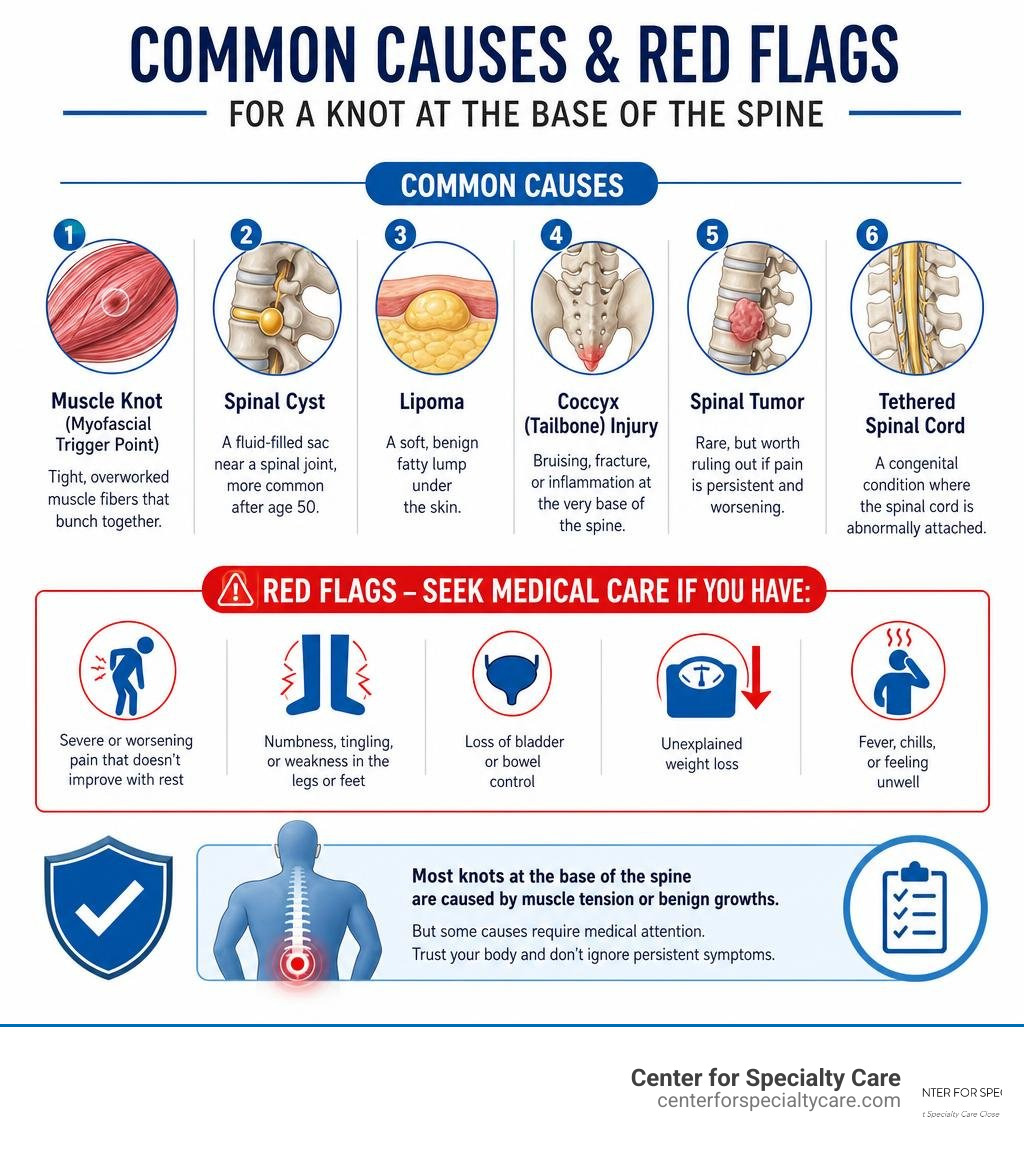
Quick answer — common causes include:
- Muscle knot (myofascial trigger point) — tight, overworked muscle fibers that bunch together
- Spinal cyst — a fluid-filled sac near a spinal joint, more common after age 50
- Lipoma — a soft, benign fatty lump under the skin
- Coccyx (tailbone) injury — bruising, fracture, or inflammation at the very base of the spine
- Spinal tumor — rare, but worth ruling out if pain is persistent and worsening
- Tethered spinal cord — a congenital condition where the spinal cord is abnormally attached
Most of the time, a knot near the tailbone is a muscle issue or a benign growth. But some causes do need medical attention. This guide walks you through how to tell the difference — and what to do next.
I’m Dr. Corey Welchlin, a board-certified orthopedic surgeon with over 30 years of experience treating spine, joint, and musculoskeletal conditions at the Center for Specialty Care in Fairmont, Minnesota. In my practice, I regularly see patients who come in worried about a knot at the base of the spine — and the good news is that most cases are very treatable once we identify the root cause. Let’s break down exactly what may be going on and how to find relief.
What is a knot at base of spine?
When patients mention feeling a knot at the base of the spine, they are typically describing a physical sensation of tightness, a firm lump, or a localized area of pressure near the lower back, sacrum, or tailbone. This sensation can stem from completely different anatomical structures.
For some, it is a myofascial trigger point—a localized muscle spasm where the fibers have contracted defensively. For others, it might be a literal physical lump under the skin, such as a fluid-filled cyst, a benign fatty tumor (lipoma), or even localized swelling from a bone-related issue.
Understanding where this “knot” is located requires looking closely at the lower pelvic and spinal structure. To get a clearer picture of the bones and connective tissues in this region, you can explore the Anatomy of the Coccyx.
Understanding the Anatomy of the Tailbone
The very bottom of your vertebral column is home to the sacrum and the coccyx (commonly known as the tailbone). The coccyx is a small, triangular bone structure that serves as a crucial anchor point for various pelvic floor muscles, tendons, and ligaments.
- Composition: The coccyx typically consists of 3 to 5 fused vertebrae and measures only about 1 inch in length. Interestingly, anatomical variations are incredibly common: about 76% of people have four coccygeal vertebrae, 13% have three, and 11% have five.
- Function: When you sit down, your tailbone acts like one leg of a tripod (along with your two sit bones) to distribute your body weight and maintain balance.
- The Sacrococcygeal Symphysis: This is the slightly movable joint that connects the sacrum to the coccyx. It is supported by a network of five heavy ligaments.
Because this tiny area handles so much load and serves as an attachment site for major muscle groups like the gluteus maximus, any local inflammation can easily feel like a tight, restricted “knot.” You can read more about how this bone functions to support the pelvis in this guide on Coccyx Anatomy and Function.
The Spiritual Concept of a knot at base of spine
While we focus primarily on Western orthopedic medicine at our clinics, it is fascinating to note that the sensation of a knot near the tailbone also has a long history in Eastern energy systems.
In yogic philosophy and Ayurvedic tradition, a blockage or “psychic knot” at the very base of the spine is referred to as the Brahma Granthi. Located at the root chakra (Muladhara), this energetic knot is believed to govern our basic survival instincts, feelings of security, and primal creative energy. According to these traditions, an imbalance or blockage here can manifest physically as lower back stiffness or digestive issues, and emotionally as anxiety or feeling “stuck” in life.
Those who practice holistic wellness often utilize grounding exercises, specific yoga poses, and deep breathing to release this energetic tension. To learn more about this perspective, read about the Brahma Granthi Energy Blockage.
Common Causes of a Lump or Knot in the Lower Back
If you can physically feel a lump or a highly localized point of tension at the base of your spine, it is helpful to categorize the potential culprits. The spine is complex, and everything from superficial skin tissues to deep spinal nerves can produce a “knot” sensation.
To explore the wider range of structural issues, developmental variations, and treatment pathways associated with this region, check out this comprehensive resource on Understanding Coccygeal Vertebrae. Below, we look at the most common clinical causes.
Myofascial Trigger Points and Muscle Knots
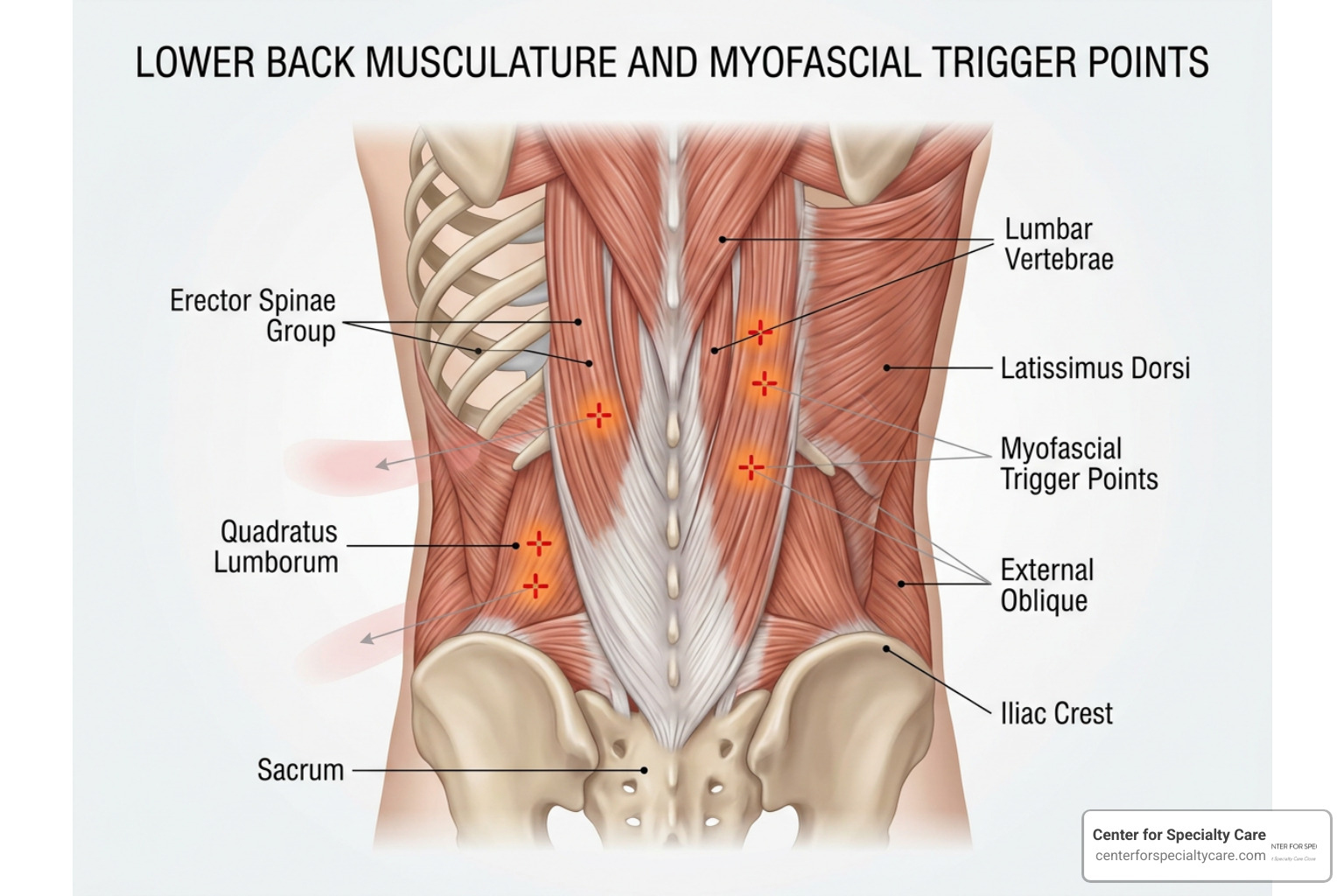
The most frequent cause of a knot at the base of the spine is a myofascial trigger point. Muscles are designed to contract and relax, but when they are pushed past their limit due to poor posture, sudden twisting, or repetitive strain, the muscle fibers can contract defensively. This creates a tight, rope-like band that cuts off its own local blood supply, leading to a buildup of metabolic waste and a highly sensitive “knot.”
In the lower back, several muscles are notorious for developing these trigger points:
- Quadratus Lumborum (QL): A deep lower back muscle that runs from your lowest rib to your pelvis.
- Erector Spinae: The thick bands of muscle running vertically along your spine.
- Gluteus Medius and Maximus: Hip and buttock muscles that insert right near the sacrum and tailbone.
When these muscles spasm, they can cause intense local pain or refer pain down into the buttocks. If you are dealing with muscle spasms higher up or want to see how we approach muscle recovery, you might find our guide on rhomboid muscle strain recovery helpful. For a deeper look at trigger points specifically in the lumbar region, read about Muscle Knots in Lower Back. Additionally, asymmetric daily habits can cause one-sided strain; learn more about this in What Causes Muscle Knots In The Lower Left Back?.
Spinal Cysts and Synovial Growths
Sometimes, the “knot” you feel is a physical, fluid-filled sac rather than a tight muscle. Spinal cysts, such as synovial or ganglion cysts, are benign growths that typically develop as a byproduct of joint degeneration and spinal instability.
These cysts are much more common in patients over the age of 50. As the facet joints in the lower spine wear down from arthritis, the joint capsule can produce excess synovial fluid. This fluid can pool and form a bubble-like cyst. While benign, if a cyst grows large enough, it can press against nearby spinal nerves, mimicking the symptoms of a herniated disc or sciatica.
Tethered Spinal Cord Syndrome
A much rarer but serious cause of tension at the base of the spine is a neurological condition called tethered spinal cord syndrome. Normally, the spinal cord floats freely within the spinal canal, allowing it to move smoothly as you bend, stretch, and grow.
In a tethered spinal cord, the tissue abnormally attaches to the surrounding spinal canal. This restricts the cord’s movement, causing it to stretch like a rubber band as the person moves or grows.
- Who it affects: This is often a congenital condition linked to spina bifida or a history of myelomeningocele (affecting up to 1 in 2 children with this history). However, it can also be acquired in adulthood due to scar tissue from previous spinal surgeries.
- Surgical risks: Up to 1 in 5 children with a tethered cord may eventually need more than one surgery to release the tension, especially during rapid growth spurts.
To understand how this condition presents, read more about Tethered Spinal Cord Symptoms.
Symptoms Associated with a Knot at the Base of the Spine
Because the causes of a spinal knot range from simple muscle fatigue to nerve compression, the symptoms can vary wildly. Pay close attention to how the area feels and whether the pain stays in one spot or travels.
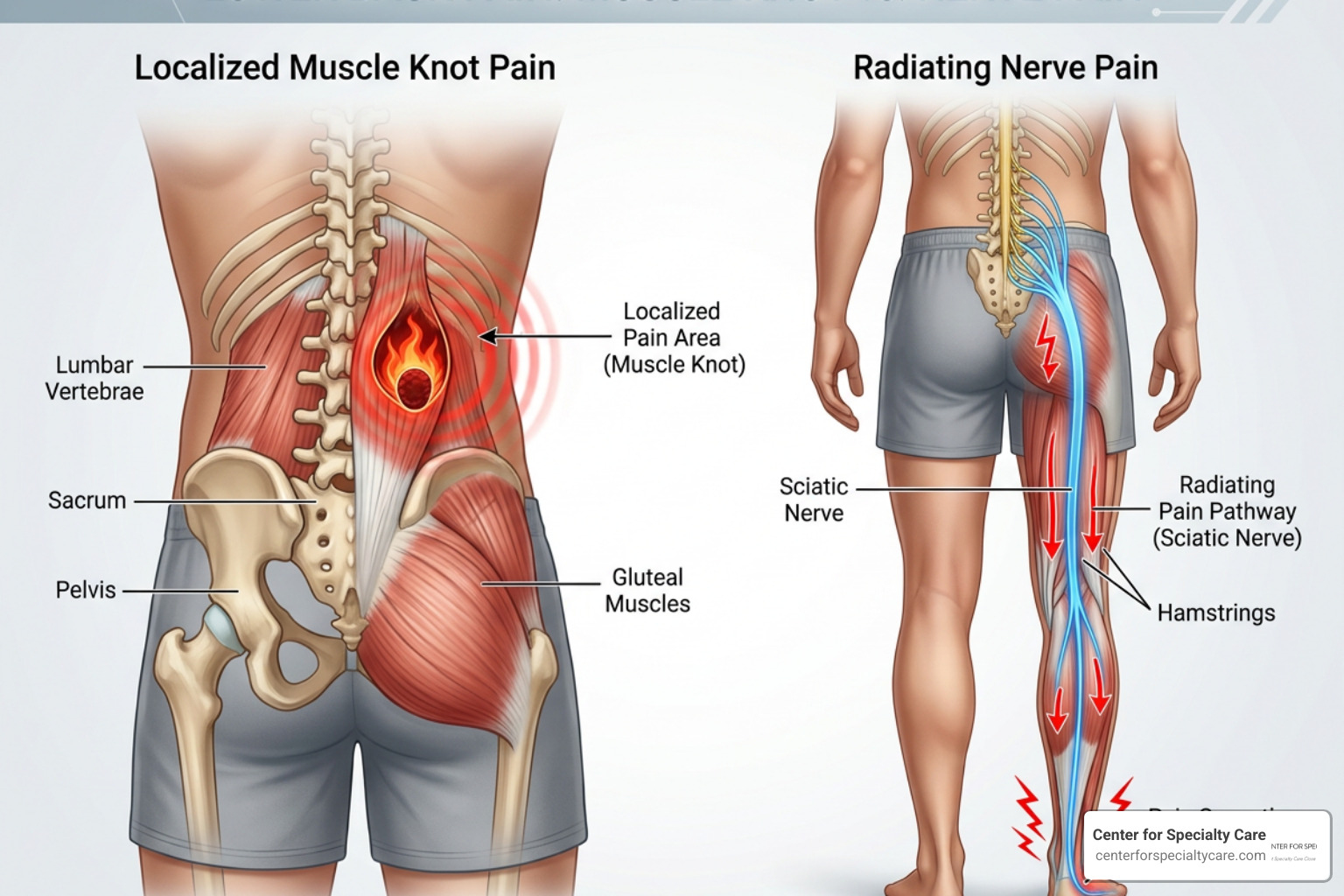
Identifying a Muscular knot at base of spine
If your knot is purely muscular, it will typically present with the following characteristics:
- A dull, aching pain that is localized to a specific spot.
- A palpable “band” or hard lump in the muscle that feels extra tender when pressed.
- Stiffness and a slightly reduced range of motion (e.g., feeling tight when bending forward).
- Pain that temporarily improves with light stretching, gentle massage, or heat.
If you are trying to decide whether your lower back pain is something you can manage at home or if it warrants a quick clinic visit, check out our article on back pain signs and treatment.
Neurological and Red Flag Symptoms
If the knot is caused by a cyst, a structural spinal issue, or nerve tethering, you may experience neurological symptoms. These are “red flags” that mean you should seek professional medical evaluation:
- Radiating Pain: Sharp, shooting, or electric-shock-like pain that travels down your buttocks, thighs, or calves (sciatica).
- Sensory Changes: Numbness, tingling, or a “pins and needles” sensation in your legs, feet, or groin area.
- Muscle Weakness: Difficulty lifting your foot (foot drop), weakness when climbing stairs, or a feeling that your leg might give out.
- Changes in Reflexes: Diminished or absent reflexes in your knees or ankles.
- Joint Subluxation Sensations: Feeling as if the joints at the base of your spine or pelvis are unstable or slipping. You can read more about what it means when a joint feels subluxed.
- Bowel or Bladder Dysfunction: Any sudden loss of bowel or bladder control, or numbness in the “saddle” area (where you would touch a saddle when riding a horse), is a medical emergency known as Cauda Equina Syndrome. If you experience this, seek emergency medical care immediately.
How Doctors Diagnose and Treat Lower Back Knots
At the Center for Specialty Care, our primary goal is to get you an accurate diagnosis so we can build a personalized, highly effective treatment plan. We believe in starting with the most conservative, non-invasive therapies first before ever discussing surgical options.
Diagnostic Procedures for Spinal Lumps
To figure out exactly what is causing that knot at the base of the spine, we use a combination of physical examinations and advanced imaging:
| Diagnostic Test | What It Reveals | Best Used For |
|---|---|---|
| Physical & Neurological Exam | Palpable muscle tightness, range of motion, reflex strength, and localized tenderness. | Identifying muscle trigger points and joint pain. |
| X-ray Imaging | Bone alignment, arthritis, joint space narrowing, and bone spurs. | Ruling out fractures or severe joint degeneration. |
| MRI Scan | Highly detailed images of soft tissues, nerves, spinal discs, and fluid-filled sacs. | Confirming spinal cysts, herniated discs, or a tethered cord. |
| CT Scan / Myelogram | Detailed cross-sectional bone images or dye-contrast nerve pathways. | Evaluating complex bone structures or patients who cannot have an MRI. |
If you are looking for a specialist who will take the time to run these tests and truly listen to your concerns, read our advice on pain management doctor selection.
Conservative and Medical Treatment Options
Once we pinpoint the cause, we offer a wide range of treatment pathways tailored to your lifestyle:
- Physical Therapy: Our physical therapists design custom exercise routines to strengthen your core and glutes, correct postural imbalances, and gently stretch tight muscle groups.
- Targeted Heat and Cold Therapy: Applying ice is excellent for acute injuries and reducing inflammation, while heat therapy is perfect for relaxing chronic muscle knots and increasing blood flow. For a deeper understanding of how to use these therapies, check out our resources on tendonitis heat therapy and choosing an ice pack for tendonitis.
- Spinal Decompression: If your knot is related to a compressed spinal disc or joint pressure, non-surgical spinal decompression can gently stretch the spine to relieve pressure on the nerves. You can read more about how this works through Spinal Decompression.
- Steroid Injections and Drainage: For painful, persistent spinal cysts, we can use ultrasound or X-ray guidance to drain the fluid or inject an anti-inflammatory corticosteroid to shrink the cyst and provide lasting pain relief.
- Advanced Pain Management: For chronic lower back pain that does not respond to basic therapies, we offer cutting-edge, minimally invasive procedures. This includes radiofrequency ablation, which uses heat to temporarily turn off pain signals from irritated joints. You can learn more in our ablation for back pain guide. We also help patients navigate advanced treatments, such as what to do if an intracept procedure details request is denied by insurance, as part of our commitment to finding chronic pain solutions.
Frequently Asked Questions About Spinal Knots
Can a spinal tumor feel like a knot at the base of the spine?
It is incredibly rare for a spinal tumor to feel like a simple, touchable muscle knot. Primary spinal tumors are very uncommon, making up only 2% to 4% of all primary central nervous system tumors. However, about 95% of spinal cancers are metastatic, meaning they began in another part of the body (like the lungs, breast, or prostate) and spread to the spine.
While a tumor inside the spinal canal usually won’t create a visible lump on your skin, it can cause deep, persistent back pain. A key warning sign of a spinal tumor is pain that gets significantly worse at night or when you lie flat. If you have a history of cancer and develop new, unexplained lower back pain, you should always get it evaluated by a medical professional immediately.
How do you get rid of a muscle knot in the lower back?
If your knot is a classic myofascial trigger point, you can often find relief at home using these steps:
- Active Recovery: Instead of strict bed rest, stay gently active. Gentle walking boosts circulation and helps heal tight muscles.
- Self-Massage: Use a foam roller or place a tennis ball between your lower back and a wall, gently rolling over the tight area to release the pressure point.
- Thermal Therapy: Apply a heating pad for 15 minutes to relax the muscle fibers, or use ice if the area feels inflamed. If you are unsure which to use, read our guide on peroneal tendonitis heat or ice for a helpful breakdown of heat vs. cold principles.
- Stretching: Incorporate gentle stretches like the cat-cow, child’s pose, and gentle knee-to-chest stretches to restore flexibility.
When should I see a doctor for a lump near my tailbone?
You should schedule an appointment with a healthcare provider if you notice a lump near your tailbone that:
- Does not improve or grow smaller after two weeks of rest and self-care.
- Is accompanied by unexplained weight loss, fever, or night sweats.
- Feels hard, completely immovable, or grows rapidly.
- Is accompanied by any neurological symptoms, such as radiating leg pain, numbness, tingling, or weakness.
Conclusion
A knot at the base of the spine can certainly be uncomfortable and concerning, but you do not have to live with the pain or the worry. Whether your knot is a stubborn muscle spasm, a benign cyst, or something requiring specialized medical care, our team at the Center for Specialty Care is here to help.
At our Fairmont, Minnesota clinic, we offer a welcoming environment, highly personalized orthopedic and pain management care, and quick appointment availability so you can get answers and relief without the wait.
Don’t let back discomfort keep you from enjoying your daily life. Contact us today to Schedule a Consultation and take your first step toward pain-free living.