
Protecting Your Practice: A Guide to Foot Tendon Malpractice Insurance
July 31, 2026
The Ultimate Guide to Custom Orthotics for Flat Feet
August 4, 2026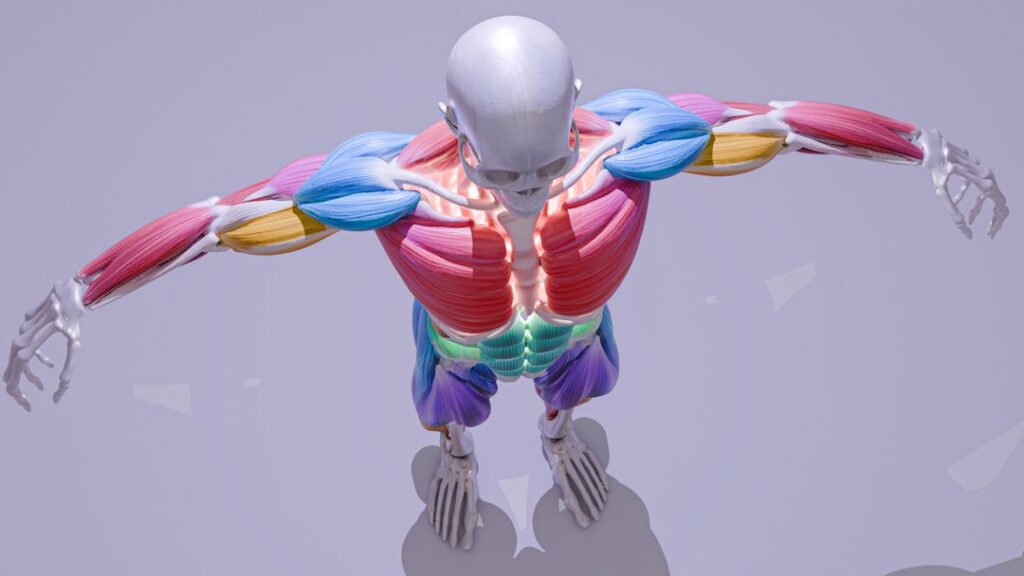
Rhomboid Muscle Pain: Common Causes and How to Find Relief
That Nagging Pain Between Your Shoulder Blades Has a Name
Rhomboid pain causes range from everyday habits to underlying medical conditions — and knowing which one is driving your discomfort is the first step toward real relief.
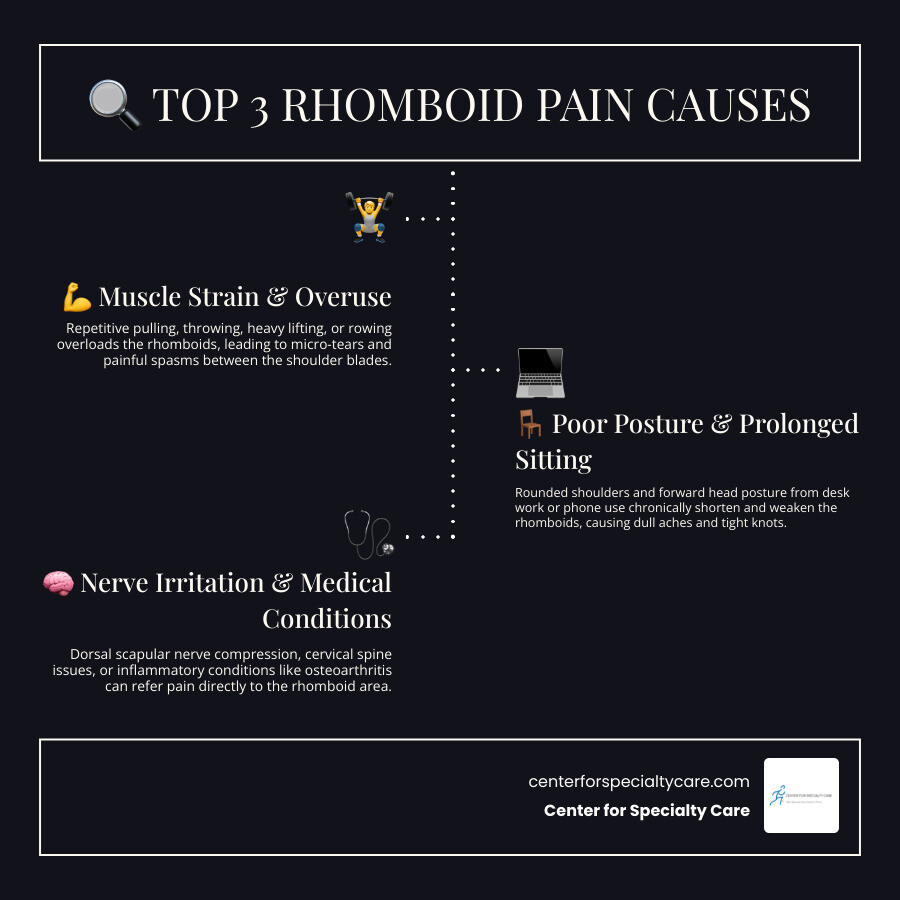
Here are the most common causes at a glance:
- Muscle strain — from throwing, rowing, heavy lifting, or sports
- Prolonged sitting — especially with rounded shoulders at a desk or computer
- Neck tightness — stiffness that refers pain down into the upper back
- Overuse and repetitive motion — repeated pulling or overhead movements
- Nerve irritation — involving the dorsal scapular, spinal accessory, or long thoracic nerve
- Medical conditions — such as osteoarthritis, rheumatoid arthritis, or polymyalgia rheumatica
- Scapular dyskinesis — abnormal shoulder blade movement that strains surrounding muscles
Upper back pain between the shoulder blades is easy to dismiss as general soreness. But when it lingers — or keeps coming back — it’s a signal worth paying attention to.
The pain often shows up as a dull ache, a burning sensation, or a tight knot that no amount of stretching seems to fix. For some people, it even radiates into the arm, mimicking the symptoms of a pinched nerve or herniated disc in the neck.
I’m Dr. Corey Welchlin, a board-certified orthopedic surgeon and sports medicine physician with over 30 years of experience treating musculoskeletal conditions — including the full spectrum of rhomboid pain causes — at the Center for Specialty Care in Fairmont, Minnesota. In this guide, I’ll walk you through everything you need to understand about what’s driving your upper back pain and how to find lasting relief.
Rhomboid pain causes basics:
What Are the Rhomboid Muscles?
To understand why your upper back is acting like a pre-tangled Slinky, we first need to look at the anatomy of the area. The rhomboids are a collective group of muscles located in your upper back, tucked deep beneath the large, triangular trapezius muscle.
This muscle group is divided into two distinct parts:
- Rhomboid Minor: The smaller, upper portion that originates from the C7 and T1 vertebrae of your spine.
- Rhomboid Major: The larger, lower portion that originates from the spinous processes of the T2 to T5 vertebrae.
Both of these muscles run diagonally downward and outward to attach to the medial (inner) border of your scapula (shoulder blade). Together, they play a critical role in forming the shoulder girdle, which stabilizes your shoulder blade and connects your upper limbs to your spine.
Whenever you pull your shoulder blades back (retraction), lift them up (elevation), or rotate them downward, your rhomboids are doing the heavy lifting. They work in direct opposition to the serratus anterior muscle to keep your shoulder blades resting flat against your rib cage. If you want to dive deeper into the clinical structure of these muscles, you can read more about the Anatomy of the Rhomboid Muscles or explore our guide on general Rhomboid Muscle Pain.
Understanding Rhomboid Pain Causes and Risk Factors

When patients visit our clinics in southern Minnesota and northern Iowa complaining of mid-back discomfort, we look at their daily habits, physical activities, and medical history. The truth is, rhomboid pain causes are rarely isolated. They typically stem from a mix of mechanical strain, postural stress, or underlying systemic issues.
Posture and Ergonomics as Rhomboid Pain Causes
In 2026, the single most common culprit we see is poor office ergonomics. Spending hours hunched over a laptop, slouching in a chair, or craning your neck forward to look at a smartphone (commonly called “tech neck”) forces your shoulders into a rounded, forward position.
When your shoulders roll forward, your scapulae are pulled away from your spine. This places the rhomboid muscles under constant, low-grade tension. Over time, these muscles become overstretched, weak, and chronically fatigued. This prolonged static positioning cuts off normal blood flow, leading to painful spasms, stiffness, and those stubborn, tender lumps we call trigger points. If you struggle with desk-related discomfort, our guide on Rhomboid Knot Ergonomic Solutions Work Pain Free Today offers practical tips to redesign your workstation.
Muscle Strain and Overuse Injuries
If you aren’t sitting at a desk, you might be overworking your upper back through physical activity. A rhomboid muscle strain occurs when the muscle fibers or tendons are stretched too far or torn. This typically happens during:
- Repetitive Overhead Movements: Activities like serving a volleyball, throwing a baseball, or painting a ceiling.
- Repetitive Pulling Motions: Heavy rowing, performing pull-ups with improper form, or pull-down weight exercises.
- Carrying Heavy Loads: Carrying a heavy backpack over a single shoulder, which forces one side of your upper back to work overtime.
- Sudden Trauma: Acute injuries from a car accident, a fall, or a sudden, awkward twist while lifting.
When these muscles are pushed past their limit, they protect themselves by seizing up. For a closer look at what a true strain feels like, check out Ouch My Shoulder Blades A Guide To Rhomboid Strain Symptoms.
Medical Conditions and Nerve Issues as Rhomboid Pain Causes
Sometimes, the pain you feel in your upper back isn’t actually a primary muscle problem at all. It can be referred pain from another structure or a symptom of an underlying medical condition:
- Nerve Irritation and Entrapment: The rhomboids are controlled by the dorsal scapular nerve, which originates from the C5 nerve root in the neck. If this nerve is compressed or irritated as it travels through the neck muscles, it can cause severe, burning pain, muscle weakness, or even scapular winging (where the shoulder blade sticks out). Other nerves, like the spinal accessory or long thoracic nerves, can also cause secondary shoulder blade pain.
- Cervical Spine Disease: Degenerative disc disease, osteoarthritis, or a herniated disc in the neck (especially at the C5-C6 level) can refer pain directly to the interscapular region.
- Systemic Inflammatory Conditions: Conditions like polymyalgia rheumatica (which typically affects patients over 50), rheumatoid arthritis, or myositis can cause widespread stiffness and pain in the shoulder girdle.
If you suspect your pain might be neurological, read our detailed breakdown on having a Pinched Nerve In Shoulder Blade.
Symptoms of Rhomboid Muscle Pain
Identifying the exact nature of your pain is crucial for choosing the right treatment. Rhomboid muscle pain can present in several ways, ranging from a mild, annoying ache to a sharp, stabbing sensation that limits your ability to move your arm or even take a deep breath.
Common symptoms include:
- A dull, aching pain or tenderness in the upper back, specifically between your shoulder blades and your spine.
- A localized “burning” spot or a physical knot that is highly tender to the touch.
- Muscle spasms or involuntary tightness in the mid-back.
- Pain that worsens when you move your shoulders, pull your shoulder blades together, or breathe deeply.
- A popping, clicking, or grinding sound (crepitus) when you move your shoulder blade.
- A feeling of arm fatigue or weakness when performing overhead tasks.
Because muscular pain can easily be confused with nerve-related issues, we have put together this comparison table to help you identify what you might be experiencing:
| Symptom Feature | Rhomboid Muscle Strain / Spasm | Cervical Nerve Compression (Pinched Nerve) |
|---|---|---|
| Pain Quality | Dull, aching, sore, or localized burning | Sharp, shooting, electric, or stabbing |
| Location | Concentrated between the spine and shoulder blade | Originates in the neck; radiates down the arm to the hand |
| Sensation | Tightness, muscular knots, and local tenderness | Tingling, numbness (“pins and needles”), or weakness |
| Aggravating Factors | Shrugging, pulling, or deep breathing | Tilting or turning the head in certain directions |
| Tenderness | High local tenderness when pressing on the muscle | Little to no local muscular tenderness; pain is referred |
If you are experiencing tender, painful lumps in your upper back, read more about Muscle Knots In Shoulder Blade Symptoms.
Diagnosing and Differentiating Rhomboid Pain

One of the greatest clinical challenges with upper back pain is preventing misdiagnosis. At the Center for Specialty Care, we frequently see patients who have been told they need complex neck surgery for a herniated disc, when their pain is actually caused by Rhomboid Myofascial Pain Syndrome.
Because abnormal spinal imaging findings (like a bulging disc) are incredibly common in completely asymptomatic people, an MRI showing a minor neck issue can easily lead to a false diagnosis if a thorough physical exam isn’t performed.
When you visit us, we perform a comprehensive physical evaluation. We will:
- Assess your posture, neck range of motion, and shoulder blade mechanics.
- Palpate the upper back muscles to check for tight bands of tissue and trigger points.
- Look for a “jump sign” — a classic indicator of myofascial pain where gentle digital pressure on a rhomboid trigger point causes the patient to jump or flinch due to referred pain radiating down the arm.
- Rule out conditions like Thoracic Outlet Syndrome (TOS), where blood vessels or nerves are compressed in the space between your collarbone and your first rib, pulling your shoulders forward and straining your back.
If conservative treatments fail to bring relief after several weeks, or if you exhibit “red flag” symptoms like progressive arm weakness or numbness, we may order advanced imaging, such as an MRI or electromyography (EMG), to check for true nerve root compression. To learn more about how we isolate the root cause of your discomfort, explore our article on Why Your Shoulder Blade Hurts And How To Fix It.
Effective Treatments and Exercises for Relief
When it comes to resolving rhomboid pain, resting in bed and hoping it goes away is actually the worst thing you can do. Prolonged rest causes the muscles to stiffen further, delaying your recovery. Instead, a combination of gentle movement, targeted strengthening, and home remedies is the fastest path to relief.
The RICE Method and Temperature Therapy
For a brand-new, acute muscle strain, start with the RICE protocol (Rest, Ice, Compression, Elevation). Apply ice wrapped in a thin towel to the area for 15 to 20 minutes every few hours to reduce acute inflammation.
For chronic, long-standing muscle tightness or spasms, heat therapy is highly effective. Applying a warm heating pad or taking a hot shower increases blood flow, relaxes tight muscle fibers, and prepares your back for active stretching.
Active Strengthening vs. Passive Stretching
Many people make the mistake of aggressively stretching their upper back when it hurts. However, if your rhomboid pain is caused by rounded shoulders, those muscles are already overstretched and weak. Stretching them further will only make the pain worse!
Instead, you need to focus on active strengthening to build stability in your shoulder girdle. Here are some of the most effective exercises:
- Shoulder Blade Squeezes (Retractions): Sit or stand tall. Squeeze your shoulder blades together as if you are trying to hold a pencil between them. Hold for 5 seconds, and repeat 10 to 15 times.
- Banded Pull-Aparts: Hold a resistance band in front of you at shoulder height. Keeping your arms straight, pull the band apart by squeezing your shoulder blades together. Slowly return to the starting position. Perform 3 sets of 10 to 12 reps.
- Foam Rolling: Place a foam roller perpendicular to your spine. Lie on your back, support your head with your hands, and gently roll from the mid-back to the top of your shoulders. Avoid rolling your lower back.
- The Tennis Ball Trick: Put a tennis ball inside a clean sock or pillowcase. Lean against a wall with the ball positioned between your spine and your shoulder blade. Gently press into the ball and roll it around to massage out stubborn trigger points.
For a complete step-by-step workout routine designed by our clinical team, visit Rhomboid Pain Relief Exercises That Actually Work or read the physical therapy perspectives in this guide on Rhomboid Muscle Pain: Causes, Treatments, and Exercises.
Frequently Asked Questions about Rhomboid Pain
How long does it typically take for a rhomboid strain to heal?
The recovery timeline depends entirely on the severity of the injury. A mild rhomboid strain (Grade 1), where the muscle fibers are slightly overstretched, can heal in as little as two to six weeks with proper home care and gentle movement.
A more severe strain or partial tear (Grade 2 or 3) can take three to six months for a full recovery. To ensure you are on the right track and to prevent scar tissue from causing chronic pain, it is highly beneficial to follow a structured rehabilitation program like The Ultimate Rhomboid Muscle Strain Recovery Plan.
Can a pinched nerve cause rhomboid pain?
Yes, absolutely. A pinched nerve in your cervical spine (neck), particularly involving the C5 nerve root or the dorsal scapular nerve, can refer severe, burning pain directly to the rhomboid muscle area.
When a nerve is compressed, it can also cause the rhomboids to become weak, leading to abnormal shoulder blade movement and compensatory muscle spasms. If you are experiencing tingling, numbness, or shooting pain that radiates down your arm alongside your back pain, read our guide on Pinched Nerve Scapula to understand your treatment options.
Why does stretching my upper back make the pain worse?
If your rhomboid pain is caused by rounded shoulders and poor posture, the muscles are already in a “taut,” overstretched, and weakened state. When you perform classic upper back stretches (like crossing your arm over your chest or rounding your spine), you place even more tension on these vulnerable muscle fibers. This can trigger a protective spasm, making the pain and tightness worse.
Instead of stretching, you need to strengthen your upper back and chest-opening muscles to pull your shoulders back into alignment. To learn more about why your upper back knots aren’t responding to stretching, check out Beyond The Trigger Point Why Your Shoulder Blade Knots Wont Go Away.
Conclusion
Whether your upper back pain is driven by long hours at a desk, an acute sports injury, or a complex nerve issue, you do not have to live with daily discomfort. Identifying your specific rhomboid pain causes is the key to unlocking a pain-free life, restoring your range of motion, and getting back to the activities you love.
At the Center for Specialty Care, our orthopedic and pain management specialists in Fairmont, Minnesota — along with our satellite clinics in Estherville, Buffalo Center, and St. James — are dedicated to helping you find lasting relief. We pride ourselves on offering personalized, compassionate care, 100% patient satisfaction, and quick appointment availability so you don’t have to wait to start feeling better.
If you are ready to say goodbye to that nagging ache between your shoulder blades, we invite you to explore our comprehensive Back Spine Care Services or contact us today to schedule your personalized evaluation. Let’s work together to get your back, shoulders, and life back in perfect alignment!