
The Best Orthotics to Help Women with Flat Feet Stand Tall
June 15, 2026
Everything You Need to Know About Foot Tendons
June 17, 2026
The Complete Guide to Shoulder Blade Pain Causes
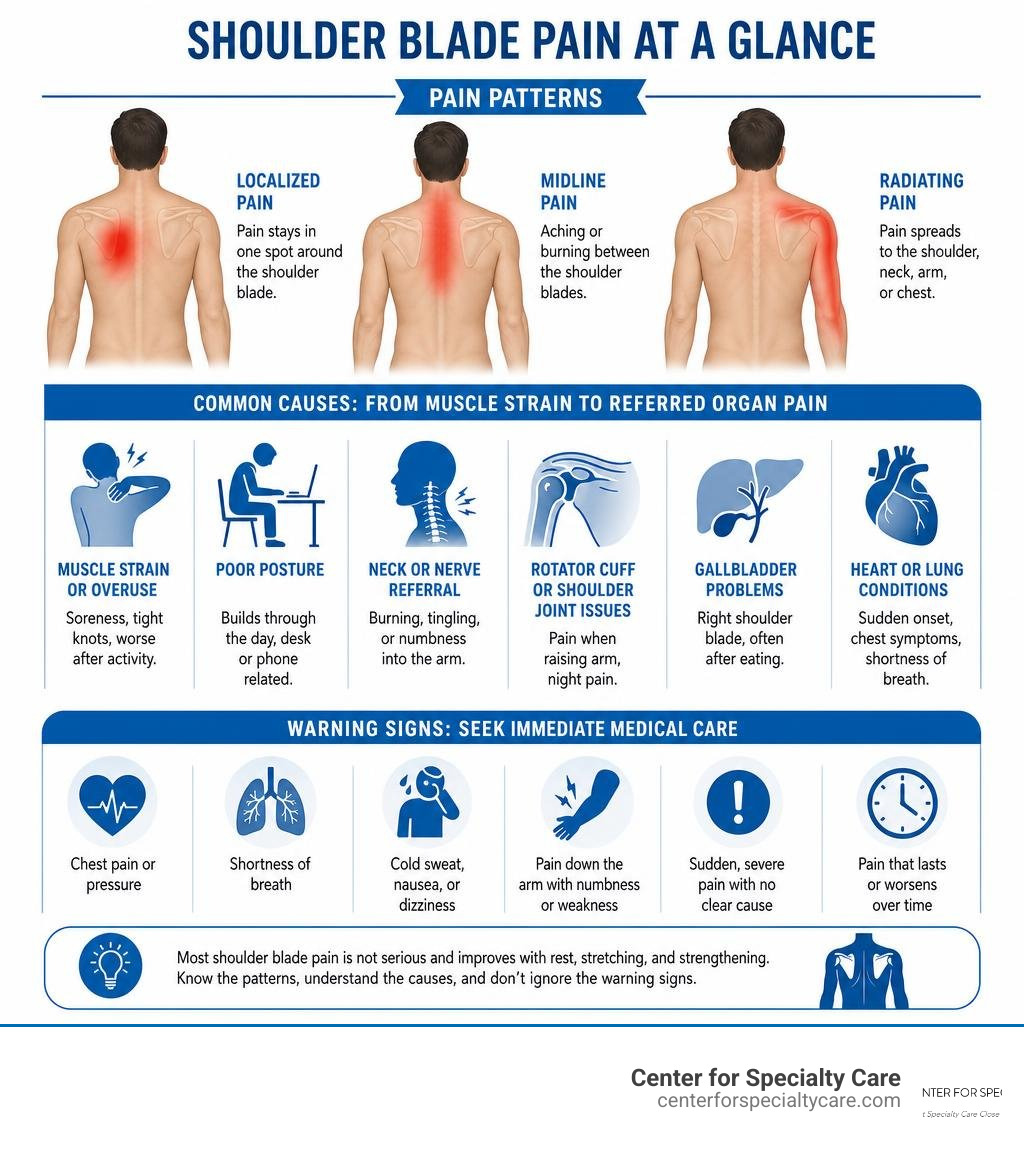
What Is Shoulder Blade Pain — and What’s Causing Yours?
Shoulder blade pain is discomfort felt around or between the triangular bones in your upper back, known as the scapulae. It can range from a dull, nagging ache to a sharp, stabbing sensation — and the cause is not always where you’d expect.
Quick answer: Most common causes of shoulder blade pain
| Cause | Key Signs |
|---|---|
| Muscle strain or overuse | Soreness, tight knots, worse after activity |
| Poor posture | Builds through the day, desk or phone related |
| Neck or nerve referral | Burning, tingling, or numbness into the arm |
| Rotator cuff or shoulder joint issues | Pain when raising arm, night pain |
| Gallbladder problems | Right shoulder blade, often after eating |
| Heart or lung conditions | Sudden onset, chest symptoms, shortness of breath |
Most cases are muscular or posture-related and respond well to stretching, strengthening, and simple lifestyle changes. However, some causes are serious — and knowing the difference matters.
Shoulder pain accounts for roughly 16% of all musculoskeletal complaints seen in primary care. And pain between the shoulder blades — called interscapular pain — is one of the most common upper-body complaints seen in clinics today. It can stem from everyday habits like sitting at a desk, or from something that needs prompt medical attention.
I’m Dr. Corey Welchlin, a board-certified orthopedic surgeon with over 30 years of experience diagnosing and treating shoulder blade pain and complex musculoskeletal conditions at the Center for Specialty Care in Fairmont, Minnesota. In this guide, I’ll walk you through every major cause — from simple muscle strain to referred pain from internal organs — so you know exactly what you’re dealing with and when to act.
Shoulder Blade Pain Causes: From Everyday Strain to Referred Pain
The shoulder blade, or scapula, is part of a busy neighborhood. It connects with the collarbone at the acromioclavicular joint, supports the shoulder socket at the glenohumeral joint, and works with the humerus, rotator cuff, rhomboids, trapezius, levator scapulae, neck, ribs, and thoracic spine.
That means pain around the shoulder blade can come from:
- Local muscles around the scapula
- The shoulder joint itself
- The neck or upper spine
- Nerves that travel into the arm
- Referred pain from the heart, lungs, gallbladder, or digestive system
A medical overview of shoulder pain explains that the shoulder’s large range of motion makes it vulnerable to many types of irritation and injury. Shoulder impingement alone is responsible for about 50% of shoulder pain cases, and rotator cuff tendinitis is especially common after age 30.
Muscle Strain, Overuse, and Trigger Points
Muscle strain is one of the most common causes of pain between the shoulder blades. It often affects the rhomboids, trapezius, or levator scapulae – the muscles that help position your shoulder blades and support your neck.
Common triggers include:
- Lifting something too heavy
- Repetitive reaching or pulling
- Yardwork, shoveling, or carrying bags
- Sports or weight training overload
- Sleeping in an awkward position
- Sudden twisting
- Long hours at a computer
This type of pain may feel like a tight knot, dull ache, soreness, or tender spot that says, “I live here now.” These tender areas are often called trigger points or muscle knots. They can make your upper back feel stiff and may radiate into the neck or shoulder.
For more on knots specifically, see our guides on shoulder blade knots and muscle knot symptoms.
How Poor Posture Triggers Shoulder Blade Pain
Poor posture is not just a “sit up straight” issue. It changes how your shoulder blades move.
Forward head posture, rounded shoulders, and slouched desk positioning can stretch the muscles between the shoulder blades while tightening the chest and front shoulder muscles. Over time, the mid-back muscles fatigue, the thoracic spine stiffens, and the scapula may move abnormally. This altered motion is sometimes called scapular dyskinesis.
Posture-related shoulder blade pain often:
- Builds gradually during the day
- Feels worse after desk work, driving, or phone use
- Improves when you move around
- Comes with neck stiffness or tension headaches
- Feels like a stubborn knot near the inner shoulder blade
If your pain links your neck and shoulder blade together, our article on a knot in the shoulder blade causing neck pain may help. We also explain tension patterns in our guide to a tension knot in the shoulder blade.
Neck, Nerve, and Spine-Related Causes
Sometimes the shoulder blade is not the main problem – it is where the pain shows up.
A pinched nerve in the neck, also called cervical radiculopathy, can send pain into the shoulder blade, shoulder, arm, or hand. Herniated discs, arthritis, spinal narrowing, or irritated joints can all contribute.
Nerve-related pain may feel:
- Burning
- Electric
- Shooting
- Tingling
- Numb
- Deep and hard to pinpoint
You may also notice grip weakness, arm heaviness, neck stiffness, or symptoms that change when you turn or tilt your head.
Pain can also come from thoracic spine stiffness or rib joint irritation. These often cause pain with twisting, deep breathing, or certain upper-back movements.
The concept of referred pain is important here: the nervous system can make pain appear in a different place than the true source. We cover this further in our pages on a pinched nerve in the shoulder blade and pinched nerve scapula symptoms.
Shoulder Joint Conditions That Refer Pain Around the Blade
Shoulder joint problems can also cause pain around or behind the shoulder blade. The rotator cuff connects the shoulder blade to the upper arm bone and helps lift and rotate the arm. When it becomes irritated, pain may spread into the upper back or shoulder blade region.
Common shoulder joint causes include:
- Rotator cuff tendinitis
- Shoulder impingement
- Bursitis
- Frozen shoulder
- Arthritis
- Labral injury
- Shoulder instability or dislocation
- AC joint injury
Shoulder impingement happens when structures inside the shoulder become pinched or irritated, often from repeated overhead motion. It may cause pain when reaching, lifting, lying on the affected side, or raising the arm. You can learn more from this shoulder impingement and rotator cuff tendinitis overview.
If your pain is lower or tucked under the shoulder blade, see our guide to pain under the scapula.
Less Common Referred Causes: Gallbladder, Heart, Lung, and Digestive Issues
Most shoulder blade pain is not dangerous. But sometimes pain near the scapula comes from an internal organ.
Examples include:
- Gallbladder irritation, often felt near the right shoulder blade
- Pancreatitis or peptic ulcer pain
- Heart attack or pericarditis
- Aortic dissection
- Pulmonary embolism
- Pneumothorax
- Certain lung tumors, including Pancoast tumors
A helpful review of shoulder blade pain causes and treatment notes that shoulder blade pain can be musculoskeletal, cardiac, pulmonary, digestive, or nerve-related.
Left shoulder blade pain with chest pressure, sweating, nausea, dizziness, or shortness of breath needs emergency evaluation. Women may be more likely than men to have less classic heart symptoms, including upper back, shoulder, jaw, or arm discomfort. For left-sided patterns, see our guide to pain below the left scapula.
How to Tell Whether Shoulder Blade Pain Is Muscular, Nerve-Related, or Serious
| Type of Pain | What It Feels Like | Common Triggers | Other Symptoms | Urgency |
|---|---|---|---|---|
| Muscle strain | Dull ache, soreness, knot | Lifting, posture, exercise | Tenderness, stiffness | Usually non-emergency |
| Nerve pain | Burning, electric, shooting | Neck movement, disc irritation | Tingling, numbness, weakness | Schedule evaluation |
| Shoulder joint pain | Deep shoulder ache, night pain | Raising arm, reaching, lying on side | Limited motion, weakness | Schedule evaluation |
| Referred organ pain | Sudden, deep, unexplained | May not change with movement | Chest pain, shortness of breath, sweating, fever | Emergency if red flags appear |
What Muscular Shoulder Blade Pain Usually Feels Like
Muscular shoulder blade pain is usually localized. You can often point to the sore spot, press on it, and say, “That is the little gremlin.”
It often:
- Feels tight, achy, or sore
- Worsens after lifting, sitting, or overuse
- Improves with heat, stretching, massage, or movement
- Does not cause numbness or arm weakness
- Does not cause chest pressure or shortness of breath
For self-care steps, read our guide on how to relieve a shoulder blade muscle knot.
What Nerve-Related Shoulder Blade Pain Usually Feels Like
Nerve pain is usually sharper, hotter, or more “electrical” than muscle pain. It may travel from the neck into the shoulder blade, down the arm, or into the hand.
Warning signs of nerve involvement include:
- Pins and needles
- Numb fingers
- Grip weakness
- Pain that worsens with neck movement
- Burning pain that disrupts sleep
- Symptoms that do not improve with basic stretching
If your symptoms involve both the neck and shoulder blade, see our guide to a knot in the neck and shoulder blade.
Can Shoulder Blade Pain Signal Heart or Lung Problems?
Yes. Shoulder blade pain can be a symptom of heart or lung problems, especially when it is sudden, severe, unexplained, or paired with other symptoms.
Seek emergency care for shoulder blade pain with:
- Chest pain or pressure
- Shortness of breath
- Sweating
- Dizziness or fainting
- Rapid heartbeat
- Coughing blood
- Fever with severe pain
- Pain with breathing
- Pain radiating down the left arm
- Sudden severe tearing pain
- Difficulty speaking, vision changes, or paralysis
If your pain feels unlike anything you have had before, do not try to stretch it away. Get checked.
Exercises, Stretches, and Treatments That Help Shoulder Blade Pain
Most non-emergency cases improve with a combination of mobility, strengthening, posture correction, and activity modification. Treatment should match the cause, which is why an evaluation matters when pain persists.
Common options include:
- Physical therapy
- Scapular strengthening
- Thoracic mobility work
- Heat or cold therapy
- Short-term medication when appropriate
- Ergonomic changes
- Injections for selected inflammatory conditions
- Surgery only when structural damage requires it

Safe Stretches to Start Slowly
Start gently. If a stretch increases sharp pain, numbness, or symptoms down the arm, stop.
Beginner shoulder blade stretches:
Shoulder rolls
Sit or stand tall. Roll shoulders up, back, down, and forward. Reverse direction. Repeat 2 to 4 times.Rhomboid stretch
Clasp hands in front at shoulder height, tuck your chin slightly, and round your upper back. Hold 15 to 30 seconds. Repeat 2 to 4 times.Posterior shoulder stretch
Bring one arm across your chest and gently pull it closer with the other arm. Hold 15 to 30 seconds.Doorway chest stretch
Place forearms on a doorway and step forward until you feel a gentle stretch across the chest.Goalpost stretch
Lie on your back or stand against a wall with arms in a goalpost position. Keep shoulders relaxed.Triceps stretch
Reach one hand behind your head and gently guide the elbow back.
For more details, see our guide to a stretch for a knot in the shoulder blade.
Strengthening Exercises for Scapular Stability
Strengthening helps your shoulder blades move well instead of freelancing like they are in a jazz band.
Helpful exercises include:
- Shoulder-blade squeezes: gently pinch shoulder blades together, hold about 6 seconds, repeat 8 to 12 times.
- Resisted rows: use a resistance band and pull elbows back while keeping shoulders down.
- Chest-level band pulls: hold a band at chest height and pull outward with straight arms.
- Wall angels: slide arms up and down a wall while keeping ribs controlled.
- Chin tucks: gently draw the head back to reduce forward-head posture.
- Thread the needle: rotate through the upper back while on hands and knees.
- Thoracic extension: extend over a rolled towel or foam roller.
Aim for 8 to 12 controlled repetitions for strengthening. Keep breathing normally and avoid shrugging. Our simple scapula exercises page gives more examples.
Heat, Cold, Foam Rolling, and Medication
Use cold when pain follows activity, strain, or inflammation. Use heat when the area feels tight, stiff, or spasmed.
General tips:
- Apply cold packs for 15 to 20 minutes after activity.
- Use heat for 15 to 20 minutes for tight muscles.
- Try a foam roller or rolled towel for gentle upper-back mobility.
- Avoid aggressive rolling directly on sharp pain.
- Use NSAIDs or acetaminophen only as directed and only if safe for you.
- Rest from aggravating activity, but do not immobilize the area for too long unless instructed.
For technique ideas, see our guide to using a foam roller for shoulder blade knots.
Physical Therapy, Ergonomics, Injections, and Surgery
Physical therapy can help by identifying the actual driver of pain: weak scapular stabilizers, tight chest muscles, limited thoracic motion, neck referral, rotator cuff irritation, or poor movement mechanics.
A care plan may include:
- Range-of-motion testing
- Strength testing
- Posture and movement assessment
- Manual therapy
- Home exercises
- Ergonomic changes
- Gradual return to lifting or sport
General physical therapy information supports the role of guided rehabilitation in restoring function.
At Center for Specialty Care, we focus on a nonsurgical-first approach when appropriate. Injections may help selected cases of bursitis, impingement, arthritis, or nerve irritation. Surgery may be needed for major rotator cuff tears, fractures, severe arthritis, instability, or advanced joint damage. Shoulder replacement is reserved for severe joint disease that has not responded to conservative care.
When to Seek Medical Care for Shoulder Blade Pain
Do not ignore shoulder blade pain that is severe, worsening, unexplained, or associated with neurological, chest, or breathing symptoms.
Emergency Symptoms That Need Immediate Care
Call 911 or seek emergency care if shoulder blade pain occurs with:
- Chest pain or tightness
- Shortness of breath
- Fainting or severe lightheadedness
- Excessive sweating
- Rapid or irregular heartbeat
- Coughing blood
- Difficulty speaking
- Vision changes
- Paralysis or facial drooping
- Severe sudden pain
- Pain radiating down the left arm
- Fever with severe pain
- New confusion or loss of consciousness
Non-Emergency Signs You Should Schedule an Evaluation
Schedule an appointment if you have:
- Pain lasting more than 72 hours and not improving
- Pain lasting more than two weeks
- Recurrent knots or spasms
- Pain affecting work, sleep, or workouts
- Arm weakness
- Trouble lifting overhead
- Numbness or tingling
- Swelling, redness, warmth, or bruising
- Pain after a fall or injury
- Decreased range of motion
- Pain that keeps coming back despite self-care
What to Expect During Diagnosis
A good evaluation starts with your story. We ask when the pain started, what makes it better or worse, whether it travels, and whether you have numbness, weakness, chest symptoms, or breathing changes.
Depending on your symptoms, diagnosis may include:
- Posture and movement assessment
- Shoulder range-of-motion testing
- Neck exam
- Strength testing
- Neurological screening
- Scapular assistance or retraction testing
- X-ray
- Ultrasound
- MRI or CT scan
- Blood tests when systemic illness is suspected
- Nerve conduction studies when nerve injury is possible
The goal is simple: treat the cause, not just the sore spot.
Lifestyle Changes That Prevent Recurring Shoulder Blade Pain
Prevention usually comes down to better movement, better setup, and better recovery. Your shoulder blades like variety. They do not like being frozen at a desk for six hours pretending to be office decor.
Desk, Driving, and Phone Ergonomics
Try these posture-friendly adjustments:
- Keep your monitor at eye level.
- Sit with feet supported.
- Keep elbows close to your sides.
- Place the keyboard and mouse so shoulders stay relaxed.
- Use lumbar support.
- Bring your phone up instead of dropping your head down.
- Take microbreaks every 30 to 45 minutes.
- Adjust your driving seat so you are not reaching forward.
- Avoid carrying a heavy bag on one shoulder.
Strength, Mobility, and Recovery Habits
A balanced upper-body routine matters. Too much pressing without enough rowing can pull the shoulders forward.
Helpful habits include:
- Pair presses with rows.
- Stretch the chest and front shoulders.
- Strengthen the rotator cuff.
- Practice scapular control.
- Warm up before lifting or sports.
- Cool down after activity.
- Increase training volume gradually.
- Do maintenance exercises about three times weekly.
- Sleep on your back or side with pillow support for the arm.
Stress, Breathing, and Daily Movement
Stress often shows up in the upper traps, neck, and jaw. If you clench, shrug, and breathe shallowly all day, your shoulder blades may file a formal complaint.
Try:
- Diaphragmatic breathing
- Walking breaks
- Gentle mobility work
- Hydration
- Recovery days
- Short stretching sessions
- Relaxing your jaw and shoulders throughout the day
Small resets done consistently beat one heroic stretching session every three weeks.
Frequently Asked Questions about Shoulder Blade Pain
What are the most common causes of pain between the shoulder blades?
The most common causes are poor posture, muscle strain, overuse, trigger points, thoracic stiffness, neck referral, pinched nerves, rotator cuff problems, shoulder impingement, and arthritis. Less commonly, pain may come from gallbladder, heart, lung, or digestive conditions.
How do I relieve upper back pain between the shoulder blades at home?
For mild pain without red flags, try gentle stretching, shoulder-blade squeezes, heat for tightness, cold after activity, posture resets, ergonomic changes, short-term rest from aggravating activity, foam rolling, and over-the-counter pain medicine if approved by your healthcare provider.
Stop and schedule an evaluation if pain worsens, radiates, causes numbness or weakness, or does not improve.
When should I worry about shoulder blade pain?
Worry – and seek care – if pain is sudden, severe, unexplained, worsening, or paired with chest pain, shortness of breath, sweating, dizziness, fever, coughing blood, numbness, weakness, or pain after an injury. Pain lasting more than two weeks should also be evaluated.
Conclusion
Shoulder blade pain can come from a simple muscle strain, poor posture, a pinched nerve, a shoulder joint condition, or referred pain from the heart, lungs, gallbladder, or digestive system. Most cases are treatable with stretching, strengthening, physical therapy, ergonomic changes, and smart activity modification. But red flags deserve quick medical attention.
At Center for Specialty Care, we provide personalized orthopedic and pain management care for patients in Fairmont, MN; St. James, MN; Estherville, IA; Buffalo Center, IA; and surrounding Minnesota and Iowa communities. We offer nonsurgical care first whenever possible, surgical expertise when necessary, and quick appointment availability with a commitment to 100% patient satisfaction.
If shoulder blade pain is limiting your work, sleep, lifting, or daily life, we can help you find the cause and build a plan that fits you. Start here: Get help for shoulder pain.